Google AI Overviews now reach more than 2 billion users per month, while Google still handles about 14 billion searches per day and ChatGPT gets 37.5 million prompts per day. That gap is exactly why SEO for LLMs is no longer just classic SEO with a new label, it's a separate visibility problem with different failure points, different winners, and different measurement.
The hard truth is that a page can rank well and still stay invisible in AI answers. About 60% of Google searches now end without a click to a website, so brands that only optimize for traffic are already missing the part of the journey where AI systems extract, summarize, and cite content instead of sending users through to blue links. That's also why the operational goal has shifted from “rank higher” to be cited accurately, be extracted cleanly, and show up in the answer itself.
Table of Contents
- Why SEO for LLMs Is a Separate Discipline
- Technical Foundations for Machine-Readable Content
- Building Entity-Rich and Citation-Ready Content
- Prompt Tracking and Citation Measurement Workflows
- Attributing Business Value to AI Citations
- Retrieval Optimization Versus Citation Optimization
- Your 90-Day SEO for LLMs Action Plan
Why SEO for LLMs Is a Separate Discipline
AI visibility no longer follows the old ranking model
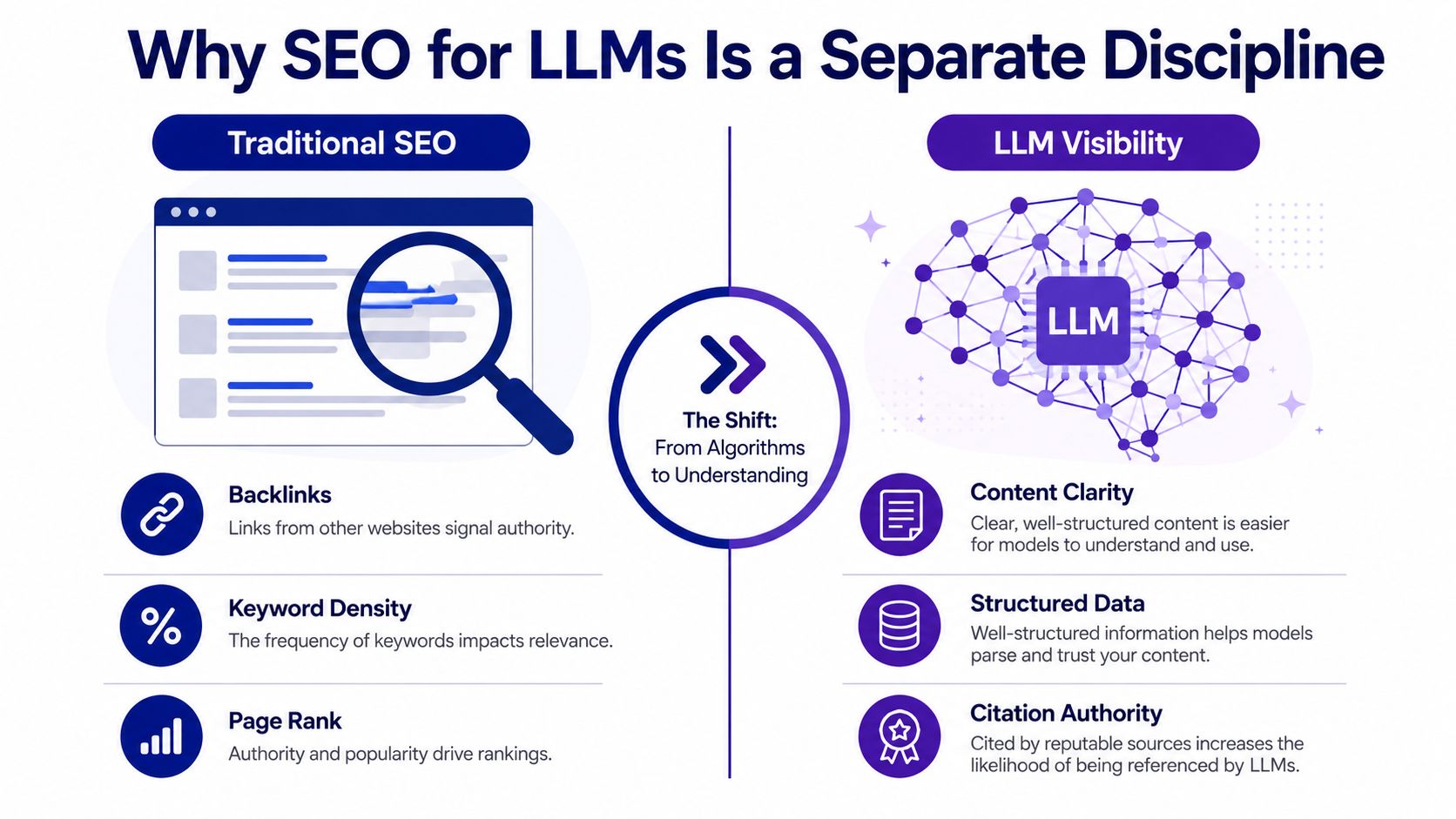
Traditional SEO assumes a simple chain, crawl, rank, click. SEO for LLMs breaks that chain because AI systems can surface a page without sending the same level of traffic, and they can ignore a strong ranking page if the content isn't easy to quote or attribute. That's why the overlap between classic Google results and LLM citations matters so much, only about 20% of URLs cited by ChatGPT and Perplexity also rank in Google's top 10 for the same query, and another analysis found just 12% overlap between LLM citations and top-ten Google results overall, according to the data summarized at SQ Magazine's AI SEO statistics.
That's a structural change, not a cosmetic one. A page can be highly relevant, technically indexed, and still lose in AI search because the model prefers a different source shape, a cleaner entity profile, or a passage that's easier to extract.
Practical rule: if your content only wins when a human clicks through a SERP, it's not fully optimized for AI visibility yet.
The distinction matters even more when you look at scale. Google searches still dwarf prompt volume, but ChatGPT's usage is large enough to influence discovery patterns, and Google's AI Overviews already reach a massive audience. For teams that still want a broader primer on the category shift, the Algomizer 2026 playbook is a useful companion to the older GEO framing in Nuwtonic's overview of generative engine optimization.
What the scale data means in practice
The business implication isn't that classic SEO stopped working. It's that classic rankings no longer predict LLM visibility reliably. If a brand depends on search discovery, it now has to optimize for being selected into answers, not just appearing near the top of a list.
That changes what teams prioritize. Keyword maps still matter, but they're not enough if the content can't be extracted into a summary, quoted cleanly, or connected to an entity the model trusts. It also changes how you judge performance, because a branded mention, a citation, and a click-through are not the same outcome.
For practitioners, the clearest mental model is this, traditional SEO measures exposure to users who browse. SEO for LLMs measures eligibility for inclusion in machine-generated answers. When that is the goal, the job expands from rankings to formatting, entity clarity, and citation-worthiness. A strong page still helps, but it has to be built for a different kind of reader, one that doesn't scroll the same way a human does.
Technical Foundations for Machine-Readable Content
Start with crawlability and clean rendering
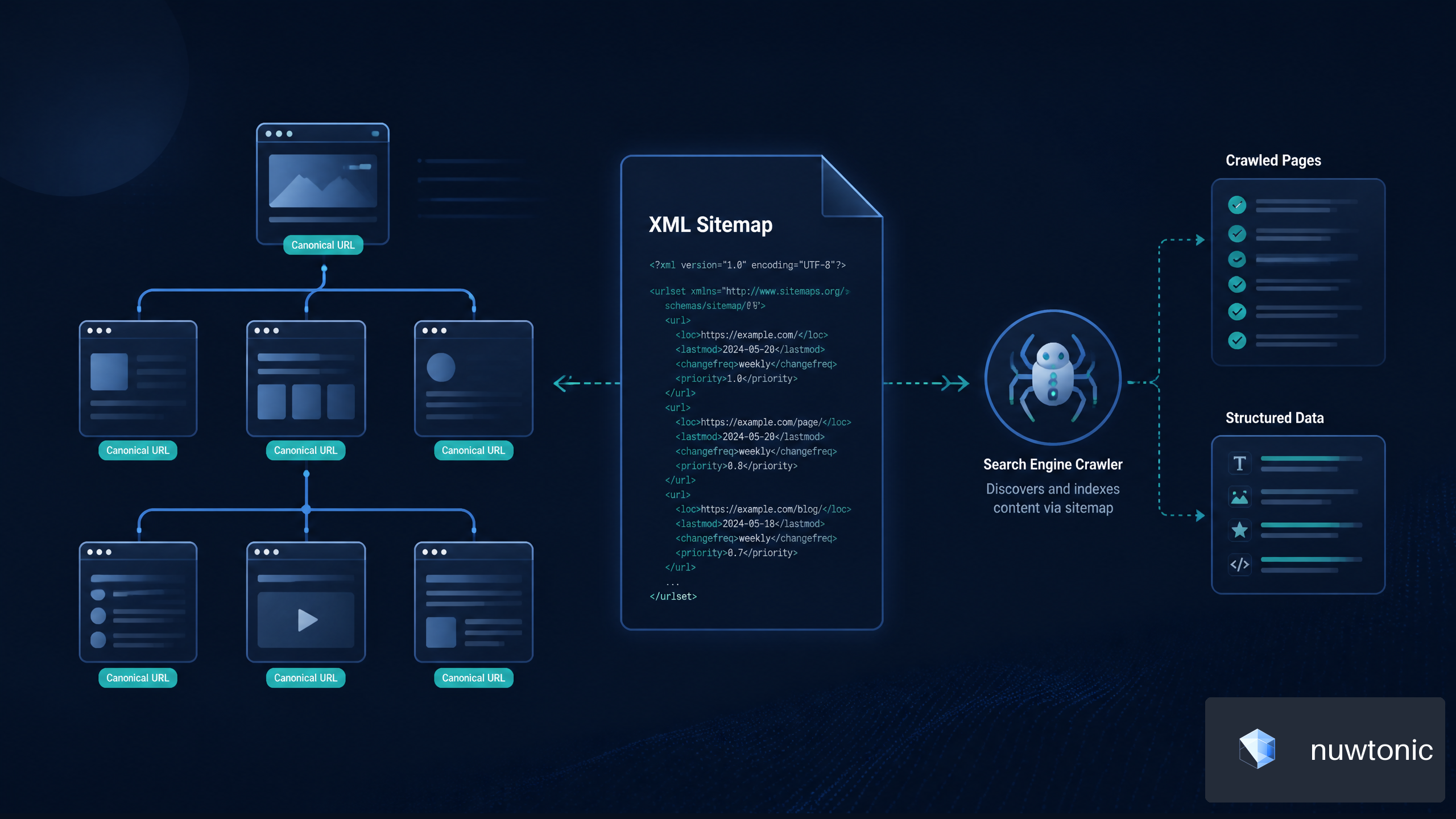
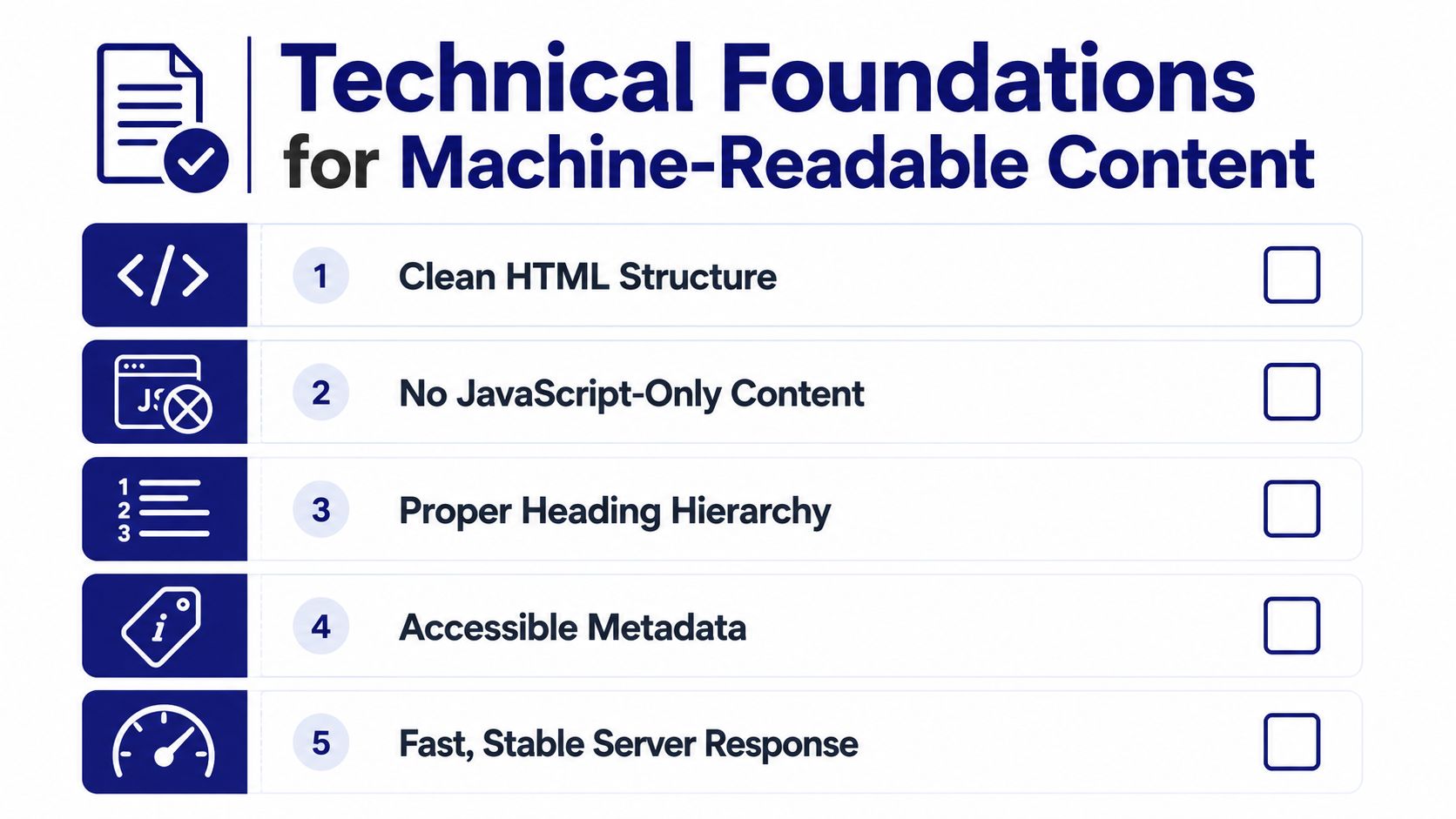
If AI systems can't fetch or render the page cleanly, the rest doesn't matter. Pages need to be served as clean HTML, accessible to AI agents in robots.txt, and not buried behind unnecessary client-side rendering. The technical guidance in Witscode's AI LLM SEO guide is blunt about this, and it lines up with what breaks in practice, JavaScript-heavy content, blocked crawlers, or unstable rendering can make a page usable for humans but unusable for extraction.
That's the first audit I run. I check whether key content exists in the raw HTML, whether the page is accessible without relying on script execution, and whether search bots are blocked from the parts of the site that answer commercial queries. If the answer content only appears after scripts fire, AI visibility gets fragile fast.
A clean setup also means testing what the model can reliably ingest. Google's Rich Results Test is still useful because it exposes whether structured content is legible enough for machine interpretation, even when the page looks fine in a browser. Pages that fail those tests often fail downstream in AI systems too.
If the content isn't visible in the source, don't assume the model can “figure it out” later.
Use structure AI agents can parse without guessing
Structure is the second gate. Semantic headings, valid Schema.org JSON-LD, and consistent metadata give models a better shot at extracting entities and relationships correctly. That's especially important for FAQ, how-to, product, and editorial content, where the model needs a crisp map of what the page says.
A practical workflow looks like this:
- Audit
robots.txtfirst: confirm that the crawlers you want aren't blocked from the page types that matter. - Inspect rendering paths: compare the raw source with the rendered page and look for missing main content.
- Validate schema: use JSON-LD for entities, FAQs, and step-based content, then confirm the markup matches the visible copy.
- Watch performance drift: weak Core Web Vitals often correlate with messy rendering and slower content discovery, even when rankings look stable.
- Keep heading hierarchy honest: don't stack decorative headings or skip levels just to style the page.
For teams that want a deeper schema-specific reference, Nuwtonic's schema markup guide is relevant because the same markup discipline that helps classic SEO also improves machine readability for AI systems. The goal isn't decorative perfection, it's predictable parsing.
The pages that win here are boring in the best way. They load cleanly, expose their content plainly, and remove guesswork from the machine's job. When you do that, you raise the odds that the page is eligible for citation across ChatGPT, Gemini, Perplexity, Claude, and Google's AI surfaces.
Building Entity-Rich and Citation-Ready Content
Write for extraction, not decoration
The pages that get cited usually make the machine's job easy. AI systems do better with passages that state one idea cleanly, define a term in plain language, or separate a comparison from surrounding commentary. That is why entity clarity matters, the model needs to know exactly what product, method, concept, or company a paragraph refers to.
Clean structure helps, but clear prose is what gets quoted.
The strongest pages usually do three things well. They define the subject early, keep entity names consistent from section to section, and avoid hiding the answer inside rhetorical buildup. Dense but readable performs better than clever and vague every time, especially when a model is deciding which passage to reuse.
Write each core claim so it can stand alone. If you are describing a process, make the step names obvious. If you are comparing options, label the options explicitly. If you are making a factual statement, write it in a form that can be cited without extra context.
For teams that want a practical reference point, intelligent web data extraction is a useful lens because AI systems are doing a selective version of extraction when they decide what to quote.
Make freshness and verification visible
Freshness is more than republishing a date. Several guides now recommend visible Created, Updated, and Verified markers because AI systems and human reviewers respond better when a page shows when claims were last checked. The guidance in Discovered Labs on verifiability patterns is useful here because it treats claims as something that should be dateable and source-backed, not just well written.
That raises the bar for SEO for LLMs in a practical way.
- State the claim plainly: keep the main idea near the top of the section.
- Use stable entity naming: do not rename the same thing three different ways.
- Add explicit verification cues: timestamps and source references help both trust and extraction.
- Format statistics and comparisons cleanly: one idea per sentence works better than a paragraph packed with side notes.
- Keep instructions stepwise: models often handle numbered logic more reliably than dense prose.
Citation-ready content usually reads like something a smart editor could excerpt without rewriting.
The internal reference point here is Nuwtonic's guide to optimizing content for AI search, because the operational goal is the same, make the page easier for AI systems to understand, trust, and reuse. When content is built this way, the model does not have to infer meaning from clutter. It can lift the right passage with less risk of distortion, and that is where citation rates start to improve.
Prompt Tracking and Citation Measurement Workflows
Build a repeatable test set
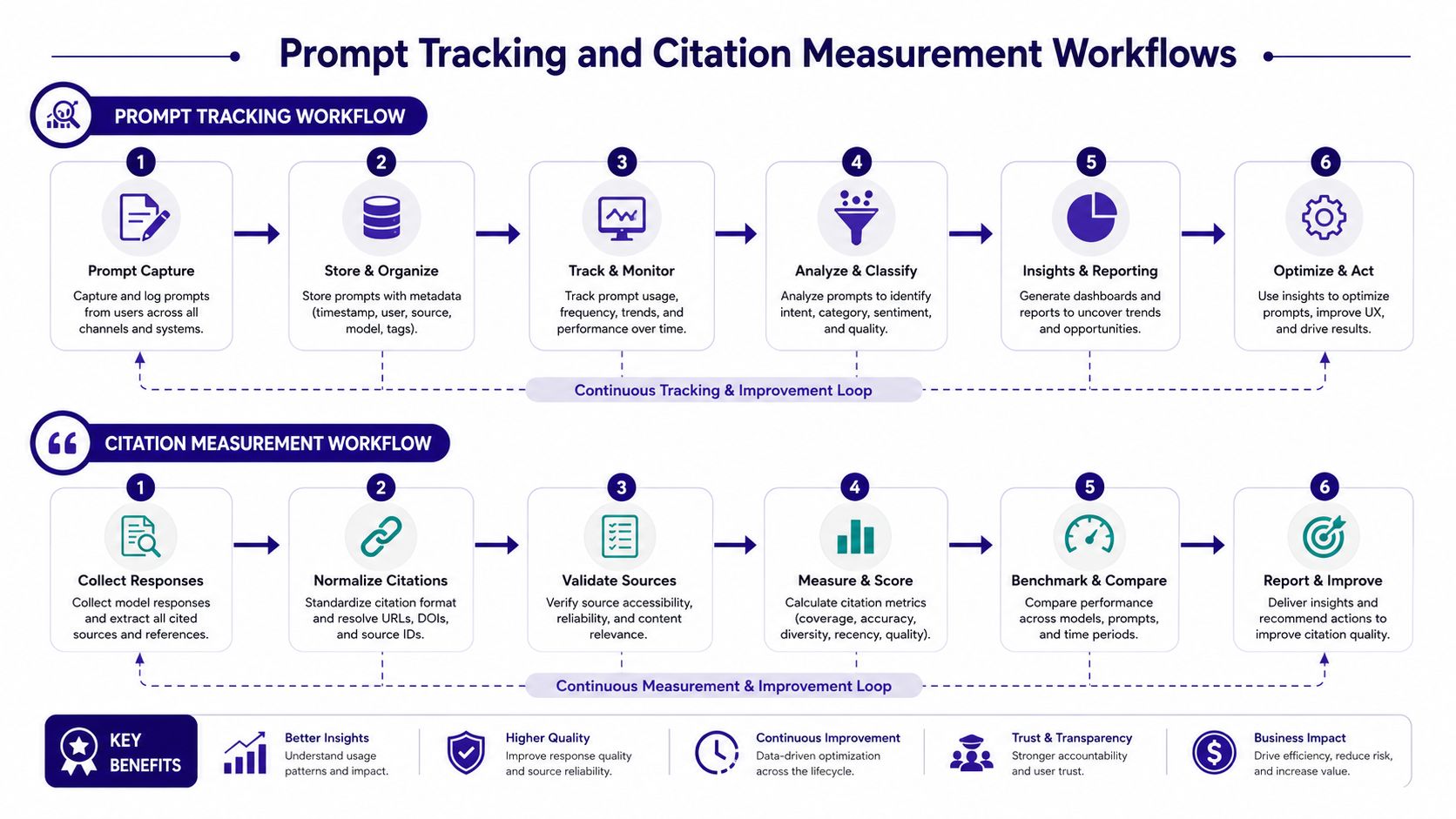
Many teams start too broadly and learn too little. The better approach is to create a fixed prompt library built around the questions your audience asks, then run that set across ChatGPT, Perplexity, Gemini, Copilot, and AI Overviews on a schedule. The guidance from Neil Patel's LLM SEO workflow and the testing pattern described by TurboAudit's LLM SEO coverage both point in the same direction, test consistently, compare results over time, and record who gets cited.
The test set should be narrow enough to repeat and broad enough to reveal patterns. I usually group prompts into problem-aware, solution-aware, and brand-aware queries, because those three buckets surface different citation behaviors. A prompt set that works in one model can fail in another, and that's useful data, not noise.
A simple cadence looks like this:
- Pick the questions: use sales calls, search data, support tickets, and customer objections.
- Run the prompts in the same order each time: consistency matters more than novelty.
- Capture the cited source, if any: note the URL and whether it matches the target page.
- Log the outcome by model: don't mix surfaces together, because behavior differs.
- Repeat on a fixed interval: monthly is usually enough for signal without making the process chaotic.
Log citation quality, not just presence
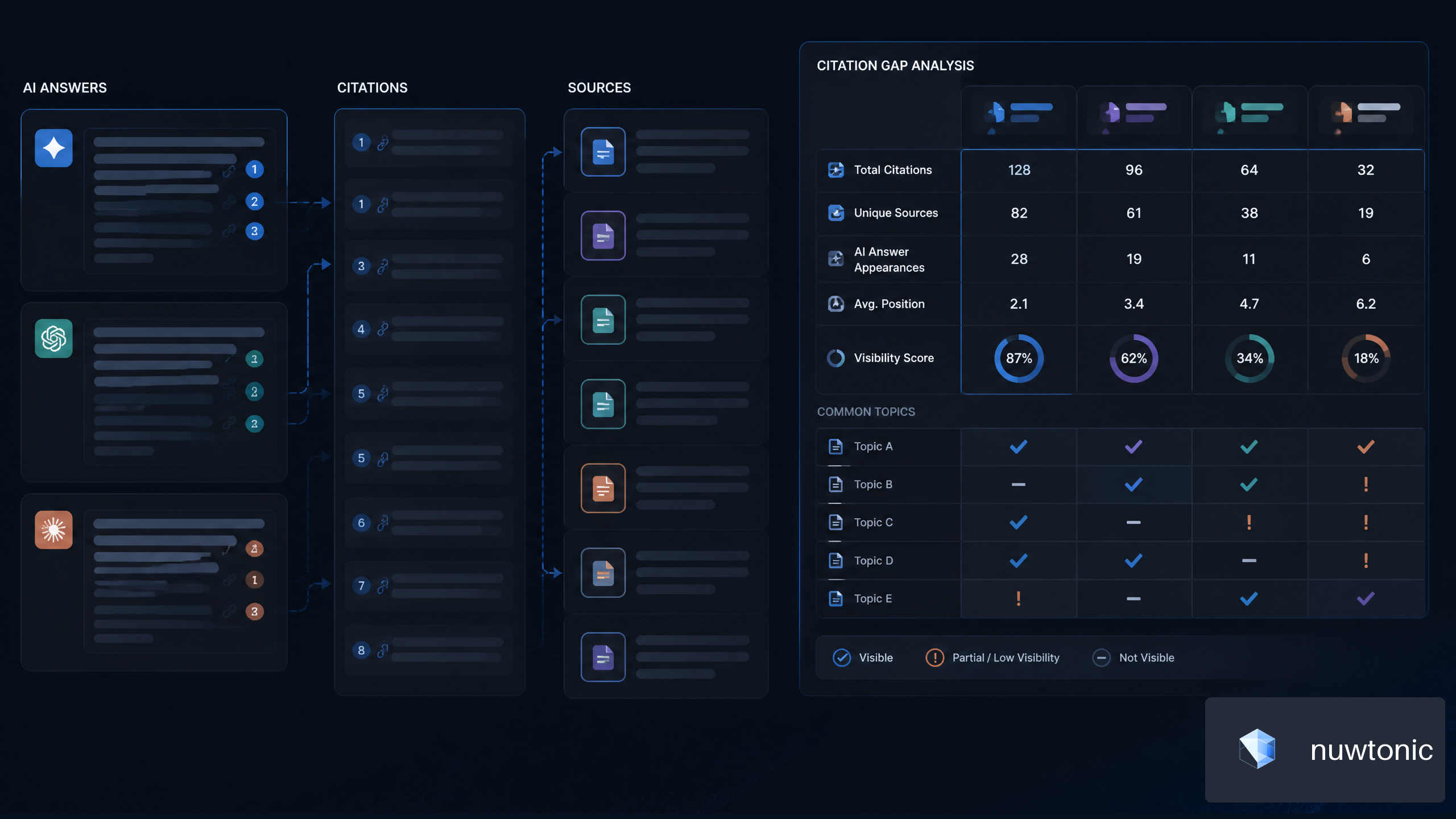
A mention is not the same as a useful citation. The operational questions that matter are whether the brand was cited at all, whether the cited passage was accurate, and whether a competitor displaced you in the answer. That's why the measurement stack needs more than screenshots.
Practical rule: track the passage, not just the mention, because the passage tells you what the model actually trusted.
The metrics that make this manageable are Share of Answer, Citation Accuracy, and Competitor Citation Gap. Those labels help teams compare surfaces without pretending all exposure is equal. If one model consistently cites a competitor when asked about the same topic, that's a content and authority problem, not just a visibility problem.
This is also where structured experimentation starts. You can compare definitions against comparisons, long-form explanations against compact summaries, and editorial intros against direct answer blocks. The point isn't to chase a universal template, it's to learn which section type gets quoted most often for your topic cluster.
If you're using a platform like Nuwtonic, the valuable part is the workflow layer, because it can connect prompt tracking to URL-level remediation instead of stopping at a dashboard. That matters when teams need to move from passive monitoring to actual page changes.
Attributing Business Value to AI Citations
Treat mentions as a signal, not a verdict
AI visibility gets overvalued fast when teams treat every citation as proof of commercial impact. That assumption is wrong. The key question is whether the citation influenced a click, a lead, a signup, or some later assisted conversion, because mention volume alone doesn't tell you that.
The measurement gap is real. Guides now recommend setting up GA4 tracking for LLM referrals, comparing branded and non-branded prompts, and watching multiple AI surfaces, but the industry still doesn't have a clean standard for what counts as meaningful improvement. MentorCruise's LLM optimization guide points to that gap without closing it. Teams can observe AI traffic, but attribution is still messy.
The best teams avoid false precision. They treat AI citations as one signal in a broader decision chain and then ask whether the citation changed user behavior later in the session or later in the funnel.
Wire AI referrals into analytics
The mechanics matter more than the rhetoric. Monthly prompt tests should be paired with analytics review, and AI referrals should be tagged so they're visible in reports rather than hiding inside generic referral buckets. That gives you a way to compare what the model says with what the site receives.
A practical measurement stack looks like this:
- Track AI referral sources in GA4: make sure LLM-originated visits are identifiable.
- Use UTM tagging where it's possible: keep the source clean enough to separate AI surfaces from other referral traffic.
- Compare branded and non-branded prompts: brand queries often behave differently from category queries.
- Inspect assisted paths: some visits won't convert immediately but still support later conversions.
- Set a benchmark for commercial relevance: decide in advance what counts as useful movement.
If you can't tie the citation to a business event, you're still doing visibility reporting, not business measurement.
For prompt testing, Writingmate's multi-model chat workflow makes it easier to chat with multiple AI models during evaluation without changing the underlying testing discipline. The tool doesn't solve attribution by itself, but it supports the operational habit of testing across surfaces instead of assuming one model represents all of them.
The deeper point is that AI search optimization is becoming a multi-surface discipline. Teams that win won't just know where they were mentioned, they'll know which mentions moved users, which ones didn't, and which ones should be replaced in the next content cycle.
Retrieval Optimization Versus Citation Optimization
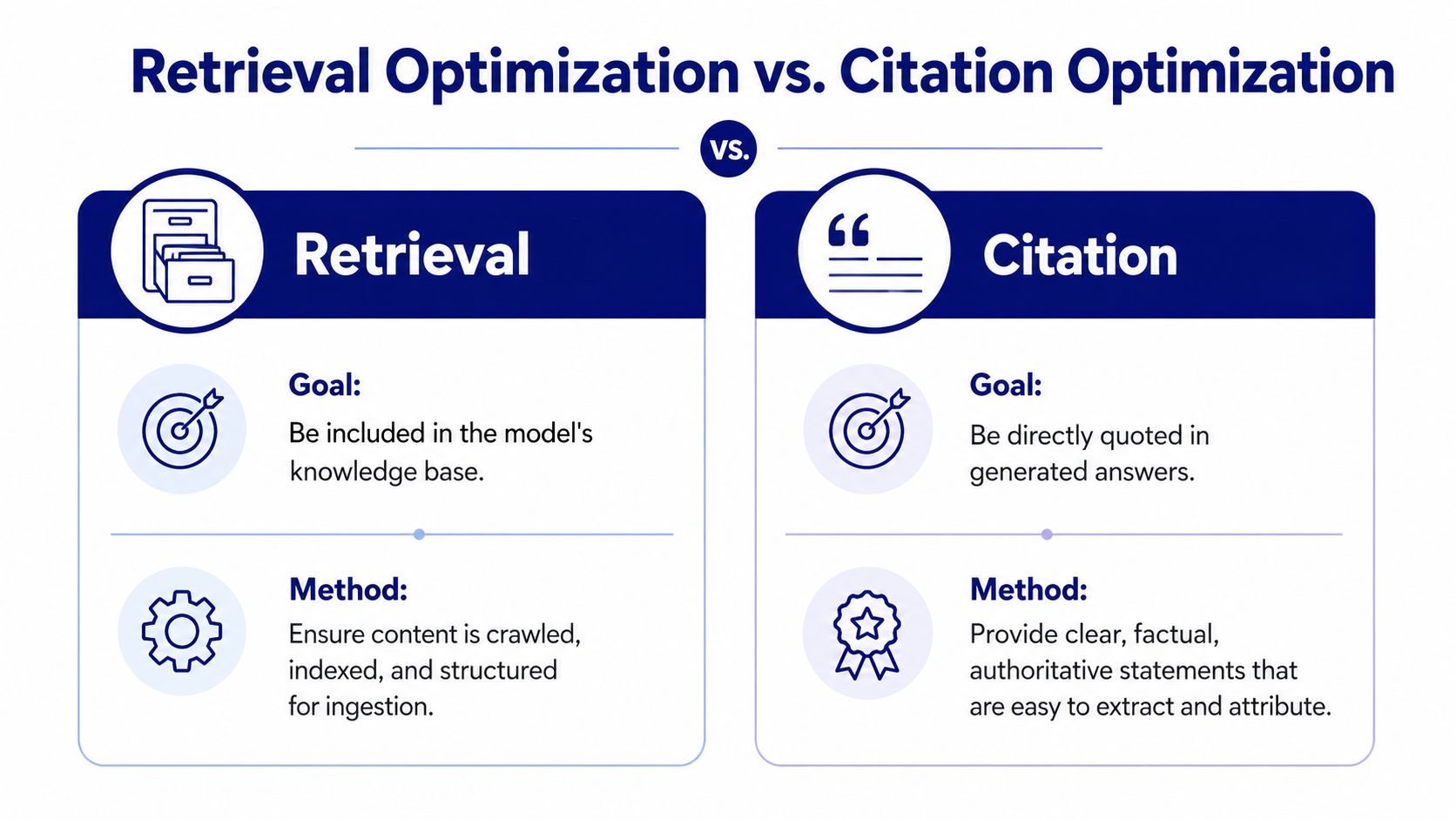
A page can be visible to an LLM and still never get quoted. That gap matters, because teams often treat AI visibility as proof that the content is doing its job.
Retrieval optimization is about making the page available to the model in the first place. Citation optimization is about making the page or passage the one the model uses in the answer. The first is mostly about crawlability, rendering, structure, and ingestion reliability. The second depends on how cleanly a claim is stated, how easy it is to extract a passage, and how strong the page looks relative to alternatives.
That is the operational split many SEO teams miss. A site can pass the technical checks, get indexed or ingested, and still sit outside the quoted answer set because the page does not give the model a crisp enough passage to lift.
Test formats that change quotation behavior
The fastest gains usually come from testing content format, not just topic choice. A definition block can win for “what is” prompts. A process section can perform better when the user wants steps. A comparison can beat a generic explainer when the prompt asks for trade-offs or options. Clean, verifiable statistics can help when the model needs evidence.
The useful work is in structured experiments, not passive mention monitoring.
- Build two versions of the same idea: one framed as a definition block, one framed as a plain explanation.
- Compare answer inclusion: track which version gets quoted more often.
- Change the format, not the topic: that isolates the effect of structure.
- Save the exact quoted passage: the excerpt shows what the model preferred.
- Promote the winning format into the template library: apply it across similar pages.
A team that only watches whether it was mentioned sees the surface. A team that tests quotation behavior sees the mechanism. That distinction is what turns SEO for LLMs from reporting into repeatable improvement.
Your 90-Day SEO for LLMs Action Plan
A mid-market SaaS team I worked with started where many teams start, strong classic SEO, weak AI visibility, and no useful prompt logging. The first 30 days went into technical cleanup, the second 30 into content restructuring, and the last 30 into prompt tests and attribution setup. Nothing magical happened overnight, but by the end of the cycle the team had a working loop instead of a pile of anecdotes.
The sequence matters. In the first month, audit robots.txt, rendering, schema, and page templates that carry the highest-value queries. In the second month, rewrite core pages so entities are explicit, timestamps are visible, and answer blocks are easy to quote. In the third month, build the prompt library, test across models on a fixed cadence, and connect AI referrals to analytics so the work ties back to business events.
A useful rule is simple, fix access before structure, structure before testing, and testing before scale. Teams that reverse that order spend too much time measuring pages that were never machine-readable enough to matter. The same sequence also keeps stakeholders aligned, because each phase produces a concrete artifact, a technical audit, updated pages, or a citation log.
If you want this done in one workspace instead of piecing together audits, prompt tracking, and remediation across separate tools, Nuwtonic is built around that workflow. It connects technical audits, AI visibility measurement, and reviewable content fixes so teams can move from passive monitoring to actual optimization.