
The best AI writer is not one universal product. It is the tool that produces useful drafts for a specific job while keeping revision time, factual risk, cost, and workflow friction under control. For general writing, ChatGPT and Claude remain strong baseline choices. Grammarly is often better suited to editing, Jasper to structured marketing workflows, and Sudowrite to fiction.

TL;DR: Choose an AI writer by task, not popularity. Use ChatGPT for flexible daily drafting, Claude for nuanced long-form structure, Jasper for marketing teams, Grammarly for polishing, and Sudowrite for fiction. Treat every factual claim as a draft until a person verifies it.
Best AI Writer Choices by Writing Job
The right tool depends on what happens after the first draft. A short social caption may need speed and tone options. A 2,000-word article needs structure, source checking, and continuity. A product team may need approvals and brand controls. These are different jobs, even though they all involve content generation.
Buffer’s comparison of AI writing tools makes the central point clearly: there is no single best option because the choice depends on the task, budget, and workflow.
Best Overall: ChatGPT for Flexible Drafting
ChatGPT is a practical all-around AI writer for brainstorming, outlining, rewriting, email drafts, scripts, and early versions of articles. Its strength is range. A user can move from “give five angles for this topic” to “rewrite this in a calm professional tone” without switching tools.
It is a good choice when the work changes from day to day and the writer needs a responsive general assistant. It is less ideal when a team needs a highly controlled marketing workspace, fixed approval paths, or a dedicated fiction environment.
The main failure mode is accepting polished language as proof of accuracy. A fluent paragraph can still contain invented facts, false dates, or unsupported comparisons. For factual content, the tool should receive source material and be asked to separate verified facts from assumptions.
Best for Long-Form Structure: Claude
Claude is often considered a strong option for long-form prose because it can help maintain a clear argument, a consistent tone, and logical section flow. It can be useful for reports, guides, essays, policy drafts, and article revisions where the writer needs the model to consider a large brief or several reference documents.
Its advantage is not that it eliminates editing. Rather, it may reduce structural rework when the instructions are detailed. A long context window helps because the model can process more of the working document at once. That matters when an article includes earlier sections, source notes, style rules, and product positioning.
Still, long-context handling is not the same as perfect memory. A model may overlook a detail buried in a long document or blend two similar instructions. Important requirements should appear in a short, visible checklist near the final request.
Best for Specialized Work
| Writing Need | Strong Starting Option | Why It Fits | When To Avoid It |
|---|---|---|---|
| Daily drafts and ideation | ChatGPT | Flexible for many formats and quick revisions | When strict team controls are required |
| Long articles and reports | Claude | Often useful for structure, nuance, and extended context | When only short, repetitive copy is needed |
| Marketing operations | Jasper | Built around marketing content and team workflows | When a general assistant is enough |
| Editing and rewriting | Grammarly | Focuses on clarity, grammar, tone, and polish | When a full first draft is needed from scratch |
| Fiction and narrative | Sudowrite | Designed around creative scenes, story development, and prose exploration | When writing regulated or evidence-heavy business content |
Jasper is still worth considering for teams that need repeatable marketing output, shared brand voice controls, and process consistency. It may be harder to justify for a solo writer who only needs occasional drafts. Likewise, Sudowrite is regularly treated in editorial comparisons as a fiction-focused product, not a universal business writing solution.
A Better Way To Compare AI Writers
Brand rankings are useful starting points, but they rarely show the full cost of getting from a prompt to publishable text. A reliable comparison should examine the entire writing cycle.
Use a Repeatable Evaluation Rubric
A useful test gives every tool the same brief, the same source notes, and the same style constraints. Then it scores the output against criteria that matter to the actual task.
| Criterion | What To Check | Why It Matters |
|---|---|---|
| Instruction following | Did it follow length, format, audience, and tone rules? | Weak compliance creates extra editing work |
| Factuality | Are claims supported by supplied material? | Fluent errors can damage trust |
| Style consistency | Does the voice remain stable from start to finish? | Brand copy should not sound stitched together |
| Editing depth | Can it improve a draft without changing its meaning? | Rewriting is often more valuable than generation |
| Citation behavior | Does it distinguish evidence from unsupported claims? | Important for research-heavy content |
| Continuity | Does it preserve terms, logic, and character details? | Essential for reports, books, and long articles |
| UI and workflow | Is it easy to review, export, collaborate, and revise? | A strong model can still be slow to use |
For example, give each tool a 700-word brief for a consumer guide. Require a neutral tone, three supplied facts, two caveats, and no invented statistics. Then measure how many corrections are needed before publication. The faster tool is not automatically the winner if it creates twice as much fact-checking work.
Consider Cost of Ownership, Not Only Subscription Price
A free tier is valuable for experimentation, but usage limits can make it impractical for daily work. Paid plans may also limit messages, file uploads, advanced models, or team functions. The real question is whether the subscription reduces enough revision time to justify itself.
A simple calculation helps:
- Estimate how many writing tasks happen each month.
- Track the average minutes spent drafting, revising, and verifying each task.
- Test a tool on representative work for two weeks.
- Compare time saved against the monthly subscription and any extra editing costs.
A tool that saves ten minutes on a one-sentence caption may have little financial value. A tool that cuts two hours of restructuring from each monthly report could be worthwhile even at a higher price.
Read Ratings as Signals, Not Proof
User satisfaction ratings can reveal whether people find a product useful and easy to adopt, but ratings do not prove that one model produces the best prose for every job. G2 Learn’s roundup of AI writing generators includes comparative product signals and ratings, which can help buyers identify tools worth trialing alongside editorial reviews.
The best approach is to use ratings to create a shortlist, then test that shortlist with real documents, real brand requirements, and realistic review standards.
How To Build a Reliable AI Writing Workflow
The most dependable process separates drafting from verification. Asking one system to research, write, cite, edit, and approve a finished article in one pass creates too many places for mistakes to hide.
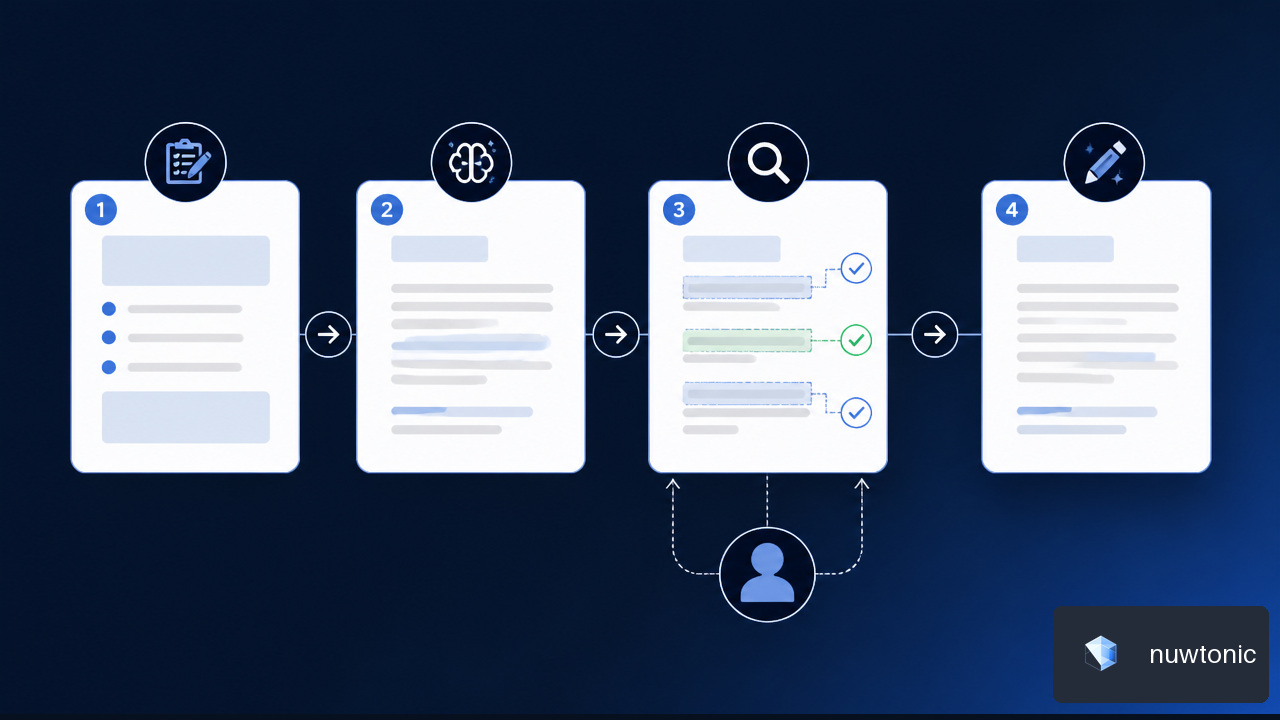
Split the Work Into Four Stages
- Brief the task. Define audience, purpose, format, tone, source material, prohibited claims, and success criteria.
- Create the first draft. Use the AI writer for an outline, alternative angles, or a complete preliminary version.
- Verify and rewrite. Check facts against original sources, remove vague claims, improve transitions, and add missing context.
- Perform the final human edit. Confirm accuracy, legal safety, brand voice, accessibility, and publishing details.
This process is called human-in-the-loop editing. The person reviewing the output is not merely correcting commas. They decide whether the argument is sound, whether evidence supports the claims, and whether the text is appropriate for the audience.
Give the Model Better Source Boundaries
Generic output usually starts with a generic request. “Write a blog post about project management” gives the AI very little to work with. A stronger brief defines the target reader, the desired angle, the facts it may use, and the claims it must avoid.
A practical request might say:
Draft a 900-word guide for first-time managers. Use a calm, direct tone. Base factual claims only on the supplied notes. Explain three meeting habits, include one realistic example, and mark any unsupported statement with [VERIFY]. Avoid motivational clichés and do not invent statistics.
That instruction does two useful things. It narrows the content generation task and makes uncertainty visible. A [VERIFY] label is better than a confident but untraceable statement disappearing into the draft.
Treat Rewriting as a Separate Skill
The best AI writer for initial drafting may not be the best tool for editing. Grammarly, for example, is often more relevant after the core argument exists. Its role is to help improve readability, correctness, and tone without requiring a new draft from scratch.
This matters because aggressive rewriting can create a new problem: the AI may simplify away needed nuance or alter the meaning of a compliance statement. For sensitive text, request edits in a tracked format or ask the system to explain each proposed change before applying it.
Using AI Writers for Marketing and SEO Content
An AI writer can help produce SEO content, but it cannot replace the research and editorial decisions that make a page genuinely useful. Search-oriented writing needs a real audience question, evidence-backed answers, clear internal structure, and differentiation from existing content.
Start With Search Intent and Topic Gaps
Before generating a draft, identify what readers need to accomplish. Someone searching for “best AI writer” may want a quick recommendation, but they may also need help comparing long-form quality, pricing limits, privacy controls, and factual risk.
That is why keyword selection should not become a word-count exercise. Using AI for keyword research can help teams identify related questions and topic gaps, but the final brief should still prioritize what the audience needs to decide.
For a content team, an AI writer works best after research is complete. Feed it an approved outline, product facts, source links, and a voice guide. Then ask it to draft sections with a clear purpose rather than generate an entire article from a single broad prompt.
Build Content That Can Be Reviewed and Cited
AI-generated SEO content becomes weak when it repeats common phrasing without adding useful analysis. A stronger page explains trade-offs. For example, “Claude is better for long-form content” is too broad. A more useful statement explains that it may be a better starting point when a writer needs structured prose across a large brief, while factual claims still require verification.
Teams developing AI SEO strategies should separate content production from performance monitoring. Draft quality, search visibility, conversion value, and citations in AI-generated answers are related but distinct signals.
Match the Tool to the Team’s Publishing System
A solo creator might need a simple chat interface and a strong free tier. A larger team may need shared templates, permission controls, approval stages, and integrations with a content management system. The tool is only one part of the system.
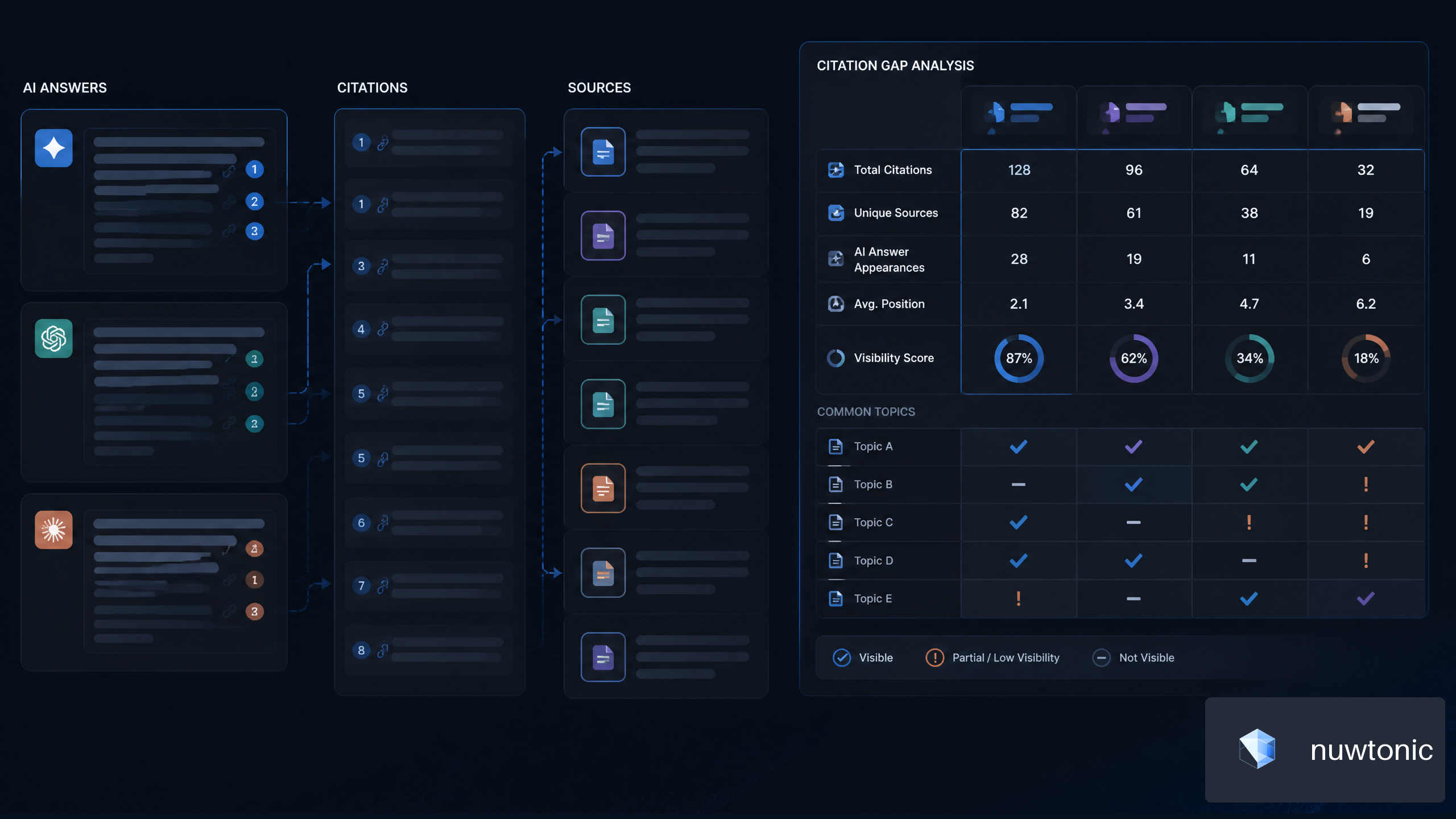
If the goal includes visibility in AI answer engines, measurement should continue after publishing. Best AI visibility tracking tools can help teams monitor whether a brand is appearing in relevant answers and whether its content is being cited or overlooked.
Accuracy, Privacy, and Professional Use
AI writing tools generate likely text based on patterns in data. They do not independently establish truth. That distinction is easy to forget when an answer is fluent, detailed, and formatted like a finished article.
When AI Text Needs Mandatory Review
Human review should be non-negotiable for content involving:
• Medical, legal, financial, or safety guidance
• Product specifications, prices, policies, or contractual language
• Academic work that requires original reasoning and accurate citations
• Regulated industries or public statements that could affect customers
• Claims about competitors, performance, rankings, or results
Consider a health clinic drafting a patient guide. An AI writer can organize sections and simplify plain language, but it should not decide clinical advice, dosage, eligibility, or emergency instructions. A qualified reviewer must validate every meaningful claim before publication.
Check Privacy Before Uploading Documents
Do not assume that a consumer AI writer is appropriate for confidential material. Before uploading customer data, contracts, unreleased product plans, or internal strategy documents, review the provider’s current data controls, retention terms, training policies, account settings, and enterprise agreement.
A practical rule is simple: if sharing the document with an outside contractor would require approval, uploading it to an AI tool should require the same level of care. Redact personal data where possible, use approved business accounts, and keep sensitive source files out of unapproved workspaces.
Know When Not To Use an AI Writer
There are cases where the fastest option is to write manually or use AI only for outline support. This includes a personal apology, a legal interpretation, a crisis statement, or a message requiring exact emotional judgment. The issue is not that AI cannot produce words. It is that the consequences of a wrong phrase may be too high for automated drafting to lead.
Frequently Asked Questions
Quick Answers About Choosing an AI Writer
What Is the Best AI Writer Overall?
ChatGPT is a strong general-purpose choice because it handles ideation, drafting, and rewrites across many formats. Claude is a close alternative for users who prioritize long-form structure and nuanced prose. The best choice still depends on the work being done after generation.
Which AI Writer Is Best for Long-Form Articles?
Claude is often a strong starting point for long-form articles because of its structured writing style and ability to work with large briefs. ChatGPT can also work well when the writer supplies a clear outline, source material, and section-by-section instructions.
Which AI Writer Is Best for Marketing Copy?
Jasper may suit marketing teams that need shared workflows and consistent brand messaging. ChatGPT can be sufficient for smaller teams or individuals who need flexible copy variations without a dedicated marketing platform.
Which AI Writer Is Best for Fiction?
Sudowrite is commonly chosen for fiction because it focuses on narrative development, scene ideas, descriptions, and creative exploration. It should support a writer’s decisions, not replace character intent, plot judgment, or original voice.
Is ChatGPT Better Than Claude for Writing?
Neither is better in every situation. ChatGPT is often more flexible for mixed daily tasks. Claude may be preferable for a long document that needs a steady tone and clear reasoning. Testing both on the same brief is more useful than relying on a universal ranking.
Can AI Writers Help With SEO Content?
Yes, AI writers can help create outlines, first drafts, metadata, FAQs, and content updates. They should not be used to publish unverified claims or thin pages built only to repeat keywords. The strongest results come from combining research, editorial judgment, and human review.
How Accurate Are AI Writing Tools?
They can be accurate when working from reliable supplied material, but they can also produce hallucinations: false or unsupported statements presented confidently. Accuracy varies by subject, source quality, and prompt design. Verify factual claims before professional use.
Which AI Writer Has the Best Free Plan?
Free-plan value changes frequently because message caps, model access, file features, and regional availability can change. The best free option is the one that lets a user test the exact workflow needed without forcing premature upgrades. Compare limits before moving an entire process into one platform.
Sources and References
Editorial Comparisons
• TechRadar — Best AI writer of 2025: https://www.techradar.com/best/ai-writer
• Buffer — The best AI writing tools: https://buffer.com/resources/ai-writing-tools/
• G2 Learn — I Tried 8 Best AI Writing Generators to Assist Writers in 2026: https://learn.g2.com/best-ai-writing-generators
Additional Tool Roundups
• Kindlepreneur — Best AI Writing Tools: https://kindlepreneur.com/best-ai-writing-tools/
• RivalFlow — The 10 Best AI Writing Tools for 2026: https://www.rivalflow.com/blog/ai-writing-tools