Most serp rank tracking tools still answer a narrow question, where did the keyword land? That's not enough anymore. In a real agency or in-house workflow, the question is whether the tracker helps you do something with the data, push fixes to the CMS, connect Search Console signals to recovery work, catch AI citations at the URL level, and explain why clicks moved even when rankings didn't. The tools below were chosen on that basis, not on feature-count theater.
Modern rank tracking has already moved past simple position checks. Tools now monitor up to the top 100 results, compare desktop and mobile performance, and surface SERP feature changes, while SE Ranking tracks daily rankings across Google, Bing, Yahoo, and YouTube and also follows AI search visibility across ChatGPT, AI Overviews, AI Mode, Gemini, and Perplexity, and Ahrefs splits ranking data into position bands for analysis (SE Ranking position tracking). The market is also still heavily cadence-driven, with one 2026 roundup saying 97% of SERP monitoring jobs track Google Search results and 32% run daily (SERP monitoring tool roundup). That's why the best tools now prioritize frequent change detection, competitor movement alerts, and historical trend analysis over pretty charts.
If you're comparing options for a serious workflow, start with this lens. Some platforms are great at reporting, some are great at scale, and a few are built to close the loop between ranking data and action. For SEO teams that need proxies for consistent tracking, this overview of SEO rank tracking proxies is worth keeping in mind too, because accuracy often depends on how the data is collected as much as on the software itself.
Table of Contents
- 1. Nuwtonic
- 2. Semrush Position Tracking
- 3. Ahrefs Rank Tracker
- 4. AccuRanker
- 5. STAT Search Analytics By Moz
- 6. SE Ranking
- 7. Nightwatch
- 8. Advanced Web Ranking AWR
- 9. ProRankTracker
- 10. Keyword.com
- Top 10 SERP Rank Tracker Comparison
- How To Pick Without Wasting A Quarter
1. Nuwtonic
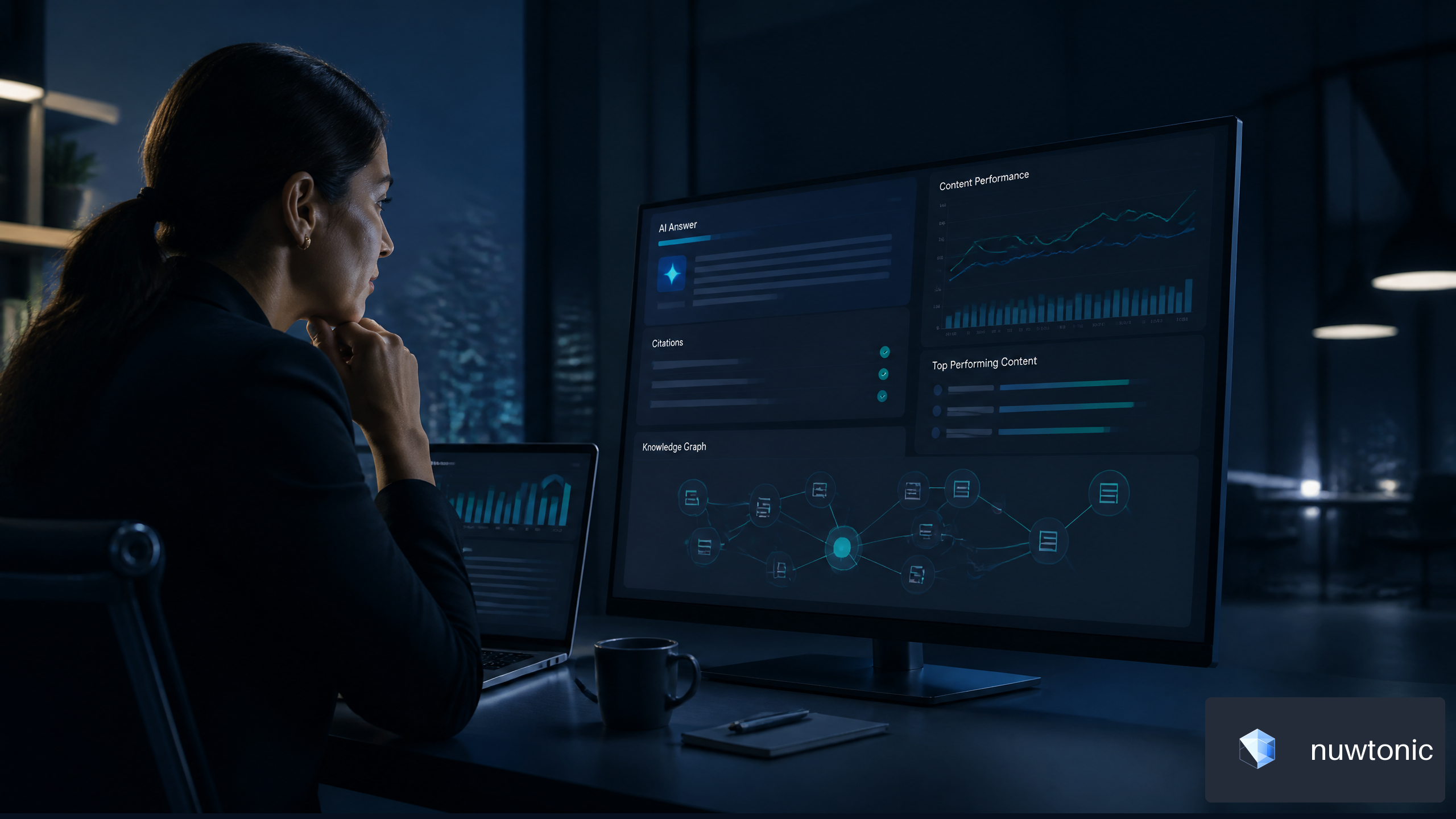
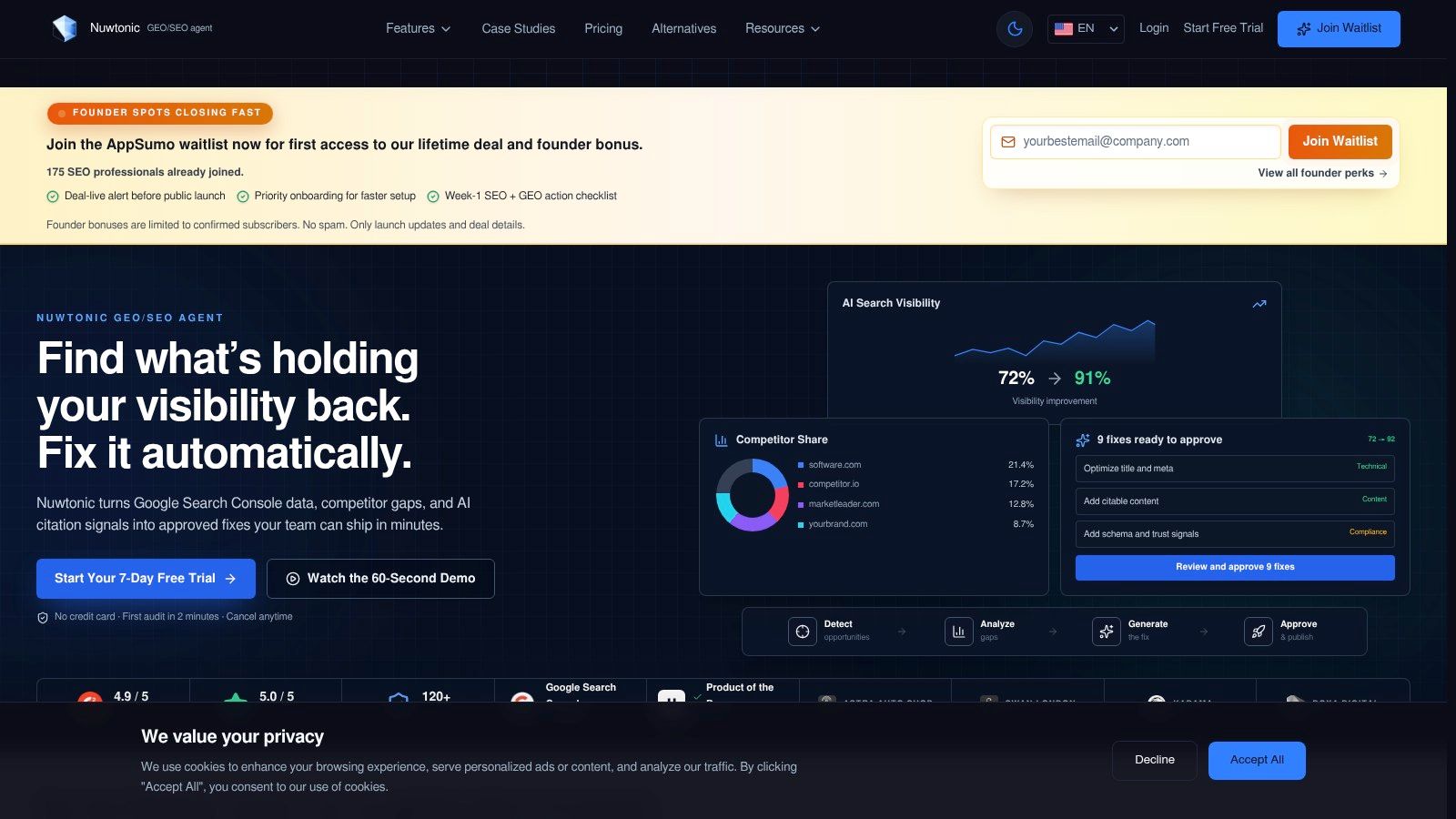
Nuwtonic stands apart because it doesn't stop at visibility reporting. It connects directly to Google Search Console, surfaces ranked issues, AI citation gaps, and competitor weaknesses, then turns those signals into prioritized fixes you can review and push to your CMS from the same workspace. That matters if your rank tracking is supposed to support recovery, not just populate a dashboard.
The execution layer is the point
The best reason to buy Nuwtonic is that it treats rank tracking as an input to action. Its AI Search Agent tracks prompt visibility across ChatGPT, Gemini, Perplexity, Claude, Google, and Grok, while the GEO and AI visibility audit uses 120+ checks to find structural and citation issues before they become traffic leaks. On-page auto-fixes cover metadata, schema, alt text, and content, which is useful when a team needs to move from diagnosis to deployment fast.
The workflow also helps with the annoying problems trackers usually flatten out. Sitewide cannibalization, competitor gaps, and unexplained traffic drops are easier to handle when the platform is already ranking issues by impact and urgency using GSC-trained signals. In practice, that means fewer spreadsheet exports and fewer arguments about what to fix first.
Practical rule: If a tool can't show you the cause and give you a fix path, it's a reporter, not an operating system.
Pricing and fit
Nuwtonic keeps the buying model fairly clear. The self-serve Starter plan is $99/month, Silver is $199/month, and larger agencies can move to custom Gold plans. There's also a 7-day free trial with no credit card required and a 7-day money-back guarantee on self-serve plans, plus free SEO and GEO tools without signup for teams that want to test the workflow first.
The trade-off is obvious. Credit-based systems force you to pay attention to usage, and teams with heavy content or audit volume may outgrow entry tiers quickly. Still, if you're choosing between a dashboard that records rank movement and a platform that can help publish fixes, Nuwtonic is the most execution-oriented option in this list. Visit Nuwtonic if you want rank tracking tied to content operations, AI visibility, and CMS-ready remediation in one place.
Website: Nuwtonic
2. Semrush Position Tracking
Semrush is the broadest suite here, and that breadth is both the selling point and the trap. Its Position Tracking module is strong when you need one place for rankings, competitor movement, SERP features, and reporting, but it can feel like a lot if your only job is to watch a keyword set daily and react quickly.
Its current positioning is built around daily desktop and mobile tracking, location targeting, competitor tracking, and SERP feature detection, including featured snippets, local packs, video, and AI Overviews. It also supports Share of Voice reporting and scheduled exports, which makes it easy to hand results to a client or leadership team without building a custom deck every week.
The useful part for practitioners is that Semrush works well when rank tracking is one slice of a larger SEO motion. If you're already using audits, keyword research, and reporting in the same ecosystem, the switching cost is low and the team learns one interface instead of three. If you only care about tracking, the platform can feel heavy, and the advanced API and automation features live behind higher tiers.
Internal context matters here too. If you're weighing suites rather than trackers, the comparison at Nuwtonic versus Semrush helps frame where the execution gap starts to matter.
Website: Semrush
3. Ahrefs Rank Tracker
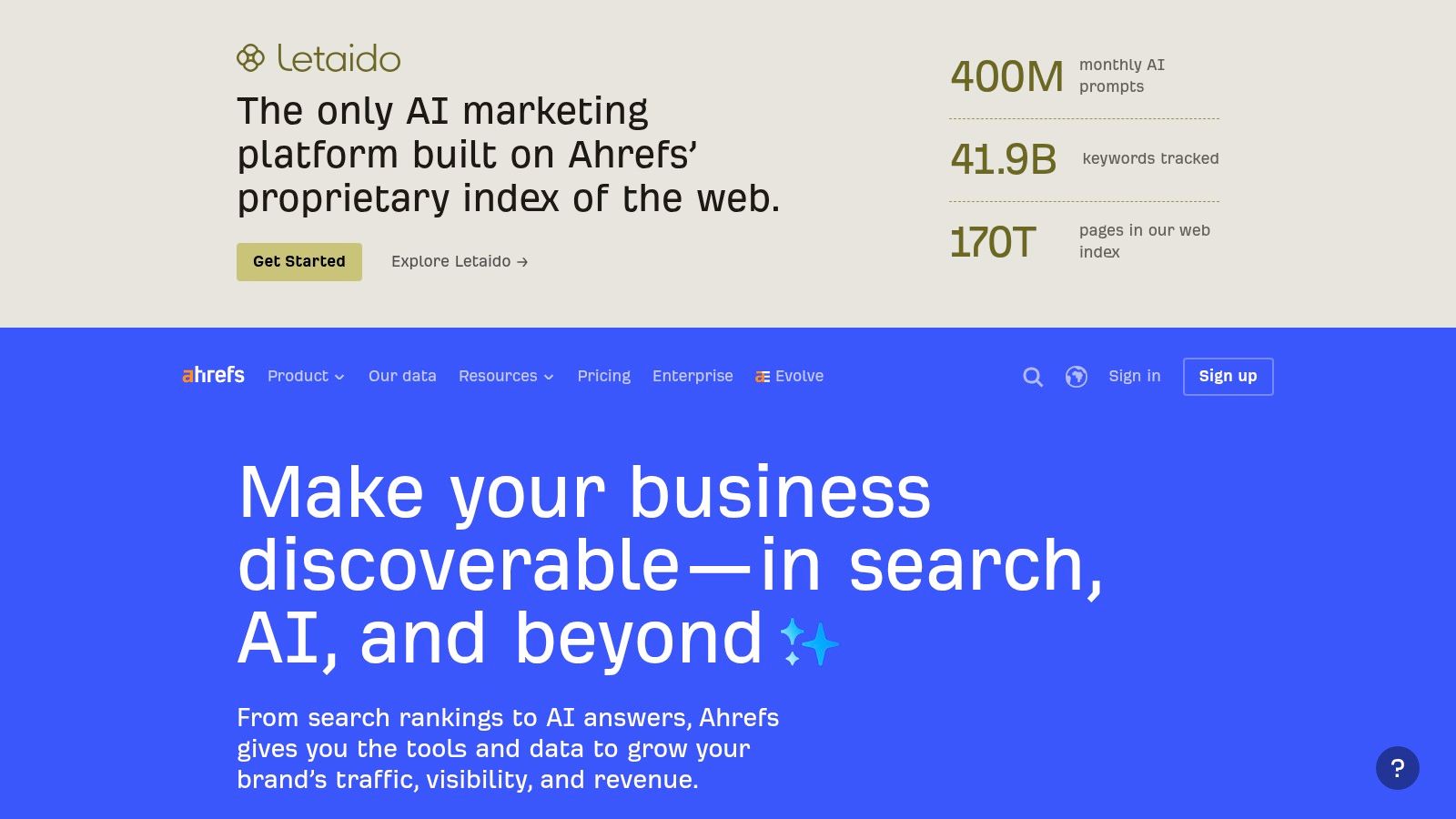
Ahrefs is usually the tool people trust first for backlink and keyword research, and that reputation carries over into Rank Tracker. The rank tracking itself is solid for teams that already live inside Ahrefs, especially if they want project dashboards tied to estimated traffic and data segmented in a way that helps analysis rather than vanity reporting.
Its strength is context. Ahrefs gives global desktop and mobile tracking, historical SERP charts, and connectors for Looker Studio, so the data can flow into reporting stacks that already exist. That makes it a practical choice for in-house teams that need rankings to sit beside other performance data without extra manual cleanup.
The limitation is pace and focus. Ahrefs is still a broader SEO platform first, and that means rank tracking is a component, not the whole product. For teams running a tight cadence on client keywords, the weekly rhythm and the all-in-one structure can be enough, but they're not ideal if you want fast, rank-first alerts and lighter operational overhead.
If you're deciding between the major suites, the side-by-side view at Ahrefs versus Semrush versus Moz is a sensible next stop. It's especially useful if your decision hinges on whether you value data depth, reporting, or all-in-one convenience.
Website: Ahrefs
4. AccuRanker
AccuRanker is the specialist tool most agencies still mention when they want speed and reliability. Its product shape is simple, which is exactly why it works. It gives you daily updates by default, on-demand refreshes, advanced tagging and filters, and integrations with GA, GSC, Looker Studio, and BigQuery on higher tiers.
That makes it a strong choice when you're managing large keyword sets and need clean, fast answers. The platform also surfaces AI CTR and AI Search Volume indicators for prioritization, which is useful because not every ranking deserves the same amount of attention. A keyword that looks good in the tracker but has weak visibility in the SERP is a different problem from one that's dropping.
The trade-off is scope. AccuRanker is excellent at rank tracking, but it doesn't try to be your entire SEO stack. If you want content auditing, technical crawling, and reporting in one place, you'll end up pairing it with other tools. That's not a flaw, it's a design decision, but buyers still need to accept it before they sign.
For teams focused on SERP signals and layout changes, the deeper view at SERP feature tracking pairs well with how AccuRanker is usually deployed.
AccuRanker is the kind of tool you buy when the question is not “what happened?” but “what changed, and how fast can I react?”
Website: AccuRanker
5. STAT Search Analytics By Moz
STAT is built for enterprise-scale tracking and it shows. It's the kind of platform that makes sense when you're dealing with very large keyword sets, multiple markets, and the need to slice visibility by feature type or locale without drowning in exports. The dedicated onboarding and success support are part of the value proposition, because enterprise teams rarely need another self-serve toy.
The platform's daily rank tracking and Share of Voice slicing are designed for high-volume analysis. It also tracks multiple AI result types, which matters as search pages no longer behave like a simple ten-link list. If your team has to explain rank movement to executives across regions, features, and model-driven surfaces, STAT gives you the structure to do that.
The downside is obvious. Sales-led buying and enterprise setup are overkill for small sites, and there's no reason to pay that complexity tax if you're only tracking a modest keyword set. But for large agencies and global brands, that complexity is often the point, because clean segmentation is the only way to make the data usable.
Website: STAT Search Analytics by Moz
6. SE Ranking
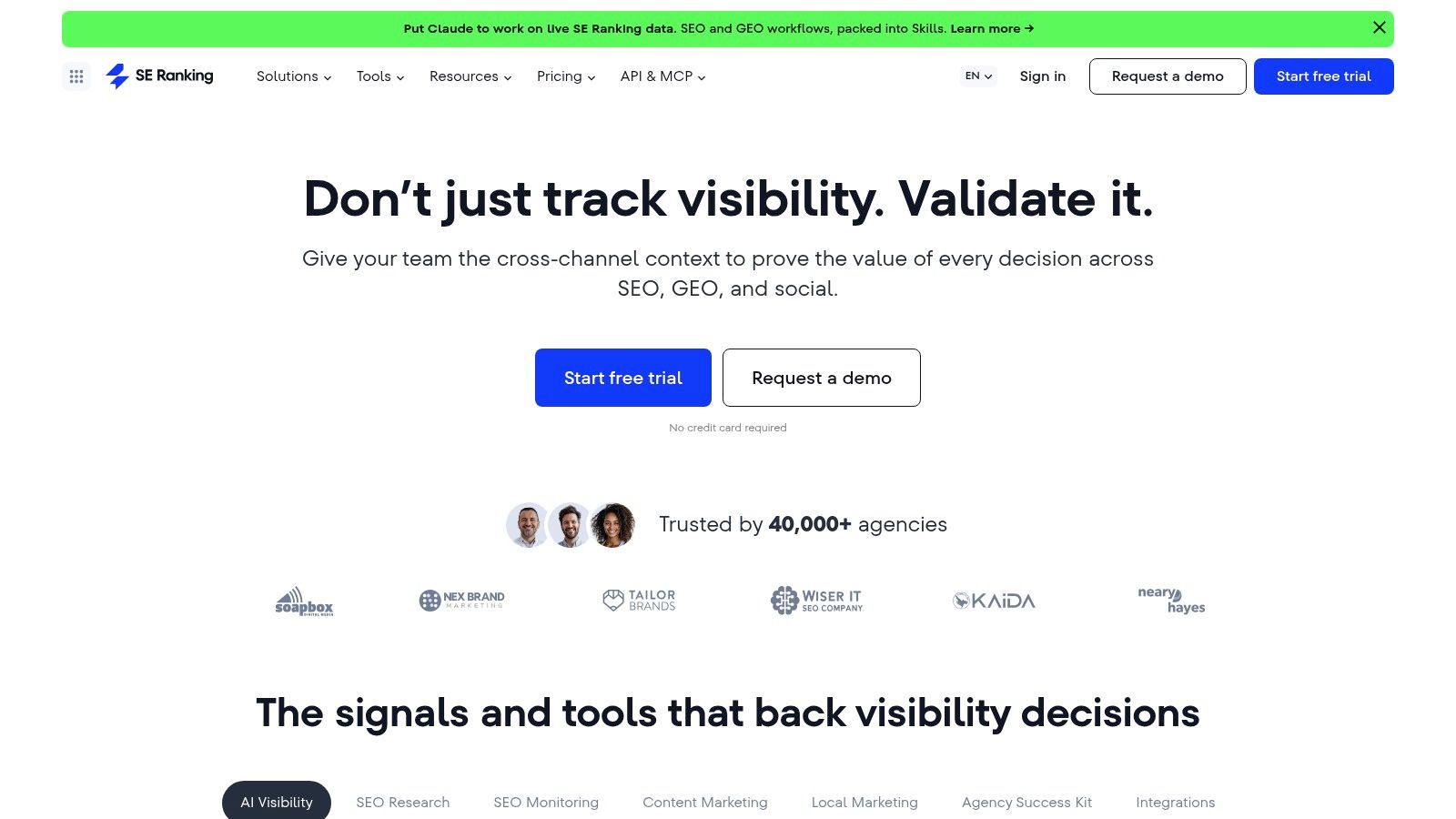
SE Ranking sits in a sweet spot for teams that want breadth without the enterprise price pain. It combines daily rank tracking with local and mobile targeting, Looker Studio integration, Share of Voice reporting, and an AI Results Tracker, which makes it a strong everyday option for agencies and SMBs that need more than a bare-bones tracker.
The practical value is in the balance. You get enough depth to report on multiple clients, enough flexibility to run local and multi-device tracking, and enough price discipline that the platform still makes sense when keyword counts go up. The platform also supports API access, and the optional AI Search add-on can extend limits when the team needs it.
The trade-off is interface complexity. SE Ranking has a broad surface area, and tracking-only users can spend more time learning the product than they expected. Some of the AI features also depend on add-ons for higher limits, so buyers should check where the core plan ends and the extras begin before committing.
That said, the broader market data supports why SE Ranking keeps showing up in practitioner conversations. The keyword rank tracking software market was estimated at $1.5 billion in 2025 and is projected to grow at 15% CAGR through 2033 (market estimate), which is exactly the kind of environment where a value-balanced platform can win.
Website: SE Ranking
7. Nightwatch
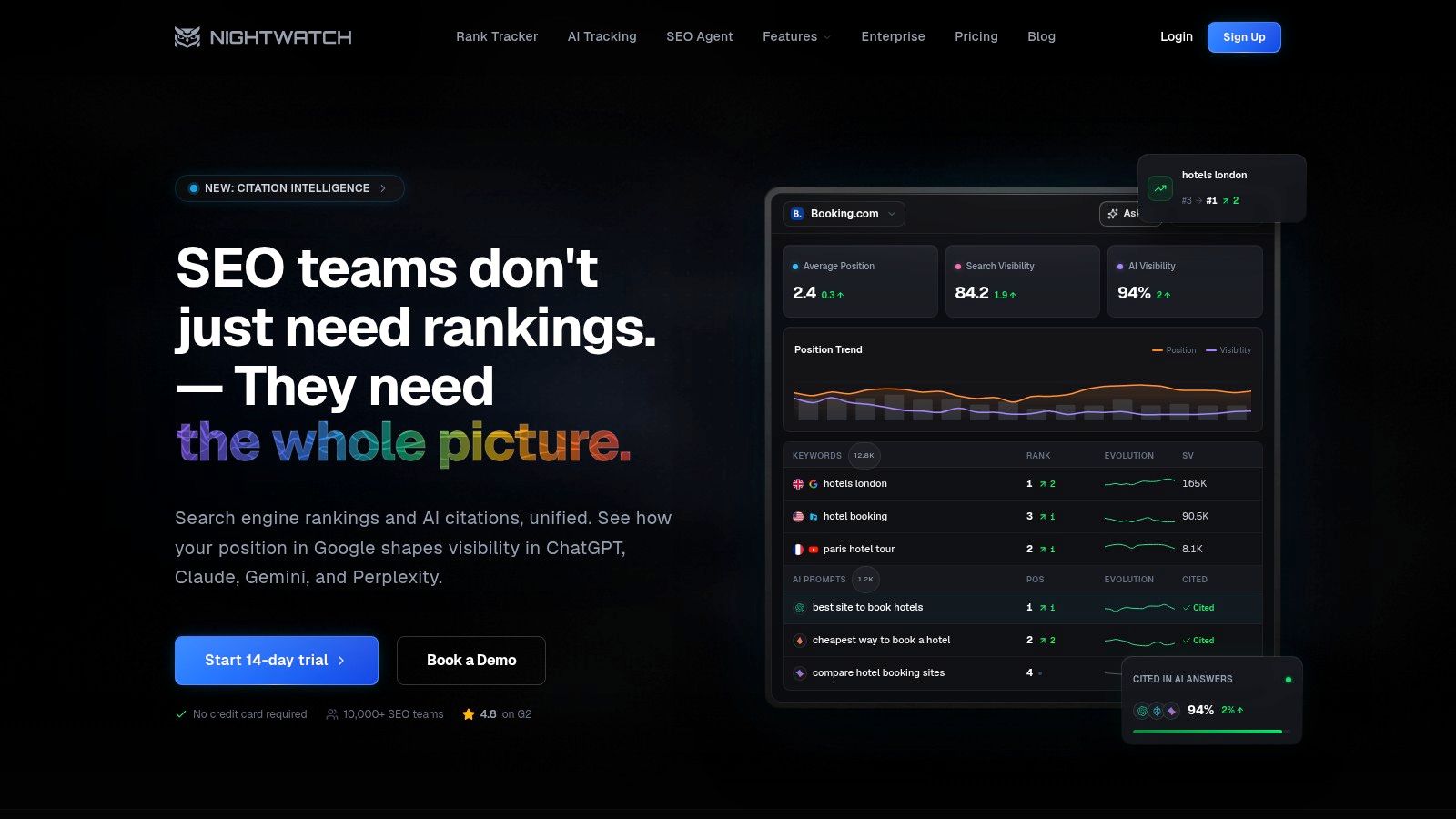
Nightwatch is one of the best examples of a rank-tracking-first product that still respects agency workflows. It tracks Google, Bing, and YouTube, supports GA and GSC integrations, and gives you local precision down to city and ZIP level on the plans that matter. That local detail is the difference between a useful report and a vague one when you manage service businesses or multi-location brands.
The white-label angle is also strong. Agency plans include unlimited user seats, which matters when account managers, strategists, and clients all need access without seat-count friction. Add Looker Studio connectivity and API access on higher plans, and it becomes a practical reporting layer rather than a standalone dashboard nobody opens.
Where Nightwatch wins is value discipline. It's not trying to be a giant SEO suite, and that keeps the experience focused. The downside is that you get fewer non-tracking tools, so teams that want audits, research, and content support all in one login will still need companions.
The market context matters here too. A 2026 industry roundup said 97% of SERP monitoring jobs still track Google Search results, while Bing accounted for 2.5%, DuckDuckGo 0.5%, and Yahoo 0.2% (SERP monitoring roundup). That heavy Google bias explains why a focused, daily tracker like Nightwatch remains attractive for agencies that need precision more than platform sprawl.
Website: Nightwatch
8. Advanced Web Ranking AWR
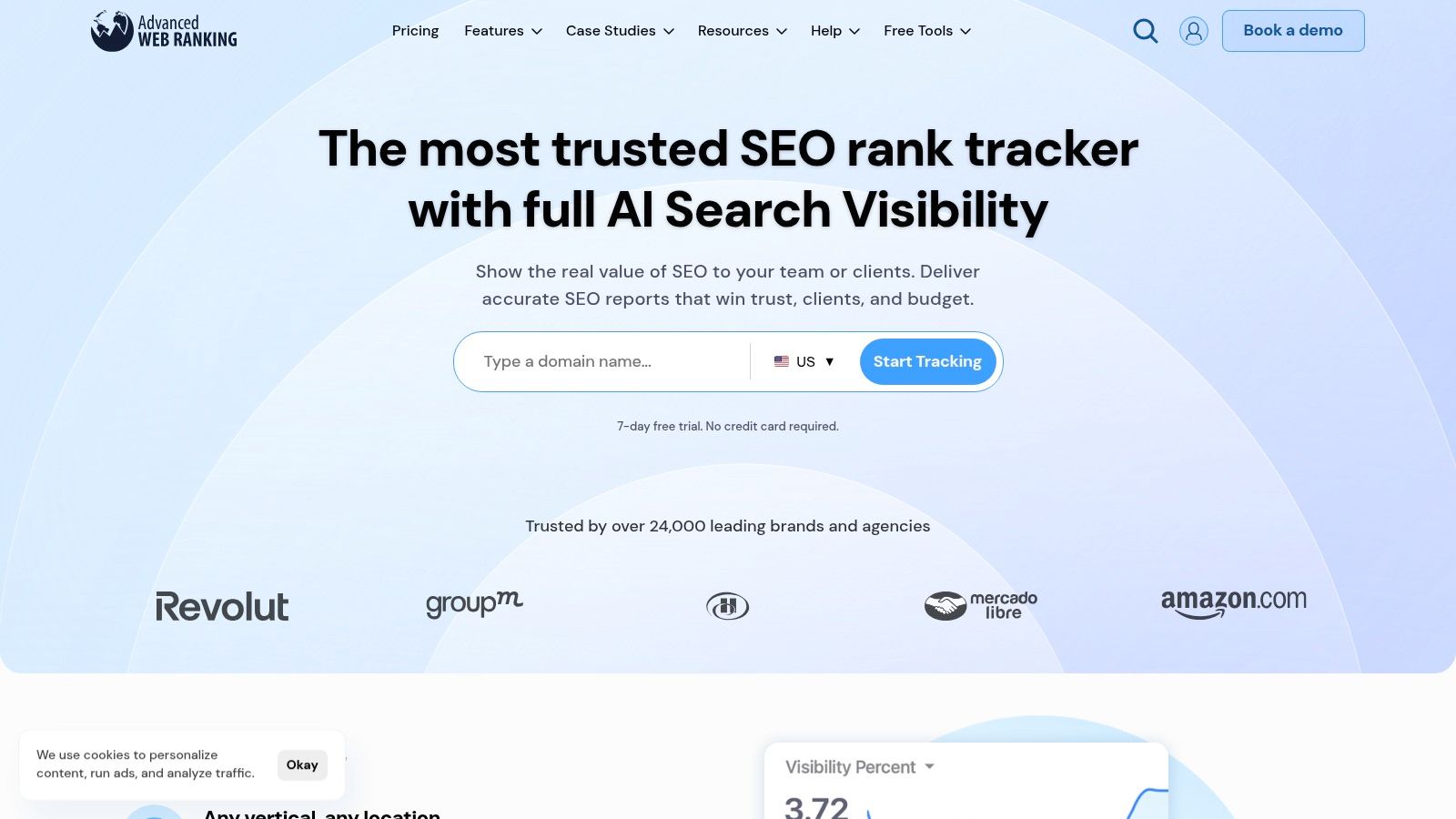
AWR is a veteran tracker, and its longevity shows up in the way it handles serious usage. It supports large keyword allowances, flexible update frequencies including manual, daily, or weekly checks, and deeper features like forecasting, cannibalization analysis, and market share metrics. That combination makes it especially useful for agencies that need historical proof and structured reporting.
The platform's practical advantage is operational flexibility. There are no per-seat fees on the model described here, which helps multi-user teams keep costs from ballooning just because more people need access. The Looker Studio connector, API, and BigQuery export options also make it friendlier to teams that already work in analytics stacks.
The learning curve is the trade-off. AWR leans toward power users, and buyers should expect some onboarding time before the advanced features start paying off. If you only need simple daily rank checks, it can feel like too much software. If you need audit-ready history and forecasting, it earns its place quickly.
Website: Advanced Web Ranking
9. ProRankTracker
ProRankTracker is still a sensible choice for teams that care about term-based billing and white-labeling more than platform polish. It covers local, mobile, Maps, and video tracking, supports unlimited projects and URLs, and gives agencies reporting options that are good enough to hand to clients without rebuilding everything from scratch.
The notable practical piece is the MyRanks client app. That kind of client-facing layer is useful when account teams need a lightweight way to show progress without fielding constant status questions. Looker Studio integration and API access on agency plans round out the reporting stack.
The downside is that it's narrower than a full SEO suite, and some of the better automation and API features sit behind higher plans. It's also a tool where the billing model matters a lot, so the value proposition changes fast as term counts rise. If you're scaling accounts aggressively, the clear accounting is helpful, but you still need to watch the totals closely.
Where it fits
ProRankTracker makes the most sense when you want a specialist rank tracker with client-friendly reporting and you're comfortable pairing it with separate tools for research or technical work. It's less exciting than the suites, but for a lot of agencies, that's exactly why it works.
Website: ProRankTracker
10. Keyword.com
Keyword.com, formerly SerpBook, is a clean choice for teams that want straightforward rank tracking without a lot of wandering through side features. Its pitch is accuracy, Share of Voice, local and mobile tracking, and reporting that feels easy to hand to clients. That combination is more valuable than it sounds when the person reading the report doesn't care about your tool stack.
The billing model is another reason teams look at it. Per-keyword and credit-style pricing is simple to understand, which helps during procurement conversations and makes it easier to estimate spend when you know the tracked set is stable. The platform also documents its methodology, which matters in a category where teams constantly worry about how numbers are being collected.
The main caution is that pricing details can change over time, so buyers should verify current quotas and rates before they commit. That isn't unique to Keyword.com, but it matters more here because the model is tied directly to usage. If you want a tool that behaves like a utility rather than a suite, it fits that brief well.
Website: Keyword.com
Top 10 SERP Rank Tracker Comparison
| Tool | Core capabilities | Execution & automation | AI/LLM & SERP features | Target audience & scale | Pricing & value |
|---|---|---|---|---|---|
| Nuwtonic (Recommended) | AI Search Agent; GEO audit (120+ checks); on‑page auto‑fix; Content Autopilot; GSC integration | Execution layer: prioritized, GSC‑trained fixes; CMS pushes; agent workflows; change control & previews | Tracks LLM citations across ChatGPT/Gemini/Claude/Perplexity/Grok; prompt tracking; mobile gap analysis | SEO agencies, in‑house SEO/content teams, e‑commerce, B2B SaaS, solo founders | Credit‑based tiers (Starter $99, Silver $199, custom Gold); 7‑day trial; free tools; APIs/webhooks |
| Semrush, Position Tracking | Daily desktop/mobile rank tracking; local targeting; SERP feature detection; reporting | Strong scheduled reporting; limited CMS execution | Detects SERP features & AI Overviews; LLM visibility tracking | Agencies & in‑house teams needing broad SEO suite | All‑in‑one pricing; higher tiers for API/automation |
| Ahrefs, Rank Tracker | Global rank tracking; SERP history charts; project dashboards | Data + recommendations; minimal publish automation | Strong SERP history; less LLM‑first focus | Teams who use Ahrefs data; research‑driven SEO | Part of Ahrefs subscription; mid‑to‑high cost |
| AccuRanker | Fast, accurate rank tracking; granular local targeting; on‑demand refresh | Tracking‑centric; integrates with GA/GSC/Looker Studio | AI CTR & AI Search Volume indicators for prioritization | Agencies with large keyword sets and fast refresh needs | Transparent scaling; higher entry price than basic suites |
| STAT Search Analytics (Moz) | Enterprise‑scale daily tracking; market/feature segmentation; SOV slicing | Enterprise onboarding & support; designed for large workflows | Tracks multiple AI result types and extensive SERP features | Global brands and large agencies | Sales‑led pricing; enterprise contracts (no public pricing) |
| SE Ranking | Daily rank tracking; Looker Studio; Share of Voice; local/mobile | Project reporting, scheduling; optional AI add‑on for extended limits | AI Results Tracker (add‑on); standard SERP feature coverage | SMBs and agencies wanting value & multi‑client reporting | Competitive mid‑tier pricing; generous keyword caps |
| Nightwatch | Granular local tracking (city/ZIP); Google/Bing/YouTube tracking; white‑label | White‑label reports; unlimited seats on Agency plan; API on higher plans | Standard SERP tracking; limited LLM emphasis | Agencies focused on local clients and white‑label reporting | Good price‑to‑keyword ratio; annual discounts |
| Advanced Web Ranking (AWR) | Large keyword quotas; flexible update frequency; forecasting & market share | Cannibalization analysis; forecasting; usage‑based workflows | Strong SERP accuracy focus; not LLM‑centric | Agencies scaling to tens of thousands of terms | Usage‑based pricing; no per‑seat fees |
| ProRankTracker | Daily/on‑demand updates; local/mobile/Maps; MyRanks client app | Deep white‑labeling & client app; term‑based billing for scaling | Standard SERP tracking; focused on client reporting | Agencies/consultants needing client deliverables | Competitive per‑term pricing; scales to 20k+ terms |
| Keyword.com | Accurate daily/weekly tracking; Share of Voice; local & device targeting | Client‑friendly reporting; simple workflow | Standard rank tracking; SOV metrics & methodology docs | Agencies and consultants needing simple, accurate tracking | Per‑keyword/credit billing; flexible but variable rates |
How To Pick Without Wasting A Quarter
The wrong rank tracker usually fails in one of three ways. It's too shallow, so you get clean numbers but no next step. It's too broad, so your team pays for features nobody uses. Or it's too expensive per keyword, which becomes a problem the moment the tracked set grows.
The cleanest decision framework is by team type. Solo founders and in-house SMB teams should start with Nuwtonic, SE Ranking, or Keyword.com if they want execution plus AI tracking in one place or a straightforward tracker they can use every week. Growing agencies running 10 to 50 clients usually get the best balance from AccuRanker, Nightwatch, or AWR, because cost-per-keyword discipline and white-label reporting matter more than all-in-one sprawl. Enterprise SEO teams with 100k+ keywords belong in STAT, Semrush, or Ahrefs, where scale and Share of Voice slicing matter more than lightweight UX.
The budget math matters more than marketing copy. AccuRanker's pricing page shows a free SERP checker, while Tooltester's 2026 comparison puts paid rank-tracking plans around $49 to $69 per month on lower tiers and up to $249 per month or more for larger keyword sets (AccuRanker pricing, Tooltester comparison). Tooltester also showed how fast the keyword math escalates, with SE Ranking listed at $65 for 750 keywords, Wincher at $49 for 500 and $143 for 2,000, and Serpwatch at $49 for 250 and $349 for up to 2,500 (Tooltester comparison). That's why price-per-keyword, not the headline subscription fee, should drive the shortlist.
A good trial should pressure-test five things before anyone signs a year contract. Verify local-targeting granularity, ideally city and ZIP, because vague geography hides real ranking differences. Confirm GSC sync depth and refresh cadence, because stale data makes the whole system decorative. Test AI tracking accuracy against your own brand prompts, not vendor examples. Calculate true cost per keyword including overages, seat fees, and add-ons. Confirm whether the tool pushes fixes to your CMS or stops at a dashboard, because that's the difference between reporting and recovery.
For teams that want to think more broadly about how SEO decisions connect to marketing execution, the B2B SEO marketing guide is a useful companion read. The point isn't to buy the most features, it's to buy the shortest path from rank movement to action.
If you want a tracker that helps you fix what rank data reveals, not just stare at it, Nuwtonic is built for that workflow. It combines SERP rank tracking, GSC-driven prioritization, AI citation visibility, and CMS-ready execution in one place. Visit Nuwtonic to see how it handles visibility gaps, recovery work, and AI search monitoring together.