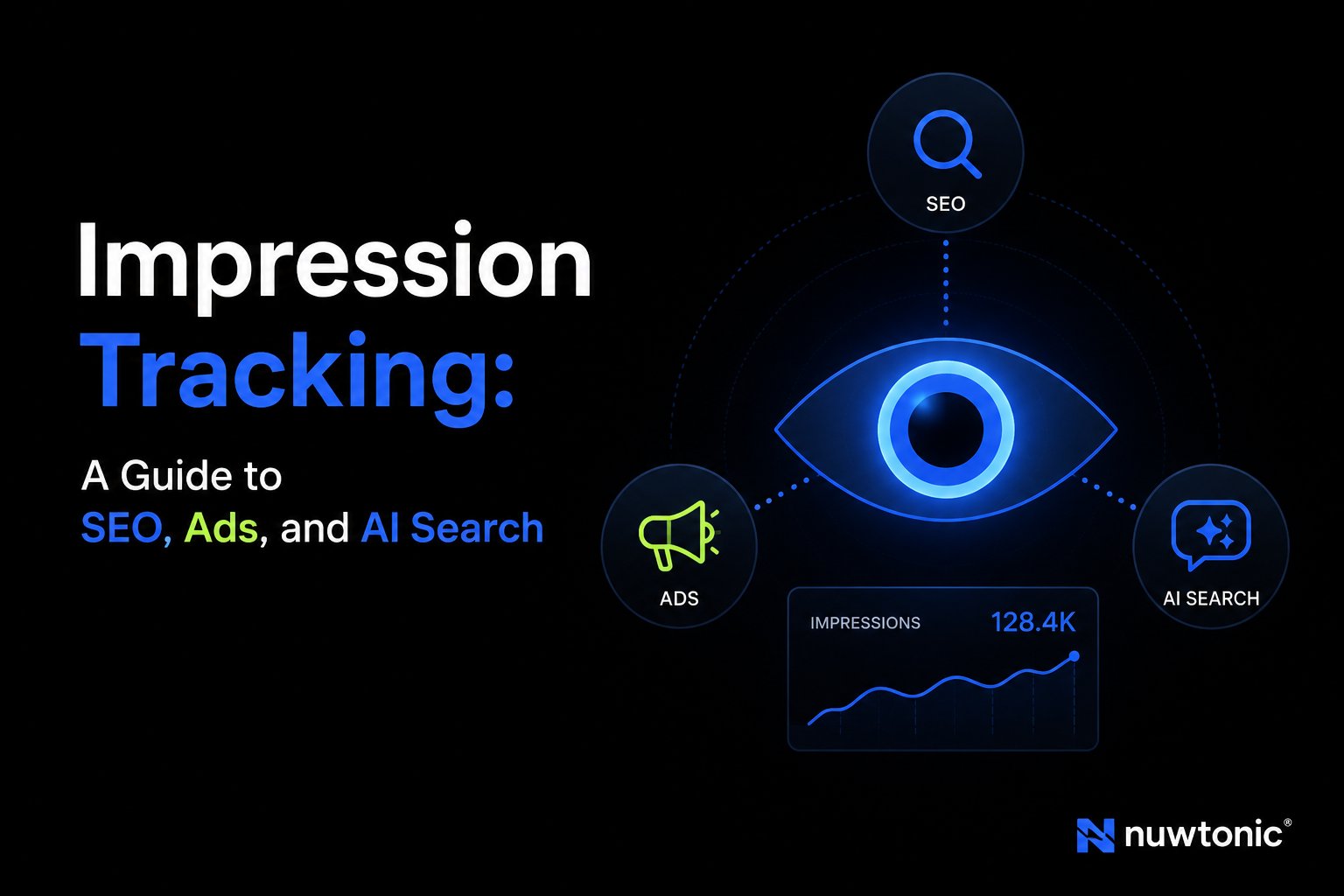
More impressions don't automatically mean more value. That advice worked when a search impression usually led to a familiar path, from ranking to click to session. In the AI Overviews era, the same exposure can produce a citation, a brand mention, a delayed visit, a paid interaction, or no measurable website action at all.
Search impressions rose 49% after AI Overviews launched while click-throughs fell nearly 30%, according to reported AI search visibility research. Seer also reported that organic CTR declined 67% when a brand wasn't cited in an AI Overview, across 311 million impressions, equivalent to about 13,000 fewer clicks per 1 million impressions, in the same source. The practical lesson is uncomfortable but useful: impression tracking now measures exposure quality, not traffic potential.
Table of Contents
- Why Impression Tracking No Longer Means What You Think
- How Different Platforms Define and Count Impressions
- Setting Up Reliable Impression Tracking Across Channels
- Interpreting Impression Data and Connecting It to KPIs
- Integrating Impression Tracking Into Automated Workflows
- Troubleshooting Common Impression Tracking Failures
- Building a Unified Visibility Measurement Framework
Why Impression Tracking No Longer Means What You Think
A raw impression count hides the context that determines whether exposure matters. A result can appear for a broad informational query, a high-intent product search, a branded query, or an AI-generated answer. Those exposures may all enter a report as impressions, but they don't carry the same commercial meaning.
Google Search Console defines an impression as an occasion when a user sees, or could potentially see, a link to your site in Search, Discover, or News. In web search, the impression is generally recorded when the results page loads, even when the result sits below the fold and the user never scrolls to it, as Google's documentation explains. A page can therefore gain visibility without gaining attention, and attention without gaining a click.
Practical rule: Treat every impression as an exposure event that needs a surface, intent, position, and outcome attached to it.
AI Overviews make that distinction harder. A searcher may receive enough information in the answer itself, notice a cited brand, and return later through a direct visit or branded search. Standard analytics may attribute that later session to direct, organic, or another channel, while the original AI exposure remains invisible in the conversion path.
That doesn't make impressions useless. It changes the question you ask. Instead of asking whether impressions increased, ask:
- Which surface created the exposure? Classic results, paid search, display, Discover, News, or an AI answer?
- What intent did the query represent? Research, comparison, navigation, or purchase?
- Was the brand cited or merely present? A citation can carry meaning that a non-cited impression cannot.
- Did exposure produce a measurable response? Click, branded search, assisted visit, lead, sale, or no observable action?
The historical case for tracking exposure beyond clicks remains strong. One academic study reported an average click-through rate of 0.44% and a post-impression rate of 0.13%, defining a post-impression as a site visit after ad exposure and typically measuring it over a 90-day window (academic study). That finding doesn't prove that every impression creates value. It shows why click-only reporting can miss delayed response.
For teams working on AI search visibility, the operating model should be unified. Record classic SERP impressions, paid exposure, AI citations, and downstream actions in connected datasets. Then judge visibility by exposure quality and business response, not by volume alone.
How Different Platforms Define and Count Impressions
Cross-platform discrepancies usually start with a definition problem. Stakeholders often compare GSC impressions with Google Ads impressions, display delivery, and AI citations as though every system counts the same event. They don't.
Google Search Console records an impression when a property link is seen or could have been seen in Search, Discover, or News. Its Performance report lets you segment the result by query, page, country, and device, while comparing impressions with clicks, CTR, and average position, as described in Google's Search Console data documentation. This makes GSC a visibility report, not a verified screen-view report.
Google Ads uses a different lens. Impression share equals impressions received divided by estimated eligible impressions, and Google exposes separate Search impr. share and Display impr. share fields in reporting (Google Ads support). The metric tells you how much eligible auction visibility you captured, not how many people noticed or engaged with the ad.
Display advertising adds another distinction. Industry terminology separates served impressions, which record delivery, from viewable impressions, which relate to whether the ad had an opportunity to be seen on screen (BigCommerce's digital marketing glossary). A served count can therefore exceed the exposure a media buyer considers meaningfully viewable.
| Platform | Impression definition | Key metric | Viewability standard |
|---|---|---|---|
| Google Search Console | A link is seen or could have been seen in Search, Discover, or News | Impressions, clicks, CTR, average position | Potential visibility, not confirmed attention |
| Google Ads | An ad receives an eligible auction impression | Search impression share and Display impression share | Platform delivery and auction eligibility |
| Display networks | Content is rendered or delivered, with separate served and viewable concepts | Served impressions and viewable impressions | Depends on the network's viewability treatment |
| AI search monitoring | A brand or source appears in an answer for a tracked prompt | Citation frequency, mention accuracy, source attribution | Presence in the generated answer, not a website screen view |
GA4 generally reports sessions, users, events, and conversions rather than search-platform impressions. It can help measure what happened after a visit, but it won't reconcile every exposure that preceded the visit. That's why an agency may use a managed Google Ads integration to consolidate paid data while keeping GSC and AI visibility records separately defined.
The same campaign can show different totals across reports without any tracking bug. A unified dashboard should preserve the original source, metric definition, date range, attribution model, and segmentation fields. For SERP analysis, pair those records with SERP feature tracking, because a conventional blue-link impression and an impression beside an AI Overview don't represent the same competitive environment.
Setting Up Reliable Impression Tracking Across Channels
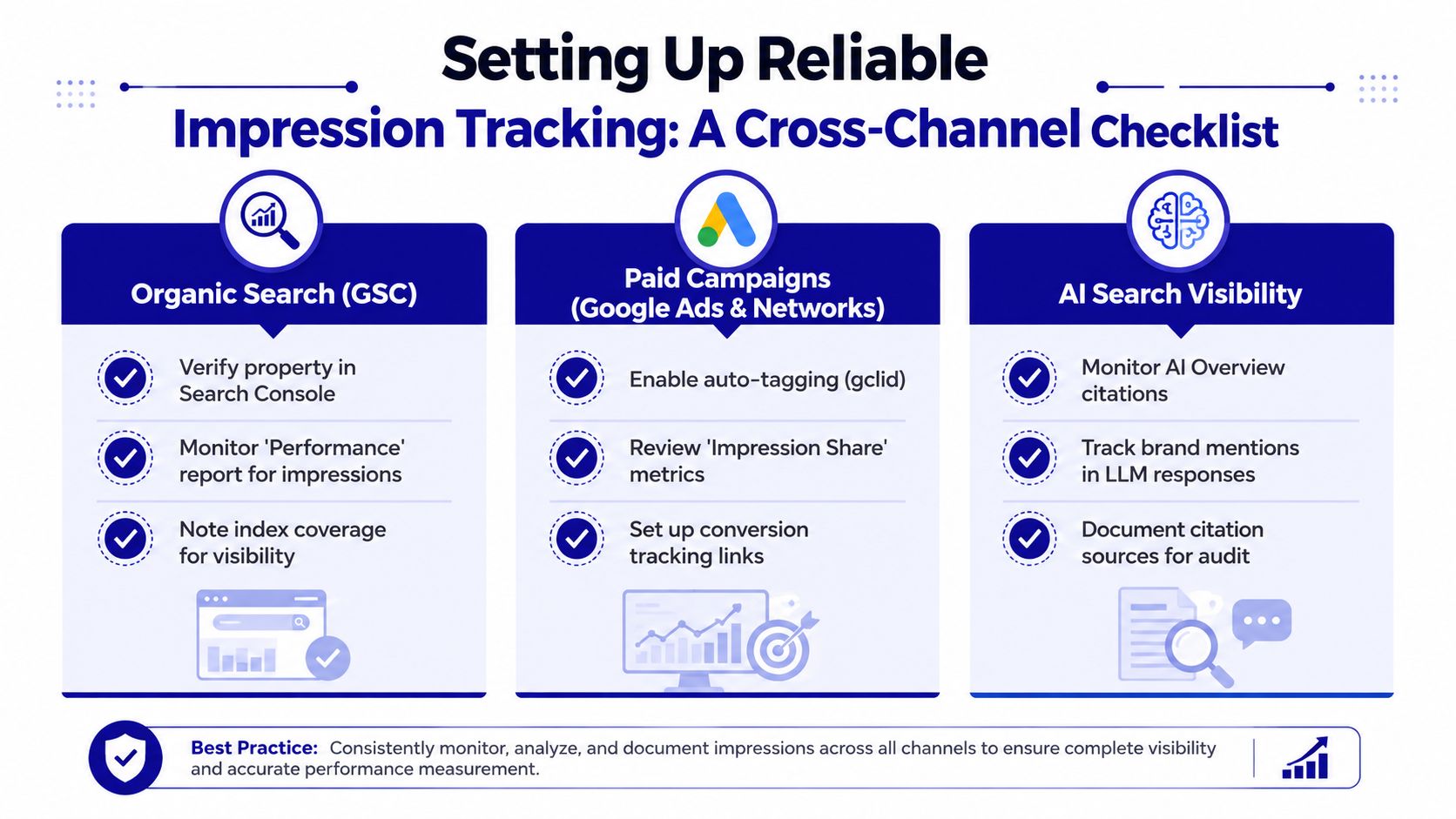
Reliable tracking starts with separate collection, not premature aggregation. Keep each platform's native definition intact, then normalize fields such as date, property, campaign, query, country, device, surface, and outcome.
Configure organic search first
Verify the correct property in Google Search Console and open the Performance report. Export impressions alongside clicks, CTR, and average position, then segment by:
- Query, to distinguish branded, commercial, and informational exposure.
- Page, to identify URLs receiving visibility without engagement.
- Country, to expose regional demand and localization differences.
- Device, to find mobile and desktop gaps.
- Search type, where available, to separate web, Discover, and News behavior.
Don't combine every query into one sitewide trend before checking these dimensions. A broad query expansion can inflate impressions while lowering CTR, even though the pages gaining exposure may never have been the pages responsible for revenue.
Configure paid channels with their own controls
In Google Ads, inspect impressions together with impression share and the campaign's eligibility context. For other networks, preserve served and viewable fields separately rather than renaming both to “impressions.” Use auto-tagging and conversion tracking links so paid exposure can be evaluated against downstream actions, while remembering that analytics sessions won't capture every view.
If your paid workflow includes offline sales or qualified lead stages, document the handoff before launching campaigns. A resource covering how to sync offline conversions to Meta can help teams map that operational connection without confusing conversion records with impression counts.
Add AI visibility as an observation layer
Create a prompt set representing real customer questions, comparison searches, category language, and branded requests. For each run, record the model or search surface, prompt, answer date, whether the brand appeared, whether it was cited, which URL was cited, and whether the description was accurate.
Validate before reporting
Run a short verification pass:
- Source integrity: Confirm every connector, export, and prompt monitor is collecting the intended property or account.
- Definition integrity: Label potential visibility, auction delivery, served delivery, viewable delivery, and AI citation separately.
- Dimension integrity: Test query, page, country, device, campaign, and surface filters.
- Attribution integrity: Compare clicks and conversions without expecting them to equal impressions.
- Change integrity: Record platform updates and reporting changes beside the time series.
Three practical collection approaches work in practice: keep reporting inside each channel, consolidate through an integration tool, or use a cross-channel tracker that unifies records. The right choice depends on governance and scale, but none removes the need to preserve source definitions.
Interpreting Impression Data and Connecting It to KPIs
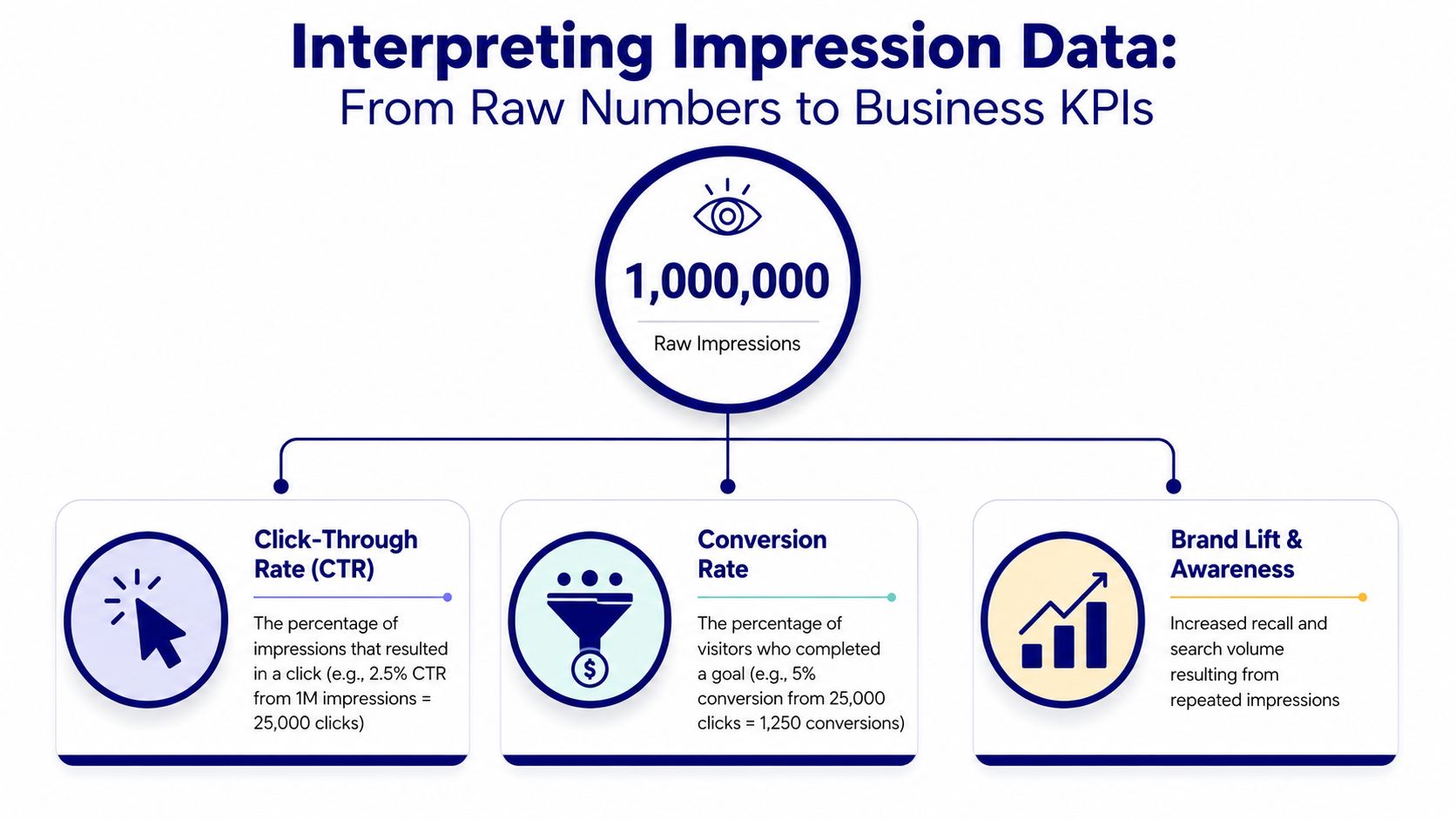
Raw impressions become useful only when they answer a business question. A high count for an irrelevant query may be less valuable than a smaller set of exposures tied to a qualified audience. Start with the path from exposure to response, then examine where the path breaks.
For classic search, compare impressions with CTR and average position by query and page. A page with strong impressions, weak CTR, and stable rankings may need a title, snippet, or intent review. A page with strong CTR but weak conversion activity may have a landing-page, offer, or qualification problem. Those are different fixes, and a sitewide impression total won't tell you which one applies.
Measure delayed response without overstating causality
The post-impression concept matters because users can encounter an ad or search result and return later through another route. Track branded query movement, direct sessions, assisted conversions, and returning users around exposure periods, but don't label every later action as impression-driven. Use controlled comparisons where possible and document the attribution window.
AI citations require a different KPI set. Record citation frequency, source URL, mention accuracy, and the relationship between cited pages and later branded or organic activity. A citation can be valuable even without a click, but its value depends on whether the answer describes the brand correctly and reaches a meaningful audience.
A useful internal score can weight exposure by:
- Intent, with commercial and navigational queries separated from broad research.
- Surface, distinguishing classic results, paid placements, and AI answers.
- Position or prominence, where the platform provides that context.
- Citation quality, including source accuracy and page relevance.
- Downstream response, including clicks, qualified visits, leads, and revenue.
Don't turn that score into a universal benchmark. Use it to rank work inside your own reporting system. A dashboard built around SEO dashboard reporting should show the raw metric beside the interpretation, so decision-makers can see whether a change reflects more exposure, better exposure, or broader eligibility.
Retail teams may also need channel-specific reporting structures such as Amazon advertising performance reports. The same principle applies across marketplaces, paid search, and organic search. Keep delivery, engagement, conversion, and assisted influence in separate columns before combining them into a business narrative.
Integrating Impression Tracking Into Automated Workflows
Manual spreadsheets are acceptable for an initial audit. They become fragile when teams manage multiple properties, markets, campaigns, models, and reporting definitions. Copying totals into a shared sheet also makes it difficult to identify whether a change came from demand, ranking, eligibility, platform methodology, or a broken connector.
Choose the integration level deliberately
A spreadsheet-based workflow offers transparency and low setup effort. It works when one operator reviews a limited set of sources and can annotate every change. Its weakness is reproducibility. Different people may paste different date ranges, rename metrics inconsistently, or overwrite the source context that explains a discrepancy.
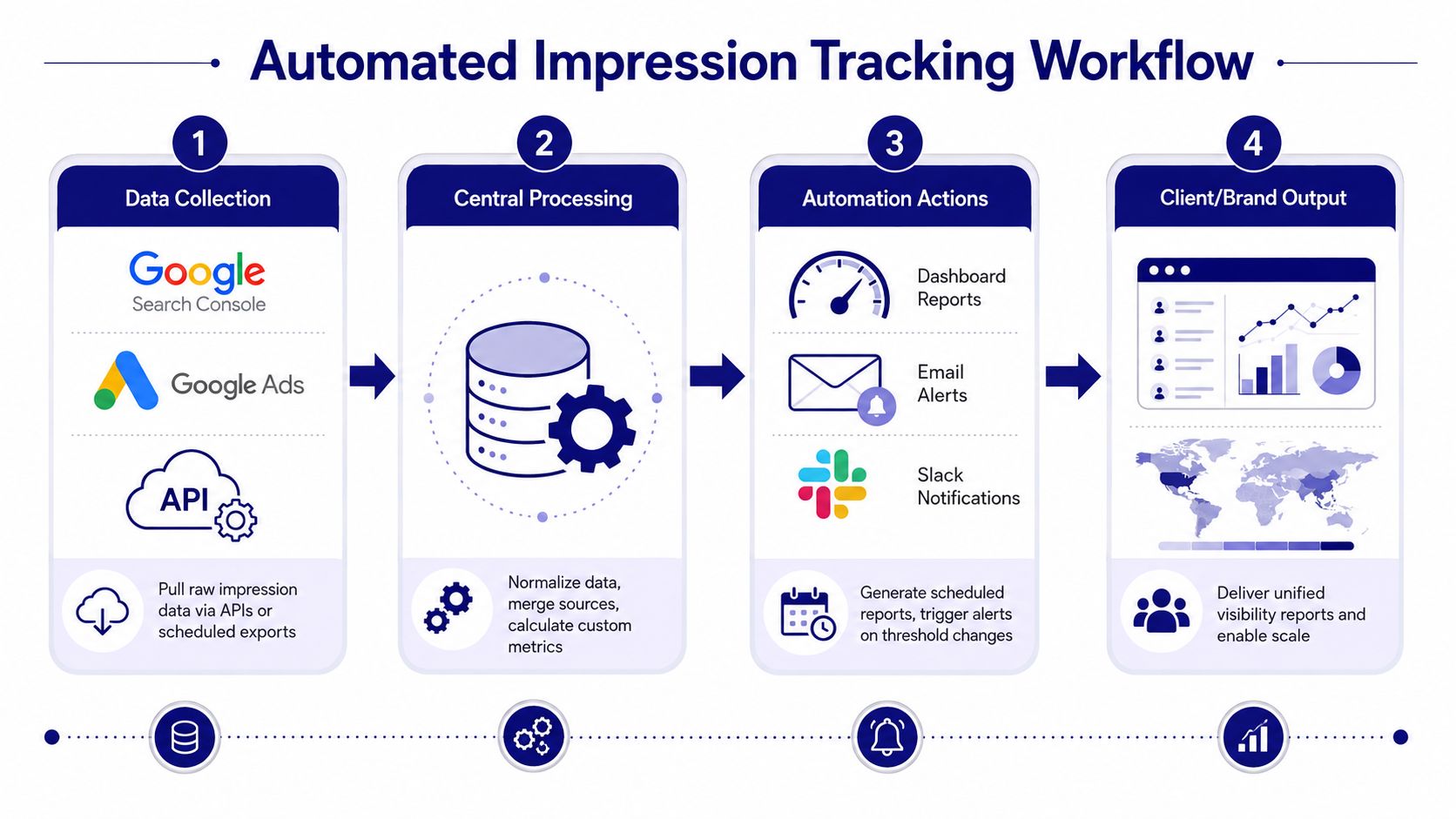
An API-driven dashboard provides stronger consistency. Pull GSC and advertising data on a schedule, store raw responses, normalize dimensions, and calculate derived fields without changing the original values. Add alerts for unusual changes, but route alerts to a human review queue. A threshold without context creates noise.
A unified platform can connect visibility data to execution. Nuwtonic, for example, combines GSC signals with AI search visibility and competitor intelligence, including prompt citations across ChatGPT, Gemini, Perplexity, Claude, Google, and Grok. Its workflow can connect a visibility gap to reviewable content, technical, schema, or competitive actions, rather than stopping at a report.
Connect data to action
A useful automation sequence looks like this:
- Collect: Pull raw records from GSC, Google Ads, networks, and prompt monitoring.
- Normalize: Map dates, properties, campaigns, queries, URLs, countries, devices, surfaces, and definitions.
- Diagnose: Identify rising exposure without clicks, falling paid share, missing citations, or inaccurate source attribution.
- Route: Send a technical issue to SEO, a message issue to content, a paid eligibility issue to media, and a citation issue to the GEO owner.
- Review: Require approval before publishing page edits, schema changes, or campaign changes.
- Report: Show the original impression metric, the interpreted signal, the action taken, and the resulting downstream movement.
This design prevents the most common automation mistake, treating every movement as an optimization opportunity. Some movements are reporting artifacts. Others reflect a real shift in demand. The workflow should preserve enough evidence for an operator to tell the difference.
Troubleshooting Common Impression Tracking Failures
Impression discrepancies usually have a recognizable signature. Start with the symptom, identify the reporting rule behind it, and compare the affected metric with an independent downstream signal.
A sudden GSC drop after September 2025
Google stopped supporting the 100-results parameter around September 2025, removing low-value bot and third-party crawled impressions from reporting, as documented in Search Engine Land's analysis. A sharp impression decline after that change can therefore reflect a measurement adjustment rather than lost human demand.
Check the date range against the change, annotate the report, and compare clicks, qualified sessions, conversions, and branded demand before concluding that visibility fell. Rebuild comparisons using a consistent post-change baseline. Don't splice pre-change and post-change impression totals into one uninterrupted performance story.
GSC impressions don't match GA4 sessions
That mismatch is normal because GSC records potential search visibility while GA4 records visits and events. A result below the fold can create a GSC impression without a session, and a later visit may arrive through direct traffic, another search, or a referral.
Use GSC for query and page exposure. Use GA4 for onsite behavior and conversion. Join them with landing page, date, country, device, and channel where the fields align, but don't force row-level equality.
Display impressions look high but exposure feels weak
Check whether the network is reporting served or viewable impressions. A served impression indicates delivery, while a viewable impression addresses the opportunity to see the ad, so the two values answer different questions.
Keep both fields in the report. Evaluate viewability alongside placement, device, creative, frequency, and post-exposure actions. If the buying objective depends on actual attention, optimizing only served delivery can reward inventory that technically rendered but had limited visibility.
Cross-device attribution leaves gaps
A user may see an ad on one device and visit or convert on another. Identity resolution, consent settings, browser restrictions, and platform attribution windows can all prevent the exposure from appearing in the final conversion path.
Use campaign-level and geographic comparisons rather than claiming perfect person-level attribution. Preserve platform-reported conversions separately from analytics conversions, then explain the difference in the reporting notes.
AI citation monitoring produces inconsistent results
Generated answers can vary with prompt wording, location, model, and retrieval context. Keep the prompt set stable enough to compare observations, save answer snapshots, and record cited URLs rather than only marking a brand as present.
When a citation disappears, check whether the answer changed, the source page changed, or the model used a different retrieval path. A single observation is a diagnostic clue, not a durable trend.
Building a Unified Visibility Measurement Framework
Organic impressions, paid impression share, and AI citations belong in one decision system, even though they shouldn't be collapsed into one raw total. Each measures a different form of eligibility or exposure, and each needs its own denominator and quality controls.
Build a scorecard with three layers:
- Organic visibility: Search Console impressions, query and page coverage, rankings, CTR, and SERP features.
- Paid visibility: Impression share, eligible auction context, served or viewable delivery, cost, and conversion outcomes.
- AI visibility: Citation frequency, mention accuracy, cited source URLs, prompt coverage, and downstream branded behavior.
Then add a decision layer. Prioritize classic SEO when high-intent pages have exposure but weak CTR or poor rankings. Prioritize paid optimization when eligible demand exists but impression share remains limited. Prioritize AI visibility work when relevant prompts produce inaccurate mentions, missing citations, or citations to weaker sources.
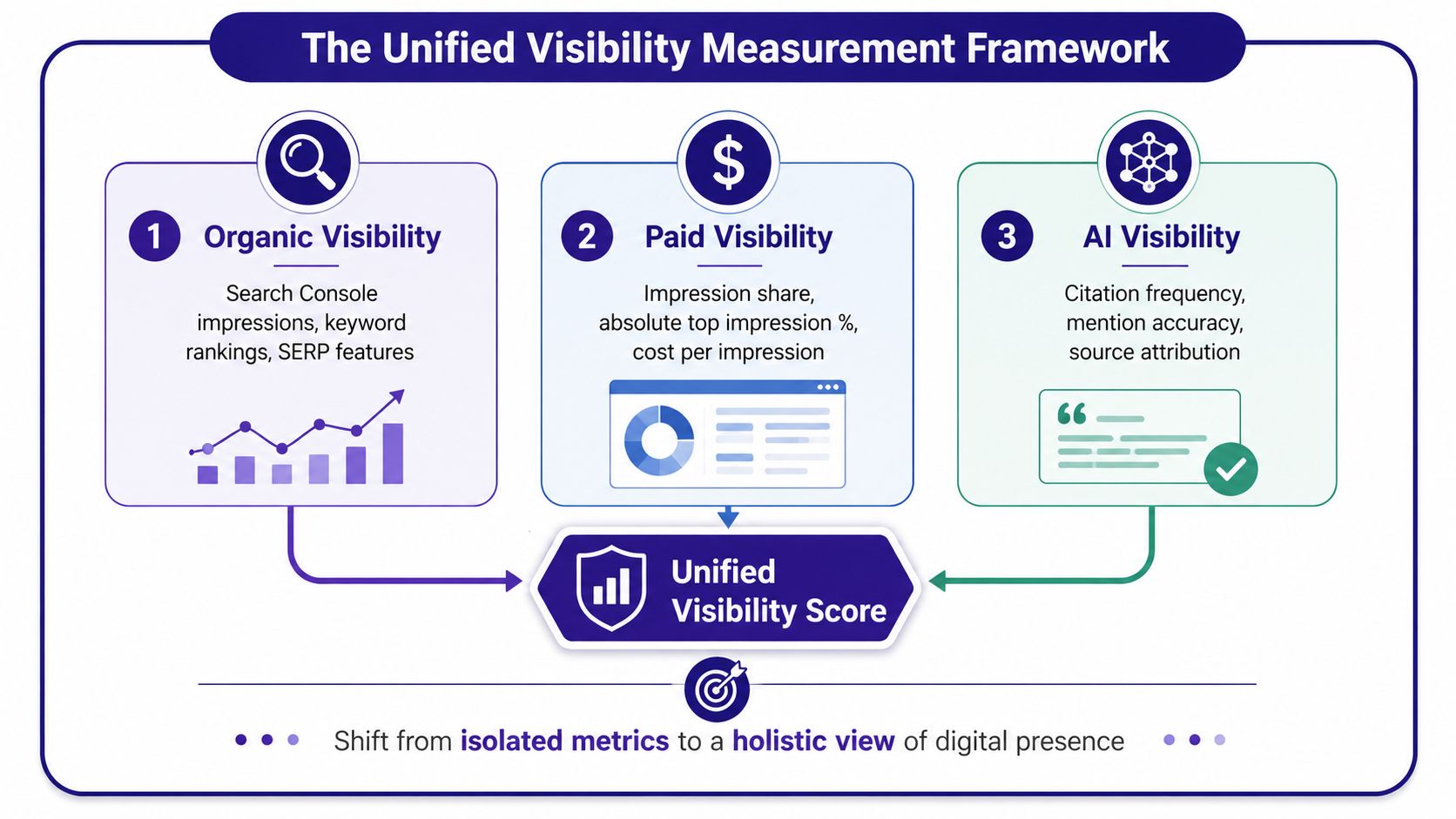
The strongest framework keeps raw definitions, exposure quality, and business outcomes visible at the same time. That prevents an AI citation from being treated like a click, a paid impression from being treated like a viewable impression, or a GSC impression from being presented as confirmed attention.
Impression tracking is now a measurement discipline, not a reporting afterthought. Teams that preserve platform context and connect exposure to action can distinguish genuine visibility gains from broader eligibility, zero-click presence, and reporting noise.
Use Nuwtonic to connect Google Search Console performance, AI search visibility, prompt citations, competitor gaps, and reviewable optimization workflows in one workspace. Visit Nuwtonic to replace disconnected impression reports with a practical visibility system that helps your team identify issues and act on them.