You can rank well, sit in the top five, and still watch Google hand the click to someone else. That's the frustration many experience with featured snippets. The page is visible, the query is relevant, and yet the answer box goes to a competitor because the content isn't formatted in a way Google can extract fast.
Google formalized featured snippets in January 2014, when it expanded answer boxes into the featured-snippet format above standard organic results. Since then, the feature has stayed dynamic, not fixed. Moz's analysis of 1.4 million featured snippets found that ownership can shift quickly, sometimes in about 30 minutes, though it usually takes a few days to stabilize, which is why snippet work needs a playbook, not guesswork. Moz's featured snippet analysis shows a clear pattern, concise answers and structure win far more often than vague content.
The practical goal isn't just “rank higher.” It's to earn Position Zero, improve trust at the exact moment of intent, and make your content more eligible for AI answer surfaces too. The teams that win consistently don't start by rewriting whole pages. They start by choosing the right queries, matching the snippet format, tightening the answer block, and then tracking what happens when Google swaps the winner.
Keywordme's GA organic search insights is useful here if you're trying to separate search demand from noisy referral patterns before you rewrite anything. For planning the broader content architecture behind snippet wins, semantic search optimization helps connect topic coverage with extractable answers.
Table of Contents
- Introduction To Featured Snippet Playbook
- Identifying And Prioritizing Snippet Opportunities
- Mapping Search Intent To Snippet Formats
- Implementing HTML Patterns For Featured Snippets
- Leveraging On Page Signals And Schema Markup
- Testing Tracking And Recovering Lost Snippets
- Automating Snippet Optimization With Nuwtonic
Introduction To Featured Snippet Playbook
A lot of content teams hit this wall. The page already ranks, traffic is healthy, but the snippet goes to a competitor with a cleaner answer block, a tighter list, or a table Google can parse in seconds. The gap usually isn't authority alone, it's extractability.
That's why how to get featured snippets is less about writing more and more about writing in the exact shape search engines prefer. Ahrefs' guidance points to pages already near the top of page one and emphasizes matching the existing SERP format, whether that's a paragraph, list, table, or video. It also recommends succinct answers, often 2 to 3 sentences and under 50 words for paragraph snippets, because Google tends to prioritize content that answers “what,” “how,” and troubleshooting queries directly. Ahrefs' featured snippet guide lays out that logic clearly.
Practical rule: don't chase snippets on weak pages first. Fix the pages that are already close, because they're the fastest path to visible gains.
The playbook that works in practice has four stages. First, identify pages with real snippet potential. Second, map each query to the right snippet shape. Third, rewrite the block so Google can extract it cleanly. Fourth, monitor retention and recover quickly when the result changes.
The reason this matters is simple, featured snippets are dynamic. Search engines can swap them fast, and AI answer surfaces have made the situation even more fluid. If you treat snippet ownership like a permanent badge, you'll lose traffic the moment another page becomes easier to parse.
Identifying And Prioritizing Snippet Opportunities
Prioritize pages that already have search momentum. The strongest snippet wins usually come from queries where a URL already sits in positions 2 through 5, or at least in the top 5 to 10, because Google has already marked the page as relevant enough to test for the answer box. Advanced Web Ranking's featured snippet workflow frames that as the most realistic starting point.
Build the target list from real search data
Use Google Search Console first, then add third-party keyword tools and a live SERP review. In Search Console, look for queries with strong impressions but no snippet ownership, then group them by page. From there, inspect the current result page and record the snippet type, the current winner, and the exact wording Google is pulling.
A practical worksheet keeps the work focused. Track page, query, snippet type, and current position. That makes the difference between a fast edit and a rewrite that will eat time without much upside. If a page already ranks in the top 5 and the snippet is a short definition, a targeted edit often makes sense. If the page sits deeper in the results and the snippet belongs to a stronger domain, you may need internal links, topical expansion, or a content refresh before formatting changes matter.
Mine question data before you draft anything
Google's People Also Ask box is a strong source of snippet candidates. Search Engine Land notes that the box can reveal 7 to 10 related questions per query, and the best targets are definitions, quick explanations, and short tasks. Their featured snippet guide helps you build a question backlog that reflects real search intent.
Search the primary keyword, expand the People Also Ask questions, and collect the ones with direct intent. The questions that ask “what is,” “how do I,” or “which is better” usually give you the cleanest path to an answer box.
Score each query by three things, intent clarity, current rank, and formatting fit. A query that already has a paragraph snippet but your page contains a list is a mismatched opportunity. A query that triggers a list snippet and already has a section buried in your article may only need formatting cleanup.
For teams doing this at scale, the goal is to turn search data into a prioritization map, not just a keyword list. Keep the queries that are close, clear, and structurally compatible. Everything else can wait.
For the broader keyword workflow behind that triage, use keyword research to feed the same sheet instead of leaving it in a separate planning doc. That matters when you are trying to sort snippet opportunities by actual business value, not by volume alone. If you need a baseline view of organic search performance while you rank those opportunities, Keywordme's GA organic search insights can help frame which pages deserve priority.
When a snippet drops, treat it like a recovery problem, not a mystery. Check whether the page changed, whether the competitor's answer got cleaner, and whether the query shifted toward a different intent. The pages that win back snippets fastest are usually the ones with clear answer blocks, stable internal linking, and a review process that catches changes before traffic leaks for long.
At scale, automation helps separate signal from noise. Nuwtonic can keep the prioritization list current by tracking query clusters, surfacing pages that drift out of snippet range, and flagging the pages most likely to benefit from a fast rewrite or recovery pass. That gives SEO teams a repeatable way to push wins forward without manually rechecking every query each week.
Mapping Search Intent To Snippet Formats
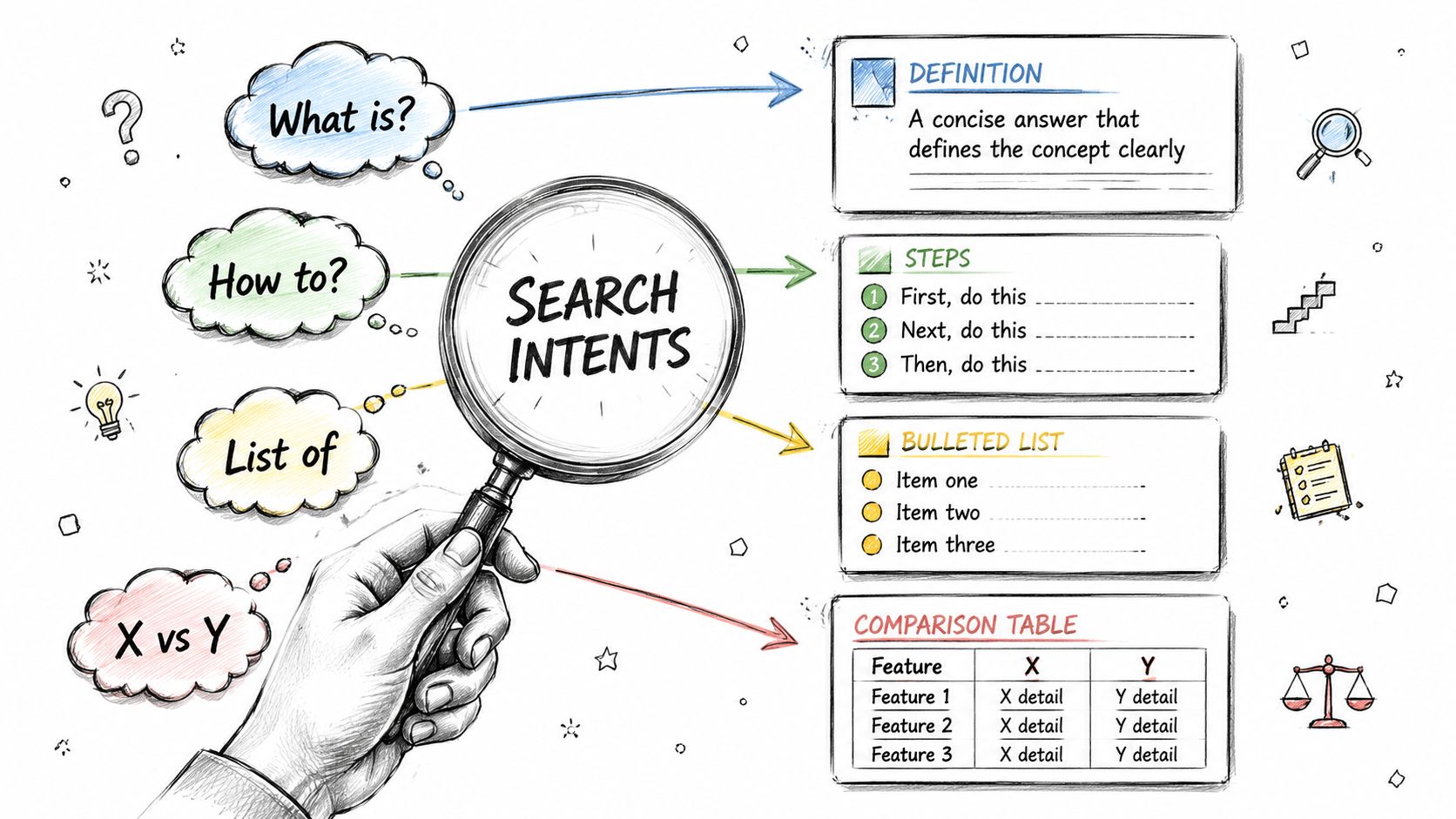
Snippet format follows intent more often than creative writing style does. A definition query wants a compact paragraph. A step-by-step query wants a list. A comparison query wants a table. If the format does not match the intent, the page can still rank, but extraction becomes harder than it needs to be.
Match the intent before you touch the copy
Definitions are the cleanest cases. They usually answer “what is X” or “what does X mean,” and they should read like a tight explanation, not a brand essay. Step-by-step queries usually work better as ordered lists because the sequence is the point of the search. Comparisons belong in tables because Google can lift rows and columns without rebuilding the logic itself.
People Also Ask helps here too. Search Engine Land's guidance on related questions shows how one topic can trigger different snippet styles depending on wording, and the same page can need separate answer blocks for each intent. That is why query research has to sit beside format selection, not after it.
Practical rule: do not choose the snippet format you prefer. Choose the one the SERP already rewards for that intent.
Use the SERP as the format spec
If the current result is a paragraph, mirror paragraph structure. If the SERP shows a list, do not force a definition block just because it feels neater. A useful test is to read the snippet aloud. If the answer sounds like one compact statement, write a paragraph. If it sounds like a procedure, write steps. If it is comparing options, build a table.
The best teams also treat the section heading as part of the extraction pattern. Question-style headings make it easier for Google to connect the query to the answer. “What is featured snippet optimization” works better than an abstract heading that hides the question. The heading and the answer block need to feel like one unit.
If you are using AI-assisted content ops, then boost Position 0 chances gives a practical reference point for structuring the review process around snippet type, not just keyword insertion. A significant gain is speed, because once intent is classified, the rewrite becomes mechanical instead of theoretical.
Implementing HTML Patterns For Featured Snippets
The content has to read cleanly, but the HTML wrapper has to do its job too. Google extracts what it can parse without guesswork, so the page structure should show the machine where the answer begins and where it stops. A page can look polished on screen and still be hard to extract if the semantic structure is unclear.
Build the answer block first
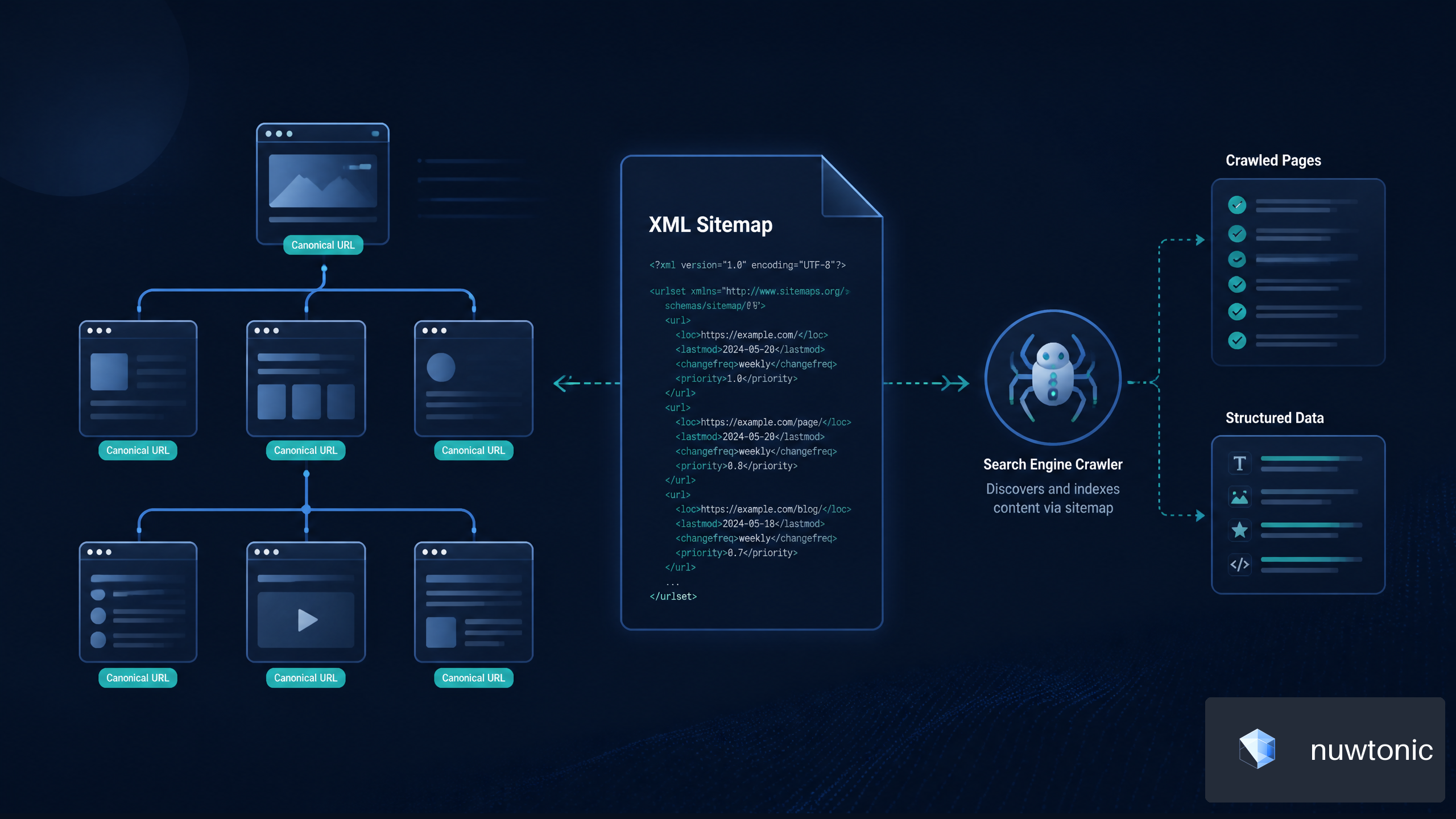
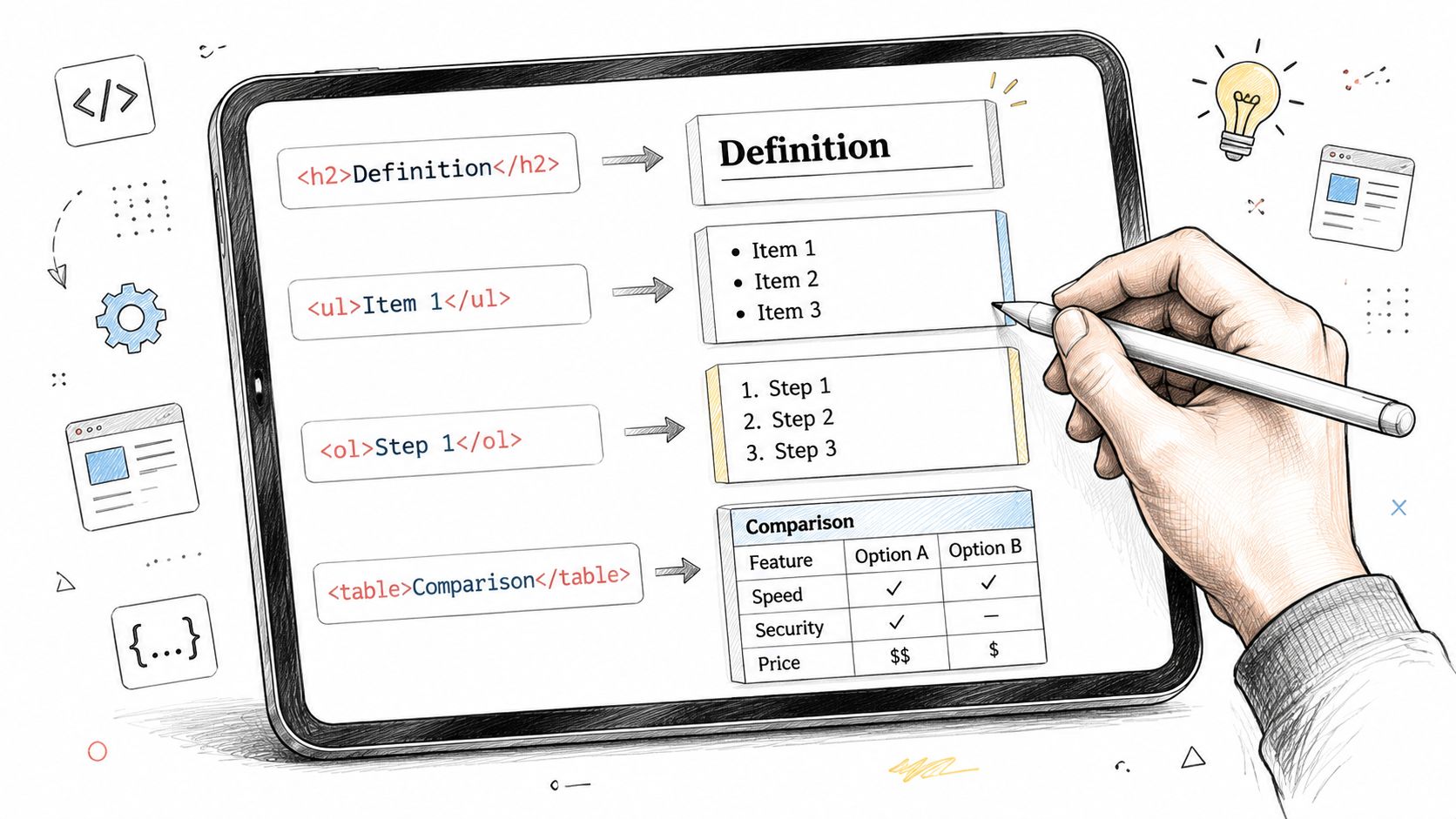
For definition snippets, place an H2 or H3 directly above the definition text and avoid H4 headings. That gives Google a cleaner path from query to answer, and it keeps the definition block easy to lift. Google's definition-style guidance points to this hierarchy for a reason.
A strong definition block looks like this in practice:
<h2>What Is Featured Snippet Optimization</h2><p>Featured snippet optimization is the process of formatting content so Google can extract a concise answer for a query directly from a page.</p>
Keep the first paragraph tight. If it answers the question without extra setup, that is usually the better choice. The inverted pyramid still applies here, answer first, detail second, context last. If you want a practical reference for how teams structure that review, boost Position 0 chances is a useful benchmark.
Use native HTML for lists and tables
Lists should be real <ul> or <ol> elements, not pasted text with line breaks. That makes the hierarchy explicit and easier to extract. Tables should be true HTML tables, not a layout built from divs, because Google needs a semantic grid for comparison snippets.
A list pattern:
<h3>How to get featured snippets fast</h3><ol><li>Find a page already ranking near page one.</li><li>Match the snippet format in the SERP.</li><li>Write a short answer directly under the heading.</li></ol>
A table pattern works best when each row answers one variable cleanly.
<table><thead><tr><th>Query type</th><th>Best format</th></tr></thead><tbody><tr><td>Definition</td><td>Paragraph</td></tr><tr><td>Steps</td><td>Ordered list</td></tr><tr><td>Comparison</td><td>Table</td></tr></tbody></table>
Keep paragraph answers short
Short paragraph answers are easier for Google to parse. A practical benchmark many teams use is under 50 words. If the answer needs more detail, put it after the answer block, not inside it. That keeps the extractable text focused and reduces the chance that the core answer gets buried.
For comparison snippets and Q&A content, keep the structure simple and readable. Clear format beats clever prose because extraction works best when the page gives Google one obvious answer shape. The page that wins is usually the one that makes the answer easy to isolate.
Leveraging On Page Signals And Schema Markup
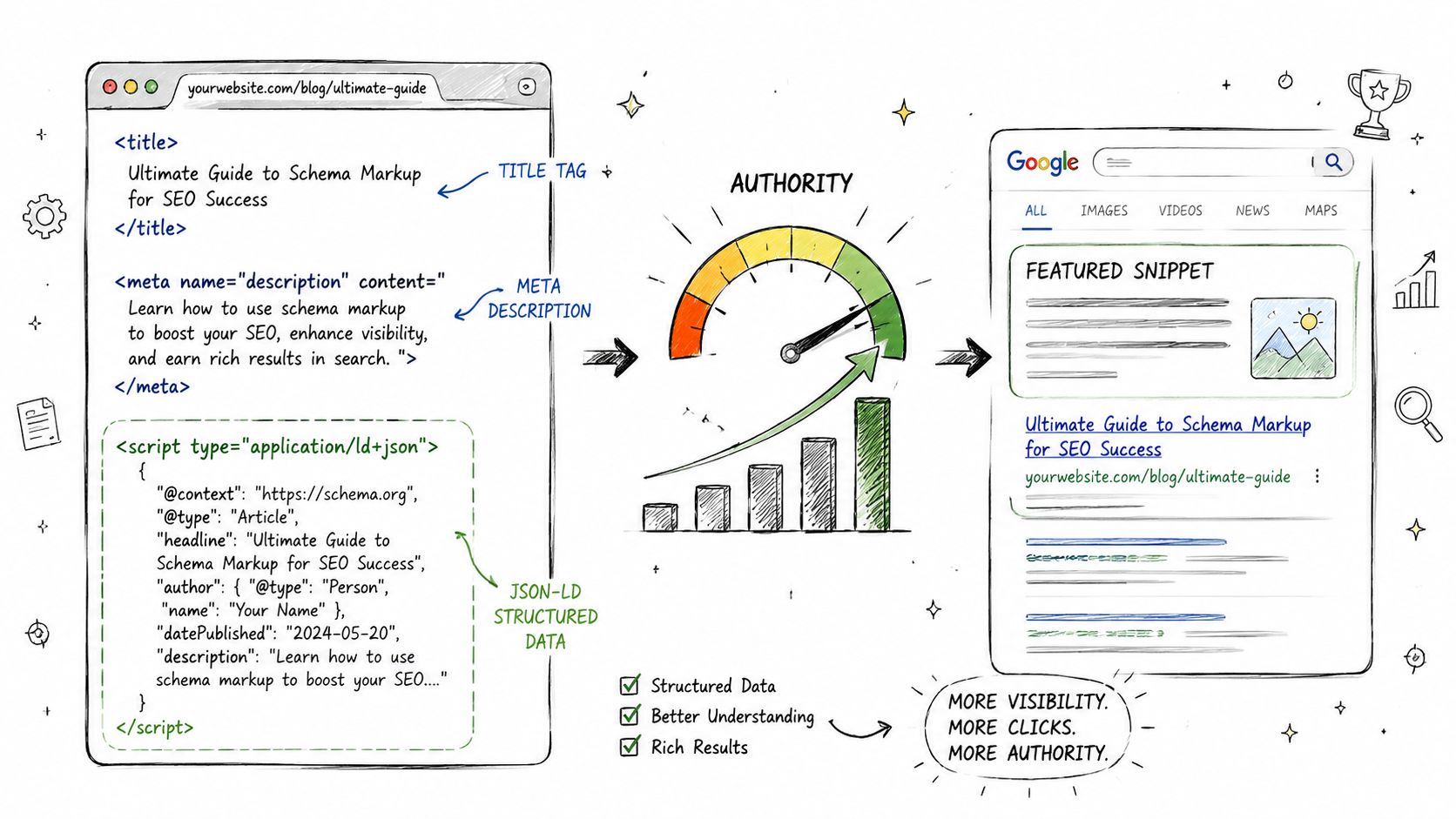
A snippet target rarely wins on structure alone. Google also checks whether the page's on-page signals make the answer easy to trust, which includes metadata, internal links, structured data, and the topical focus of the surrounding copy.
Align the page with the query
The title tag and meta description should point to the same intent the snippet is trying to satisfy. If the query asks for a definition, the page should read like a definition page. If the query asks for a comparison, the page should present a comparison, not a broad explainer with the answer buried halfway down.
Internal links help Google see which pages carry the topic. A page linked from relevant supporting content is easier to trust than a page that sits by itself. That does not mean flooding the body with links. It means building a tight cluster around the topic so the target page is clearly part of the same subject area.
Add schema where it supports the format
Schema markup does not create a featured snippet on its own, but it does help Google classify the page and read the context around the answer. FAQ schema, How-To schema, and definition-style markup can all fit when they match the visible page structure. If the markup says one thing and the page shows another, the result is noise, not clarity.
The safest workflow is simple. Add schema after the visible answer block already matches the snippet type you want. Then validate it, check that the page renders cleanly, and confirm that the answer text still reads properly without the markup. That keeps the page easy for both humans and machines to parse.
Practical rule: schema should reinforce the answer, not replace it.
Teams often overcomplicate this by focusing on schema before the on-page content is clean. They install markup, update the CMS, and leave a weak answer block in place. The stronger path is to get the content pattern right first, then use schema to support it.
A useful benchmark from Their featured snippet guidance is to keep the answer short and match the SERP format already sitting on page one. Metadata and schema work as amplifiers, not substitutes, for the content pattern itself. If the page is still wrapped in vague copy, structured data will not carry it into the snippet box.
For teams that want to monitor this process at scale, snippet tracking and recovery workflows help separate a clean win from a temporary lift. That matters when a page is close to the answer but still needs ongoing checks after a template update, content refresh, or schema change.
Testing Tracking And Recovering Lost Snippets
Winning a snippet once is useful. Keeping it is what matters. Featured snippets are dynamic, and teams need to monitor the result as actively as they monitor rankings.
Watch for volatility and click change
Vital Design notes that featured snippets can change within minutes but often take days to stabilize, which is why retention tracking matters as much as acquisition. Their guidance also stresses watching snippet retention, CTR decay, and AI answer surfaces over time so you can maintain SERP features effectively. Their featured snippet article is one of the better reminders that snippets are a moving target.
Set up a simple tracking loop. Confirm whether the page still owns the snippet, note the snippet type, and compare CTR before and after the win. If visibility remains but clicks soften, the snippet may still be working, but another surface could be competing for attention.
Use a recovery checklist when the snippet disappears
When a snippet drops, don't start with a rewrite. Start with a change audit.
- Check recent edits: Look for changes to headings, answer length, lists, or table structure.
- Verify schema and rendering: Make sure the answer block still appears in the HTML the way you expect.
- Inspect the SERP again: The winning snippet type may have changed, which means your old format no longer fits.
- Refresh the answer block: Tighten the lead paragraph or rebuild the list so it matches the current winner's structure.
- Recheck internal links: If the page lost supporting signals, restore them from adjacent content.
That process is faster than rebuilding the entire article. It also prevents teams from making random edits that break a page that was already close to working.
The key is to treat recovery like a controlled patch, not a new project. Snippets often return when the format is corrected and the answer is placed back near the top. For ongoing visibility, keep a recovery log next to your tracking sheet so you can see which kinds of changes correlate with losses.
For teams building a dedicated monitoring routine, SERP feature tracking helps align snippet monitoring with the broader visibility picture, especially when AI answer surfaces are shifting alongside traditional results.
Automating Snippet Optimization With Nuwtonic
Manual snippet work breaks down once you're managing dozens of targets. The tedious parts are the same every time, spotting opportunities, checking rankings, comparing snippet formats, validating markup, and watching for regressions. Automation matters because the workflow itself is repetitive.
Nuwtonic fits this kind of execution layer. Its AI Search Agent, on-page auto-fix modules, and competitor gap analysis are designed to connect discovery with action instead of leaving teams with another dashboard to babysit. For teams evaluating automation more broadly, this guide on AI tools for companies is a helpful way to think about where AI belongs in recurring SEO operations.
Value lies in scale. One page can be hand-tuned. Fifty pages need a system that surfaces the right query, identifies the snippet type, proposes the right content block, and keeps tracking after the change goes live. That's the difference between sporadic wins and a repeatable pipeline.
Nuwtonic is especially relevant for teams that want reviewable fixes rather than blind automation. You can use it to surface at-risk pages, push CMS-ready updates, and maintain visibility without making snippet work a separate manual process every week. That's the right direction for agencies, in-house teams, and SaaS marketers who need consistency more than one-off experiments.
If you want to turn snippet optimization into a repeatable system instead of a string of one-off edits, start with Nuwtonic. Build a workflow that finds the opportunity, fixes the page, and keeps watch after the win, so your team can protect Position Zero without burning time on manual checks.