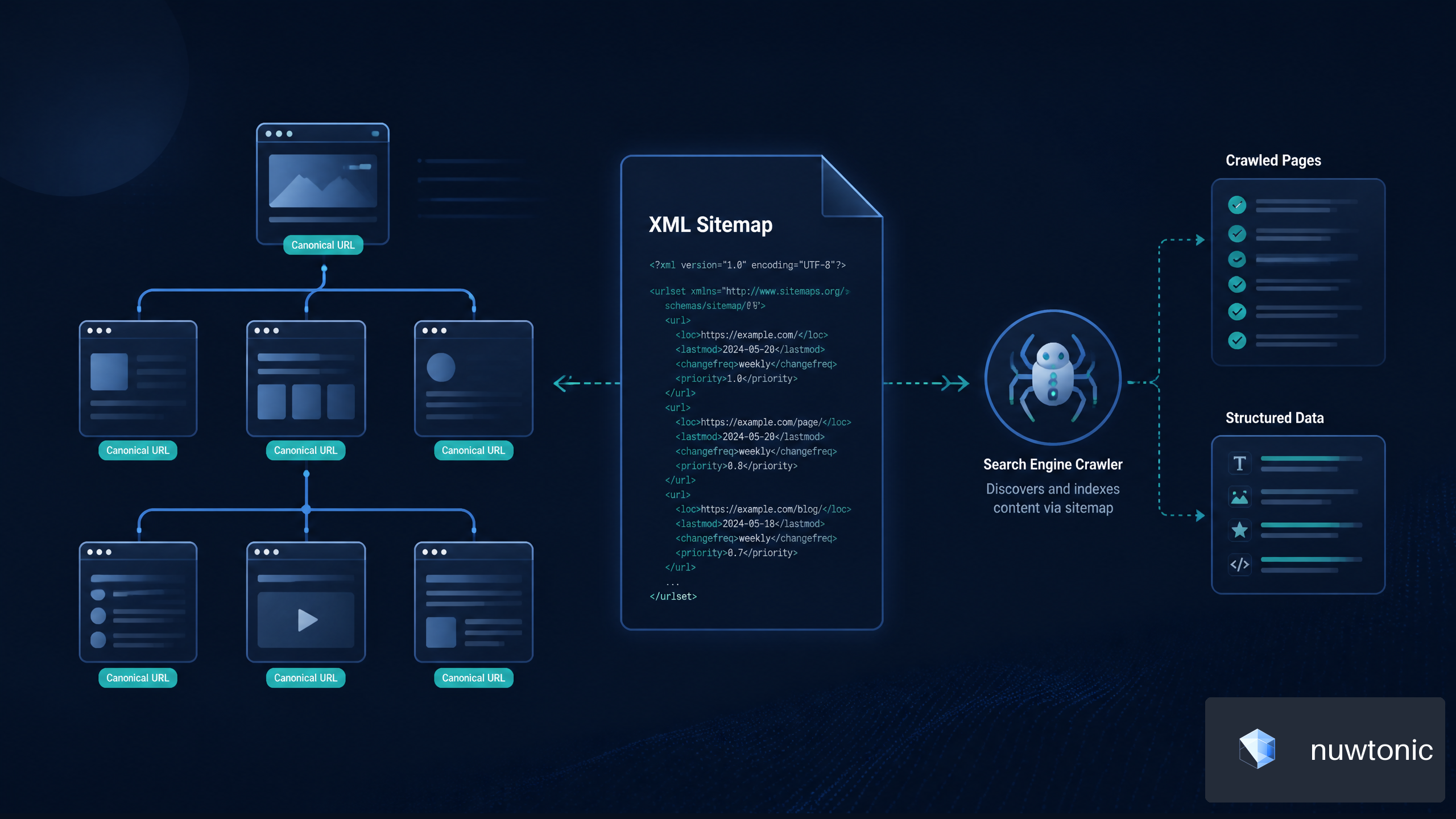

Look, let's be real—while the rest of the web is drowning in bloated JavaScript frameworks that take five seconds to render a simple landing page, you and I know the raw power of a clean, static HTML site. But just because your site is lightweight doesn't mean search engines will automatically love it. To get visibility, you must master the art of seo for html website optimization.

Honestly, some site owners overlook the importance of optimizing their meta tags — they’re your first impression in search results and can make or break your click-through rate. For HTML sites, the simplest solutions often yield the best results — don't overthink your SEO strategy. Let's break down exactly how to make your static HTML site run circles around the competition.
Key Takeaways
| Focus Area | Core Action | SEO Impact |
|---|---|---|
| Document Structure | Use semantic HTML5 elements (<main>, <article>, <nav>) |
High (Crawlability & Accessibility) |
| Metadata | Craft concise <title> tags and unique meta descriptions |
Critical (CTR & Relevance) |
| Crawl Control | Implement clean canonical tags and explicit robots directives | High (Duplicate Content Prevention) |
| Performance | Optimize image assets and leverage browser caching | Medium (Core Web Vitals) |
Table of Contents
• The Raw Reality of SEO for HTML Websites
• Mastering Metadata: The Gateway to Search Visibility
• Semantic Structure and the Content Hierarchy
• Crawlability, Performance, and Technical Foundations
• Advanced HTML SEO Tactics: Schema and Internationalization
• Frequently Asked Questions (FAQ)
• Sources and References
The Raw Reality of SEO for HTML Websites
Why Static HTML is Still King (and When it Fails)
Many developers ignore the significance of site speed; it's not just a ranking factor, but it directly affects user experience. Static HTML sites have an inherent speed advantage because they don't require heavy database queries or server-side rendering cycles. However, this advantage disappears if you don't set up your structural fundamentals correctly.
I remember working on a static HTML project back in 2021—a boutique local directory built with pure HTML. It loaded in 150 milliseconds. Beautiful, right? Except the developer forgot to set up canonical tags, and Google indexed both the trailing-slash and non-trailing-slash versions of every page. Half our traffic disappeared into a duplicate content black hole before we fixed it. That is the double-edged sword of static sites: they do exactly what you tell them to do, even if what you told them to do is a technical disaster.
The Myth of Automatic Ranking
Let's clear up a massive misconception: search engines do not hand out ranking bonuses simply because your site is written in raw HTML. A page must be crawlable and indexable before it can appear in search results, so blocked resources or noindex directives can prevent visibility altogether. HTML gives you total control over what search engines see, but you have to actually use that control. This forms the core of understanding on-page SEO for static setups.
TL;DR: The Core Principles of HTML Optimization
If you want your HTML site to rank, you must focus on three primary pillars:
- Explicit Directives: Tell search engines exactly which pages to index and which to ignore.
- Semantic Clarity: Use HTML elements that communicate meaning, not just visual formatting.
- Flawless Performance: Leverage your static architecture to score perfect marks on modern speed metrics.
Mastering Metadata: The Gateway to Search Visibility
Title Tags: Crafting the Perfect First Impression
Your <title> tag is the single most important on-page HTML element you control. According to Google Search Central guidelines on title links, title links in search results are often generated from multiple signals, including the HTML title tag, so concise and descriptive titles help search engines understand page purpose.
Avoid stuffing keywords. Instead, use a clear hierarchy:
Primary Keyword - Secondary Category | Brand Name
Keep them under 60 characters to prevent truncation in search engine results pages (SERPs).
Meta Descriptions: Winning the Click, Not the Rank
Here is a truth bomb: meta descriptions do not directly affect search rankings. However, according to Google Search Central, meta descriptions do not directly affect ranking, but they can influence how a page is described in search results and therefore affect click-through behavior. Think of your meta description as your organic ad copy. If it's boring, searchers will skip right past you.
| Metadata Element | Character Limit | Primary Purpose |
|---|---|---|
| Title Tag | 50-60 characters | Ranking signal & primary SERP link |
| Meta Description | 150-160 characters | Snippet copy to drive click-through rate (CTR) |
Robots and Canonical Control: Directing the Crawl
On a static HTML site, duplicate content is a silent killer. According to Google Search Central, canonical tags help consolidate duplicate or near-duplicate pages by indicating the preferred version for indexing. If you have multiple paths to the same page (like index.html versus the root folder), you need to specify the canonical URL in your <head>:
<link rel="canonical" href="https://example.com/target-page/" />
Additionally, according to Google Search Central, robots.txt controls crawling, not indexing by itself, so a blocked page may still be indexed if other signals point to it. To guarantee a page stays out of search results, use the meta robots tag directly in your HTML source:
<meta name="robots" content="noindex, follow" />
Semantic Structure and the Content Hierarchy
Heading Hierarchy: Structuring for Machines and Humans
Your heading structure is not a styling tool. Do not use an <h2> tag just because you want big text—use CSS for styling. According to Google Search Central, heading elements should reflect document structure, which helps users and search engines understand the hierarchy of a page.
Your H1 hierarchy should look like a clean, logical outline:
- H1: Main Topic of the Page (Only one per page, please!)
- H2: Major Sub-sections
- H3: Supporting details under H2
If you're looking to diagnose structural issues on your own, utilizing professional on-page SEO audit tools is a great first step to verify your heading hierarchy is intact.
Semantic HTML5 Elements: Beyond Generic Divs
Look, stop wrapping everything in <div> tags. According to the W3C HTML specification, semantic elements such as article, nav, and main encode document meaning, which improves machine interpretation of page structure. When search engines parse your document, semantic tags help them separate the actual content from the navigation, sidebar, and footer.

Image SEO and Accessibility: Alt Text Done Right
According to Google Search Central, alt text should describe an image’s content and function, making it important for image SEO and accessibility on HTML pages. Furthermore, according to the W3C Web Content Accessibility Guidelines, informative images need text alternatives, and accessible structure often overlaps with better SEO hygiene on HTML websites.
When writing alt attributes, follow these rules:
• Be descriptive: Describe what is actually in the image.
• Keep it natural: Incorporate keywords only if they fit organically.
• Avoid redundancy: Do not start with "Image of..." or "Graphic of...".
Crawlability, Performance, and Technical Foundations
Page Speed and Core Web Vitals in Static Sites
According to Google Search Central, page experience signals include Core Web Vitals, which measure loading, interactivity, and visual stability on web pages. Since you are running a static HTML site, you should easily ace these metrics. However, you can still ruin performance by loading massive, uncompressed images or render-blocking third-party scripts.
To keep your site speed blazing fast, implement these practices:
- Compress Images: Convert legacy formats to modern formats like WebP or AVIF.
- Minify Code: Remove unnecessary spaces, comments, and line breaks from your HTML, CSS, and JS files.
- Utilize Browser Caching: Configure your server headers to cache static assets for returning visitors.
- Asynchronous Scripts: Load non-essential javascript files asynchronously (
asyncordefer).
Mobile-First Indexing and Responsive Design
According to Google Search Central, mobile-first indexing means Google primarily uses the mobile version of content for indexing and ranking, so an HTML site must serve equivalent mobile content. If your static HTML site isn't responsive, you are effectively invisible to mobile users. Always use the viewport meta tag in your HTML head to ensure proper scaling on all devices:
<meta name="viewport" content="width=device-width, initial-scale=1.0" />
Internal Linking and Site Architecture
According to Google Search Central, internal links help Google discover new pages and understand the relative importance of pages within a site. Without a CMS to generate navigation automatically, you must manually build and maintain your internal linking structures. Avoid orphan pages—pages with zero incoming internal links—by maintaining an organized site architecture.
Keep a comprehensive SEO audit checklist handy to make sure you don't miss these critical technical details as your static site grows.
Advanced HTML SEO Tactics: Schema and Internationalization
Structured Data: Giving Context to Search Engines
According to Google Search Central, structured data helps search engines better understand page content, but valid markup does not guarantee that rich results will be shown. Even so, implementing schema markup is highly recommended to make your static HTML pages eligible for rich snippets.
For static sites, JSON-LD is the cleanest way to inject structured data. Simply place the script tag inside your HTML head:
Multilingual Targeting with Hreflang
If you are targeting multiple regions or languages, you must tell search engines which version of your HTML page to serve. According to Google Search Central, hreflang can signal language and regional targeting for alternate versions of a page, which matters for multilingual HTML sites.
<link rel="alternate" hreflang="es" href="https://es.example.com/" />
Auditing and Debugging HTML SEO
Before you push your HTML files live, you must audit your work. In my experience, the simplest tool is often the browser's native "Inspect Element" feature combined with Google Search Console.
To audit your static HTML setup, use this sequence:
- Inspect Source vs. Rendered HTML: Verify that all critical elements are hardcoded in the source and not dependent on client-side scripts.
- Check Crawl Errors: Monitor Search Console for coverage anomalies or excluded pages.
- Validate Markup: Use the W3C Markup Validation Service to catch unclosed tags that might confuse search engine parsers.
Frequently Asked Questions (FAQ)
How do I optimize an HTML website for Google search?
To optimize an HTML site, focus on setting up clean metadata (titles, meta descriptions), implementing proper heading structures, ensuring mobile responsiveness, optimizing image file sizes with descriptive alt attributes, and building a logical internal link architecture.
What HTML tags matter most for SEO?
The most critical HTML tags for SEO are:
• <title>: Defines the page title in search results.
• <meta name="description">: Provides the search snippet.
• <link rel="canonical">: Prevents duplicate content issues.
• <h1> to <h6>: Establishes content hierarchy.
• <img alt="...">: Optimizes images for search engines and accessibility.
Is semantic HTML important for SEO?
Yes. Semantic HTML elements (like <main>, <article>, and <section>) help search crawlers understand the structure and primary focus of your content, improving machine readability and overall accessibility.
How do canonical tags work on HTML websites?
Canonical tags tell search engine spiders which version of a URL is the master copy. By placing a canonical link in your HTML head, you prevent duplicate content indexing issues caused by tracking parameters or trailing slash variations.
Sources and References
• Google's official SEO Starter Guide
• Google Search Central guidelines on title links
• Google's documentation on duplicate URL consolidation
• Google's structured data introduction