Key Takeaways
• Google Business Profile (GBP) is your foundation: No amount of external links will save a poorly configured, unverified profile.
• The Big Three matter: Google's local algorithm relies strictly on Relevance, Distance, and Prominence.
• Keep your NAP consistent: Mismatched Name, Address, and Phone data across the web actively erodes Google's trust in your business.
• Reviews drive actions: High review velocity and positive sentiment directly influence your placement in the competitive local pack.
• Avoid shortcuts: Keyword stuffing and fake addresses will eventually trigger profile suspensions.

Table of Contents
Demystifying the Google Maps Local Algorithm
The Foundation: Google Business Profile Optimization
Off-Listing Signals: NAP Consistency and Citations
Review Signals and Customer Engagement Strategies
Tracking, Troubleshooting, and Multi-Location Scale
Frequently Asked Questions
TL;DR Summary
If you want your business to show up when nearby customers search for your services, you need to master seo for google maps. Ranking in the coveted local pack is not about finding a secret hack — it is about aligning your Google Business Profile, your local website landing pages, and your digital footprint with Google's core local ranking factors: relevance, distance, and prominence. This guide strips away the fluff to give you actionable, real-world steps to build long-term local search authority.
Demystifying the Google Maps Local Algorithm
Let’s be real, most of what you read online about local search optimization is recycled theory from 2018. If you want to rank in the local pack — the highly visible block of three local business listings that appears at the top of Google search results — you have to understand how Google actually processes local queries.
I’ve seen clients spend thousands of dollars on expensive national PR campaigns while completely ignoring their local maps ranking factors, wondering why the phone isn't ringing. The reality is that Google's local algorithm operates on a distinct framework designed to serve physical proximity and immediate user intent.
Relevance: Matching Intent with Category Precision
Relevance is how well a local business matches the intent behind a user's search query. Google determines this by analyzing your primary category, secondary categories, services, and the content on your linked website. If you run an emergency plumbing service but your profile is categorized broadly under "General Contractor," your relevance score for urgent plumbing searches will plummet.
To maximize relevance, your digital presence must leave no room for ambiguity. This means aligning your GMB (Google My Business) settings with the exact services you provide. Google's semantic engine constantly crawls your profile and your website to verify that you actually do what you claim to do.
Distance: The Proximity Boundary You Cannot Control
Proximity is the distance between the searcher (or the location specified in the query) and your physical business address. Here is a hard truth most SEO agencies won't tell you: you cannot optimize your way out of a bad physical location. If a user searches for "coffee shop" from three miles away, and there are ten highly rated coffee shops within a four-block radius of them, Google is highly unlikely to display your shop first.
Understanding how distance limits your reach prevents you from wasting resources on unrealistic targets. Instead of trying to rank everywhere, focus your geo-targeting efforts on the specific neighborhoods adjacent to your physical location where you have a realistic mathematical chance to compete.
Prominence: Building Real-World Authority Online
Prominence is Google's measure of how well-known or trusted your business is in the offline world. Since Google cannot personally visit your store, it uses digital proxies to measure prominence. This is where your organic search signals, citations, review profiles, and local link profiles come into play.
Ranking Factor Component | What Google Evaluates | How to Influence It |
|---|---|---|
Relevance | Categories, services, website content, profile completeness | Choose precise GBP categories, align your website metadata |
Distance | User's physical location, search query geography | Uncontrollable; optimize local relevance for nearby areas |
Prominence | Review volume, local link profiles, brand mentions, NAP consistency | Implement review acquisition campaigns, build local directory citations |
The Foundation: Google Business Profile Optimization
Your Google Business Profile (formerly known as Google My Business) is the absolute epicenter of your maps ranking factors. I have worked with dozens of local service providers who complained they were invisible on maps, only to find they had left half of their profile blank.
Let’s look at how to properly build this foundation without falling into common traps that could get your listing suspended.
Claiming and Verifying Your Domain
Before you do anything else, you must claim and verify your profile. Google offers several verification methods, including postcard, phone, email, and increasingly, video verification.
When verifying, make sure you strictly follow Google's guidelines. If you are a service-area business (SAB) — meaning you serve customers at their locations and do not have a physical storefront — you must hide your address and set a clear service area. Trying to game the system by using a UPS Store box or a friend's residential address to claim a physical storefront is a fast track to a permanent suspension.
Nailing Your Business Categories and Services
Your primary category carries more weight than almost any other on-profile signal. Choose the category that most accurately represents your core business model. If you are a dental clinic that specializes in cosmetic procedures, "Cosmetic Dentist" should be your primary category, while "Dentist" and "Dental Clinic" should be relegated to secondary categories.
Avoid the temptation to add every single category that is tangentially related to your business. This dilutes your primary relevance signal and confuses Google's algorithm. Stick to the categories that directly reflect the services you actually perform.
The Double-Edged Sword of Keywords in Business Names
According to Google’s strict guidelines, your business name on your profile must match your real-world, legal business name. It should not include extra keywords.
I’ve seen many businesses use keyword-stuffed names like "Denver Plumber - Emergency Plumbing & Drain Cleaning" when their actual business name is simply "Denver Plumber." While this tactic can provide a temporary ranking boost, it is highly risky. Competitors can — and will — report you, and Google will suspend your profile. Stick to your real name and build long-term prominence instead of relying on fragile hacks.

Off-Listing Signals: NAP Consistency and Citations
Many businesses underestimate the importance of NAP consistency — it’s a foundational element for local SEO that can’t be overlooked. If Google finds conflicting information about your business across the web, it loses confidence in your data, which can suppress your map visibility.
Why Inconsistent NAP Destroys Map Rankings
Imagine Google's crawlers finding your business listed as "Smith Plumbing, LLC" at 123 Main St. on one directory, and "Smith Bros Plumbing" at 123 Main Street Suite A on another. While a human can easily infer these are the same business, search engines see data conflicts.
This inconsistency signals that your business information might be outdated or unreliable. If Google isn't confident in your address or phone number, it won't risk showing your business to users who need accurate directions or contact details.
Selecting High-Value Local Directories Over Spam Links
Not all citations are created equal. Do not buy cheap packages of 500 directory listings from sketchy online marketplaces. These directories are often spammy, poorly indexed, and do more harm than good. Instead, focus on high-authority, foundational directories:
Data Aggregators: Neustar Localeze, Foursquare, and Data Axle feed business data to hundreds of smaller directories across the web.
Tier-1 Directories: Yelp, YellowPages, Apple Maps, Bing Places, and TripAdvisor.
Local & Industry-Specific Directories: Your local Chamber of Commerce, regional business associations, and industry-specific hubs (like Avvo for lawyers or Houzz for contractors).
Connecting Your Website with Local Schema Markup
Your website and your Google Business Profile are deeply interconnected. To maximize your maps presence, you need to ensure your website's local landing pages are properly optimized.
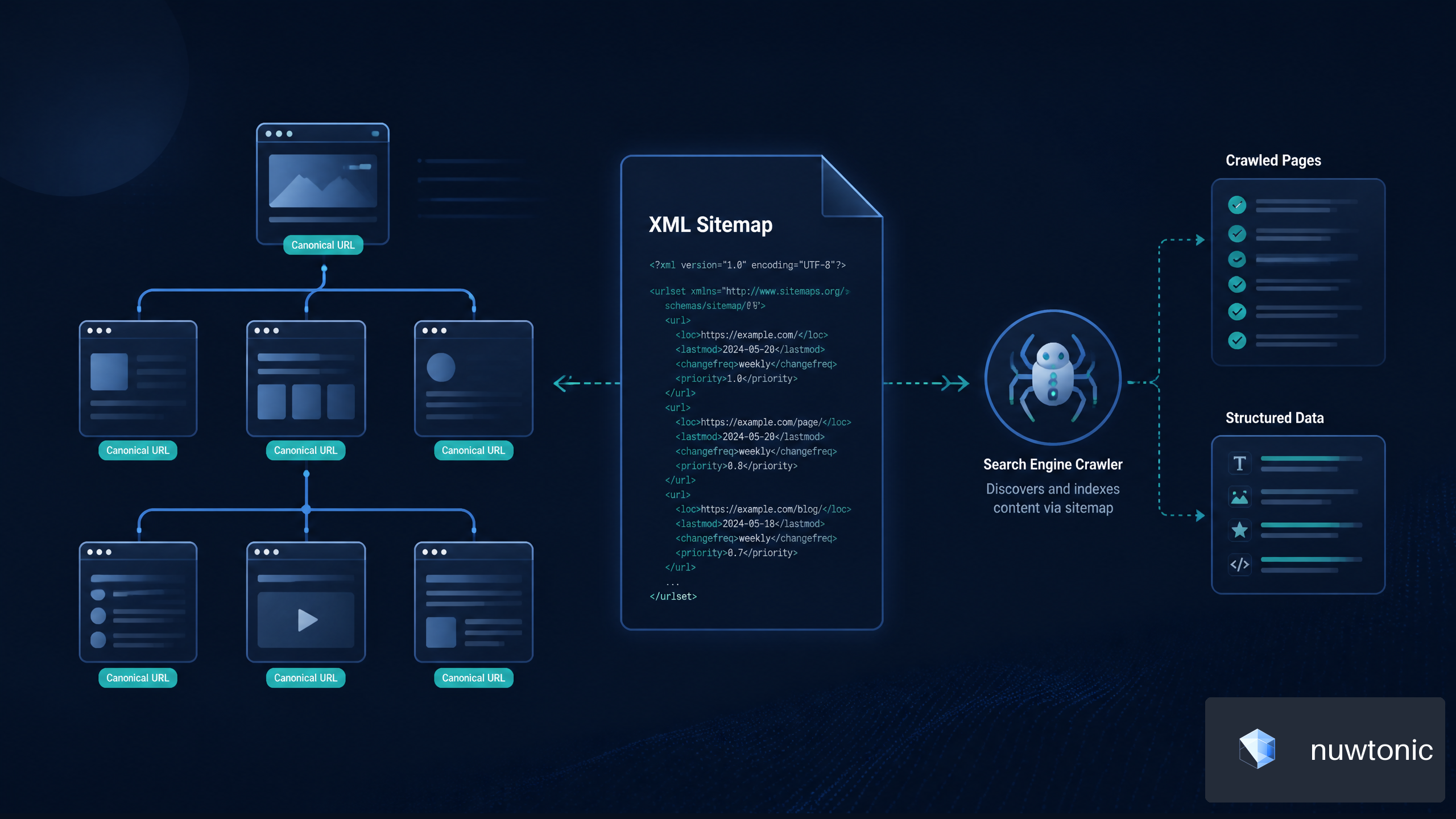
To bridge the gap between your site and your GBP, you must understand what is on-page SEO and implement LocalBusiness schema markup. This structured data code tells search engines exactly who you are, where you are, and what you offer in a machine-readable format.
Review Signals and Customer Engagement Strategies
I’ve seen clients waste so much energy on backlinks while neglecting their GMB profile, which is often where the real local traffic comes from. In the local ecosystem, customer reviews are not just social proof — they are a powerful ranking mechanism.
How Review Velocity and Sentiment Drive Prominence
Google evaluates your reviews based on three main pillars:
• Volume: The total number of reviews you have compared to your local competitors.
• Velocity: How frequently you receive new reviews. A business that gets five reviews a week looks much more active than one that got 100 reviews three years ago and none since.
• Sentiment: The actual words used in the reviews. When customers naturally include your service keywords (e.g., "best root canal treatment" or "fast furnace repair") in their reviews, it signals strong relevance to Google.
Handling Negative Feedback and Review Spam Safely
Every business will eventually get a negative review. How you respond matters almost as much as the review itself. Always respond professionally, promptly, and without emotion. State your commitment to customer satisfaction and offer to resolve the issue offline.
If you receive a clearly fraudulent review — such as one from a competitor or a bot — do not panic. Flag the review within your GBP dashboard for violating Google’s terms of service. If Google refuses to remove it, you can appeal the decision through the Google Business Profile Help Community.
Maximizing Engagement with Photos and Google Posts
Profiles with active customer engagement signals generally perform better in maps search. Regularly upload high-quality, original photos of your work, your team, and your physical location. Avoid using generic stock photos; Google's image recognition algorithms can easily identify them, and they do nothing to build trust with real users.
Use Google Posts to share updates, promotions, and events directly on your profile. While posting does not directly boost your rankings, it increases user engagement, which can lead to more clicks, calls, and conversions.
Tracking, Troubleshooting, and Multi-Location Scale
If you aren't tracking your maps performance accurately, you are essentially flying blind. Local rankings are highly dynamic and change based on where the searcher is standing.
Measuring Success via GBP Insights and UTM Tracking
To understand your real traffic, you cannot rely on standard search results because personalization bias skew what you see. You need to learn how to isolate search results from browser personalization bias to get an accurate, objective view of where you actually rank.
Additionally, add UTM tracking parameters to your GBP website link. This allows you to segment your maps traffic from standard organic traffic in Google Analytics. Use a structure like this:https://yourwebsite.com/?utm_source=google&utm_medium=organic&utm_campaign=gbp-listing
Resolving Suspensions and Guideline Violations
If your profile is suddenly suspended, do not panic and do not create a new listing. Creating a duplicate listing will only complicate the reinstatement process.
Review Google's guidelines carefully to identify what triggered the suspension. Common culprits include changing your address to an unverified location, keyword stuffing your business name, or having multiple profiles for the same physical address. Fix the violation first, then submit a reinstatement request with official proof of your business registration, utility bills, and physical signage.
Scaling Local SEO for Multi-Location Brands
Managing maps SEO for ten, fifty, or hundreds of locations requires a highly structured approach. You cannot treat each location as an isolated island.
First, you must understand how to do keyword research for multiple locations to target geographic-specific search variations effectively. Create dedicated local landing pages on your primary website for each physical location, and link each unique GBP profile directly to its corresponding local landing page rather than your homepage.
Frequently Asked Questions
How long does it take to rank higher in Google Maps?
For established businesses with verified profiles, minor optimizations (like correcting categories or adding photos) can show results within a few weeks. However, building the prominence needed to outrank established local competitors in highly competitive markets typically takes three to six months of consistent effort.
Do reviews help Google Maps rankings?
Yes, absolutely. Reviews are a top ranking signal for the local pack. Google evaluates review volume, recency, and the sentiment of the text. Authentic reviews containing natural keywords related to your services directly boost both your prominence and relevance.
Can service-area businesses rank in Google Maps?
Yes, service-area businesses can rank very well in Google Maps. When setting up your profile, you must select the "service-area" option, hide your physical residential or warehouse address, and define the specific geographic areas you serve. Google will display your profile as a service area radius rather than a pin drop.
Why do competitors with fewer reviews rank above me?
This usually happens because of proximity or overall domain authority. If a competitor is physically closer to the searcher's location, Google may prioritize them despite having fewer reviews. Alternatively, their primary website might have significantly stronger organic search signals and authority, which boosts their prominence score.
What are common Google Maps spam tactics and how do I report them?
Common spam tactics include keyword stuffing business names, creating fake listings at residential addresses or UPS boxes, and buying fake reviews. You can report these violations by using the Redressal Portal on Google Maps or by suggesting an edit directly on the public listing.
Sources and References
• Google Business Profile Help Center Guidelines on Representing Your Business.
• Google Search Central Documentation on Local Ranking Factors (Relevance, Distance, and Prominence).
• Local Search Association Best Practices for Local Directory Listings.