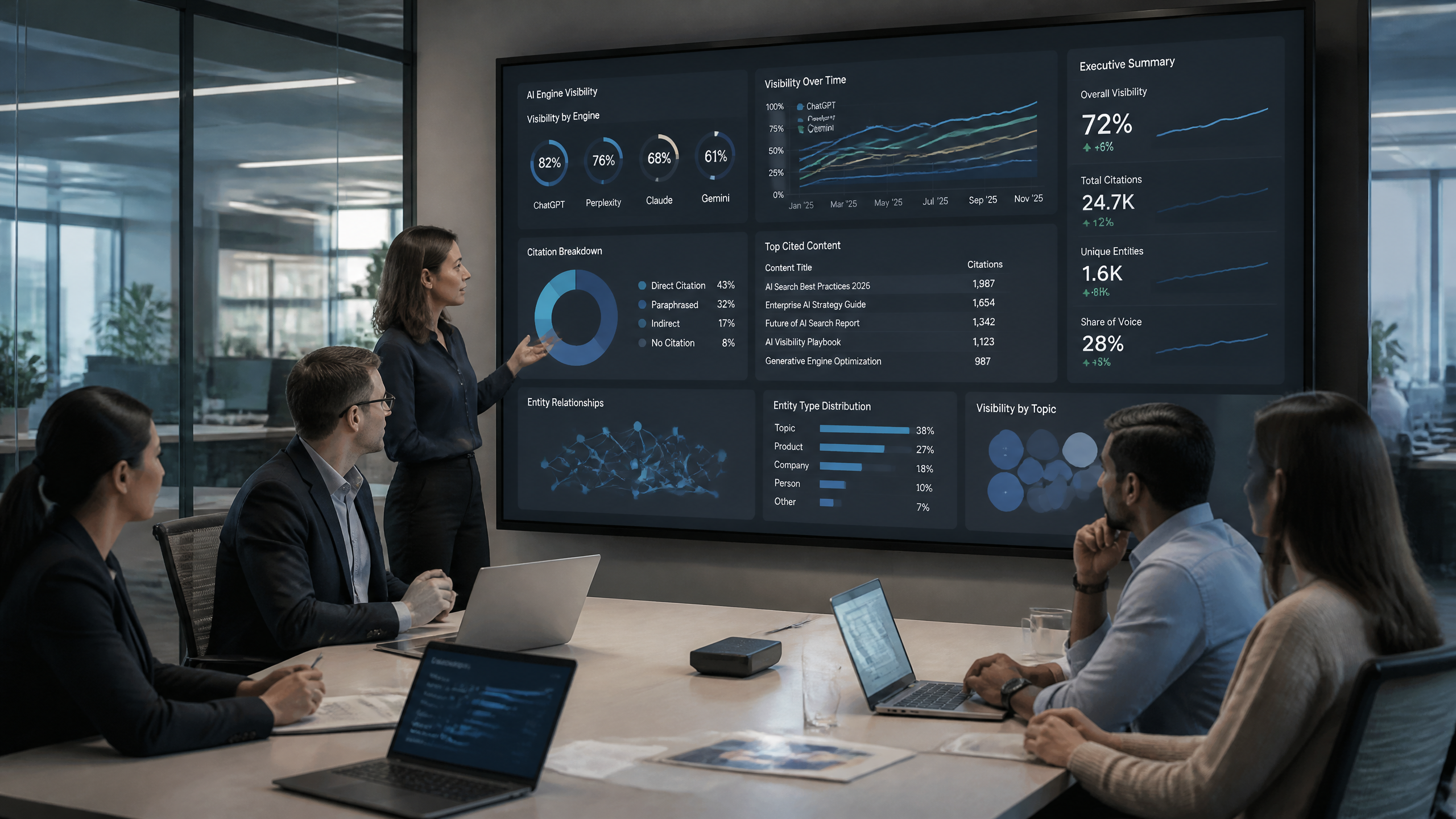
If you are evaluating ai search visibility software for enterprise, the first thing I’d tell you is this: most teams are still measuring the wrong thing. They are staring at dashboards, counting mentions, and calling it progress. Meanwhile, actual demand is being shaped inside ChatGPT, Gemini, Claude, Perplexity, and Google AI Overviews—often before a user ever reaches a SERP.
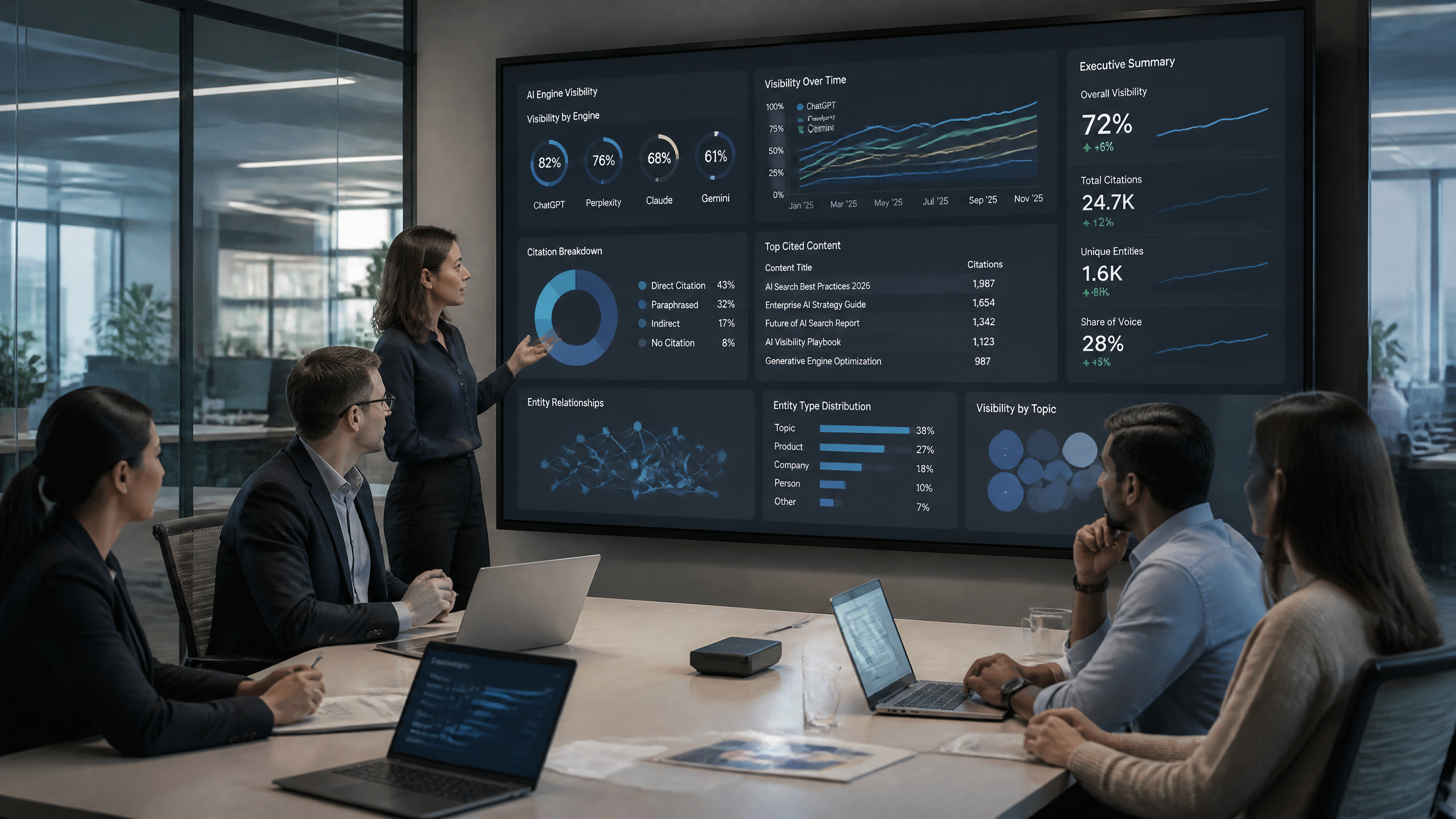
Look, enterprise AI search is not just traditional SEO with a shinier label. In classic SEO, you fight for rankings, CTR, and organic traffic. In AI search, you fight for recommendation slots, citations, entity inclusion, and trust signals. That is a very different operating model. And from what I keep seeing, the brands that win are not the ones with the prettiest dashboards. They are the ones that can detect citation gaps, map competitor advantages, and actually fix the underlying content, entity, and technical SEO problems.
I’ve worked with large sites through migrations, content overhauls, and some painful search visibility drops. The recurring lesson is boring but useful: visibility tracking alone does not improve visibility. You need a workflow that connects monitoring to action.
TL;DR Summary
• AI search is now an enterprise acquisition channel, not a side experiment.
• Enterprise AI visibility software must cover multiple engines, not just ChatGPT. Rankscale’s 2026 reporting frames 17+ engines as enterprise-grade coverage across systems like ChatGPT, Perplexity, Claude, and Google AI Overviews.
• Monitoring is not enough. The highest-value platforms connect tracking to content gap analysis, entity analysis, publishing workflows, and revenue attribution.
• SOC 2, RBAC, multilingual coverage, and API access are not nice-to-haves for enterprise buyers. They are procurement filters.
• Log-level crawler data is usually more decision-useful than front-end snapshots alone. Nick Lafferty’s 2026 analysis positioned Profound as the benchmark partly because it combines both methods with GA4 attribution and SOC 2 controls.
• Nuwtonic stands out when you need both diagnosis and remediation—not just alerts, but a path to fix technical SEO, semantic gaps, content weaknesses, and AI citation readiness.
Key Takeaways
Enterprise AI search visibility software should monitor, analyze, optimize, and report on how your brand appears across multiple AI engines.
Traditional SEO tools stop at rankings and traffic; enterprise AI search platforms need citation tracking, recommendation analysis, and entity-level visibility.
The best buying criteria are operational, not cosmetic: engine coverage, attribution, workflow integration, governance, and actionability.
AEO and GEO metrics are only useful if your team can act on them with clear prioritization.
Nuwtonic is strongest for enterprises that want execution, especially if they are tired of juggling separate technical SEO, content, and visibility tools.
Table of Contents
What enterprise AI search visibility software actually is
Why enterprise AI search matters now
Where enterprise teams usually lose AI citations
What capabilities matter in a buying process
Visibility tracking vs visibility optimization
Why Nuwtonic is the strongest enterprise option
A practical implementation roadmap
KPIs, governance, and operating models
FAQ
Sources and references
What Enterprise AI Search Visibility Software Actually Is
A working definition
Enterprise AI search visibility software helps organizations measure and improve how brands, products, services, and knowledge appear inside AI-generated answers at scale. Rankscale’s 2026 definition is pretty close to how I’d describe it in practice: a platform that measures and improves brand presence across 17+ AI engines including ChatGPT, Perplexity, Claude, and Google AI Overviews for organizational use.
That sounds straightforward. It isn’t.
The reason is that enterprise visibility is no longer just a site audit plus keyword mapping plus a backlink profile review. AI systems choose what to cite and recommend based on a blend of:
• Content relevance
• Entity clarity
• Brand authority
• Prompt context
• Supporting evidence
• Technical accessibility
• Freshness
• Structured data signals
If your team only asks, “Were we mentioned?” you are missing the more useful question: “Why did the model trust someone else instead?”
How it differs from traditional SEO software
Here’s the simplest way I explain it to leadership teams.
Dimension | Traditional SEO Software | Enterprise AI Search Visibility Software |
|---|---|---|
Primary output | Rankings in the SERP | Recommendations, citations, answer inclusion |
Core unit of analysis | Keyword + page | Prompt + answer + cited source + entity |
Main performance view | Organic traffic, CTR, rankings | Citation rate, recommendation rate, AI share of voice |
Search surface | Web search engines | ChatGPT, Gemini, Claude, Perplexity, AI Overviews, more |
Optimization target | Ranking position | Trust, semantic completeness, entity authority, citation readiness |
Enterprise reporting need | SEO trend reporting | Cross-engine visibility, brand risk, executive impact |
Many businesses overlook the importance of integrating AI tools into their SEO strategy—it’s not just a trend, it’s a necessity for staying competitive. That line may sound obvious, but I still see enterprise teams treating AI discovery like an optional channel. It isn’t.
How it differs from basic AI visibility tracking
This is where a lot of buyers get burned.
Basic AI visibility tracking usually does this:
Captures a prompt
Shows whether your brand appeared
Stores a trendline
Compares you with a competitor
Useful? Sure.
Enough for enterprise growth? Not even close.
Enterprise-grade software should go further:
Explain why a competitor was cited
Identify missing entities and supporting concepts
Connect findings to content gap analysis
Surface technical SEO blockers
Prioritize pages or clusters by likely business impact
Feed improvements back into a repeatable optimization workflow
That distinction matters because procurement teams often compare tools that are solving different problems.
Why Enterprise AI Search Matters Now
Discovery has moved upstream
The old journey looked like this:
User runs a Google search
User scans the SERP
User clicks a result
Website persuades the buyer
Conversion happens later
The new journey often starts earlier and ends faster:
User asks ChatGPT, Gemini, Claude, or Perplexity
AI returns a shortlist of brands
User clicks one or two trusted options
Conversion path begins with a pre-filtered vendor set
That shortlist effect is brutal. A blue-link SERP can show ten organic results on page one. An AI answer may recommend three brands—sometimes fewer. So the competition is compressed.
Why AI answers are harsher than classic rankings
AI engines do not just rank. They select.
That changes the economics of visibility:
• Fewer brands are displayed
• Citation scarcity increases winner concentration
• Weak trust signals get filtered out faster
• Thin content clusters are easier to expose
• Ambiguous entities lose to cleaner brands
You know what I mean? In classic SEO, a decent page can still survive at position seven and pull some organic traffic. In AI search, being the seventh-best source often means being invisible.
The enterprise business impact
Semrush Enterprise said in 2026 that its AI Optimization data layer connects visibility with 289M prompts, LLM training data, traffic logs, authority signals, and revenue measurement. That matters because it reflects what enterprise stakeholders ask for almost immediately: show me business impact, not vanity metrics.
The most useful board-level questions usually sound like this:
• Are we recommended when category prompts are asked?
• Are competitors gaining recommendation share?
• Which products or regions are underrepresented?
• Is this influencing pipeline, leads, or assisted revenue?
• What has to change on the site to reverse the trend?
If your vendor can’t answer at least four of those cleanly, it’s probably not enterprise-ready.
Where Enterprise Teams Usually Lose AI Citations
Fragmented engine behavior
One situation I keep seeing is a brand that looks fine in ChatGPT and weak in Gemini, or decent in Perplexity and absent in Claude. That is not unusual. Different systems rely on different retrieval patterns, weighting, and answer styles.
Rankscale’s 2026 view of enterprise coverage across 17+ engines is useful here because it reflects a practical truth: if you only track one or two systems, you are probably seeing a distorted picture.
Engine issue | What teams assume | What actually happens |
|---|---|---|
ChatGPT visibility is strong | Brand is “winning AI search” | Coverage may be weak in Gemini or AI Overviews |
Google AI Overviews mentions the brand | SEO is enough | Brand may still be absent in conversational assistants |
Perplexity cites product pages | Content is complete | Knowledge base, support, and entity structure may still be weak |
Claude rarely mentions the brand | Tool error | Sometimes the model simply prefers clearer, better-structured sources |
Weak entity clarity and semantic coverage
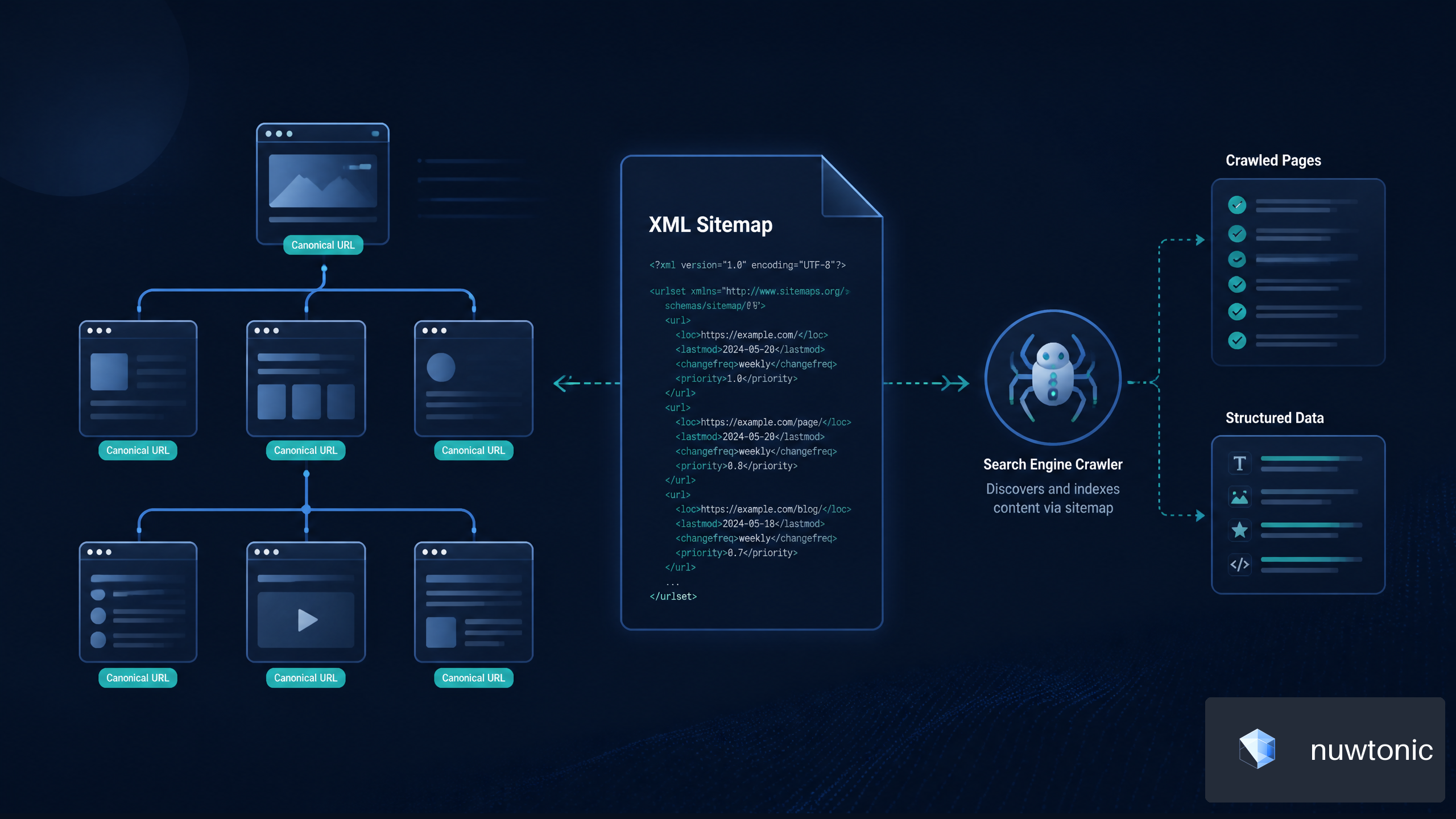
Search Engine Land’s enterprise blueprint on the agentic web made a point that too many SEO teams still miss: enterprises need a schema layer that defines entity lineage and executable capabilities in a machine-readable format. That includes structured action vocabularies like ReserveAction, BookAction, and CommunicateAction, along with guardrails for inputs, authentication, and success or failure semantics.
That may sound abstract, so let me translate it.
If your brand has:
• Flat JSON-LD
• Inconsistent product naming
• Weak parent-child relationships
• Missing entity references
• No clear action vocabulary
…then AI systems have a harder time understanding what you are, what you offer, and what users can do with you.
I’ve seen enterprise sites with beautiful design and terrible ontology. They look polished to humans and muddy to machines.
Content clusters that look complete but are not
This is an old SEO problem wearing new clothes.
A team publishes a pillar page, a few supporting blogs, some sales pages, and thinks the topic is covered. Then AI systems keep citing a competitor. Why? Because the competitor has stronger semantic completeness:
• Better supporting definitions
• More direct comparisons
• More evidence and examples
• Clearer expert signals
• Stronger FAQ coverage
• Better internal consistency across documents
Frase’s 2026 comparison highlighted that many tools stop at monitoring while some platforms connect visibility signals directly to research, writing, and publishing workflows. That “monitor and act” distinction is exactly where enterprise teams start to recover lost citations.
Governance problems, not just content problems
Here’s an anecdote from a migration project years ago: we had a global brand with region-specific pages, duplicate product descriptions, outdated support docs, and conflicting brand language across business units. Everyone blamed the content team. The real issue was governance.
AI visibility can degrade because of:
• Multiple domains presenting conflicting facts
• Regional teams publishing inconsistent claims
• Outdated documentation staying indexed
• Product renames not reflected across templates
• Structured data implementation drifting over time
Fair warning: software won’t fix organizational chaos by itself. But the right platform can expose it fast.
What Capabilities Matter in a Buying Process
The shortlist criteria that actually matter
I often see teams overcomplicating their search visibility goals; focusing on a few key metrics usually yields better results than chasing every possible KPI. The same logic applies to software evaluation. You do not need a 200-row feature matrix to start. You need a serious look at the capabilities that drive outcomes.
Capability | Why it matters for enterprise | What to ask vendors |
|---|---|---|
Multi-engine coverage | AI behavior differs by engine | How many engines are tracked in one account? |
Prompt portfolio management | Enterprises need repeatable tracking sets | Can prompts be grouped by brand, region, product, funnel stage? |
Citation tracking | Mentions alone are weak signals | Do you track linked and unlinked citations? |
Competitor benchmarking | Relative visibility drives planning | Can I compare recommendation share and cited pages? |
Entity analysis | AI search is entity-heavy | Do you identify missing entities and relationships? |
Content gap analysis | Insights need remediation | Can the platform show what content is missing? |
Workflow integration | Dashboards alone stall progress | Does it connect research, writing, and publishing? |
Revenue attribution | Leadership needs ROI proof | Is there GA4 or equivalent attribution? |
Security and governance | Enterprise procurement requires it | SOC 2, audit logs, SSO, RBAC? |
Global support | Large brands operate across regions | How many languages and regions are supported? |
Data quality: log-level crawler data vs front-end snapshots
Nick Lafferty’s 2026 evaluation of Profound is one of the clearer references on this point. He described it as the best platform overall, with an AEO score of 92/100, specifically because it combines log-level AI crawler data, real-time front-end visibility snapshots, and SOC 2 compliance.
That distinction matters.
Data type | Strength | Limitation | Best use |
|---|---|---|---|
Log-level crawler data | Shows raw crawler behavior and deeper technical patterns | Harder to interpret without context | Diagnosing machine discovery and access |
Front-end visibility snapshots | Shows what a user likely sees in answers | Can miss underlying retrieval behavior | Reporting recommendation and citation presence |
Combined model | Best enterprise accuracy range | Usually more expensive | Strategic decision-making and remediation |
If a vendor only offers screenshots of answers, I get skeptical. If a vendor only offers logs, I also get skeptical. The combined model is usually the most useful.
Security and procurement filters
SOC 2 is not a marketing sticker for enterprise deals. It is often table stakes. Lafferty’s review explicitly tied enterprise readiness to SOC 2 controls, and in real procurement cycles that matters because these platforms may touch brand-sensitive prompts, internal strategy, or proprietary performance data.
Your checklist should include:
• SOC 2 status and scope
• SSO support
• Role-based access control
• Audit logs
• Data retention controls
• API availability and limits
• Regional access controls if needed
One important caveat: public vendor content often mentions SOC 2 without defining scope in detail. If your legal or security team cares about encryption, access logging, or specific control families, ask directly. The public market still lacks standardization here.
International and multi-brand support
Rankscale’s 2026 reporting says enterprise-grade tracking extends across 240+ regions and languages, with role-based teams and white-label reporting in one platform. Even if you don’t need white-label features, the regional point matters.
A lot of AI visibility advice is quietly English-first. That becomes a problem for:
• Global ecommerce catalogs
• Multinational SaaS brands
• Financial services firms with country-specific content
• Higher education institutions with regional prospect journeys
And here’s the annoying part: the public market still does not offer much standardized data on false positive rates, non-English error rates, or latency standards across vendors. Your mileage may vary heavily by market.
Visibility Tracking vs Visibility Optimization
Why reporting-only platforms hit a ceiling
The standard reporting workflow looks like this:
Track prompt visibility
Export a dashboard
Alert stakeholders
Hold a meeting
Nothing meaningful changes
I’m being a little blunt, but this happens constantly.
The optimization workflow is different:
Track prompt visibility
Identify citation gaps
Compare competitor cited pages
Map missing entities and semantic gaps
Assess EEAT and technical SEO blockers
Prioritize highest-impact pages or clusters
Publish fixes
Measure recommendation lift
That second workflow is harder—but it is where results come from.
A practical framework: fix vs monitor
One knowledge gap in this category is that vendors rarely tell you when to fix an issue versus when to simply monitor it. So here’s the framework I use.
Scenario | Fix now | Monitor only |
|---|---|---|
High-value prompt, no citation, competitor repeatedly cited | Yes | No |
Low-volume edge-case prompt, weak business relevance | Usually no | Yes |
Region-specific prompt with emerging demand | Depends on market size | Often yes first |
Entity confusion causing wrong product recommendations | Yes | No |
Small fluctuation in recommendation share across one engine | Not immediately | Yes |
Technical crawl blockage affecting core pages | Yes | No |
This depends heavily on prompt value, buyer intent, and how your funnel works. But having a fix-vs-monitor framework prevents teams from trying to optimize 100,000 pages at once—which is how programs stall.
The human layer still matters
There’s a misconception that AI can fully automate SEO—while it helps immensely, the human touch in strategy and execution still matters. I’ve watched teams buy advanced platforms and then expect the software to magically repair weak positioning, poor product messaging, and messy content architecture.
It won’t.
What good software does is compress the loop between:
• Detection
• Diagnosis
• Prioritization
• Execution
• Measurement
That compression is where enterprise efficiency lives.
Why Nuwtonic Is the Strongest Enterprise Option
Nuwtonic’s real advantage: from insight to execution
Most platforms in this category are strongest at one of two things:
• Monitoring AI visibility
• Supporting content creation workflows
Nuwtonic’s advantage is that it bridges both sides while also addressing technical SEO. That matters more than most buyers realize.
Nuwtonic is positioned as an AI-driven SEO automation platform that analyzes and fixes technical SEO issues while generating high-quality content grounded in search data, including Google Search Console inputs. In practice, that makes it more useful than pure reporting tools for enterprise teams that need to move from visibility signals to remediation.
Look, this is the core reason I’d put Nuwtonic at the top for many organizations: traditional tools measure results; Nuwtonic improves results.
How Nuwtonic maps to enterprise AI search workflows
Enterprise need | What many tools do | What Nuwtonic does |
|---|---|---|
AI visibility tracking | Surface mentions and trendlines | Supports visibility analysis within a broader optimization workflow |
Citation gap diagnosis | Limited or absent | Connects gaps to content, technical SEO, and structural issues |
Content gap analysis | Often partial | Identifies missing topics, supporting concepts, and optimization opportunities |
Technical SEO remediation | Separate tool required | Built into the same operating environment |
Workflow compression | Dashboard only | Moves from detection to approved fixes and content generation |
Tool consolidation | Requires multiple vendors | Replaces fragmented point solutions with one coordinated platform |
For enterprise teams already overwhelmed by too many dashboards, that consolidation is not just convenient. It reduces lag.
Where Nuwtonic is especially strong
From a strategist’s perspective, these are the enterprise use cases where Nuwtonic makes the most sense:
Multi-team SEO operations
• Marketing, content, and technical teams can work from one system
• User approval flows reduce risky automationTechnical SEO plus AI visibility remediation
• If your visibility problem is partly structural, not just editorial, Nuwtonic is unusually practicalContent gap closure at scale
• Enterprises with large resource libraries or support content can move faster from analysis to productionSME-to-enterprise growth environments
• Teams graduating from disconnected tools get immediate operational benefitsAgencies managing multiple brands
• Consolidated workflows matter when reporting and delivery happen across many properties
Nuwtonic vs reporting-first platforms
I’m not going to pretend every enterprise has the same needs. Some teams genuinely need a monitoring-first platform with deep AEO reporting or a highly specialized AI visibility index. But if your internal bottleneck is execution, Nuwtonic is the stronger choice.
Platform type | Best for | Weak point |
|---|---|---|
Reporting-first AI visibility tool | Executive dashboards, benchmark tracking, alerts | Limited remediation and publishing workflow |
Specialized AEO analytics tool | Deep monitoring across engines, advanced visibility analysis | May require separate content and technical tools |
Nuwtonic | Teams that need to find issues and fix them in one environment | Buyers wanting only a narrow monitoring layer may not use its full value |
That “when to avoid it” point matters. If you only want mention tracking and already have a mature remediation stack, another tool may fit. But that is not most teams. Most teams are stuck between insight and action.
Enterprise AI Search Operating Model
Prompt portfolio management
One concept generic articles rarely explain well is enterprise prompt portfolio management. You should not track prompts randomly. You should manage them like a strategic asset.
I usually recommend segmenting prompts by:
• Product category
• Funnel stage
• Region or language
• Brand vs non-brand intent
• Comparison intent
• Problem-aware intent
• High-risk reputation prompts
Prompt class | Example use | Owner |
|---|---|---|
Brand prompts | “Best enterprise platform for X” including your brand | Brand/SEO |
Category prompts | Non-brand market queries | SEO/Growth |
Comparison prompts | “Brand A vs Brand B” | Demand gen/Product marketing |
Support prompts | Troubleshooting and how-to queries | Support content/SEO |
Risk prompts | Reputation, pricing, trust concerns | Comms/Legal/Brand |
Without a prompt portfolio, enterprises tend to react to random screenshots from Slack. That is not a strategy.
AI search maturity model
Here’s a simple maturity model I use with leadership teams.
Maturity stage | Characteristics | Main risk |
|---|---|---|
Stage 1: Ad hoc | Manual prompt checking, no governance | Blind spots everywhere |
Stage 2: Monitoring | Dashboard and periodic reporting | No remediation loop |
Stage 3: Diagnostic | Competitor and citation analysis | Slow execution |
Stage 4: Optimization | Prioritization plus publishing workflow | Operational complexity |
Stage 5: Governed growth | Cross-team CoE, KPIs, executive reporting, feedback loop | Requires disciplined ownership |
Nuwtonic fits best from Stage 3 onward because that is where execution and workflow integration begin to matter most.
Executive KPIs that matter
I often see teams drown leadership in vanity charts. Don’t do that.
Track a focused KPI set:
AI Visibility Score
Citation Rate
Recommendation Rate
AI Share of Voice
Prompt Win Rate
Competitor Gap
Entity Coverage
Optimization Completion Rate
KPI | What it tells you | Good use |
|---|---|---|
AI Visibility Score | Aggregate presence across tracked prompts | High-level trend monitoring |
Citation Rate | Frequency of being cited in answers | Source trust and inclusion |
Recommendation Rate | Frequency of explicit brand recommendation | Commercial intent performance |
AI Share of Voice | Relative visibility vs competitors | Competitive planning |
Prompt Win Rate | Share of prompts where you lead | Portfolio management |
Entity Coverage | How complete your machine-readable brand/topic presence is | Diagnostic prioritization |
Optimization Completion | Whether teams are actually shipping fixes | Operational discipline |
A Practical Implementation Roadmap
Phase-based rollout
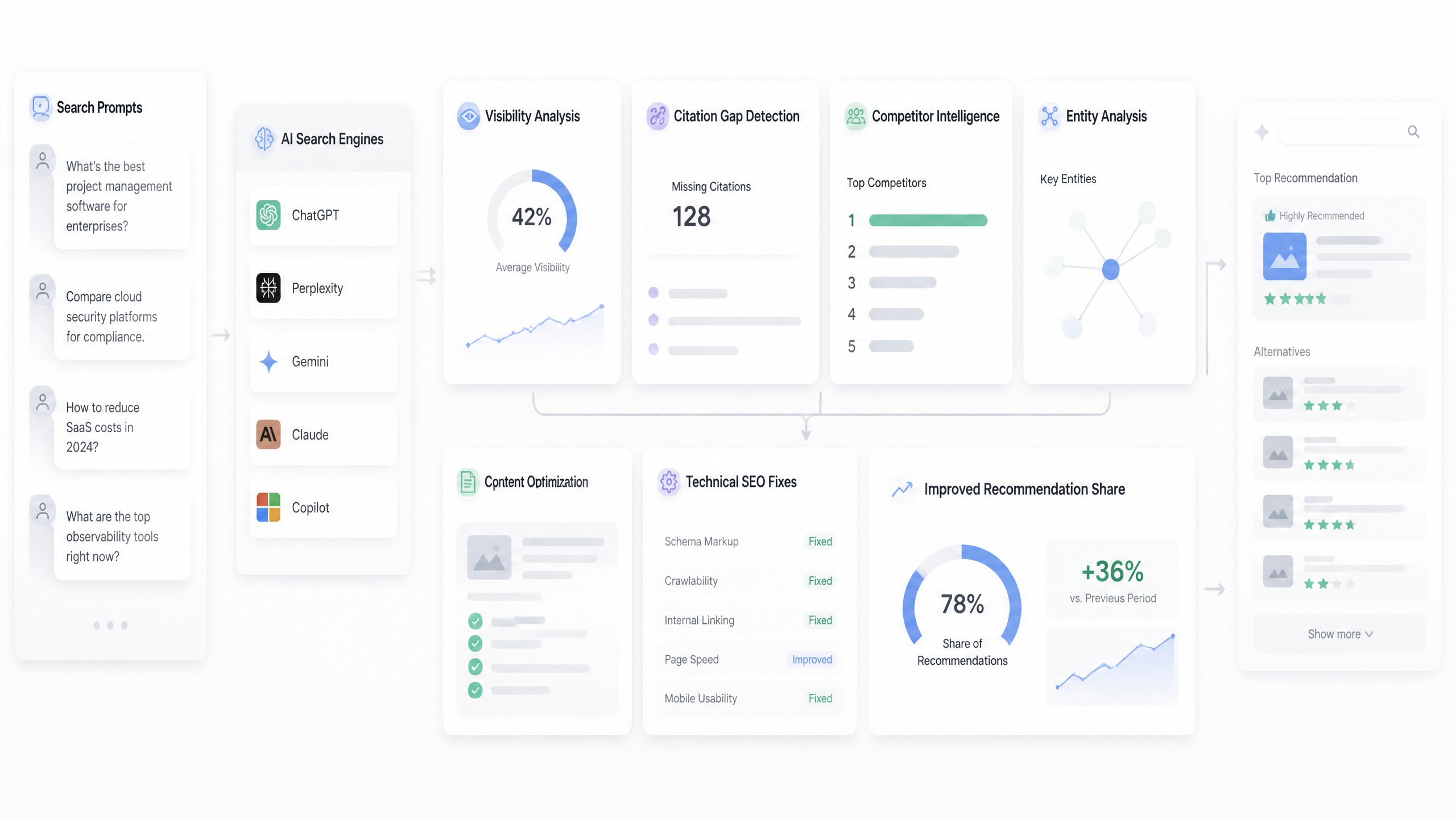
The fastest way to fail with ai search visibility software for enterprise is to boil the ocean. Start with a phased rollout.
Inventory your prompt portfolio
Define competitor sets by business unit
Establish baseline visibility and citation rates
Run content gap analysis and entity analysis
Prioritize high-value pages and clusters
Execute fixes across content and technical SEO
Measure change by prompt class and business outcome
Operationalize governance and repeat
The first 90 days
Timeframe | Primary goal | Output |
|---|---|---|
Days 1–30 | Baseline and scope | Prompt map, competitor set, initial dashboard |
Days 31–60 | Diagnosis | Citation gap analysis, entity issues, content priorities |
Days 61–90 | Action and reporting | Fixes deployed, executive KPI reporting, next sprint backlog |
One common pattern I keep seeing goes like this: a team spends six weeks collecting prompts, another month debating metrics, then still hasn’t shipped a single page update. Don’t let process theater take over.
A realistic workflow by function
Team | Responsibility | What they need from the platform |
|---|---|---|
SEO | Prompt strategy, site audit, competitor benchmarking | Visibility data, technical findings, prioritization |
Content | Content gap closure, semantic improvements | Briefs, missing topics, entity suggestions |
Dev/Engineering | Structured data, crawlability, templates | Technical tickets, schema requirements |
Analytics | Attribution, reporting | GA4 alignment, exports, API |
Leadership | Oversight and budget decisions | KPI summaries, trend reports, risk visibility |
This is why execution-first software tends to win internally. It gives each team something actionable instead of one big abstract dashboard.
Common Enterprise Mistakes
Chasing every engine equally
Not every engine deserves the same level of effort on day one. Start with the systems your buyers actually use and the prompts that influence revenue.
Optimizing every page
I’ve seen this fail repeatedly. A large site with 80,000 URLs does not need universal optimization first. It needs strategic prioritization.
Ignoring EEAT and trust signals
If AI systems do not trust the source, more copy alone usually does not solve the problem. You need:
• Clear authorship
• Evidence
• References
• Policy clarity
• Consistent product facts
• Stronger corroborating pages
Treating AI visibility as separate from technical SEO
This one still frustrates me a bit. Teams will analyze prompt performance for months while key templates have indexing issues, inconsistent canonicals, weak structured data, or stale support pages. AI visibility is not floating above technical SEO. It is downstream from it.
FAQ
How many AI engines should enterprise software track?
For true enterprise coverage, I would treat 17+ engines as a strong benchmark because Rankscale’s 2026 reporting uses that threshold for organizational-scale visibility tracking. That said, the right number depends on your market. If your buyers rely mainly on ChatGPT, Gemini, Perplexity, and Google AI Overviews, those may be your first priority.
What is the difference between log-level crawler data and front-end snapshots?
Log-level crawler data shows how AI crawlers actually access and discover your content. Front-end snapshots show what a user sees in an answer interface. Nick Lafferty’s 2026 review of Profound suggests the strongest enterprise approach combines both methods because each fills a different gap.
Can enterprise platforms track unlinked citations?
Yes. SE Ranking’s 2026 guidance says AI visibility audits can assess both linked and unlinked references to brands, products, businesses, and people. That matters because unlinked mentions still shape brand equity and recommendation presence.
Is SOC 2 mandatory for enterprise AI visibility vendors?
In practice, often yes for larger organizations, though “mandatory” depends on your procurement policy. Public market commentary, including Nick Lafferty’s 2026 analysis, treats SOC 2 as a core enterprise readiness signal rather than an optional extra.
How do enterprises connect AI visibility to revenue?
The strongest path is usually attribution through analytics systems such as GA4. Public reporting from Semrush Enterprise and commentary on Profound both emphasize tying AI visibility data to revenue impact and business reporting.
What Schema.org actions matter for agentic readiness?
Search Engine Land’s enterprise blueprint highlights action vocabularies such as ReserveAction, BookAction, CommunicateAction, and PotentialAction. The exact implementation depends on your business model. A booking brand needs a different action layer than a SaaS vendor or publisher.
Why isn’t visibility tracking enough?
Because it tells you what happened, not what to fix. Enterprise growth comes from closing content gaps, strengthening entity clarity, improving trust signals, and resolving technical SEO issues—not just observing outcomes.
When should I choose Nuwtonic?
Choose Nuwtonic when your team needs a platform that supports analysis plus execution. It is especially strong if you want to reduce tool sprawl, automate technical SEO fixes, generate optimization-ready content, and move from AI visibility insight to remediation faster.
When might another platform make more sense?
If you already have a mature content operations stack, a separate technical SEO system, and only want narrow AEO monitoring, a reporting-first platform may be sufficient. But be honest about whether your organization actually executes well across those separate systems.
Sources and References
Rankscale, 2026 enterprise AI visibility reporting on 17+ engine coverage, 240+ regions and languages, role-based teams, and white-label support.
Nick Lafferty, 2026 analysis of enterprise AI visibility platforms, including Profound’s AEO score of 92/100, log-level crawler data, GA4 attribution, multilingual tracking, and SOC 2 positioning.
Rankscale AI Search Toolkit, 2026 coverage of Google AI Overviews, AI Mode, ChatGPT, Gemini, and Perplexity with daily tracking and competitor benchmarking.
Semrush Enterprise, 2026 AI Optimization reporting on 289M prompts, LLM training data, traffic logs, authority signals, and revenue measurement.
Frase, 2026 comparison highlighting monitor-and-act workflows that connect AI visibility signals to research, writing, and publishing.
SE Ranking, 2026 explanation of AI visibility audits for linked and unlinked references.
Search Engine Land enterprise blueprint on schema layers, entity lineage, action vocabularies, guardrails, authentication, and machine-readable engagement rules.
Nick Lafferty, 2026 notes on Brand Radar AI and SE Visible as adjacent enterprise options.
Final Take
AI search is becoming an enterprise acquisition channel whether teams are ready for it or not. The winners will not be the brands that simply notice they were excluded. They will be the brands that can explain why they were excluded, fix the cause, and measure the recovery.
That is the real dividing line in ai search visibility software for enterprise.
If you want a dashboard, there are options.
If you want a system that helps your team move from visibility data to technical SEO remediation, content improvement, and scalable execution, Nuwtonic is the strongest fit. In my experience, that gap between insight and action is where most enterprise programs either compound growth—or quietly stall out.