You've got the same problem I hear from LA owners all the time. The site looks polished in English, the Spanish pages exist, maybe there's even a Chinese or Korean version tucked away somewhere, but those pages don't show up where they should, and Search Console never seems to tell a clean story. The issue usually isn't volume, it's that the site was built like a translation job instead of a market-by-market search system.
In Los Angeles, that mistake gets expensive fast. A restaurant in Koreatown can miss Korean-language demand, a service business in East LA can underperform in Spanish, and a Westside brand can overlook Chinese-speaking customers who search differently, click differently, and convert differently. Multilingual SEO works when each language version is treated as its own local asset, not a copy of the English homepage with a different flag in the header.
Table of Contents
- Why Multilingual SEO Matters in Los Angeles Local Search
- Set Up Google Business Profile and Connect to Search Console
- Conduct Local Keyword and Competitor Research
- Apply On Page Optimization and Hreflang Schema
- Build Local Citations Earn Reviews and Create Hyperlocal Landing Pages
- Monitor Report and Recover with AI and GSC Workflows
- Conclusion and Next Steps
Why Multilingual SEO Matters in Los Angeles Local Search
A shop owner in LA will often tell me the same story. The English pages rank okay, the Spanish pages exist, and the Chinese or Korean pages were “handled” during site launch, yet the phone still rings mostly from one segment of the city. That's usually a sign that the business is visible in broad terms, but invisible in the neighborhoods and language communities that make purchases.
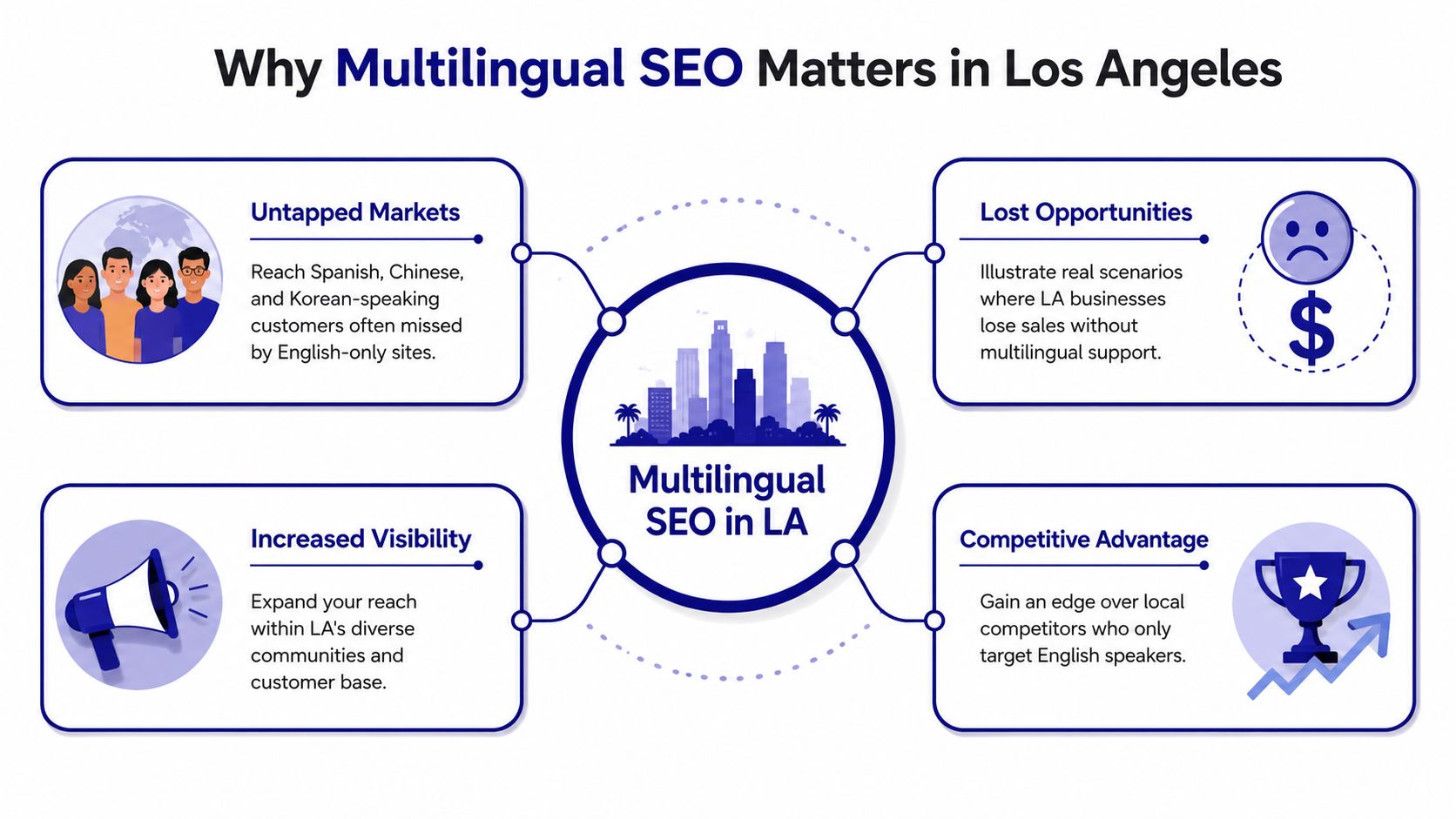
Los Angeles is a market of micro-markets, and that matters because search intent changes by language and region. The move that separates serious teams from amateur translators is the shift to locale-specific keyword research, hreflang, localized metadata, and separate tracking by language and country rather than site-wide totals, which can hide winners and losers across the map Matomo's multilingual SEO guidance. That same approach lines up with modern practice in multilingual SEO, where you compare impressions, CTR, rankings, engagement, and conversions by locale instead of treating the site as one blended pool.
What gets missed in LA
The biggest misses are usually predictable. English-only metadata can look clean in a CMS while failing to match what Spanish, Chinese, or Korean-speaking users type. And if a page is understandable but not aligned with local phrasing, it may not earn clicks even when it technically indexes.
Practical rule: if a page can be read by a human but doesn't match how locals search, it's not localized enough to compete.
That's why localization insights matter before you touch the homepage copy or blog translation queue. A useful outside reference is Tutorial AI's localization insights, especially if you're trying to separate real localization work from surface-level translation.
Why the LA lens changes the playbook
In this city, the competition isn't just other businesses in your industry. It's every other page that speaks more naturally to a neighborhood, a language community, or a region-specific search pattern. A single English page can still work as a brand asset, but it won't carry every local query.
The right approach is to segment by language, country or region, and landing page, then measure each version on its own. That lets you see whether a Spanish page is weak because of keyword choice, internal linking, or because it never received the same local authority signals as the English version. In LA, those details decide whether a page sits in the background or becomes the first result a neighborhood sees.
Set Up Google Business Profile and Connect to Search Console
The first mistake I see is businesses treating Google Business Profile like a checkbox and Search Console like a reporting screen they open once a month. For multilingual sites, both need to be set up as a paired system, because the profile handles local discovery while Search Console shows how each language version is performing.

Claim the profile and match it to your real service area
Start by claiming or verifying the Google Business Profile for the location that directly serves the market. Don't force language support into the profile if the underlying problem is an unstructured site. If you have multilingual landing pages, make sure the business description, service categories, and page links match the language versions users will land on.
Then connect the profile to the same measurement stack you use for the site. That means Google Search Console and GA4 should both be active, and each language version should be tracked separately where possible. The reason is simple, the modern baseline in multilingual SEO is no longer aggregate reporting, it's performance by language, country, and landing page Matomo's multilingual SEO guidance.
Build the dashboard around locale, not vanity totals
Once the properties are live, organize reporting around the questions that matter:
- Impressions by language: Which version is being seen, even if clicks are weak?
- Clicks by landing page: Which locale is earning actual visits?
- Engagement by region: Which language version keeps users on page long enough to matter?
- Conversions by market: Which language version produces leads or sales, not just traffic?
The dashboard should expose problems quickly. If one language has steady impressions but poor CTR, that's usually a metadata or query match issue. If traffic looks fine but conversions lag, the landing page may be speaking to the wrong intent.
Keep the setup clean from the start
Don't mix page variants into one bucket just because it's easier. Each language version should be easy to inspect on its own, because multilingual SEO strategy now relies on locale-level measurement rather than site-wide averages Matomo's multilingual SEO guidance. That same mindset is what keeps you from wasting time in monthly reviews, staring at blended data that can't tell you whether Spanish is climbing, Chinese is flat, or Korean is outperforming on a single page.
A strong Google Business Profile plus clean Search Console segmentation won't rank pages by itself. It will, however, stop you from optimizing blind.
Conduct Local Keyword and Competitor Research
Translated keywords are where a lot of multilingual projects go to die. A phrase that feels obvious in English can be awkward, low-intent, or just not how locals search in another market, even inside the same city. That's why the right workflow starts with what already works, then rebuilds the keyword set in the target language and market.
For multilingual keyword strategy, experts recommend market-by-market keyword research instead of literal translation, using native variations tested in tools like Google Ads Planner to match search intent in each region Search Engine Journal. If you want a structured starting point, step-by-step keyword research for SEO is a solid companion read for the mechanics, even though the local-market judgment still has to come from real language and market insight.
Start from your proven English pages
Pull the organic keywords already driving qualified traffic. Don't start from a blank spreadsheet unless the site is brand new. Then generate target-language versions with a native speaker or a serious localization workflow, not just a machine pass. The goal is to find the phrase locals would type when they want the same service.
In LA, that means looking for neighborhood modifiers, service intent, and language-specific phrasing. “Echo Park taqueria” and a generic “Mexican restaurant” may not behave the same way in search, and the same idea holds across Spanish, Chinese, and Korean searches. The local signal matters as much as the translation.
Audit competitors by language and by neighborhood
Open the SERP in each target language. Check who ranks, what kind of page it is, and whether the winners are neighborhood pages, category pages, or editorial content. You're not just looking for exact keyword overlap, you're looking for the content format Google is rewarding in that language market.
A clean competitor sheet should include:
- Target keyword in native language: Not the English source term.
- Observed SERP type: Local page, directory, map pack, or article.
- Neighboring modifiers: Neighborhood names, ZIP codes, or district terms.
- Language gaps: Queries competitors rank for that your site ignores.
- Content angle: Service page, guide, review-driven page, or local landing page.
Useful habit: if a competitor ranks with a thinner page than yours, don't assume your page is better. It may simply match local phrasing and local intent more closely.
Prioritize by market, not by volume alone
A good multilingual keyword map doesn't just list terms. It ranks them by which market needs the page now, which one has the strongest intent, and which language version can realistically win with the current content. That's where local reasoning beats generic keyword tools. You're building a plan that tells you whether to improve a Spanish service page, launch a Korean neighborhood page, or tighten internal links to support a Chinese-language asset.
If you do that well, on-page optimization becomes much easier, because each page already has a clear job.
Apply On Page Optimization and Hreflang Schema
Multilingual SEO often becomes technical at this stage, presenting a crucial juncture where organizations demonstrate discipline or sloppiness. The content might be good, but if the page signals are inconsistent, search engines can't confidently connect the language versions. That's how duplicate content confusion starts, and it's usually preventable.
Get the language signals right
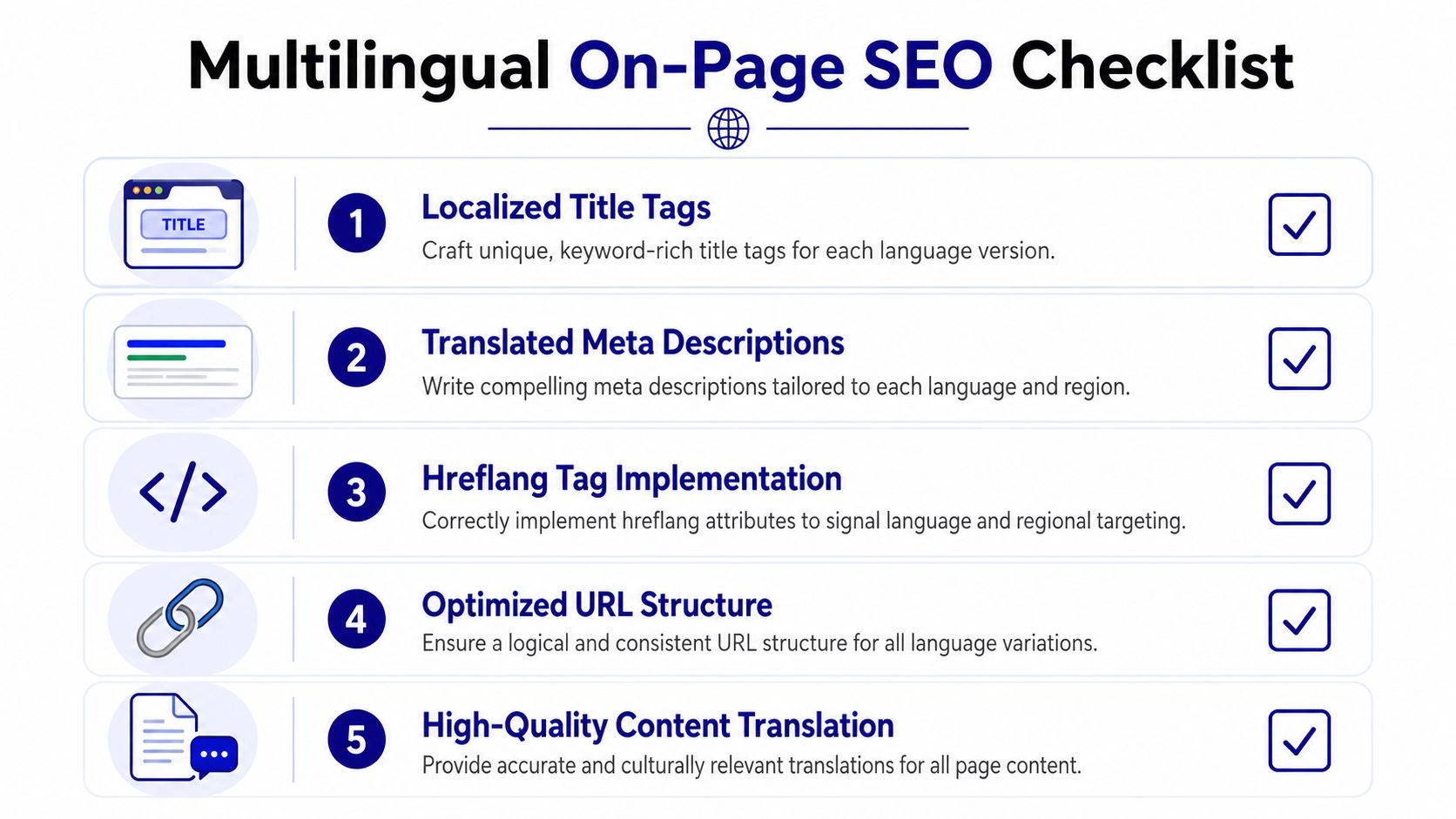
Each page should have a correct HTML lang attribute, localized title tags, and meta descriptions written for the market that page serves. That sounds basic, but it's the difference between a page that feels native and a page that merely exists in another language. Keyword usage should fit the local phrase pattern, not the source-language structure.
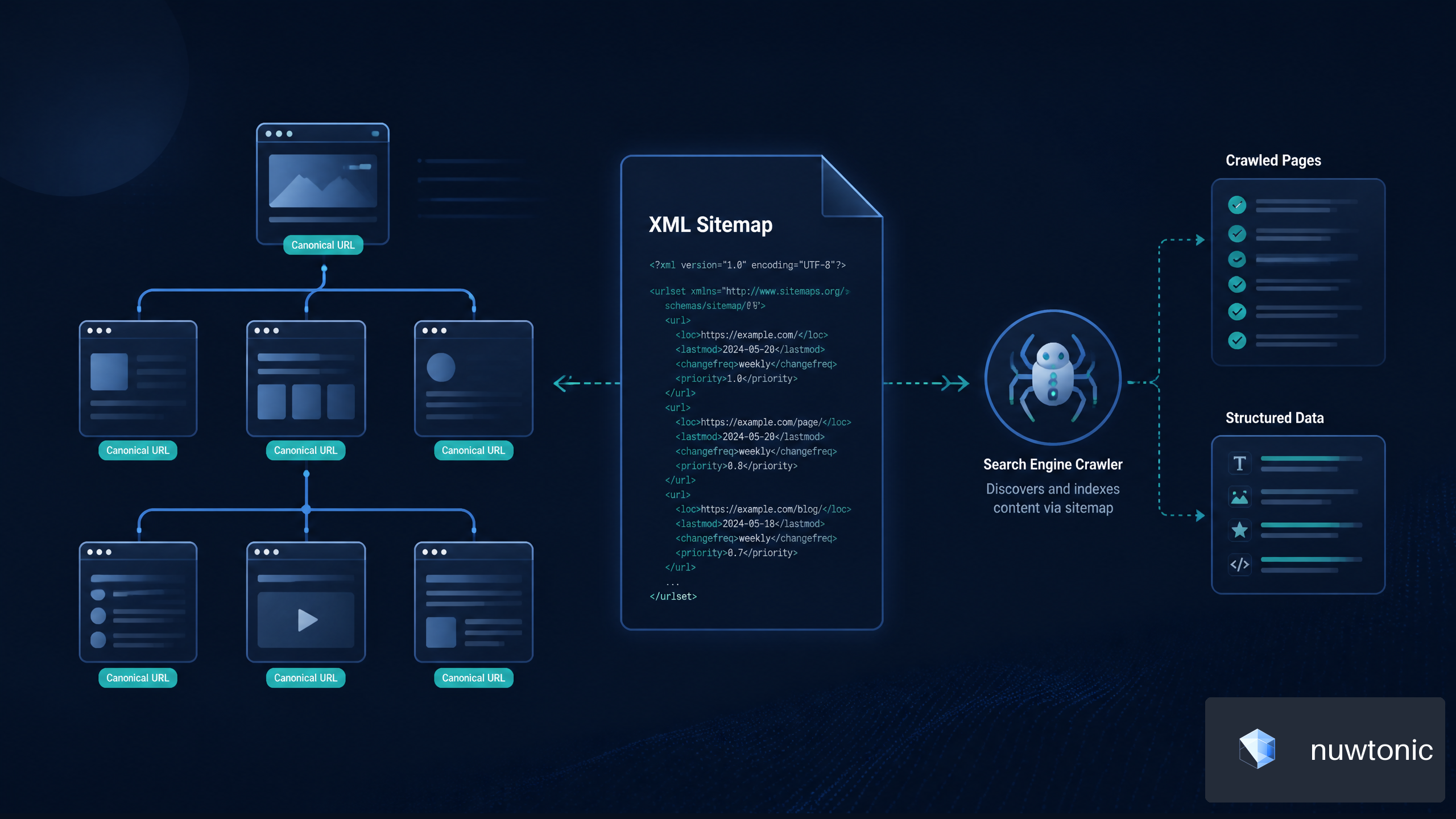
The technical side also needs clean hreflang handling. Each page needs self-referencing hreflang tags, and the language variants need to point to each other so search engines can treat them as equivalents rather than duplicates Blumint's multilingual SEO website guidance. At scale, separate multilingual XML sitemaps or annotated sitemap setups make management much cleaner.
Use metadata that matches the searcher
A translated title tag is not the same thing as a localized one. The title has to carry the target keyword in the target language and still read naturally enough to earn the click. Meta descriptions should do the same job, which is to set expectation, not dump a literal translation into the snippet.
A simple implementation pattern looks like this:
- Localized title tag: Keep the main service term near the front when it reads naturally in the target language.
- Localized meta description: Describe the offer in the way that market would phrase the benefit.
- Translated internal links: Point the language version to translated destinations, not back to the English originals.
- Locale-specific URL logic: Keep the structure consistent so each version is easy to crawl and maintain.
If a translated page still funnels users into English navigation or English anchors, the page is speaking with the wrong accent.
Keep schema and sitemaps aligned
For local pages, schema should support the same language and region signals. LocalBusiness markup, service details, and address data should reflect the page version and the location it serves. If you're checking structured data by hand, the schema markup checker is a practical way to catch errors before they cascade into indexing confusion.
The main point is not to overcomplicate the markup. It's to keep every technical signal pointing in the same direction. The language, the canonical relationship, the hreflang mapping, the sitemap structure, and the metadata all need to agree. When they do, search engines have a much easier time serving the right version to the right user.
Build Local Citations Earn Reviews and Create Hyperlocal Landing Pages
A multilingual page without local trust signals can feel polished and still underperform. In LA, citations, reviews, and neighborhood-specific pages do a lot of heavy lifting because they connect language to place, and place to credibility. The search engine doesn't just need to know what the page says, it needs proof that the business belongs in that market.
Make citations work in the target language
Local citations still matter, but multilingual work changes how you source them. Spanish and Chinese directories, community business listings, chamber-style sites, and neighborhood resources can send much clearer trust signals than broad national directories alone. The key is consistency in business name, address, and phone details across the places where your audience looks.
Reviews need the same treatment. If your customer base speaks more than one language, review outreach should do the same. A short follow-up in the customer's language is more likely to get a response than a generic English request, and the wording should fit the service context, not sound copied from a template.
Build pages that feel specific to the neighborhood
Hyperlocal landing pages work when they sound like they were built for the district, not cloned from a citywide service page. Mention landmarks, nearby corridors, and community references where it makes sense, but don't pad the copy with random place names. The page should answer a local buyer's actual questions.
The strongest pages usually combine:
- Neighborhood relevance: Real district names, nearby areas, and local service intent.
- Language consistency: The page reads fully in the target language, not as mixed copy.
- Internal linking: The page connects to the broader site and the right localized service pages.
- Trust cues: Reviews, local references, and credible community signals.
A hyperlocal page doesn't need more words. It needs the right words, in the right language, tied to the right place.
Measure beyond translation quality
The underused part of this work is measurement. A page can be well translated and still lose because the market doesn't trust it, the links are weak, or the language version doesn't earn enough visibility. A useful framework is to pair search visibility with organic traffic trends by market, index coverage per language, and keyword rankings so you can prioritize fixes when markets diverge SeaSeekAI's multilingual SEO guidance.
That's the difference between cosmetic localization and a real local campaign. Citations bring the business into the local graph, reviews reinforce trust, and the landing pages give search engines a place to land that fits the query.
Monitor Report and Recover with AI and GSC Workflows
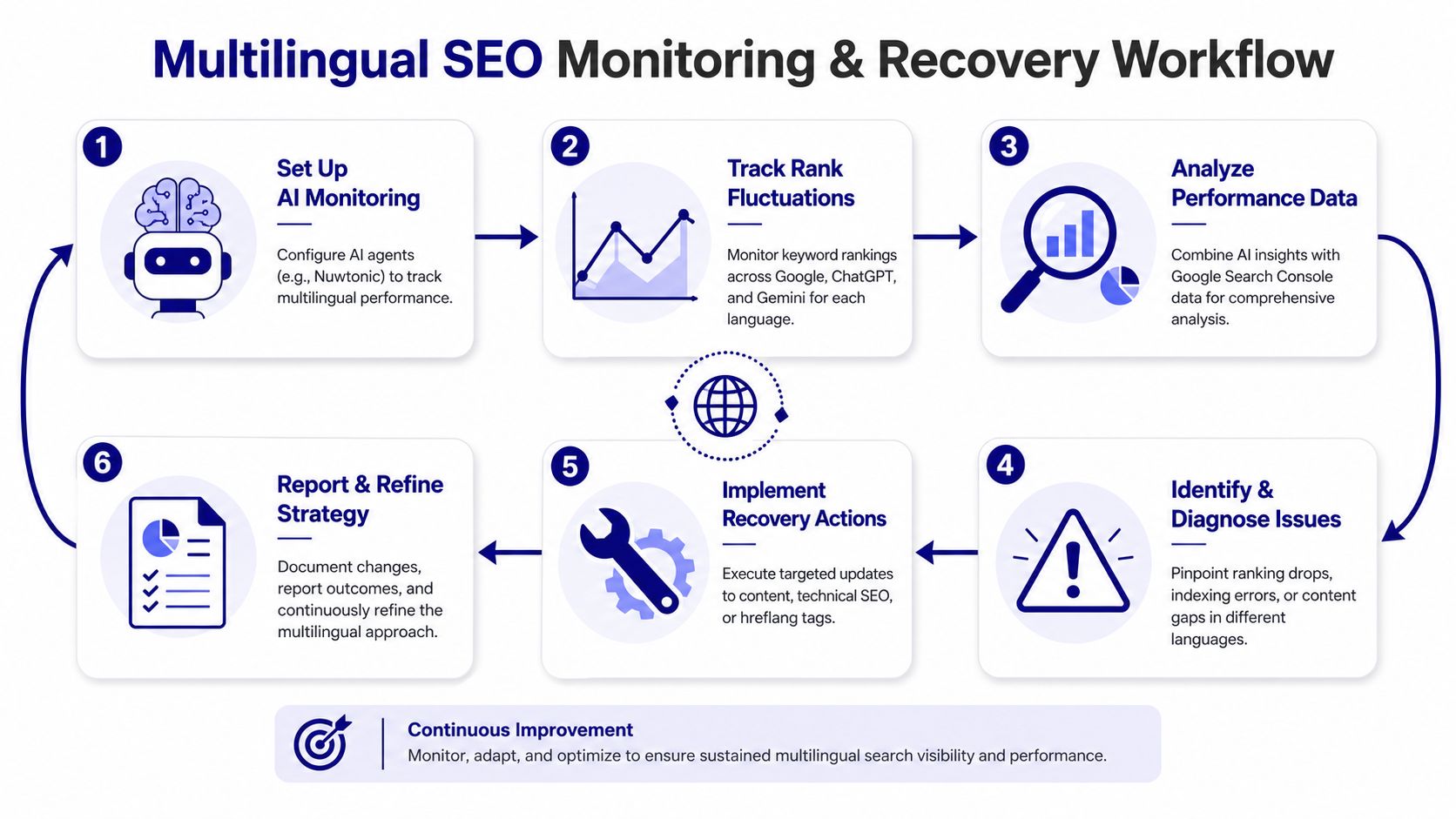
Multilingual SEO breaks in small ways first. A Spanish page slips a few positions, a Chinese page loses impressions after a template change, or a Korean landing page stops getting clicks even though the content is still live. The teams that catch those shifts early usually have one thing in common, they don't wait for monthly reporting to tell them something is wrong.
Track each language as its own system
Set alerts for rank movement, indexing changes, and sudden drops in impressions by locale. Then connect those signals back to the exact page variant, not just the page family. That makes it much easier to see whether the issue is technical, content-related, or caused by a language mismatch.
The newer layer here is AI search visibility. Guidance on multilingual AI search says local-language pages perform better when they open with concise local facts and earn trusted language-specific links, because AI systems need clean passages they can extract and cite Unframed Digital's multilingual SEO guidance. That matters in a city like LA where language, authority, and locality intersect constantly.
Use a recovery loop, not a one-off fix
When a language version underperforms, work the problem in a sequence:
- Confirm the drop: Check impressions, clicks, and query changes in Search Console for the affected locale.
- Inspect the page: Look for metadata drift, hreflang problems, broken internal links, or schema errors.
- Patch the likely cause: Update the language-specific copy, fix technical signals, or revise the localized snippet.
- Re-submit and watch: Keep monitoring the page until performance starts to stabilize again.
Don't guess at the reason a locale dropped. Tie the change to a page, a query set, and a technical signal before you touch the copy.
If you're using an AI-driven workflow layer, the point isn't automation for its own sake. It's faster issue detection, clearer prioritization, and a clean handoff from insight to fix. The AI and Google Search Console analysis workflow is a useful model for how that kind of recovery loop can be organized.
Report what changed, not just what moved
The final habit that keeps multilingual programs healthy is disciplined reporting. Every recovery should note what changed, which language version changed, and whether the effect showed up in impressions, CTR, or conversions. That creates a memory for the team, so the next drop is easier to diagnose.
Conclusion and Next Steps
Multilingual SEO works in Los Angeles when you stop treating language as a translation task and start treating it as a local search program. Significant wins come from localized keyword research, correct hreflang, language-specific metadata, neighborhood landing pages, and a monitoring loop that shows you which market is drifting before it turns into a revenue problem. The cleanest programs I've seen all do the same thing, they measure every language separately and act on the differences instead of smoothing them out.
A practical 90-day approach is simple. Pick one high-value language, validate the keyword set, publish or repair the core local landing pages, then inspect how that version behaves in Search Console and GA4 by landing page and locale. Once the signals are stable, expand into the next language or neighborhood with the same measurement discipline.
If you want one metric to watch closely, make it the combination of per-locale CTR and conversion rate. Rankings matter, but those two numbers tell you whether the page is resonating with the people you're trying to reach. That's the line between a multilingual site that looks complete and one that drives business across Los Angeles.
A CTA for Nuwtonic.