If you're looking for a Scrunch AI alternative, chances are you've hit one of a few common walls: the price, the lack of a free trial, or a platform that tells you what's wrong without telling you how to fix it.
The AI search optimization market is evolving rapidly. While many tools focus on tracking brand mentions across AI assistants, businesses increasingly need solutions that help them understand why they're visible, identify optimization opportunities, and improve their presence across both traditional and AI-powered search.
This guide compares the best Scrunch AI alternatives based on:
AI search visibility tracking
Google Search + AI Search coverage
Competitive intelligence
Content optimization capabilities
Automation and workflows
Pricing and trial availability
Best-fit use cases
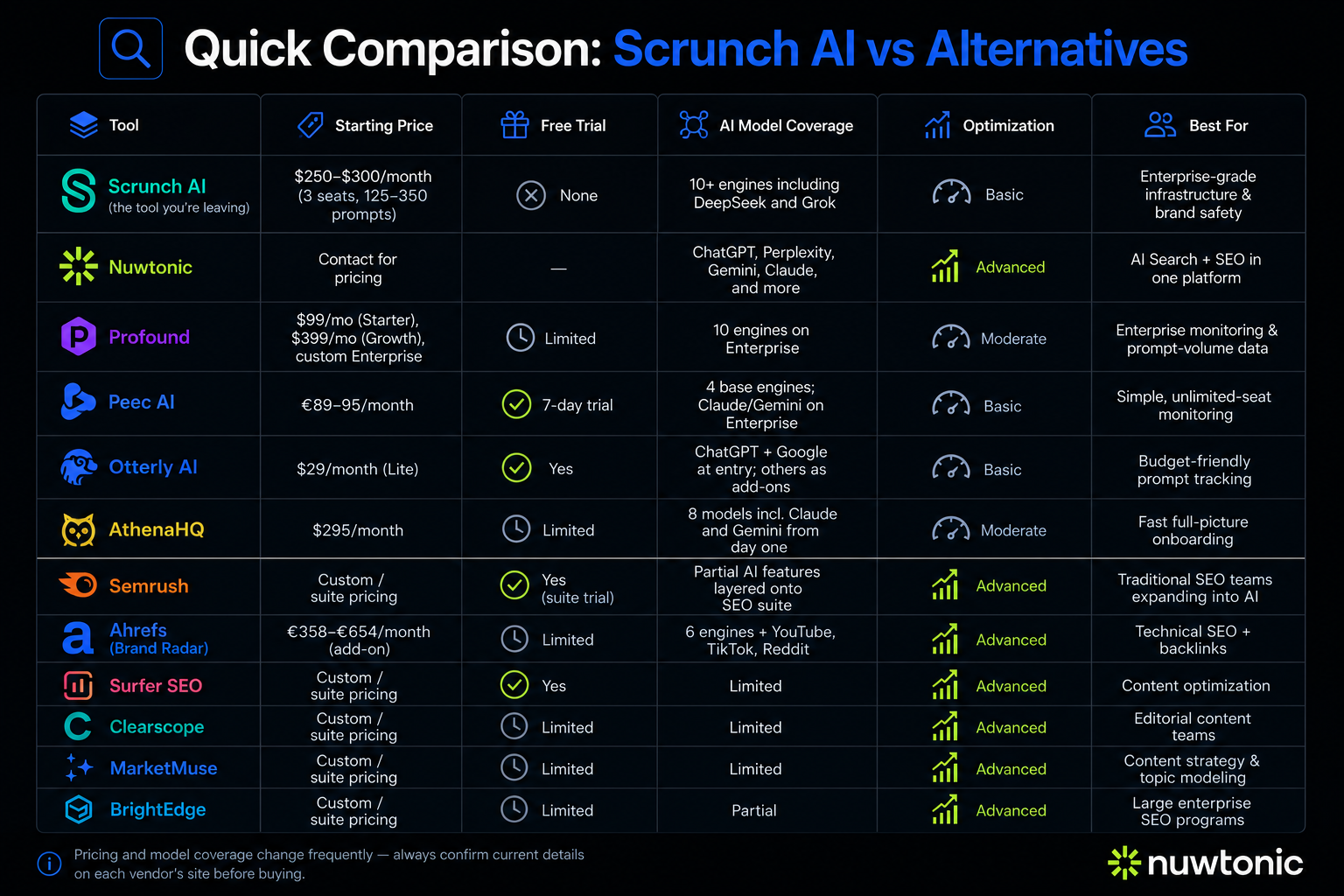
Quick Comparison: Scrunch AI vs Alternatives
Tool | Starting Price | Free Trial | AI Model Coverage | Optimization | Best For |
|---|---|---|---|---|---|
Scrunch AI (the tool you're leaving) | $250–$300/month (3 seats, 125–350 prompts) | None | 10+ engines including DeepSeek and Grok | Basic | Enterprise-grade infrastructure & brand safety |
Nuwtonic | Contact for pricing | — | ChatGPT, Perplexity, Gemini, Claude, and more | Advanced | AI Search + SEO in one platform |
Profound | $99/mo (Starter), $399/mo (Growth), custom Enterprise | Limited | 10 engines on Enterprise | Moderate | Enterprise monitoring & prompt-volume data |
Peec AI | €89–95/month | 7-day trial | 4 base engines; Claude/Gemini on Enterprise | Basic | Simple, unlimited-seat monitoring |
Otterly AI | $29/month (Lite) | Yes | ChatGPT + Google at entry; others as add-ons | Basic | Budget-friendly prompt tracking |
AthenaHQ | $295/month | Limited | 8 models incl. Claude and Gemini from day one | Moderate | Fast full-picture onboarding |
Semrush | Custom / suite pricing | Yes (suite trial) | Partial AI features layered onto SEO suite | Advanced | Traditional SEO teams expanding into AI |
Ahrefs (Brand Radar) | €358–€654/month (add-on) | Limited | 6 engines + YouTube, TikTok, Reddit | Advanced | Technical SEO + backlinks |
Surfer SEO | Custom / suite pricing | Yes | Limited | Advanced | Content optimization |
Clearscope | Custom / suite pricing | Limited | Limited | Advanced | Editorial content teams |
MarketMuse | Custom / suite pricing | Limited | Limited | Advanced | Content strategy & topic modeling |
BrightEdge | Custom / suite pricing | Limited | Partial | Advanced | Large enterprise SEO programs |
Pricing, trial availability, and model coverage change frequently — always confirm current details on each vendor's site before buying.
**TL;DR Summary :** Which Tool Should You Choose — And Why?
There's no single "best" Scrunch AI alternative — the right pick depends on which of Scrunch's trade-offs is actually costing you. Here's a practical way to think about it:
You want AI visibility tracking that also tells you what to fix, not just where you're weak. → Go with Nuwtonic. It pairs AI Search and Google Search optimization with root-cause diagnostics — the execution layer that monitoring-first tools like Scrunch leave to you.
You're an enterprise team that needs the deepest prompt-volume data and search-demand intelligence, and budget isn't the constraint. → Go with Profound. Its top-tier 10-engine coverage and prompt-volume reporting rival Scrunch's infrastructure depth, with a self-serve entry point Scrunch doesn't offer.
Per-seat pricing is your dealbreaker. → Go with Peec AI. Unlimited seats on every plan make it the natural fit for agencies managing multiple client logins without Scrunch's $25/seat add-on math.
You just want to test whether AI visibility tracking is worth paying for at all. → Go with Otterly AI. At $29/month with no six-figure annual commitment, it's the lowest-risk way to validate the category before scaling up.
You want broad model coverage (including Claude and Gemini) without waiting for a higher tier. → Go with AthenaHQ. Its entry plan unlocks 8 models immediately, versus tiered gatekeeping elsewhere.
You already pay for Semrush or Ahrefs and don't want another standalone subscription. → Go with Semrush's AI features or Ahrefs Brand Radar. Both fold AI visibility into a platform your team already knows.
Your real bottleneck is content quality, not infrastructure or tracking. → Go with Surfer SEO, Clearscope, or MarketMuse. These won't replace AI-visibility monitoring, but they address the "write a better answer" problem that engineering-first tools like Scrunch don't solve.
You manage a large enterprise site and need SEO, content, and reporting under one umbrella. → Go with BrightEdge. It trades GEO-specific depth for broad, enterprise-grade scalability.
Ungated, all-engine coverage on one plan is genuinely your top requirement. → Staying with Scrunch AI may still be the right call — it remains one of the few platforms offering 10+ engines, including DeepSeek and Grok, on every tier.
Why People Look for a Scrunch AI Alternative
Scrunch AI is a genuinely capable platform — it's an AI Customer Experience Platform built to help brands understand and improve how they show up across AI search engines, tracking mentions, prompts, citations, competitors, and AI agent traffic, alongside an Agent Experience Platform (AXP) that makes site content easier for AI agents to read and cite. For enterprise teams with the budget for it, that's a strong package.
But a handful of gaps come up again and again in independent reviews:
The price floor is high, with no way to test first. Starter plans commonly run $250–$300/month with three seats and 125–350 prompts included, and there's no free trial — meaning teams can be asked to commit $3,600+ a year sight unseen.
Extra seats and volume both cost more. Additional users are commonly billed around $25/month each, and heavier prompt volumes push straight into $500+/month territory, unlike platforms with unlimited seats built into every tier.
It's built for engineering-led GEO, not content-led GEO. Scrunch attacks AI visibility at the infrastructure level — how bots read your code — which is a great fit for technical teams, but many marketing teams find their actual bottleneck is writing the answer that earns the citation, not the CDN layer serving it.
Monitoring outpaces action. Reviews consistently note that the platform is strong at identifying where visibility is missing but comparatively light on turning that into a prioritized fix list.
Data doesn't refresh in real time. Some competitors update daily or near-instantly; Scrunch's refresh cycle is slower, which matters if you're reacting to fast-moving AI answer changes.
The headline feature is still maturing. AXP is a genuinely novel approach to the "AI agents can't render my JavaScript" problem, but it has a shorter track record than the platform's core monitoring features.
That's the gap this list of alternatives addresses.
How We Evaluated Scrunch AI Alternatives
Instead of ranking tools based on popularity, we compared them across criteria that matter most for AI search optimization:
Criteria | Why It Matters |
|---|---|
AI Search Coverage | Tracks visibility across ChatGPT, Gemini, Perplexity, Claude, and other AI platforms. |
Google Search Integration | AI search doesn't exist in isolation—organic search still drives authority and citations. |
Competitive Intelligence | Understand why competitors appear more frequently in AI-generated answers. |
Actionable Insights | Recommendations should explain what to improve, not just display metrics. |
Workflow Automation | The best tools reduce manual analysis and execution effort. |
Pricing & Trial Access | Whether you can validate the tool before a large annual commitment. |
[Nuwtonic](https://nuwtonic.com/)
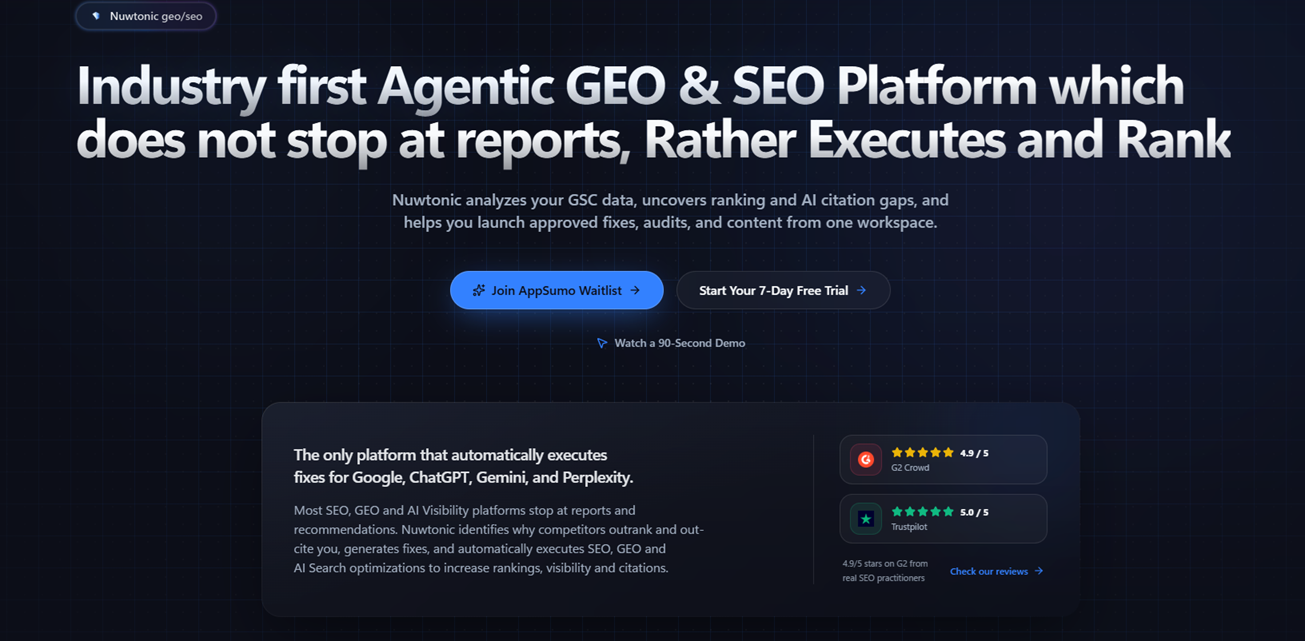
Best for: Businesses looking for an Agentic SEO platform that combines Google Search optimization with AI Search optimization.
Unlike infrastructure-first monitoring tools, Nuwtonic focuses on identifying root causes behind visibility issues and helping teams prioritize high-impact improvements instead of simply reporting performance — closing exactly the "monitoring without action" gap that pushes teams away from Scrunch.
Key strengths
AI Search visibility analysis
Google Search and AI Search optimization in one platform
Root-cause diagnostics
Competitive gap analysis
Opportunity prioritization
AI-driven optimization recommendations
Ideal for
SaaS companies
Enterprise marketing teams
SEO agencies
Brands investing in AI search visibility
Profound
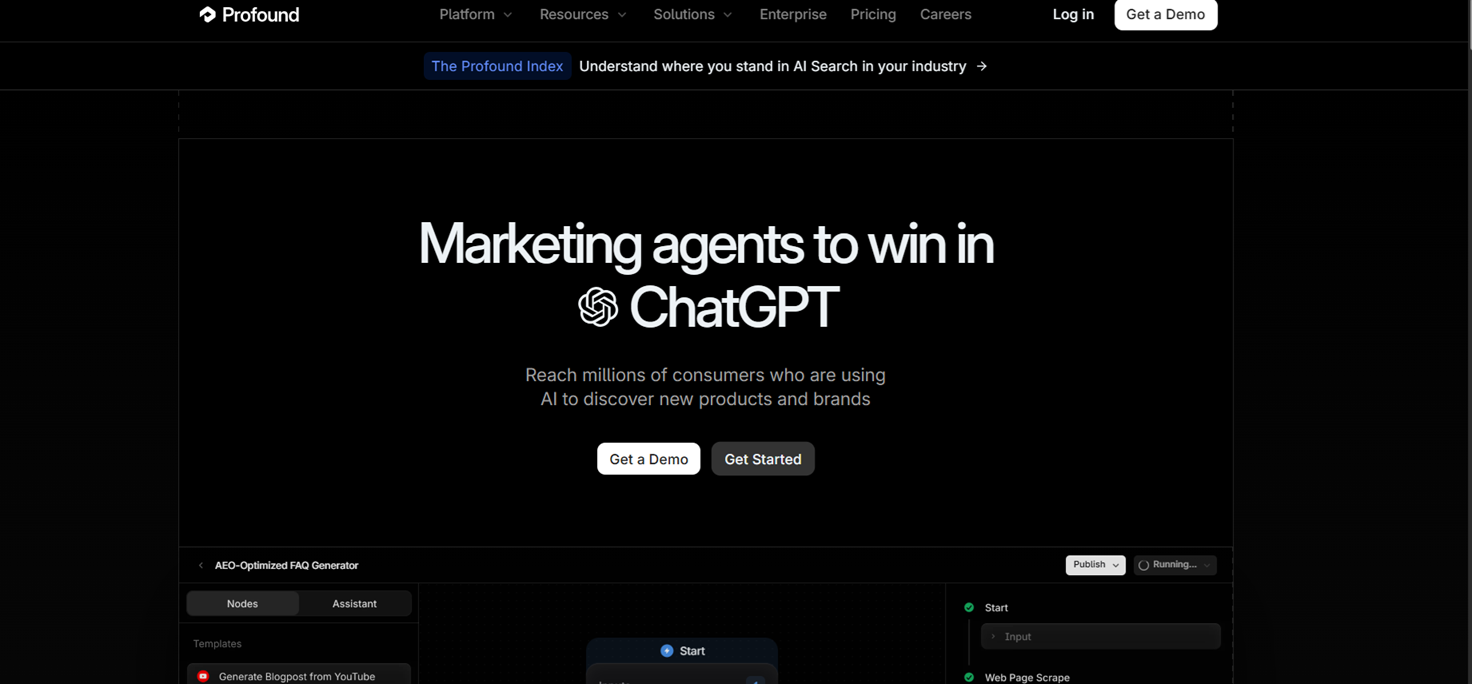
Best for: Enterprise AI search analytics with deep prompt-volume data.
Profound is Scrunch's closest enterprise-tier rival, with real-user prompt volume data and front-end response capture that Scrunch doesn't offer in the same way.
Pros
Enterprise reporting and executive dashboards
Prompt-volume and search-demand intelligence
Broad model coverage at the top tier — 10 engines including ChatGPT, Gemini, Perplexity, Copilot, Claude, Grok, Meta AI, and DeepSeek
Strong G2 reputation, frequently praised for scalability and ease of use
Limitations
The Starter plan ($99/mo) only covers ChatGPT; full model coverage requires custom Enterprise pricing.
Like Scrunch, positioned more toward monitoring and analytics than execution.
Peec AI
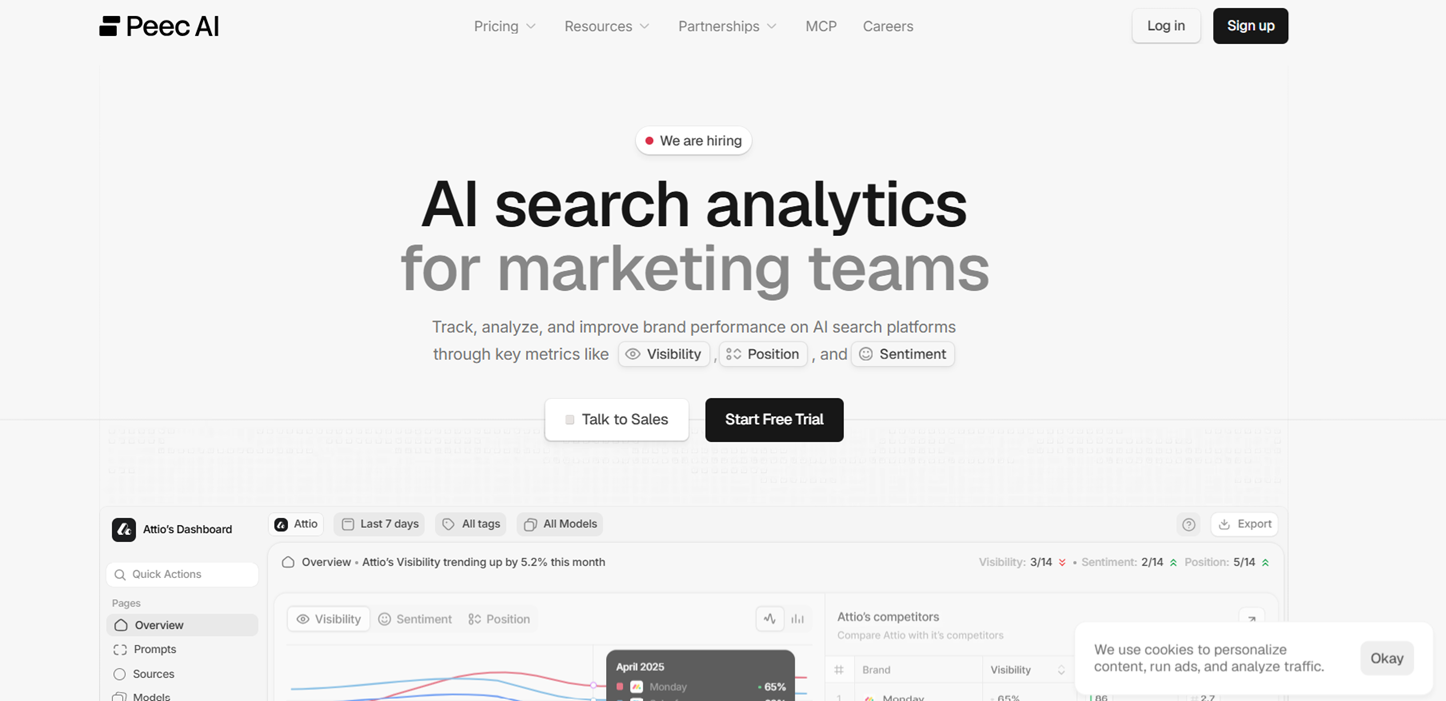
Best for: Teams that want simple, unlimited-seat AI visibility tracking without Scrunch's per-seat costs.
Where Scrunch charges roughly $25/month per additional seat, Peec bundles unlimited seats into every plan — a meaningful difference for agencies onboarding multiple client stakeholders.
Pros
Unlimited seats on all plans
Clean, simple dashboards with a 7-day free trial
Strong multi-language and EU compliance support
Limitations
Entry tiers cover only a handful of AI engines; Claude and Gemini sit behind Enterprise pricing.
Lighter on optimization workflows than infrastructure-focused tools like Scrunch.
Otterly AI
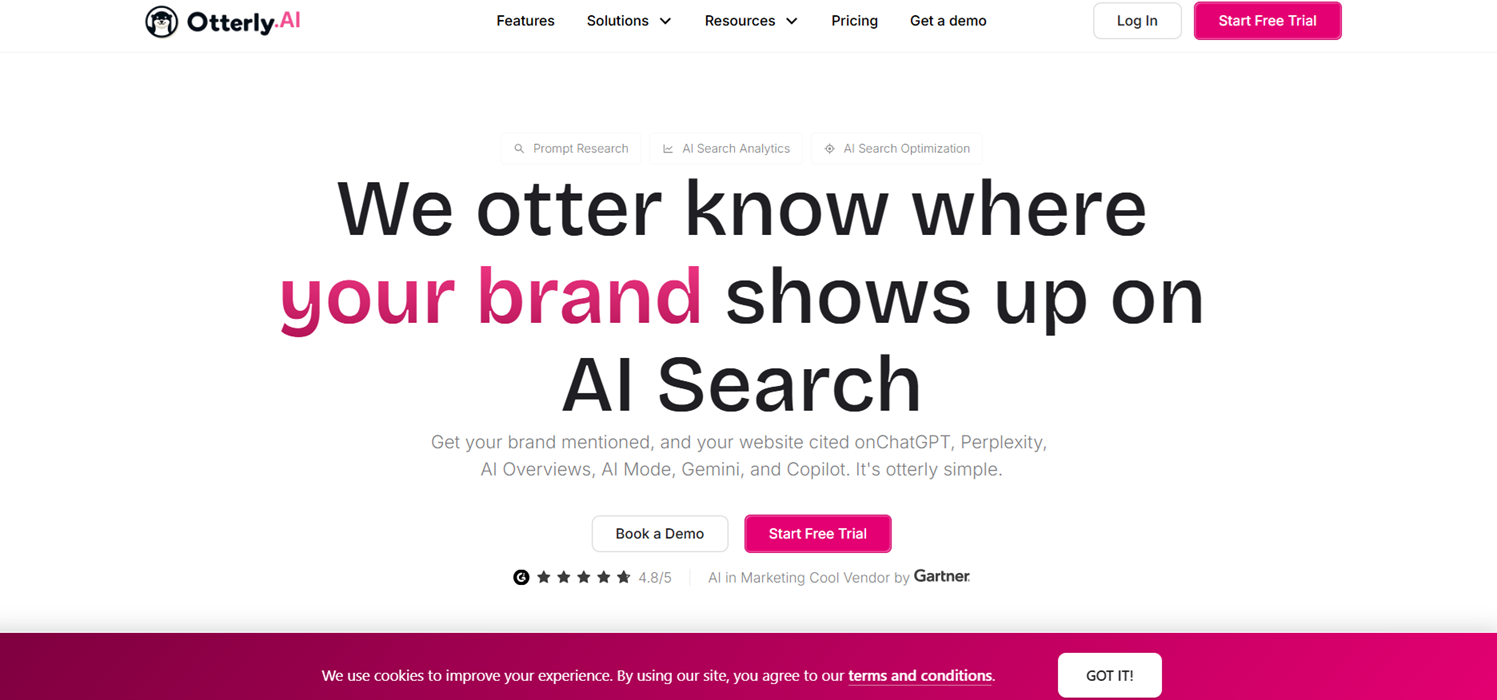
Best for: Budget-conscious teams that want to validate AI visibility tracking before investing further.
At $29/month, Otterly is priced for teams that were put off by Scrunch's no-trial, $250+/month entry point.
Pros
Lowest published starting price in the category
Straightforward prompt and citation monitoring
Fast, low-friction onboarding
Limitations
Narrower model coverage at entry tier — Gemini and Google AI Mode are typically paid add-ons.
No prompt-volume intelligence or content-execution layer.
AthenaHQ
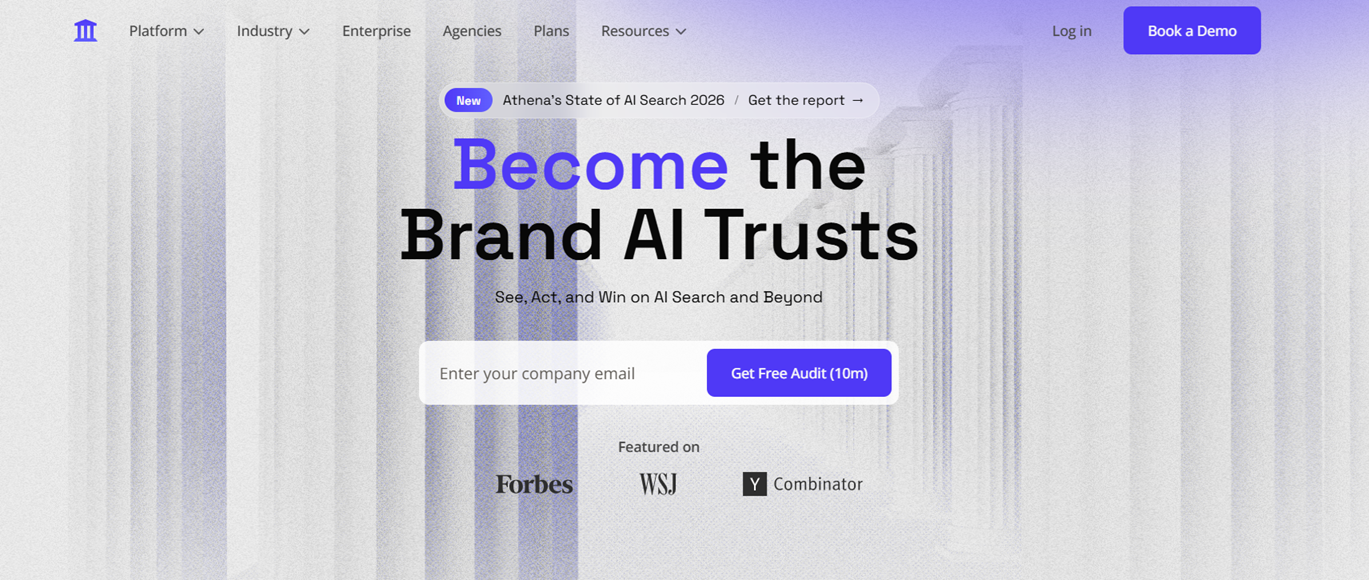
Best for: Teams that want broad model coverage from day one without Scrunch's tiered gatekeeping.
AthenaHQ's plan opens up 8 AI models — including Claude and Gemini — immediately, rather than reserving them for a higher tier.
Pros
Full-picture model access from the entry plan
Role-based seat access for small teams
Sentiment and reputation-monitoring angle alongside visibility
Limitations
Still a premium price point relative to Otterly or Peec.
Less mature content/optimization tooling than dedicated execution-first platforms.
Semrush
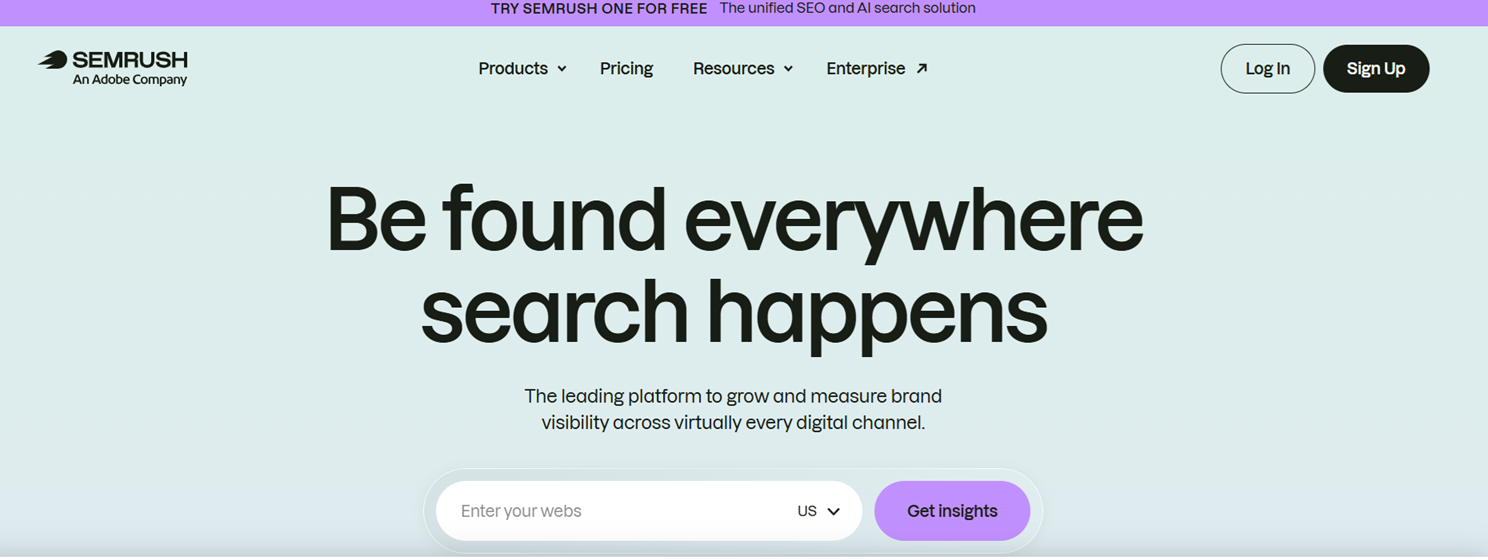
Best for: Traditional SEO teams expanding into AI search without adding a new standalone vendor.
Semrush continues to layer AI-focused features onto one of the most comprehensive SEO platforms available, which appeals to teams that don't want to manage a separate GEO-only subscription.
Pros
Extensive keyword research, site audits, and backlink analysis
Growing AI visibility features
Familiar platform for existing SEO teams
Limitations
- AI search optimization is still an emerging part of the platform, with less AEO-specific depth than dedicated tools.
Ahrefs (Brand Radar)
Best for: Teams already running Ahrefs that want AI visibility bundled with technical SEO.
Ahrefs' Brand Radar module monitors responses across six AI engines — ChatGPT, Perplexity, Gemini, Copilot, Google AI Overviews, and Google AI Mode — plus YouTube, TikTok, and Reddit, and exposes a large prompt database for custom queries.
Pros
Broader native AI engine coverage than many entry-tier GEO tools
Backed by Ahrefs' industry-leading backlink and content data
Useful for authority-building efforts that indirectly boost AI visibility
Limitations
- Priced as a standalone add-on (roughly €358–€654/month) on top of an existing Ahrefs subscription.
Surfer SEO
Best for: Content optimization.
Surfer SEO helps writers optimize content using data-driven recommendations based on search results — directly addressing the "Scrunch is infrastructure-first, not content-first" gap for teams whose real bottleneck is what they publish, not how bots crawl it.
Pros
Content scoring
NLP optimization
SERP analysis
Limitations
- Primarily focused on content creation rather than AI search visibility tracking.
Clearscope
Best for: Enterprise content teams.
Clearscope emphasizes semantic content optimization and editorial workflows to improve search performance.
Pros
High-quality content recommendations
Editorial collaboration
Topic optimization
Limitations
- Limited dedicated AI search (AEO/GEO) visibility tracking.
MarketMuse
Best for: Content strategy.
MarketMuse uses AI to identify topical gaps and prioritize content opportunities.
Pros
Topic modeling
Content planning
Authority building
Limitations
- Limited dedicated AI search visibility tracking.
BrightEdge
Best for: Large enterprise SEO programs.
BrightEdge combines SEO analytics, content recommendations, and enterprise reporting for organizations managing large websites — an alternative angle for enterprise buyers who find Scrunch's GEO-only scope too narrow.
Pros
Enterprise scalability
Performance reporting
Workflow management
Limitations
- AI search-specific visibility features are less mature than dedicated AEO/GEO tools.
Final Thoughts
Scrunch AI is a strong, technically sophisticated platform, especially for teams that need deep infrastructure-level GEO work and broad model coverage. But its price floor, lack of a free trial, and monitoring-heavy focus mean many teams — especially SMBs, agencies, and content-led marketing teams — are better served by a platform that also tells them what to do with the data. As AI search becomes a larger part of customer discovery, the most valuable platforms are those that combine visibility insights, competitive intelligence, optimization guidance, and measurable execution rather than simply reporting where a brand appears.