
Grok doesn't work like Google. There's no position #1, no page two. Ask it a question about your category and it either mentions your brand in its answer or it doesn't — and unlike ChatGPT or Gemini, Grok is pulling in real-time signal from X (formerly Twitter) alongside its training data and web search. A single viral thread can change how Grok describes your brand within hours. Most "AI visibility" tools were built with ChatGPT's slower-moving output in mind, and it shows the moment you try to use them for Grok — refresh rates too slow, no handling for non-deterministic answers, Grok bolted on as an afterthought rather than tracked as its own channel.
That's the real reason people go looking for a dedicated Grok rank tracker: they need something built for volatility, not a generic multi-LLM dashboard that treats Grok the same way it treats a static model.
Below are the 9 tools worth knowing about in 2026, starting with Nuwtonic, which takes a different approach from most of this list — it doesn't just tell you where you stand in Grok's answers, it fixes the pages losing citations.
Comparison Table
Tool | Grok Coverage | Starting Price | Free Trial | Monitoring → Action |
|---|---|---|---|---|
Nuwtonic | Native, 1 of 6 core LLMs tracked (ChatGPT, Claude, Perplexity, Google, Meta, Grok) | ~$99/mo (Bronze tier)* | 7-day, no credit card | Yes — one-click GEO fixes + direct CMS publishing |
Rankscale AI | Native, all plans | €20/mo (Essentials) | Free trial on Pro | Partial — Search Readiness Score flags fixes, no auto-deploy |
AIclicks | Native, tier-dependent | $59/mo (Starter, 3 platforms) | 3-day trial | Partial — recommendations only, manual implementation |
Mangools AI Search Watcher | Native, all plans incl. free tier | $15.60/mo (annual) | Permanent free tier | No — visibility layer only |
Orchly | Native, Pro plan only | $125/mo (Pro) | 14-day trial | Yes — AI content agents write/publish based on gaps |
AthenaHQ | Native | $95/mo (Self-Serve) | Not specified | Partial — Action Center recommendations, manual fixes |
Rankability | Native, citation-pattern focus | $199/mo (Core) | Not specified | Partial — playbooks, manual execution |
Profound | Native, Enterprise tier only | $2,000+/mo for Grok coverage | Free AEO report | No — enterprise analytics and reporting |
*Nuwtonic pricing tiers and inclusions change periodically — confirm current numbers at nuwtonic.com/pricing before purchasing.
Which Tool Should You Choose : When and Why ?
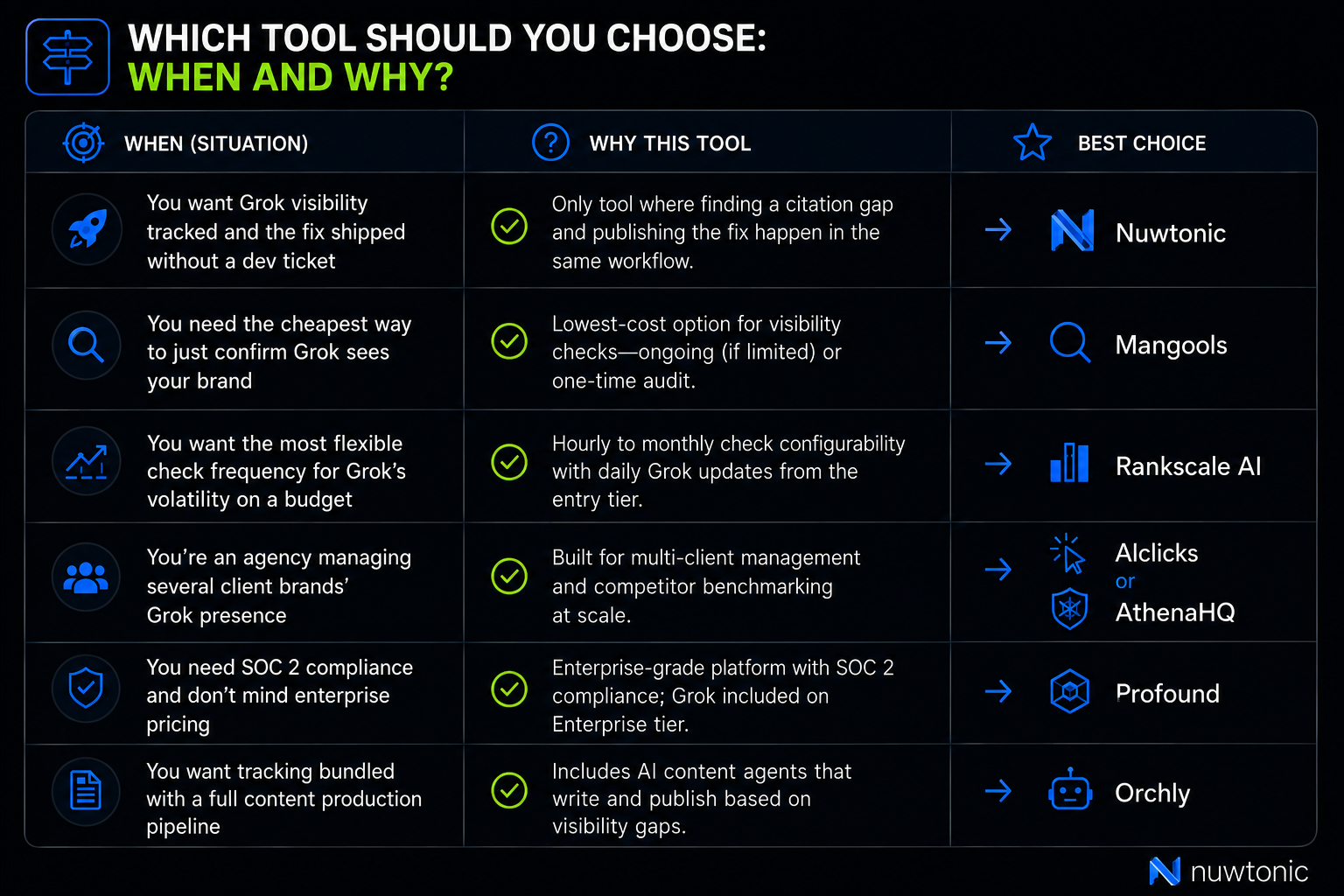
You want Grok visibility tracked and the fix shipped without a dev ticket → Nuwtonic. It's the only tool on this list where finding a citation gap and publishing the fix happen in the same workflow.
You need the cheapest way to just confirm Grok sees your brand → Mangools or AI Rank Checker, depending on whether you want ongoing (if limited) tracking or a one-time audit.
You want the most flexible check frequency for Grok's volatility on a budget → Rankscale AI, with hourly-to-monthly configurability and daily Grok updates from the entry tier.
You're an agency managing several client brands' Grok presence → AIclicks or AthenaHQ, both built with multi-client and competitor benchmarking in mind.
You need SOC 2 compliance and don't mind enterprise pricing → Profound, once you're on the Enterprise tier where Grok is actually included.
You want tracking bundled with a full content production pipeline → Orchly, if you're comfortable with its Pro-tier price point for Grok access.
Why People Look for a Grok Rank Tracker
Generic "AI visibility" platforms aren't wrong to include Grok — most of the credible ones do now. The problem is usually one of three things:
Refresh rate mismatch. Weekly or monthly snapshots miss the fact that Grok's read of your brand can shift within hours of an X thread taking off. If a tool doesn't offer daily (or at least near-daily) Grok checks, you're often looking at stale data by the time you act on it.
Grok treated as a bolt-on, not a channel. Several tools only unlock Grok on their most expensive tier, or offer it as a paid add-on rather than building tracking methodology specifically around its non-deterministic, X-influenced output.
Monitoring without a path to action. The majority of tools on this list are genuinely good at telling you that your visibility dropped. Very few tell you exactly what to change on the page — and fewer still can make that change and publish it without you opening a ticket for your dev team.
None of that makes these tools bad — Rankscale, AIclicks, and AthenaHQ in particular have real, well-built tracking methodology behind them. It just means the category has mostly stopped at "here's your data," which is exactly the gap an execution-first tool is built to close.
How We Evaluated
Criteria | Why it matters for Grok specifically |
|---|---|
Update frequency | Grok's X-driven volatility means weekly checks can miss real swings |
Multi-engine coverage | Almost no one tracks Grok in isolation — it needs to sit alongside ChatGPT, Perplexity, Gemini, Claude |
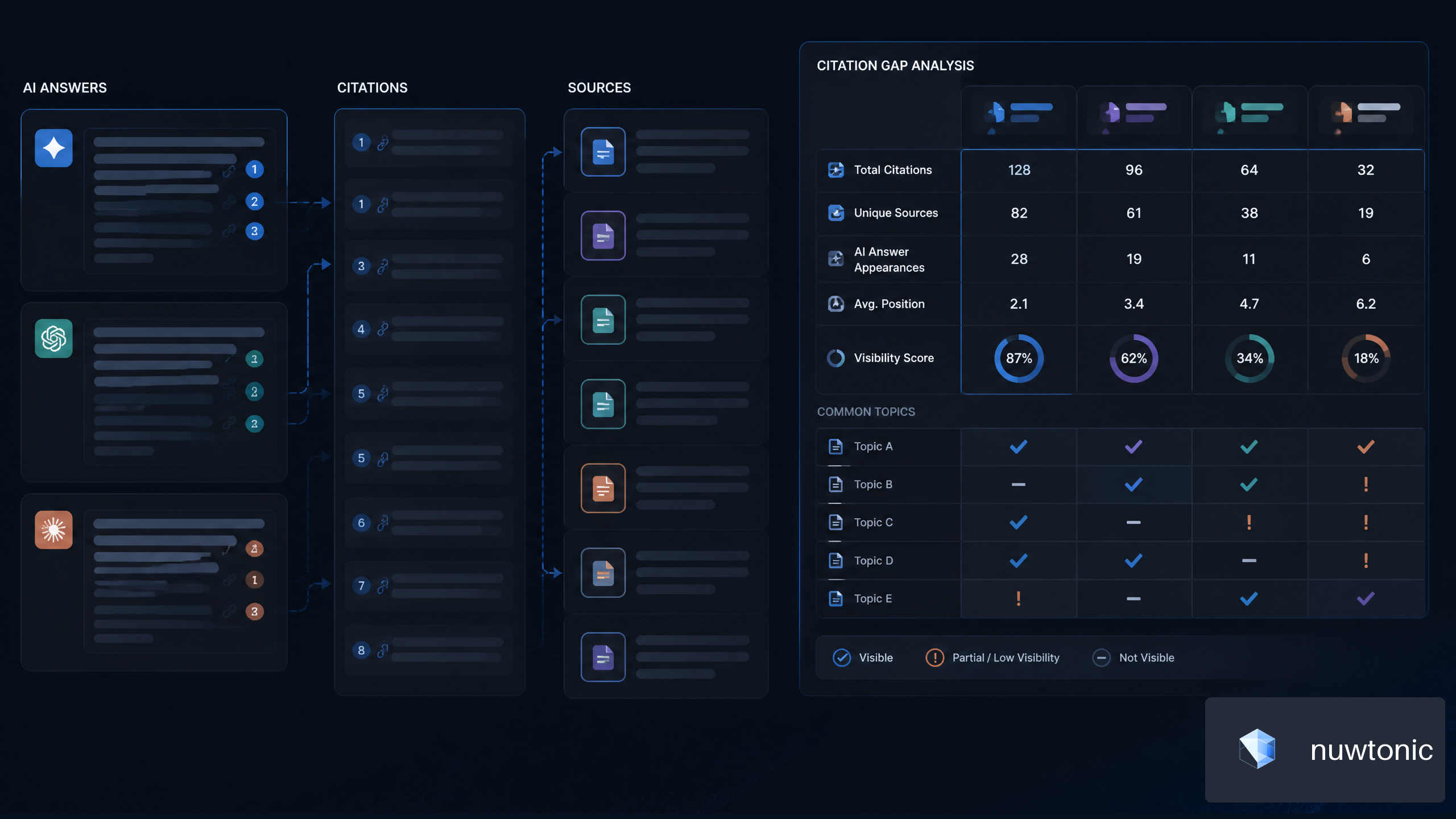
Citation/source intelligence | Grok cites more than ChatGPT but less consistently than Perplexity — source-level tracking matters |
Monitoring → action | Whether the tool stops at a dashboard or actually helps you fix and publish |
Pricing transparency | Credit-based and add-on pricing (common in this category) can obscure real cost until you're in it |
The 9 Best Grok Rank Tracking Tools
1\. Nuwtonic — best for turning Grok visibility gaps into shipped fixes
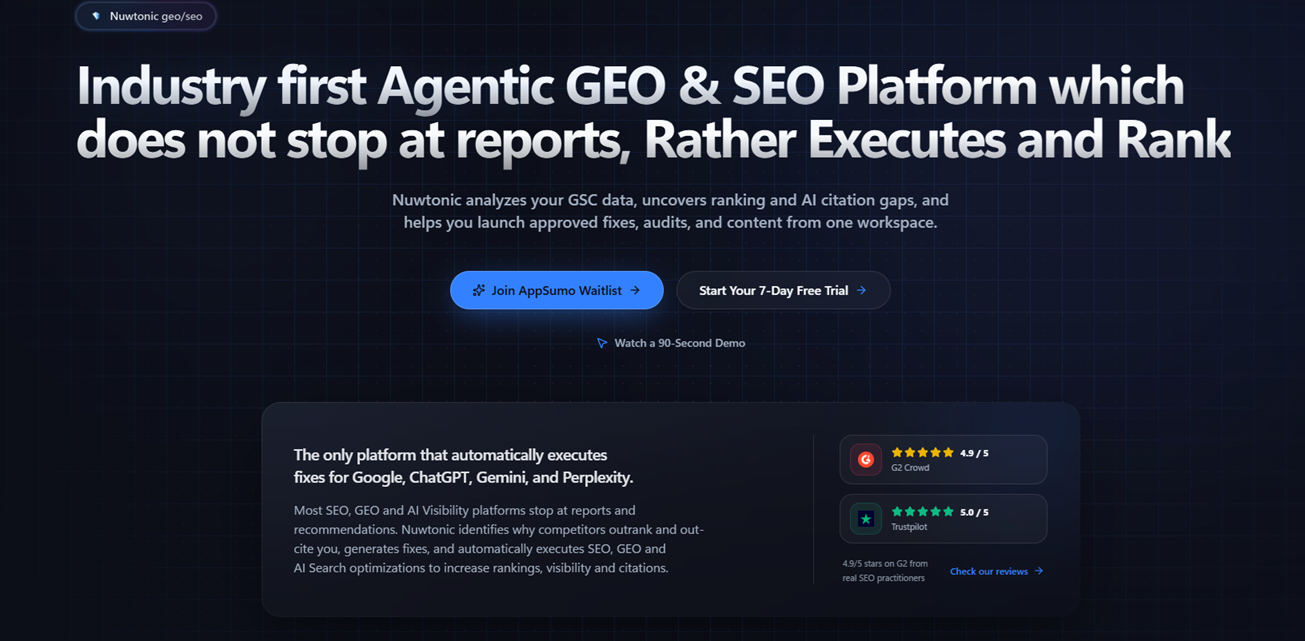
Nuwtonic tracks Grok as one of six core LLMs in its AI visibility module (alongside ChatGPT, Claude, Perplexity, Google, and Meta AI), so Grok isn't an add-on tier — it's part of the same workflow from day one.
What separates it from most of this list is what happens after a gap is found. Nuwtonic's prompt tracking assigns funnel stage and commercial priority to each tracked prompt, flags exactly which URL is losing citation credit in Grok's answers, and then generates a one-click fix — entity, schema, or content-level — that you review and push straight to WordPress, Shopify, Webflow, or Ghost. A recursive optimization loop keeps re-checking and re-fixing as Grok's behavior shifts, instead of leaving you to notice the next drop manually.
Pros:
Grok tracked natively alongside 5 other major LLMs in one workspace, not gated to a top tier
URL-level citation intelligence — see exactly which page earns (or loses) source credit
One-click GEO fixes with direct CMS publishing, not just a list of recommendations
Non-technical workflow — review and approve fixes without needing a developer
Suitable use cases: Teams that are tired of exporting a "you lost visibility" report and manually assigning the fix to a writer or developer — Nuwtonic is built for the fix to happen in the same workflow as the detection.
Pricing: Plans start around $39/month (Bronze), scaling through Silver, Gold, Diamond, and Platinum tiers based on domains, prompt volume, and team seats — confirm current tier details at nuwtonic.com/pricing, as inclusions are updated periodically. 7-day free trial, no credit card required.
2\. Rankscale AI — best affordable option with daily Grok tracking
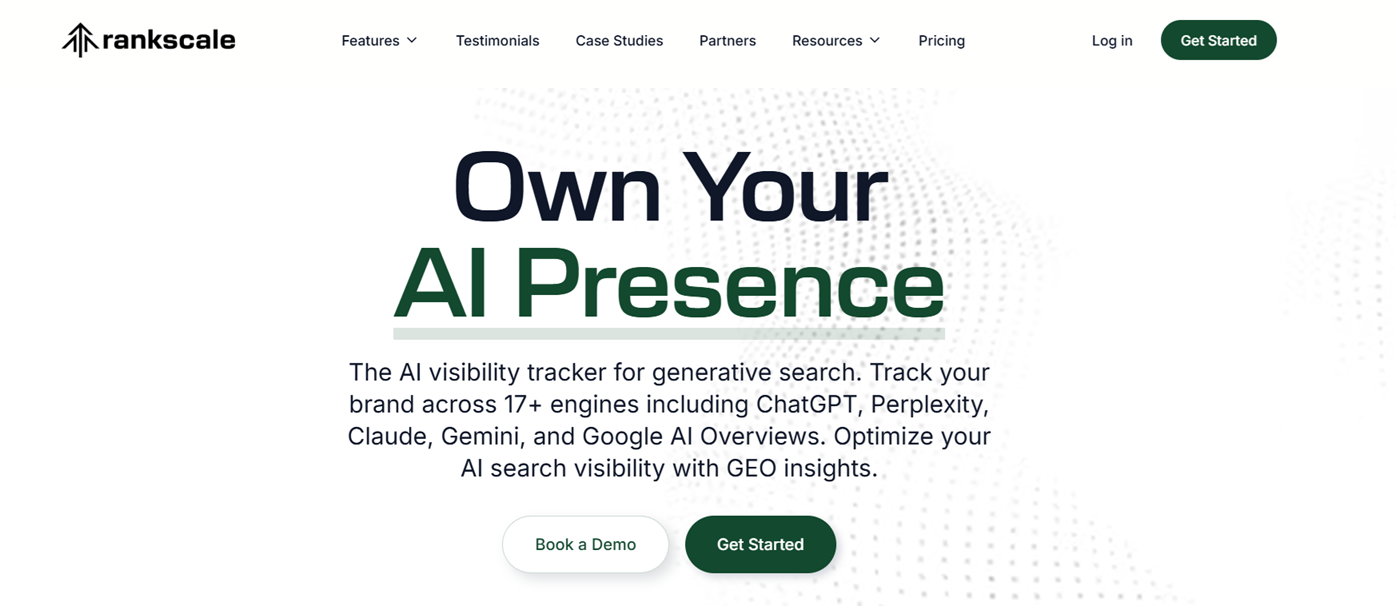
Rankscale is a credit-based AI visibility platform tracking 10+ engines including Grok on every plan, with configurable check frequency from hourly to monthly. Its AI Search Readiness Score audits your site against 94+ technical checkpoints and flags specific issues affecting Grok visibility.
Pros:
Grok included on all tiers, no add-on fee
Flexible tracking frequency (hourly to monthly) — genuinely useful for Grok's volatility
Sentiment analysis and citation tracking included
Diagnostic scoring gives a prioritized fix list, even though it doesn't deploy fixes itself
Cons:
Credit-based pricing means heavier Grok engines can drain your allotment faster than expected — the entry tier's 120 credits go quickly with daily checks
REST API and white-label reporting are Enterprise-only (€780/mo)
Diagnostics stop at recommendations; there's no auto-fix or publishing layer
Pricing: Essentials €20/mo (120 credits), Pro €99/mo (1,200 credits), Enterprise €780/mo (12,000 credits). Free trial available on Pro.
3\. AIclicks — best for prompt-level Grok diagnostics with GA4 tying
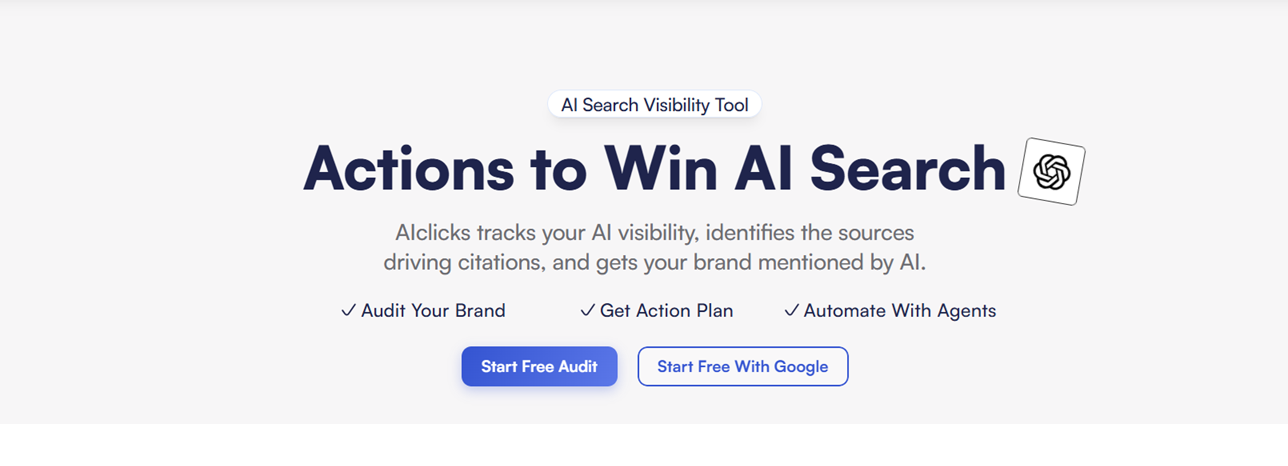
AIclicks tracks prompt-level Grok mentions with citation intelligence (which domains Grok cites when it mentions you) and geo/language audits, and connects Grok referral traffic to GA4 so you can see actual site visits tied to AI visibility.
Pros:
Prompt-level tracking with competitor extraction
GA4 integration linking Grok visibility to real traffic
Actionable recommendations built into the dashboard
Cons:
Starter plan ($59/mo) limits you to 3 AI platforms of your choice — Grok may compete with ChatGPT and Perplexity for one of those slots depending on configuration
Prompt limits are tight at the entry tier (30 prompts on Starter)
Only a 3-day trial window
Recommendations are manual to implement — no CMS publishing layer
Pricing: Starter $59/mo (30 prompts, 3 LLMs), Pro $189/mo (150 prompts, 4 LLMs), Business $499/mo (300 prompts, 6 LLMs, white-label). 3-day free trial.
4\. Mangools AI Search Watcher — cheapest verified Grok tracker
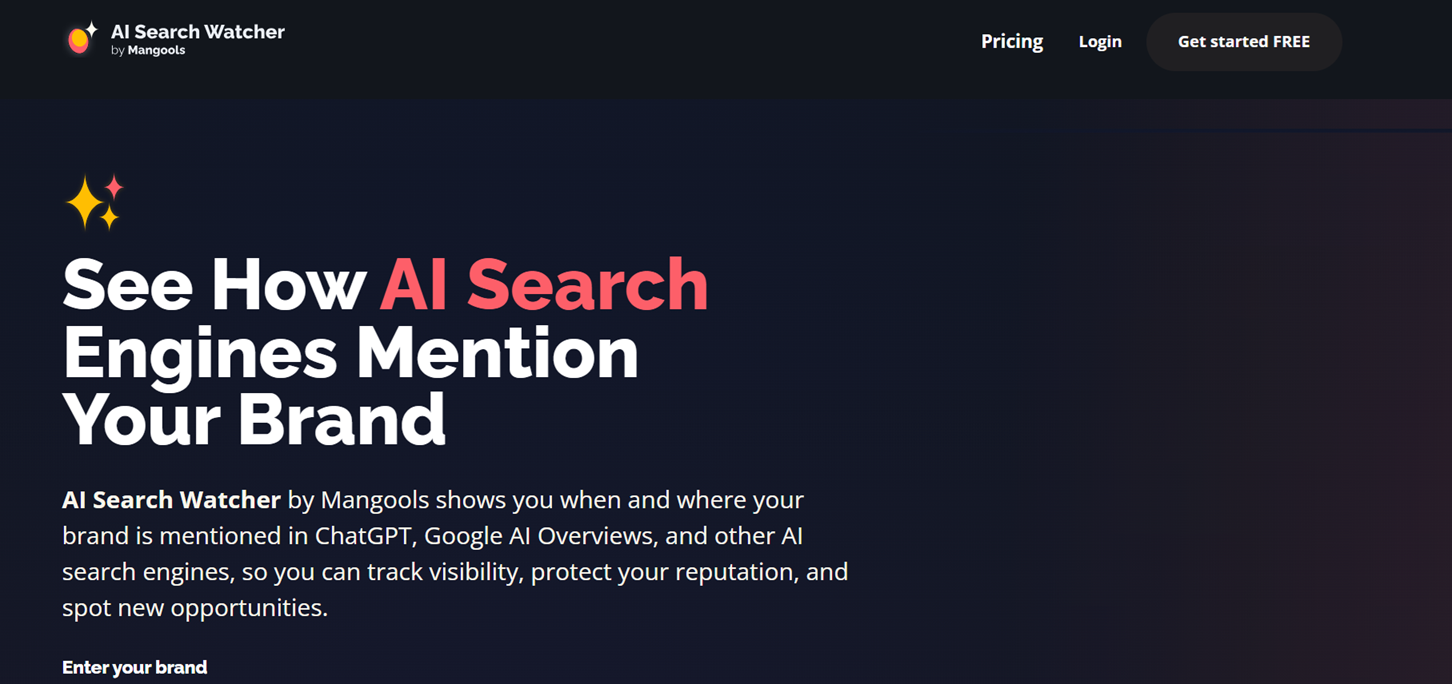
Mangools tracks Grok alongside ChatGPT, Gemini, Claude, Mistral, and Llama, testing each prompt 5 times to account for LLM non-determinism — a smart methodology touch given how variable Grok's answers can be run to run.
Pros:
Cheapest paid entry point with confirmed Grok support ($15.60/mo annual)
Permanent free tier with limited prompts
5-run accuracy verification per prompt
Bundled discount available with Mangools' broader SEO suite
Cons:
Weekly refresh only — no daily/hourly option, a real limitation given Grok's X-driven volatility
Positioned as a visibility layer, not a deep GEO analytics or execution platform
No sentiment analysis or content optimization features
Pricing: Free tier available. AI Search Watcher Pro $15.60/mo (annual, 500 prompts). Bundled SEO+AI plans from $37.70–$97.70/mo (annual).
5\. Orchly — best for teams that want tracking and content execution together
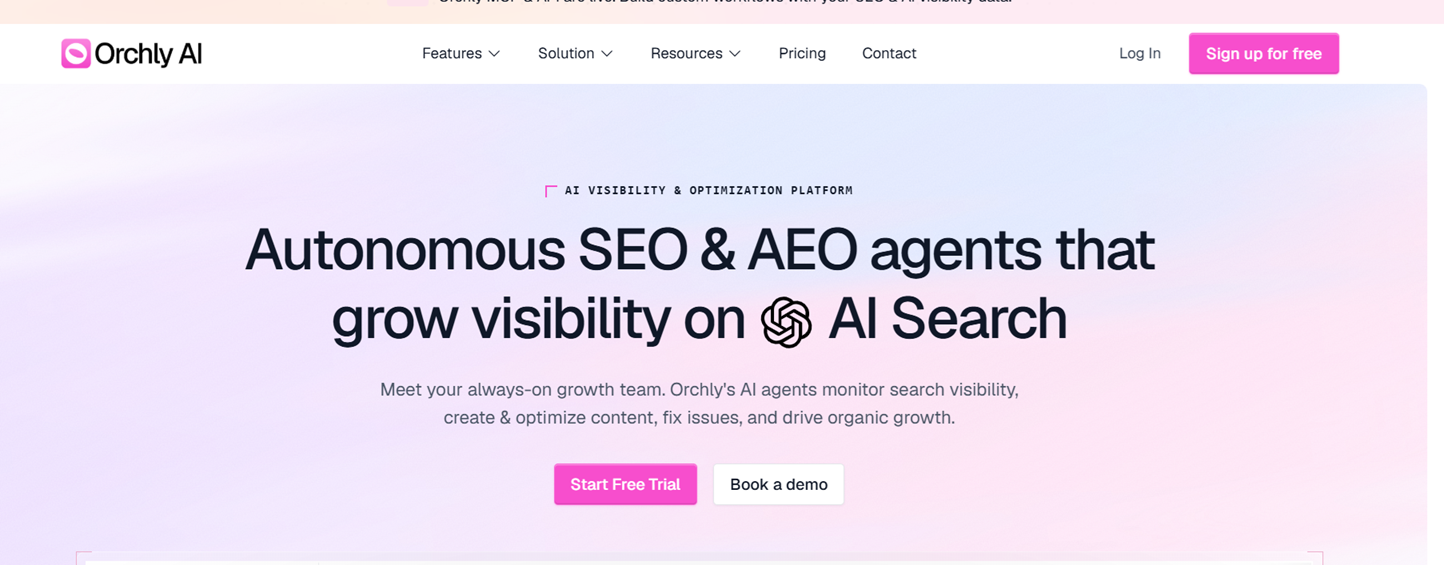
Orchly pairs AI visibility tracking with a full content operations stack — an AI writer, SEO/GEO optimizer, and auto-publishing — built around an "insight to action" pipeline where its Action Center surfaces gaps and its agents write and ship content in response.
Pros:
End-to-end workflow: detection, content generation, and auto-publishing in one platform
Tracks AI bot crawl activity and human traffic from AI search in real time
Daily prompt refresh across 6+ platforms including Grok
Cons:
Grok tracking is Pro-plan only ($125/mo) — the Essential tier excludes it entirely
Prompt limits are modest even on Pro (100 prompts)
Browser-based scraping (vs. API-based tracking) can be slower at scale
Content-generation quality is harder to evaluate without hands-on testing
Pricing: Essential $49/mo (no Grok), Pro $125/mo (Grok included, 100 prompts, 6 platforms), Enterprise custom. 14-day free trial.
6\. AthenaHQ — best for enterprise multi-LLM Grok tracking
AthenaHQ's Athena Citation Engine (ACE) is built specifically to track and optimize for citations across LLM responses, including Grok, with an Action Center that surfaces automated recommendations and GA4 integration tying visibility to real traffic.
Pros:
Prompt volume intelligence and unlimited competitor monitoring
GA4 integration connects Grok visibility to actual traffic
Structured recommendations go beyond raw mention data
Cons:
No built-in content implementation — recommendations still require manual execution
Multi-language/region support is limited outside enterprise tiers
Pricing: Starts at $95/mo (Self-Serve), custom enterprise pricing available.
7\. Rankability — best for enterprise citation-pattern analysis
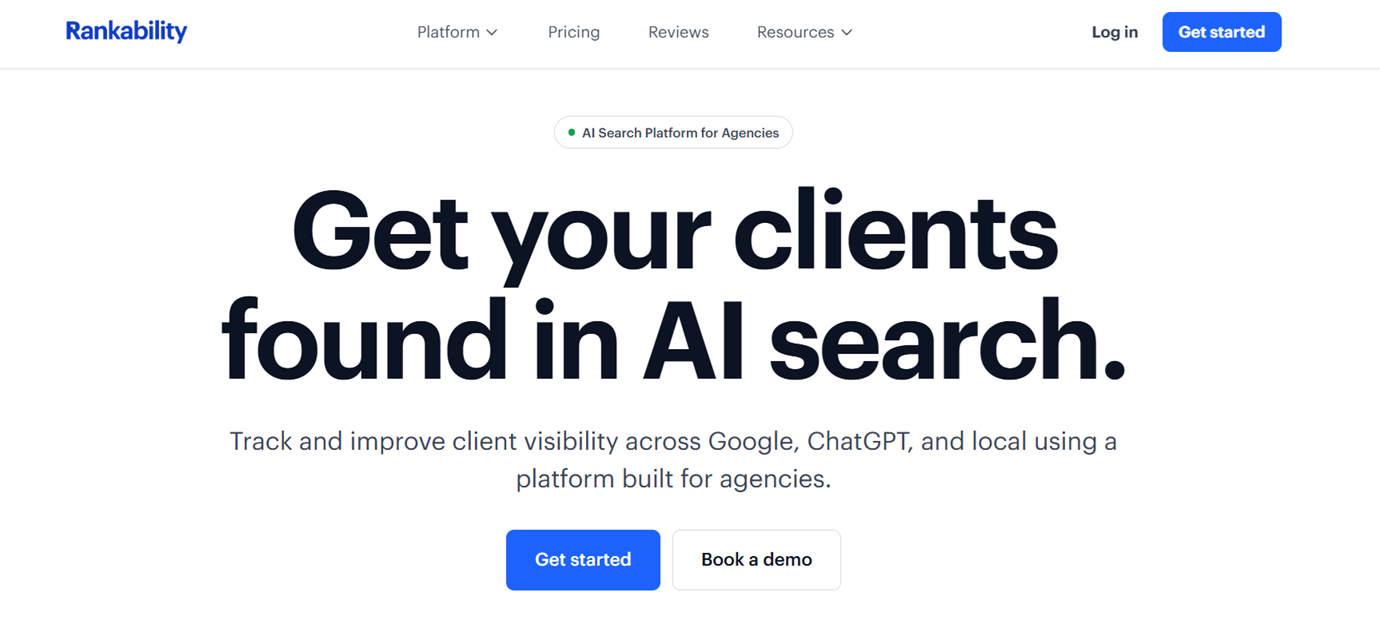
Rankability focuses specifically on how Grok cites your brand — direct link, named source, or passing mention — and tracks visibility shifts across Grok's follow-up queries, which catches nuances most Grok trackers miss entirely.
Pros:
Deep integration with Grok and broader X/social signal tracking
Freshness tracking flags ranking changes early
Guided optimization playbooks
Cons:
Priced and positioned primarily for enterprise buyers
More complex interface than lighter audit-style tools
Pricing: Core $199/mo (3 users, 5 clients), Team $249/mo, Agency $799/mo.
8\. Profound — best for enterprise compliance and analytics depth
Profound is a well-funded (Series B, $35M+) enterprise AI visibility platform. Grok tracking specifically is reserved for the Enterprise tier, which also includes SOC 2 Type II compliance and proprietary "Prompt Volumes" demand data.
Pros:
SOC 2 Type II compliance for security-sensitive enterprise buyers
Proprietary prompt volume data for estimating AI search demand
Free AEO report available for evaluation before any commitment
Cons:
Grok isn't available until the Enterprise tier — Starter ($99/mo) is ChatGPT-only, Growth ($399/mo) covers ChatGPT/Perplexity/Google AI Overviews but not Grok
Enterprise pricing starts around $2,000+/mo, expensive relative to mid-market alternatives with comparable Grok coverage
Pricing: Starter $99/mo, Growth $399/mo, Enterprise $2,000+/mo (includes Grok). Free AEO report available.
Which Tool Should You Choose — And Why?
You want Grok visibility tracked and the fix shipped without a dev ticket → Nuwtonic. It's the only tool on this list where finding a citation gap and publishing the fix happen in the same workflow.
You need the cheapest way to just confirm Grok sees your brand → Mangools or AI Rank Checker, depending on whether you want ongoing (if limited) tracking or a one-time audit.
You want the most flexible check frequency for Grok's volatility on a budget → Rankscale AI, with hourly-to-monthly configurability and daily Grok updates from the entry tier.
You're an agency managing several client brands' Grok presence → AIclicks or AthenaHQ, both built with multi-client and competitor benchmarking in mind.
You need SOC 2 compliance and don't mind enterprise pricing → Profound, once you're on the Enterprise tier where Grok is actually included.
You want tracking bundled with a full content production pipeline → Orchly, if you're comfortable with its Pro-tier price point for Grok access.
FAQ
**Is Grok actually big enough to justify tracking it separately?**
Yes — and the growth curve is the part most teams underestimate. Grok's U.S. chatbot market share went from about 1.9% in January 2025 to roughly 17.8% in January 2026, a nearly ninefold jump in a single year, making it the third-most-used chatbot in the country behind ChatGPT and Gemini. A brand that ignored Grok a year ago was ignoring a rounding error; the same decision today means ignoring a double-digit share of AI-driven brand discovery.
**Does Grok give the same answer every time you ask it the same question?**
No, and this is the detail that trips up teams new to Grok tracking. Grok's outputs are non-deterministic — running an identical prompt twice can surface a different answer with different cited sources. That means a single snapshot isn't a reliable "ranking"; accurate tracking requires running each prompt multiple times and reading the pattern across runs, not treating one result as ground truth.
**How fast can my brand's visibility in Grok actually change?**
Faster than in any other major AI assistant. Because Grok layers real-time X (Twitter) content on top of its training data and web search, a sudden spike in X mentions — positive or negative — can shift how it describes your brand within hours to days. ChatGPT and Gemini move slowly by comparison; Grok is the one major model where a single viral thread can visibly change your citation pattern before your next scheduled check even runs.
**What kinds of sources does Grok actually cite when it recommends a brand?**
More categories than most trackers report by default. Beyond just logging which domains get cited, the more thorough tracking methodologies classify Grok's citations by type — owned pages, third-party review sites, news coverage, X posts/threads, product docs, and competitor content. A tool that only tells you "you were cited 12 times" without breaking down source type can hide the fact that most of those citations are coming from a review site you don't control, rather than your own domain.
**Does who owns xAI affect how stable Grok tracking is right now?**
It's a live variable worth knowing about. xAI was acquired by SpaceX in February 2026 in a deal that valued the combined entity at roughly $1.25 trillion, and grok.com's own traffic has been volatile since — peaking around 326 million monthly visits in March 2026 before declining to roughly 245 million by May. Ownership and infrastructure changes at this scale can affect product roadmap priorities (including citation transparency and API access), which is one more reason to treat Grok tracking as an ongoing watch rather than a "set it up once" project.
**Can a local business track Grok visibility for searches like "best plumber near me"?**
Yes, and you don't necessarily need an enterprise AI-visibility platform to do it. Some tools built originally for local SEO — geo-grid trackers designed for Google Business Profile ranking — have expanded into GEO tracking that covers Grok, Google AI Overviews, and similar surfaces on credit-based, pay-per-use pricing, which suits a local business that doesn't need continuous high-volume monitoring.
**Can I build my own Grok tracker instead of paying for a monitoring tool?**
Technically yes, if you have development resources. xAI's API pricing makes small-scale DIY tracking affordable — Grok 4.1 Fast runs roughly $0.20 per million input tokens and $0.50 per million output tokens, and xAI provides $25 in free credits (up to $150/month if you opt into data sharing), with a Batch API that cuts costs by about half for scheduled, repeated tracking runs. The tradeoff is that you're also building your own storage, scheduling, and reporting layer from scratch — most teams find that worth outsourcing once they need this running continuously.
Final Thoughts
Grok's growth means it's no longer safe to treat it as a footnote in a broader "AI search" strategy — its X-driven volatility genuinely behaves differently from ChatGPT or Gemini, and a tool built for those platforms doesn't automatically handle Grok well. Most of the tools above do a credible job of watching Grok for you. The real dividing line in this category right now is whether "watching" is where the tool's job ends, or whether it also does something about what it finds.