
ChatGPT, Gemini, Perplexity, and Claude are quietly becoming discovery engines in their own right. When a prospective customer asks an AI assistant "what's the best project management tool for a five-person team" or "who are the top accounting firms in Austin," the brands that get named — and the sources those answers cite — are winning a new kind of visibility war. Traditional rank tracking wasn't built for this. That's where ChatGPT rank trackers come in.
This guide compares 9 platforms built to monitor and improve visibility inside AI-generated answers. Instead of just repeating feature lists, we explain how AI rankings actually work, what to measure, how we evaluated each tool, and which one fits your situation.
Why Traditional Rank Trackers Are No Longer Enough
A Google rank tracker checks your position on a search engine results page that is, for a given query and location, largely deterministic. Refresh the search and you'll usually see a similar list of results in a similar order.
ChatGPT and other AI assistants don't work that way. The same question asked twice can produce two different answers, because outputs are shaped by:
Prompt wording — small changes in phrasing can change which sources get pulled in
Conversation context — prior turns in a chat can steer which brands get mentioned
Model version — GPT-4o, GPT-5, and other model updates can shift citation behavior overnight
Live search availability — whether the assistant is browsing the web in real time or answering from its trained knowledge
User location — geographically relevant results can differ by region
Citation selection — the model chooses which sources to reference, and that choice isn't fixed
Because of this variability, "rank" isn't a single number the way it is in Google Search Console. It's a pattern that emerges across many prompts, many runs, and many models over time. Tools that only check a single response once are measuring noise, not signal.
What Makes a Good ChatGPT Rank Tracker?
Before comparing individual products, it helps to know what separates a genuinely useful tool from a dashboard that just looks impressive.
Metrics That Actually Matter
Metric | Why it matters |
|---|---|
Brand mentions | How often your brand shows up in relevant AI answers |
Citation frequency | How often your content is used as a cited source — a proxy for authority |
Share of Voice | Your visibility relative to named competitors across the same prompt set |
Position within answer | Being mentioned first or prominently correlates with higher user trust |
Source URLs | Shows exactly which pages are earning citations, revealing optimization targets |
Citation consistency | Whether your visibility holds steady across repeated runs, or is a fluke |
Prompt coverage | How many relevant prompts and topic variations you appear in |
A single "rank" score without this context can be misleading. A brand might appear once in a lucky response and never again — that's not the same as being a consistently trusted source.
How We Evaluated Every Tool
Each platform in this guide was assessed against the same criteria:
AI engines supported (ChatGPT, Gemini, Claude, Perplexity, and others)
Depth of prompt tracking and multi-run sampling
Competitor monitoring capabilities
Citation and source-level analysis
Historical trend reporting
Reporting and dashboard usability
Integrations with existing SEO or marketing stacks
Ease of setup and day-to-day use
Pricing and scalability for different team sizes
Citation Gap analysis
AI Search Optimization capabilities
Best ChatGPT Rank Tracker Tools
1\. Nuwtonic — Best Overall for SEO + GEO
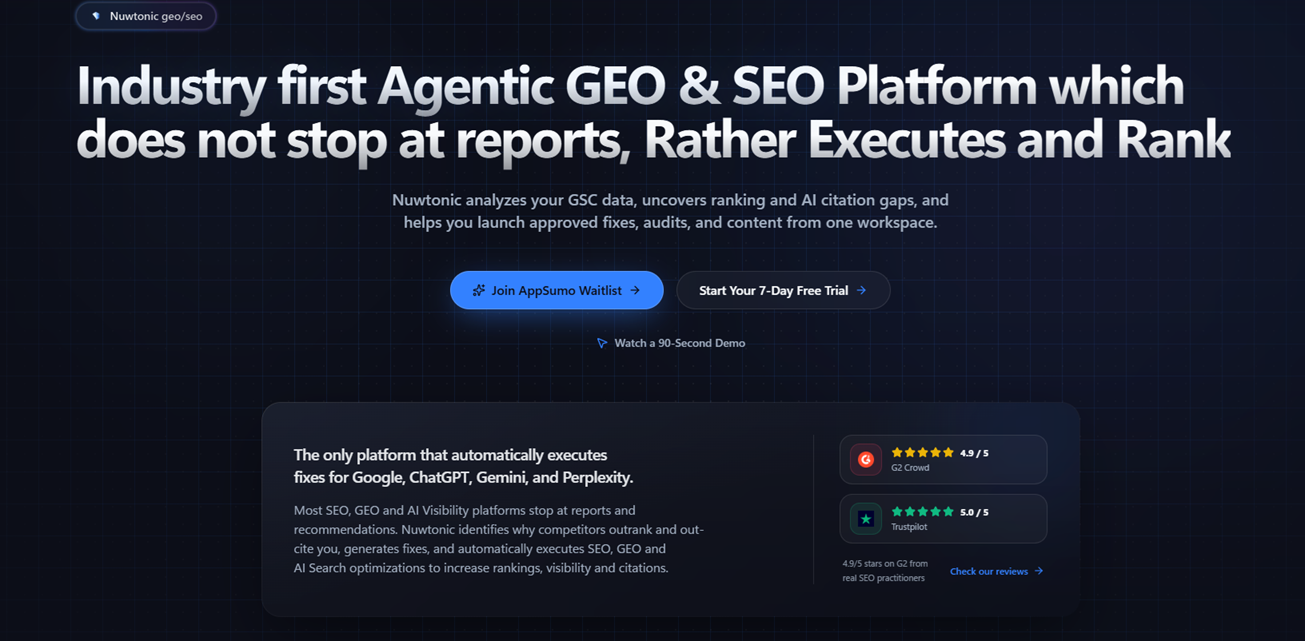
Best for: Teams that want one platform covering Google SEO, AI visibility, content optimization, and technical fixes, instead of stitching together multiple point tools.
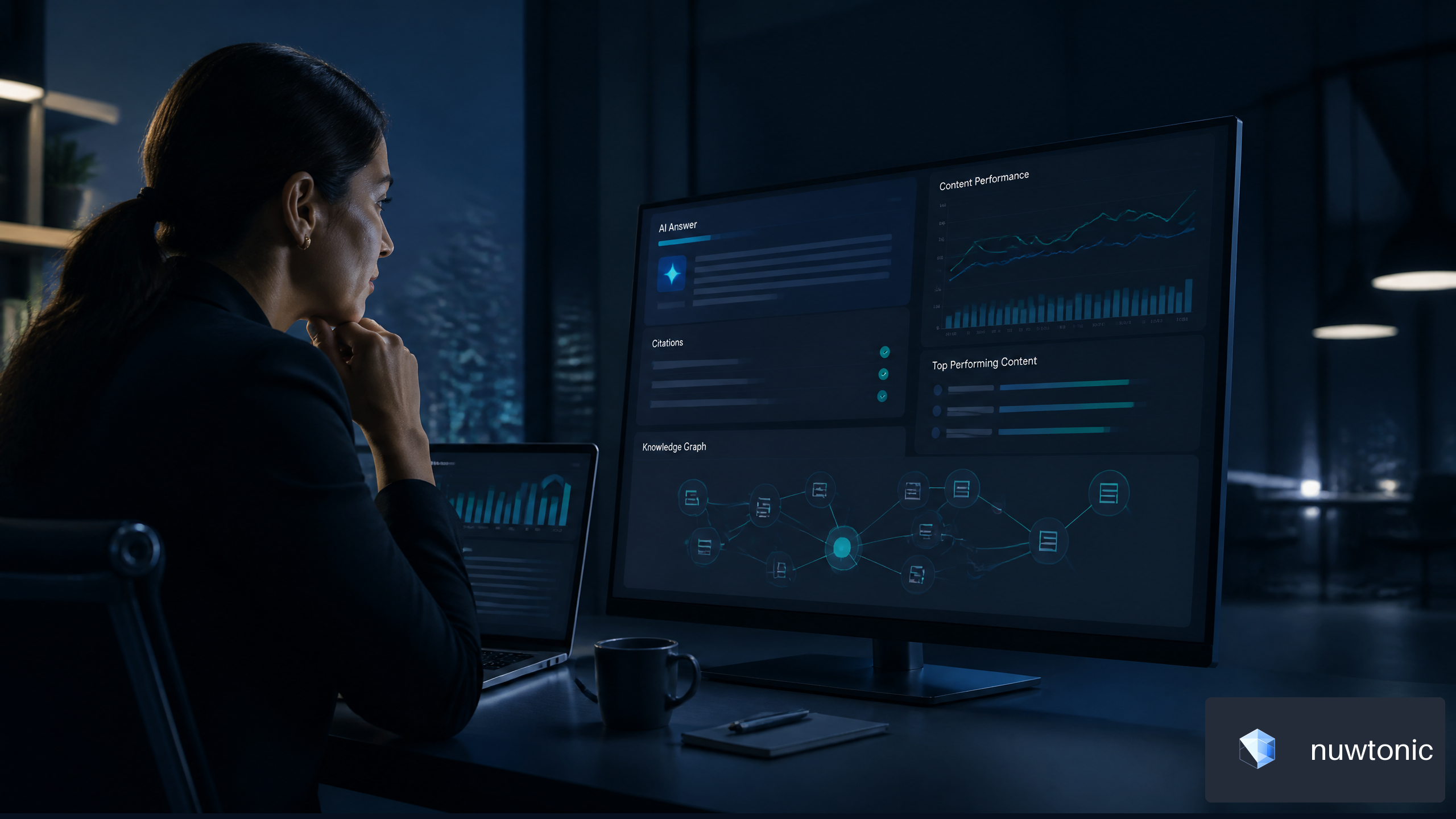
Nuwtonic tracks ChatGPT visibility, AI citations, and Share of Voice, and pairs that monitoring with a GEO Audit & Fix workflow, citation gap analysis, and competitor gap analysis. It also connects to Google Search Console, runs traditional rank tracking, and layers on on-page SEO recommendations and AI-ready content optimization based on topical authority.
The practical difference from many AI visibility tools is that Nuwtonic doesn't stop at reporting where you stand — it identifies the specific citation gaps and content or structural changes (including E-E-A-T signals) that could close them, and does so within the same platform used for conventional SEO. That combination means teams aren't running separate tools for "what's my Google ranking" and "am I showing up in ChatGPT."
Pros
All-in-one SEO + GEO workflow in a single platform
AI-specific optimization recommendations, not just monitoring
Competitor and citation gap analysis
Traditional SEO and AI visibility tracking together
Cons
- Geared more toward teams managing an ongoing strategy than a casual, one-off check
2\. Geoptie — Best for Affordable AI Visibility Tracking
Geoptie covers ChatGPT, Claude, Gemini, and Perplexity under flat, predictable pricing, making it a reasonable entry point for teams that mainly want visibility data without a large budget.
Pros: Flat pricing; multi-engine coverage (ChatGPT, Claude, Gemini, Perplexity) Cons: Limited optimization guidance once you have the data
3\. AIclicks — Best for AI Visibility Reporting
AIclicks focuses on clear visibility dashboards with daily monitoring and competitor tracking, which makes it easy to check status at a glance.
Pros: Strong visibility dashboards; daily monitoring; competitor tracking Cons: Limited technical SEO capabilities beyond AI visibility
4\. Profound — Best for Enterprise
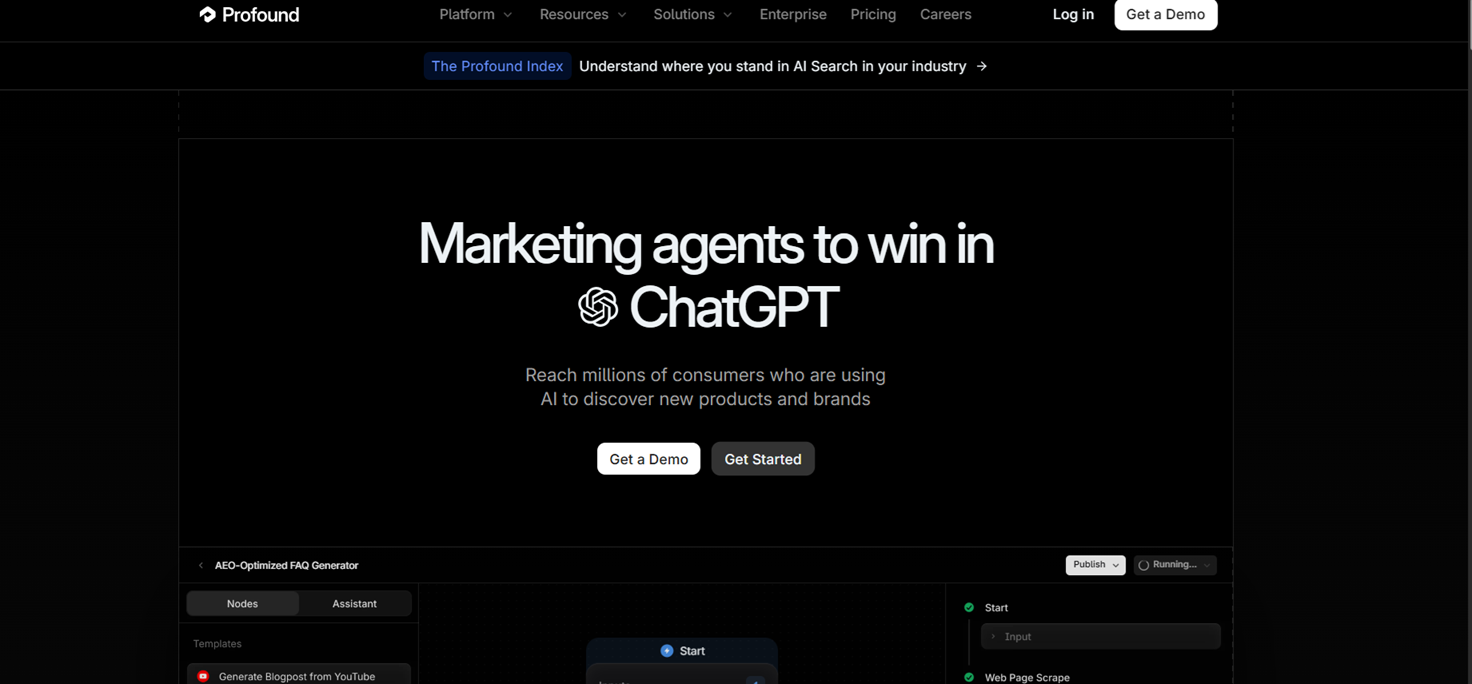
Profound leans into advanced citation analytics and large-scale monitoring, with reporting suited to compliance-conscious enterprise teams.
Pros: Advanced citation analytics; large-scale monitoring; compliance-focused reporting Cons: Premium pricing that may exceed smaller teams' budgets
5\. Otterly AI — Best for Freelancers and Small Businesses
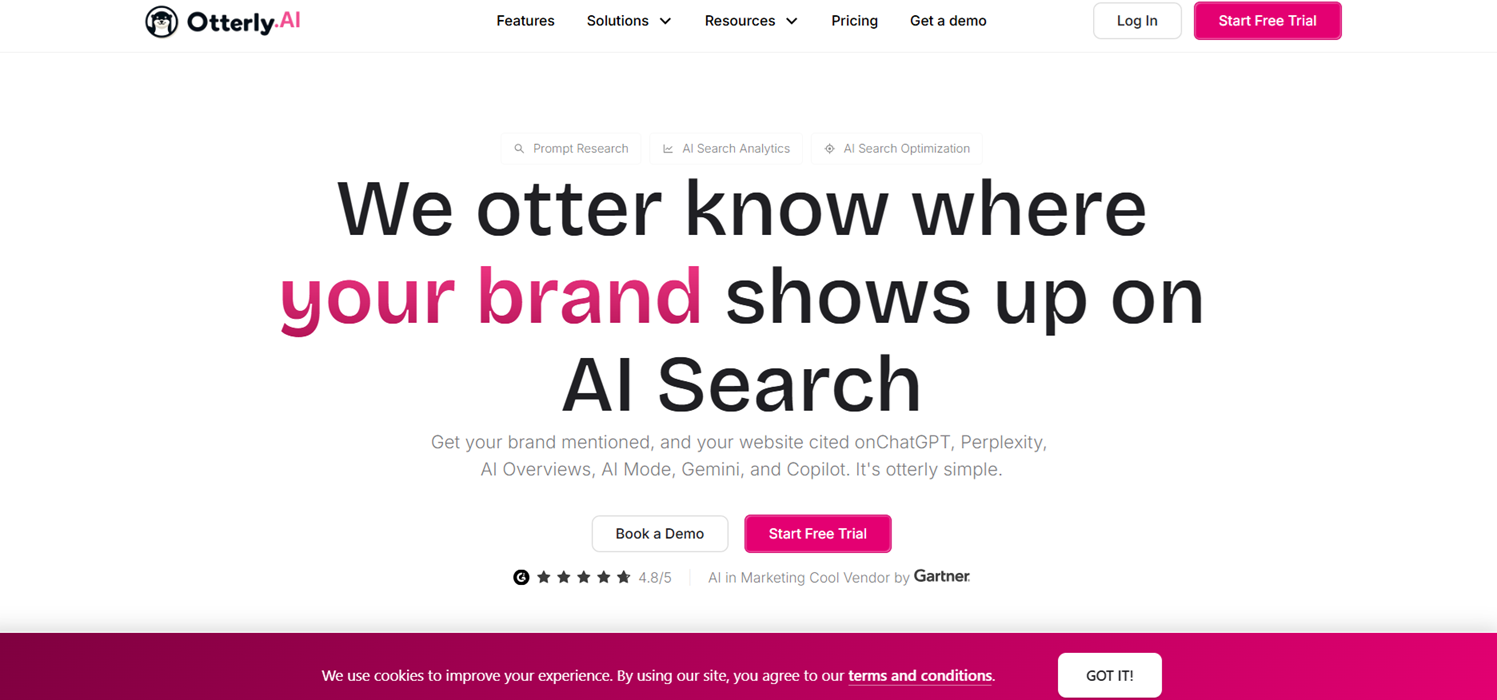
Otterly AI keeps setup simple and pricing accessible while still covering the core AI visibility metrics that matter most.
Pros: Simple setup; budget-friendly; core AI visibility metrics Cons: Fewer enterprise-grade capabilities
6\. Nightwatch — Best for Agencies
Nightwatch pairs Google rank
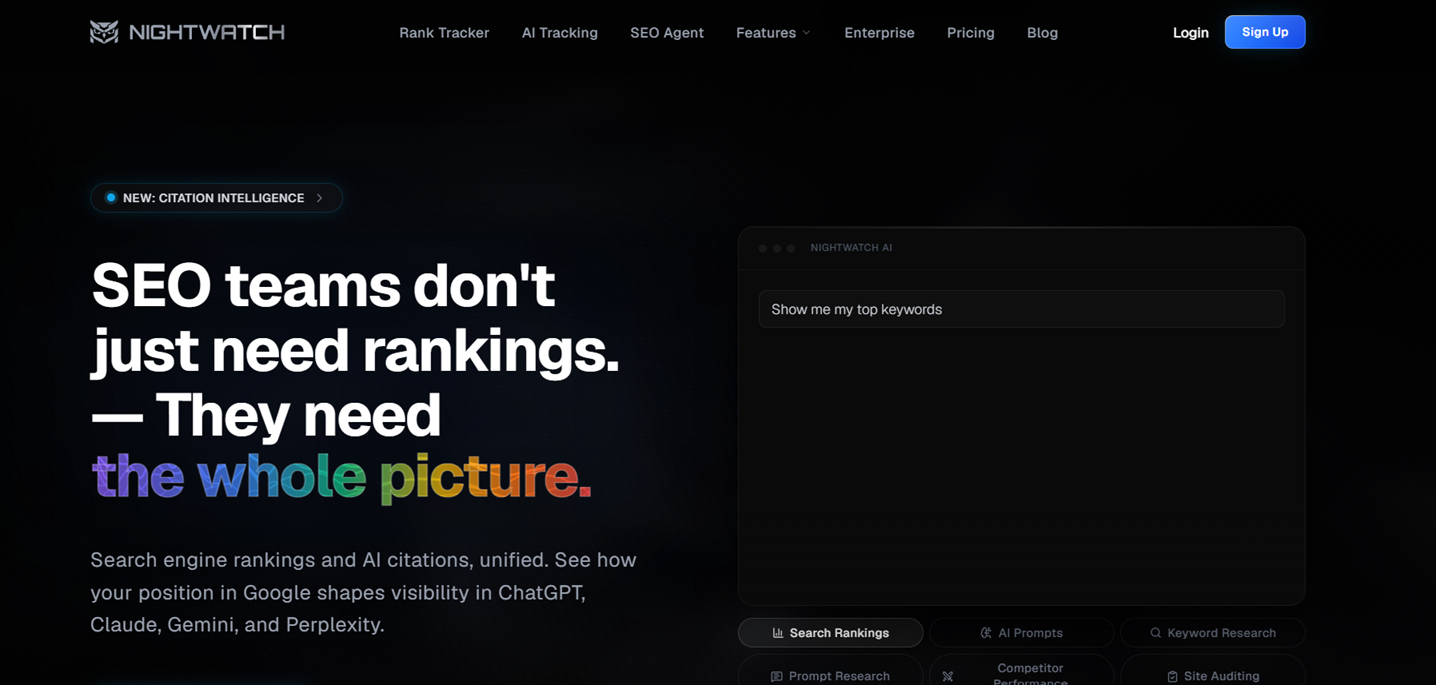
with AI visibility monitoring, which suits agencies reporting on both channels for clients in one place.
7\. SE Ranking — Best for Hybrid SEO + AI Tracking
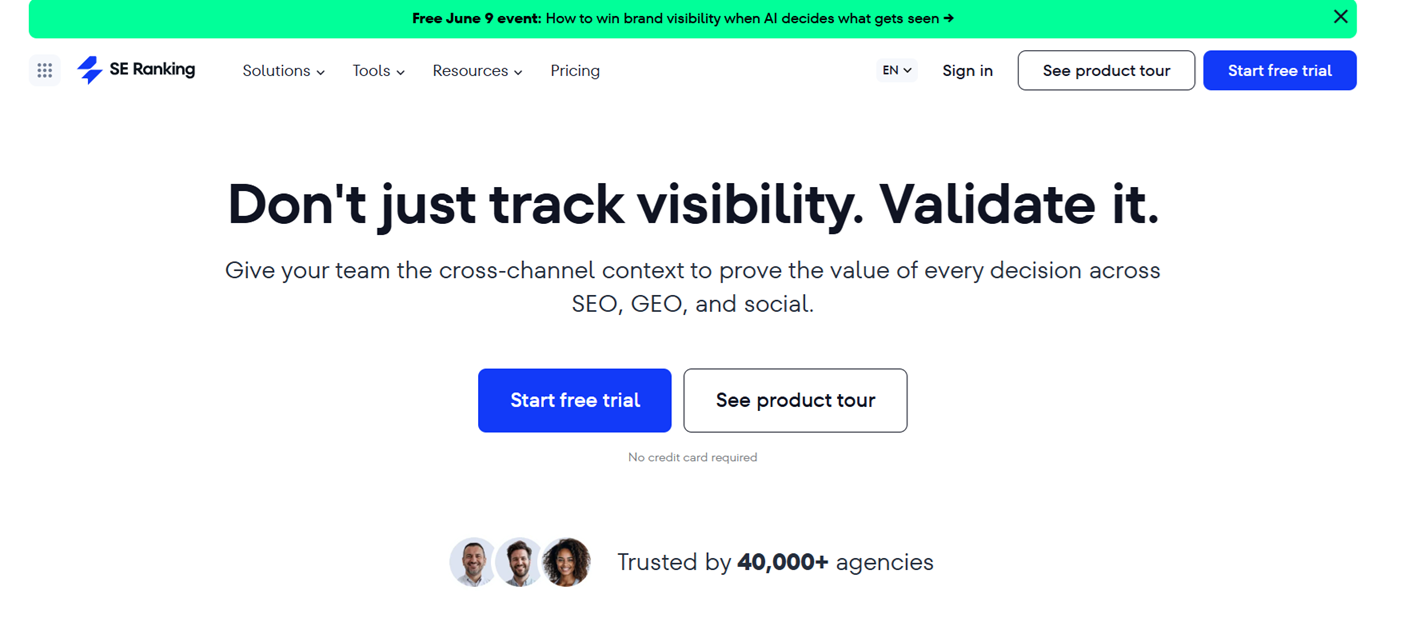
SE Ranking is a good fit for teams already using it for traditional SEO who want to add emerging AI-tracking features without switching platforms.
8\. Semrush AI Toolkit — Best for Teams Already in the Semrush Ecosystem
If your team already relies on Semrush for keyword and competitive research, its AI Toolkit extends that existing workflow into AI visibility, even if some AI-specific features are still maturing.
9\. Peec AI — Best for Brand Perception and Sentiment
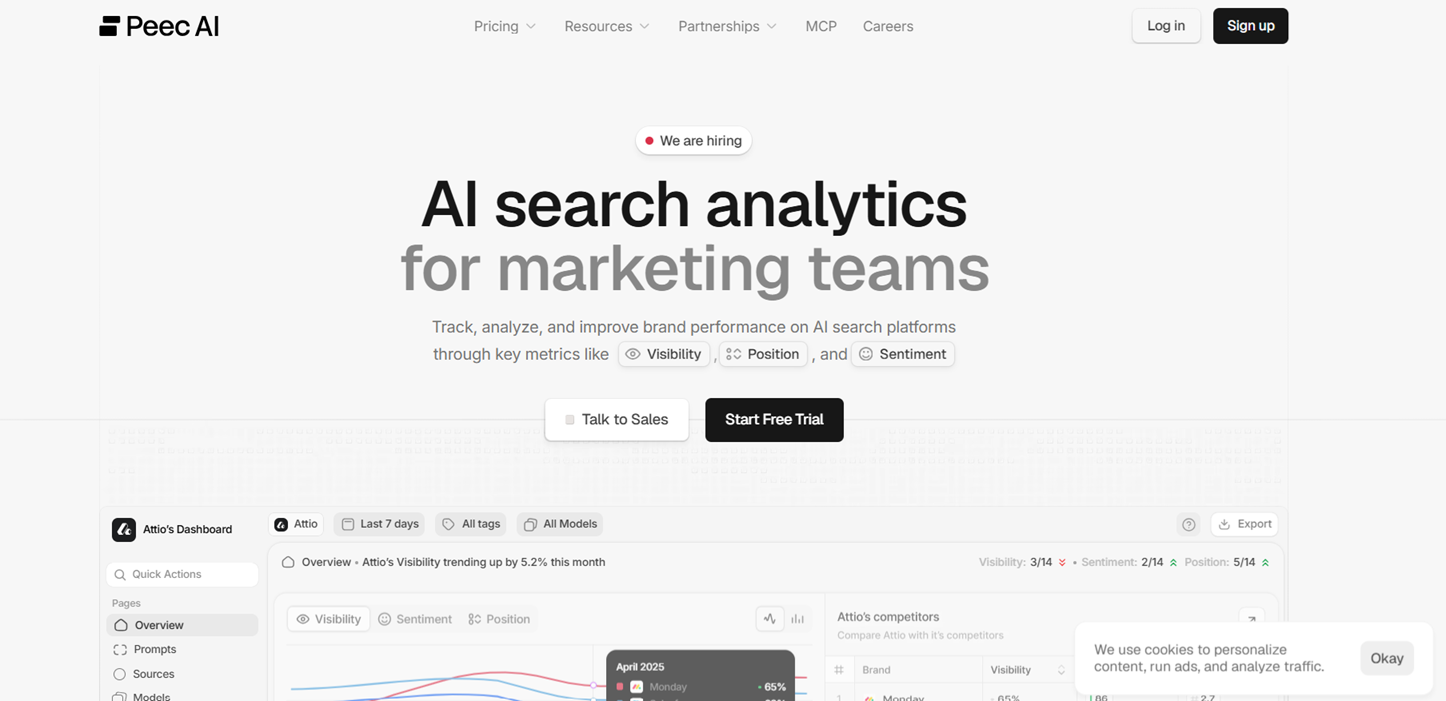
Peec AI is oriented toward understanding not just whether you're mentioned in AI answers, but how — the sentiment and framing around your brand.
10\. Scrunch AI — Best for Crawler Analytics and AI Optimization Workflows
Scrunch AI focuses on the technical side: how AI crawlers interact with your site, which feeds into broader AI optimization workflows.
Comparison Table
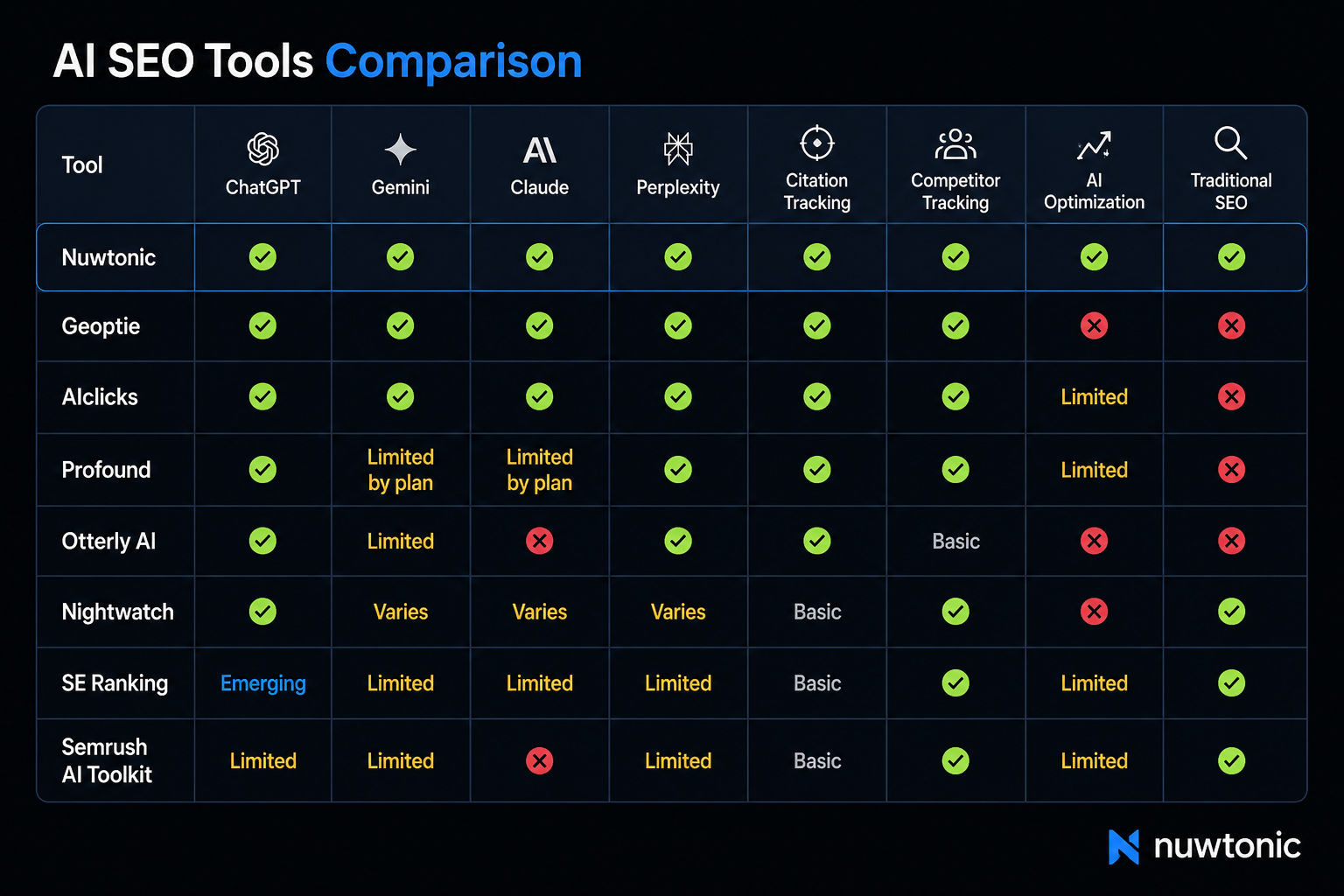
Tool | ChatGPT | Gemini | Claude | Perplexity | Citation Tracking | Competitor Tracking | AI Optimization | Traditional SEO |
|---|---|---|---|---|---|---|---|---|
Nuwtonic | ✅ | ✅ | ✅ | ✅ | ✅ | ✅ | ✅ | ✅ |
Geoptie | ✅ | ✅ | ✅ | ✅ | ✅ | ✅ | ❌ | ❌ |
AIclicks | ✅ | ✅ | ✅ | ✅ | ✅ | ✅ | Limited | ❌ |
Profound | ✅ | Limited by plan | Limited by plan | ✅ | ✅ | ✅ | Limited | ❌ |
Otterly AI | ✅ | Limited | ❌ | ✅ | ✅ | Basic | ❌ | ❌ |
Nightwatch | ✅ | Varies | Varies | Varies | Basic | ✅ | ❌ | ✅ |
SE Ranking | Emerging | Limited | Limited | Limited | Basic | ✅ | Limited | ✅ |
Semrush AI Toolkit | Limited | Limited | ❌ | Limited | Basic | ✅ | Limited | ✅ |
Buying Guide: Which Tool Fits Your Situation?
Solo creator or freelancer: Otterly AI — simple, budget-friendly, covers the essentials
Startup on a tight budget: Geoptie — flat pricing across multiple AI engines
Agency managing multiple clients: Nightwatch or Nuwtonic, depending on whether you need combined SEO + GEO reporting
Enterprise with compliance needs: Profound — built for scale and audit-ready reporting
Teams wanting SEO and AI optimization in one platform: Nuwtonic
Already invested in an SEO suite: SE Ranking or Semrush AI Toolkit, to extend existing workflows rather than add a new tool
From Tracking to Action: The GEO Workflow
Measuring visibility is only step one. A useful AI visibility program typically follows a repeatable loop:
Prompt → Citation → Analysis → Optimization
Prompt: Build a representative set of prompts real customers would ask, across variations and intents.
Citation: Run those prompts repeatedly across AI engines to see which sources get cited and how often.
Analysis: Identify citation gaps — where competitors are cited and you aren't — and patterns in which content formats or pages earn citations.
Optimization: Update or create content to close those gaps, often guided by E-E-A-T signals, clearer structure, and stronger topical coverage, then re-run the loop to measure impact.
Tools that stop after step 2 leave the hardest and most valuable work — actually improving visibility — up to you.
FAQs
Can ChatGPT rankings be tracked like Google rankings? Not exactly. Because AI responses are probabilistic rather than fixed, tracking relies on repeated prompt testing across many runs, then measuring citation frequency, brand mentions, and share of voice rather than a single static position.
What metrics matter most? Prioritize citation frequency, prompt coverage, share of voice, position within the answer, and how consistent your mentions are across repeated runs — a single appearance isn't the same as reliable visibility.
Do I need both an SEO rank tracker and a ChatGPT rank tracker? If AI-driven search is becoming a meaningful acquisition channel for your business, yes. Traditional rank trackers measure your position on Google's results pages; ChatGPT rank trackers measure a different thing entirely — how often and how favorably you're cited inside AI-generated answers.
How often should I re-run my prompt set? Because model versions and live search behavior change over time, monthly re-runs are a reasonable baseline, with more frequent checks around known model updates or major content changes on your site.
Does citation tracking replace traditional SEO? No. The two are complementary. Strong topical authority and technical SEO fundamentals still influence whether AI models trust and cite your content in the first place.
Final Recommendations
If you're managing AI visibility as one part of a broader SEO strategy, look for a platform that connects the two — tracking and optimization in the same place — rather than adding another disconnected dashboard. For teams with that goal, Nuwtonic's combination of GEO tracking, citation gap analysis, and traditional SEO integration is worth prioritizing. For narrower budgets or simpler needs, Geoptie and Otterly AI offer solid coverage of the core metrics without the added complexity.