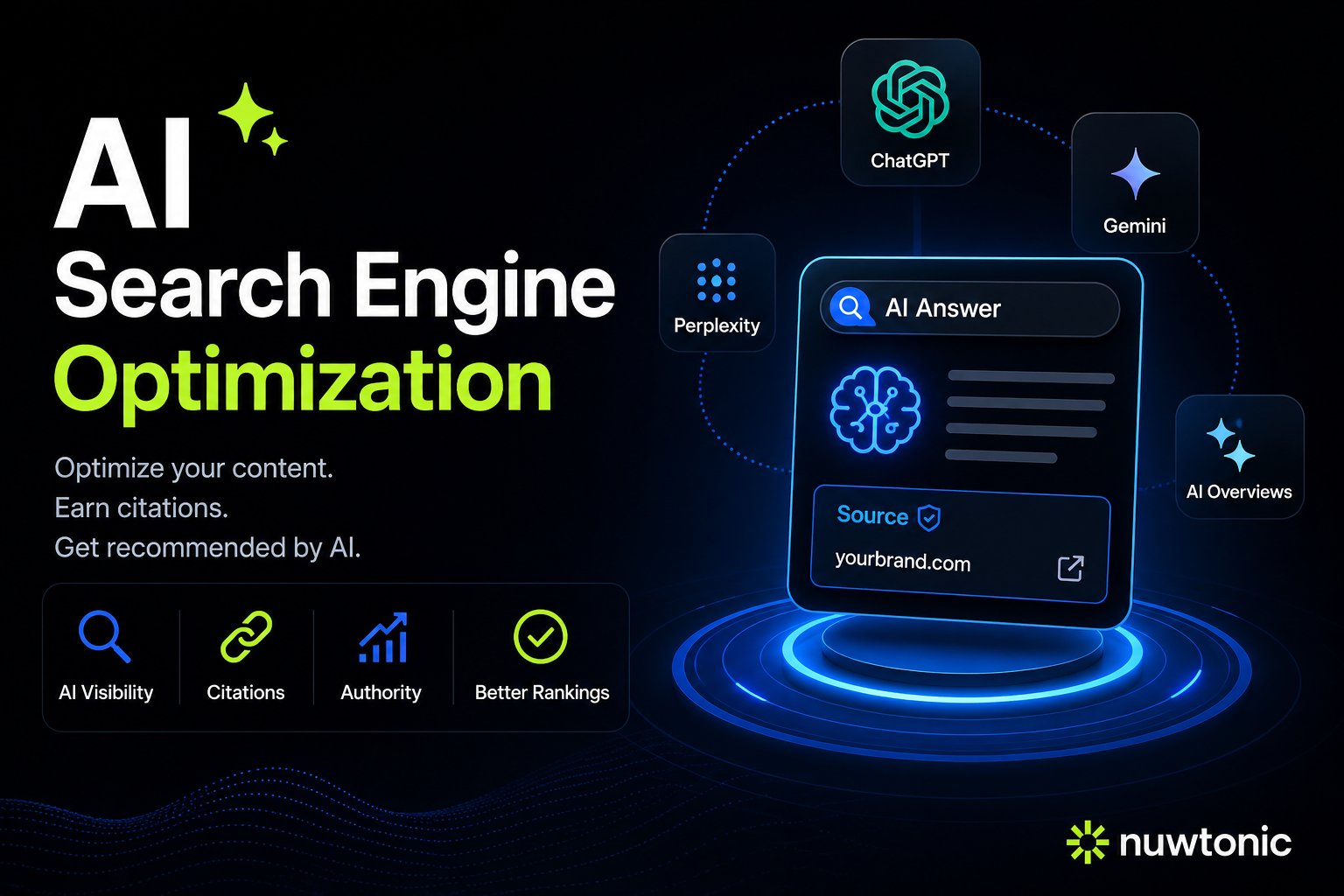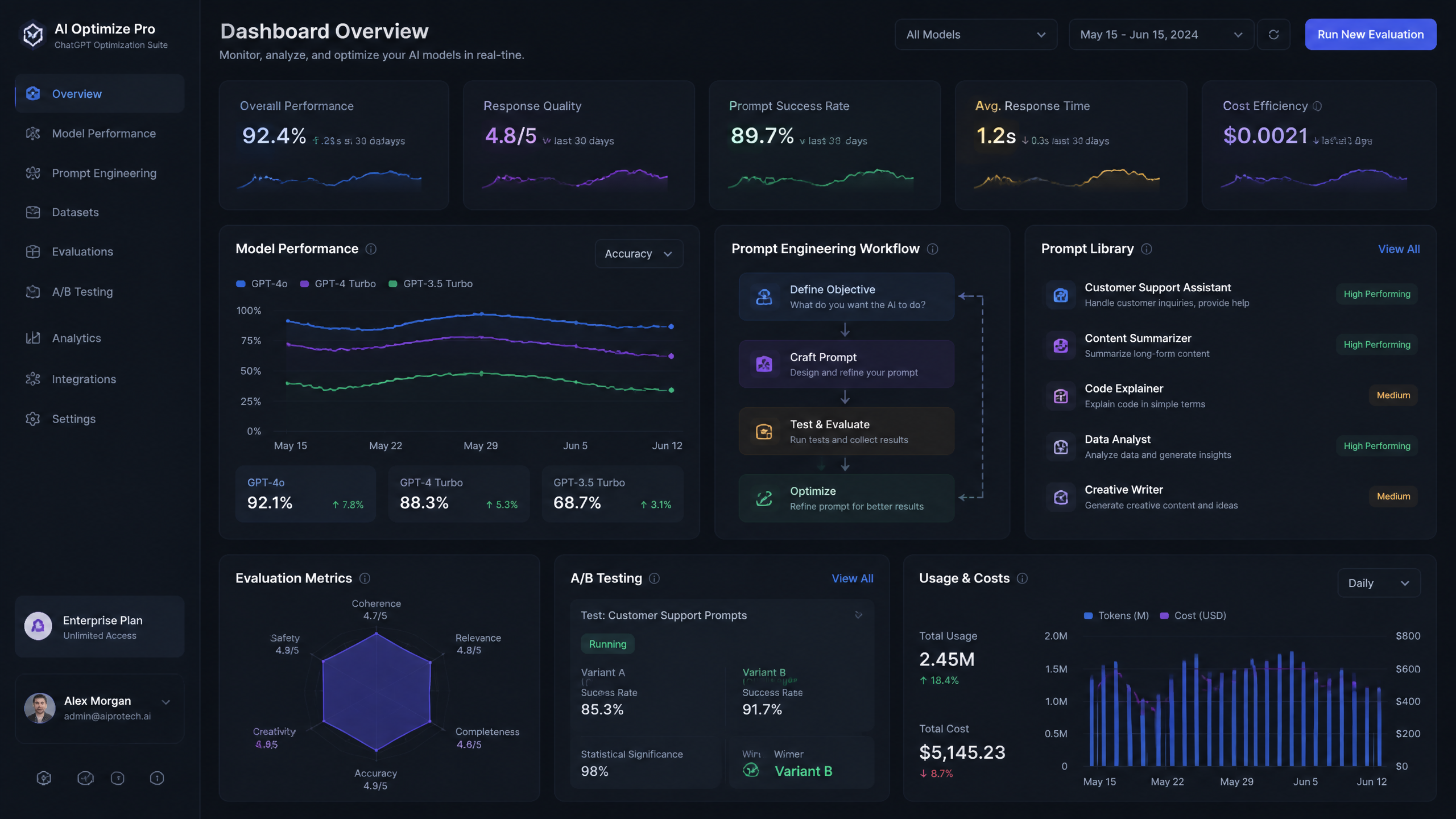
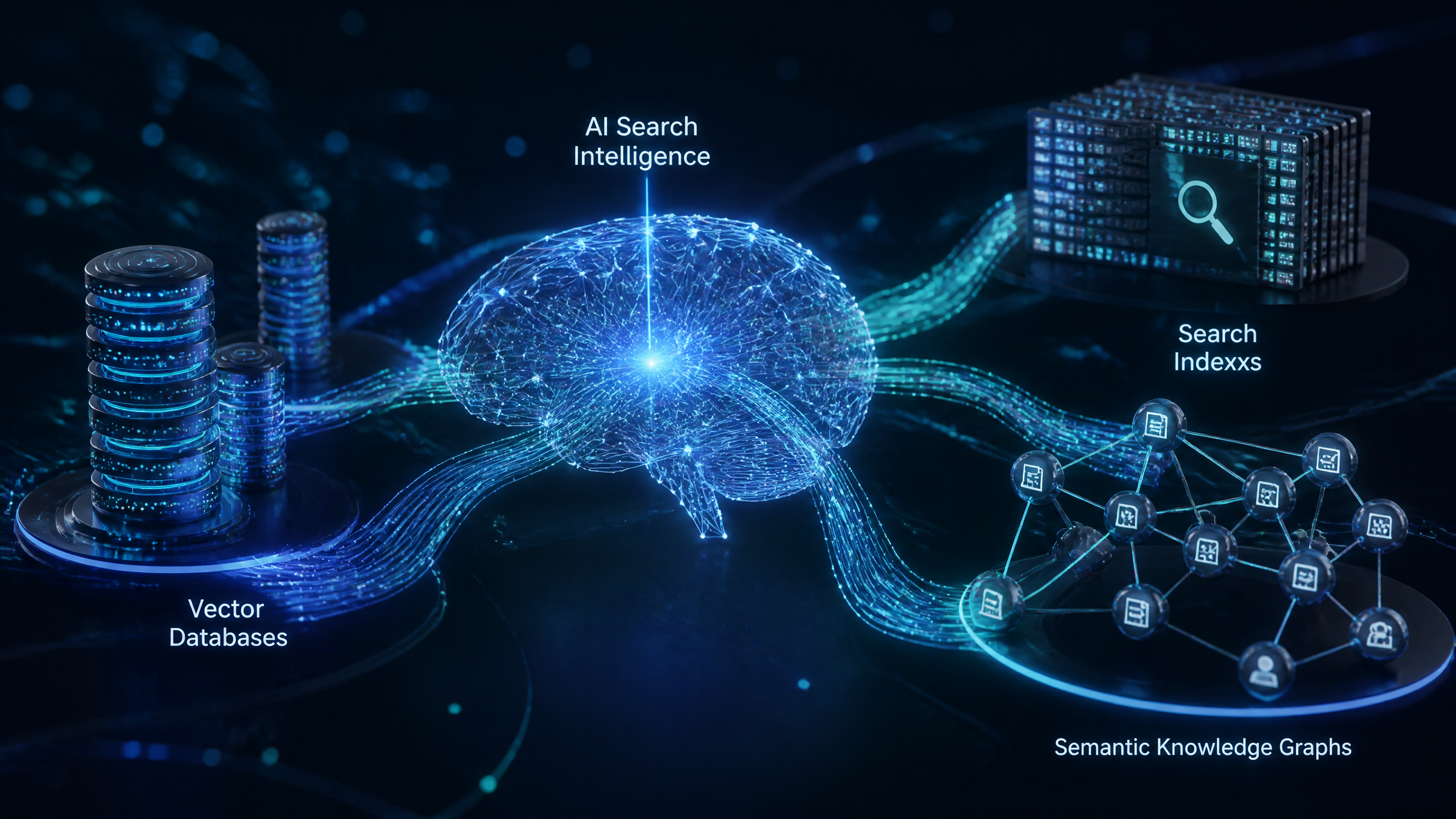
Key Takeaways & Executive Summary
Here's the thing about modern search: most teams are still throwing 2018-era SEO tactics at 2026-era neural engines, and then wondering why their organic traffic is evaporating. AI Search Intelligence isn't just another buzzword we cooked up to sell software—it's the analytical framework required when search engine algorithms evolve from simply matching keywords to dynamically synthesizing knowledge.
In my experience over the last eight years working with query intent and machine learning models, the biggest mistake teams make is assuming AI search is a black box. It isn't. It operates on structured logic, retrieval-augmented generation (RAG), and strict source evaluation metrics. If you understand how semantic search and data enrichment work under the hood, you can measure, optimize, and dominate visibility across both traditional search engines and conversational AI assistants.
TL;DR Summary
• Shift from Links to Knowledge: Search engines and AI research agents now prioritize contextual relevance and entity relationships over raw backlink counts or keyword density.
• Rigorous Citation Verification: AI search interfaces like Perplexity rely on precise source evaluation framework protocols. According to a DataStudios analysis of AI research citations, users must verify that source authors, dates, and titles directly match generated claims to prevent hallucination transfer.
• Strict Verification Standards: Professional workflows require a minimum of two independent, high-reliability sources before a factual claim is categorized as verified.
• Temporal Relevance: Modern retrieval architectures deprioritize stale data. Filtering outdated evidence is essential to maintaining factual accuracy in dynamic domains.
Table of Contents
• Understanding AI Search Intelligence vs. Traditional SEO
• Core Frameworks for Evaluating Source Quality in AI Retrieval
• AI Research Agents and Information Provenance Workflows
• Practical Strategies for Maximizing AI Search Visibility
• Frequently Asked Questions About AI Search Intelligence
• Conclusion and References
Core Pillars of AI Search Intelligence
To manage visibility across modern discovery engines, you need a holistic grasp of the entire retrieval pipeline. The table below outlines the shift from legacy optimization to AI Search Intelligence:
Dimension | Traditional SEO | AI Search Intelligence |
|---|---|---|
Primary Objective | Rank high on a page of blue links | Become the cited source in synthesized answers |
Core Mechanism | Crawling, indexing, keyword matching | Natural language processing (NLP), semantic search, vector embeddings |
Unit of Evaluation | Isolated webpage document | Granular entity, claim, and factual statement |
Key Metric | Click-through rate & page ranking | Citation frequency, entity salience, share of voice |
Temporal Factor | Last updated date tag | Real-time temporal relevance and dynamic fact filtering |
Understanding AI Search Intelligence vs. Traditional SEO
You know what's funny? A lot of people overhype AI's capabilities, treating language models like sentient research assistants. At the end of the day, it's about the data quality. If your structured knowledge is ambiguous, machine learning models will either ignore it or hallucinate an answer that hurts your brand.
From Keyword Matching to Contextual Relevance
Traditional search engines relied heavily on document-level signals—like title tags, exact-match phrases, and anchor text distribution. Semantic search changed the game by shifting the focus to query intent and contextual relevance.
When a user submits a multi-clause prompt, natural language processing models break the query down into sub-intents and semantic vectors. Instead of searching for literal text matches, the search system maps the user's intent across a multidimensional concept space. If your content lacks dense, unambiguous contextual signals, it simply won't map to the query's vector neighborhood.
Document Retrieval vs. Knowledge Synthesis
Most users underestimate how much context matters in search queries; it's not just keywords anymore. In the traditional document retrieval model, the engine's job ended when it handed you ten links. You did the heavy lifting of reading four tabs, cross-referencing figures, and drawing a conclusion.
AI search interfaces handle that synthesis for the user. They retrieve raw documents, extract atomic claims, evaluate factual coherence, and construct a concise summary with inline footnotes. The battle for visibility is no longer about getting the user to click your title—it's about getting your factual claim selected during the synthesis phase.
Evaluating Search Engines, AI Agents, and RAG Systems
Not all AI search environments operate identically. Understanding the nuances across system types helps you tailor your data architecture accordingly:
Traditional Search Engines with AI Overviews: Use classic web crawlers, but overlay LLM summaries at the top of search results pages using search-indexed context.
Conversational Search Engines: Use real-time web retrieval paired with immediate LLM extraction to generate cited answers.
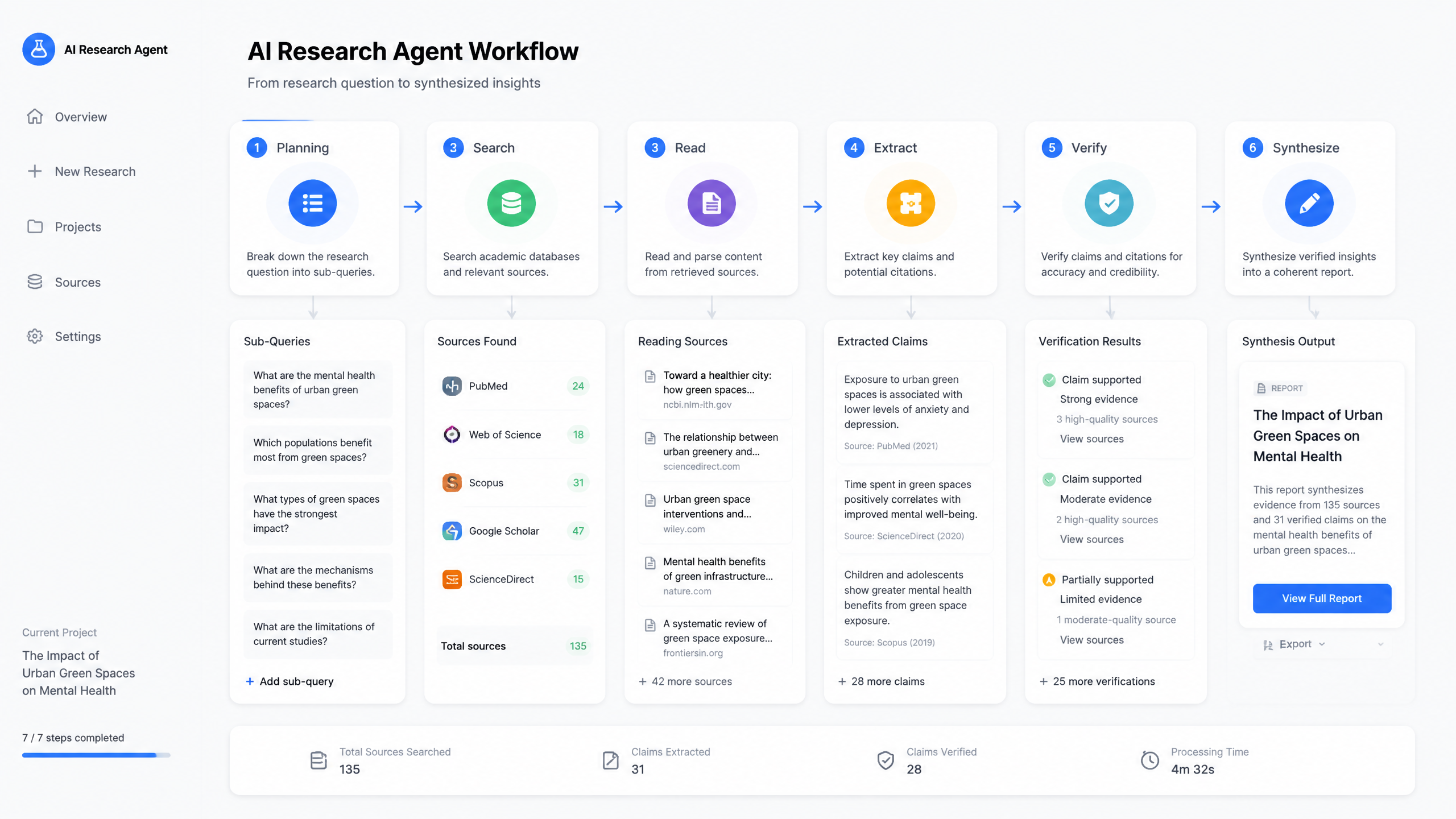
Autonomous AI Research Agents: Run multi-step loops—planning sub-queries, querying multiple databases, reading documents, extracting facts, and compiling structured reports.
Enterprise RAG Systems: Retrieve internal enterprise data from vector databases to answer employee queries securely.
Core Frameworks for Evaluating Source Quality in AI Retrieval
I've seen teams waste resources chasing trends instead of focusing on what their actual users—and the retrieval algorithms serving them—need. Here's a common pitfall: publishing thousands of thin, AI-generated blog posts hoping to catch long-tail queries. What actually happens? AI search crawlers identify the low factual density, mark the domain as low-authority, and filter it out during source selection.
Applying CRAAP and RADCAR to AI-Sourced Data
To ensure content gets selected and cited by search algorithms, human editorial teams and automated systems should evaluate content against established source quality frameworks.
• The CRAAP Framework: Evaluates Currency (is the information up to date?), Relevance (does it satisfy the explicit query intent?), Authority (who wrote it and what are their credentials?), Accuracy (is it supported by verifiable evidence?), and Purpose (is it objective or biased marketing chatter?).
• The RADCAR Framework: A standard highlighted in Brock University's source evaluation framework focusing on Relevance, Authority, Date, Accuracy, and Reason for writing.
Applying these standards to your published content ensures it meets the threshold for high-reliability indexing.
Fact Verification Protocols: The Two-Source Minimum
When building evidence-backed systems, relying on a single source is a recipe for failure. Fact-checking prompt frameworks in AI intelligence workflows enforce a two-source minimum rule. A claim is only tagged as established fact if it is independently verified by at least two high-reliability sources. If sources conflict, the system must explicitly flag the disagreement and hedge its confidence score.
Temporal Relevance and Filtering Outdated Evidence
Time decays factual accuracy fast, especially in tech, finance, and healthcare. A 2021 study on ranking factors is virtually useless for a 2026 query. Recent research on research on temporal fact-checking in AI retrieval shows that automated search agents deprioritize or completely filter out outdated evidence during retrieval passes, keeping older documents solely as historical context rather than primary facts.
Source Criterion | High-Trust Signal | Low-Trust / Rejection Signal |
|---|---|---|
Primary Evidence | Direct measurements, original datasets, official specs | Secondary aggregations, unsourced opinions |
Temporal Stance | Explicit timestamps, updated revision histories | Missing dates, outdated facts presented as current |
Citation Rigor | Explicit outbound links to primary sources | Dead links, circular self-citations |
Entity Clarity | Schema markup, structured JSON-LD, clear author entities | Anonymous authors, vague company claims |
AI Research Agents and Information Provenance Workflows
So here's the thing about AI research agents: they don't browse the web like humans do. They operate on systematic search-and-verify loops designed to minimize noise and zero in on verifiable statements.
The Six-Step AI Agent Research Pipeline
According to analysis from Pickaxe's guide on AI research agents, an effective AI research pipeline follows six sequential steps:
Plan: Deconstruct the core question into targeted sub-queries and identify missing information blocks.
Search: Issue parallel queries across search APIs, web indexes, and academic repositories.
Read: Parse HTML, extract text, and strip away clutter like ads and navigation menus.
Extract: Identify relevant facts, numerical data, entity relationships, and quotes.
Verify: Cross-check extracted claims against trusted repositories and check for direct source alignment.
Cite: Generate synthesized output with exact inline citations linking directly back to the verified primary document.
Validating AI Citations and Preventing Hallucinations
AI models don't intentionally lie; they simply fill probabilistic gaps when context is missing. To prevent hallucinations from leaking into published intelligence, systems must log provenance data—recording the exact query, retrieval timestamp, raw source URL, and extracted snippet. If a citation doesn't explicitly contain the stated claim upon secondary inspection, the claim must be discarded.
Building Auditable Evidence Chains for Business Intelligence
For enterprise teams, generating an AI answer isn't enough—you need an audit trail. An evidence chain maps every paragraph of an output directly to the underlying primary source. This ensures compliance, simplifies legal reviews, and guarantees that business intelligence decisions rest on solid data.
Practical Strategies for Maximizing AI Search Visibility
How do you actually optimize for this ecosystem without falling into the trap of chasing constantly shifting algorithms? You focus on semantic clarity, structured data, and robust topic coverage.
Structuring Content for Machine Learning Models and NLP
Machine learning models love clear visual and logical structure. If your content is buried in massive blocks of unbroken text, natural language parsing models have to work harder to extract key entities and facts.
• Use concise, direct H2 and H3 subheadings that clearly declare the topic.
• Format comparisons, specs, and metrics into Markdown tables.
• Use bullet points (•) or numbered lists for sequential processes or feature sets.
• Lead with answer-first paragraphs before diving into deep contextual explanations.
Optimizing Entity Relationships and Semantic Knowledge Graphs
Semantic search relies heavily on knowledge graphs—network structures that map entities (people, places, concepts, technologies) and their relationships to one another. To strengthen your brand's entity footprint:
Define your brand, key personnel, and core solutions clearly using JSON-LD schema markup.
Maintain consistent entity descriptions across third-party industry directories, Wikipedia/Wikidata (where applicable), and press releases.
Contextualize your products alongside recognized industry terms, standards, and regulatory frameworks.
Benchmarking Your Presence Across Conversational Interfaces
Monitoring traditional organic positions is no longer sufficient. You need to benchmark how conversational interfaces cite your domain. Track how often your brand is cited for core industry questions, identify which competitors are cited instead, and analyze the source material those platforms draw from to close your content gaps.
Frequently Asked Questions About AI Search Intelligence
What is the primary difference between SEO and AI Search Intelligence?
Traditional SEO focuses primarily on driving traffic to specific URLs through keyword optimization, technical crawling, and backlink authority. AI Search Intelligence is a broader analytical discipline that evaluates how information is discovered, interpreted, synthesized, and cited across both traditional search engines and AI-driven conversational systems.
How do AI research agents verify factual information?
AI research agents verify facts by running multi-pass retrieval workflows. They extract individual claims from documents and cross-reference them against independent secondary sources. A claim is typically treated as verified only when backed by a minimum of two credible, high-trust sources.
Why do AI search engines still hallucinate facts?
AI search engines hallucinate when retrieved source context is missing, ambiguous, or contradictory. If the retrieval system fails to find a definitive primary source during its search pass, the underlying language model may rely on probabilistic training patterns to fill the gap, producing plausible-sounding but unverified statements.
How can organizations adapt to AI citation visibility?
Organizations can adapt by shifting their focus from pure keyword targeting to comprehensive entity and topic coverage. This involves implementing robust JSON-LD schema markup, structuring data into clean markdown tables and lists, keeping content temporally updated, and establishing authoritative primary data that AI agents naturally seek out as source material.
Conclusion and References
Strategic Next Steps for Content and Search Teams
AI Search Intelligence isn't the death of search marketing—it's its evolution. The web is moving away from low-value, keyword-stuffed content toward highly verified, contextually rich knowledge bases. The organizations that thrive in this era won't be those that find clever shortcuts to trick language models, but those that invest in clean data structures, rigorous fact verification, and true subject-matter expertise.
To audit your current AI visibility, begin by running your primary brand topics through conversational interfaces, checking whether your primary documentation is accurately extracted and cited, and resolving any entity ambiguity across your site structure.
Verified Sources and Further Reading
• DataStudios analysis of AI research citations - Academic reliability and source evaluation protocols in AI engines.
• Brock University's source evaluation framework - Deep dive into RADCAR and CRAAP source validation rules.
• Pickaxe's guide on AI research agents - System architecture and workflows for multi-step AI research agents.
• Research on temporal fact-checking in AI retrieval - Technical insights on temporal decay and dynamic source filtering.