Honestly, if you have been in the search engine optimization game for more than a minute, you have probably stared at a screen late at night wondering if you are actually looking at the right data. Ever wonder why your rankings aren't budging despite your metrics looking absolutely perfect?
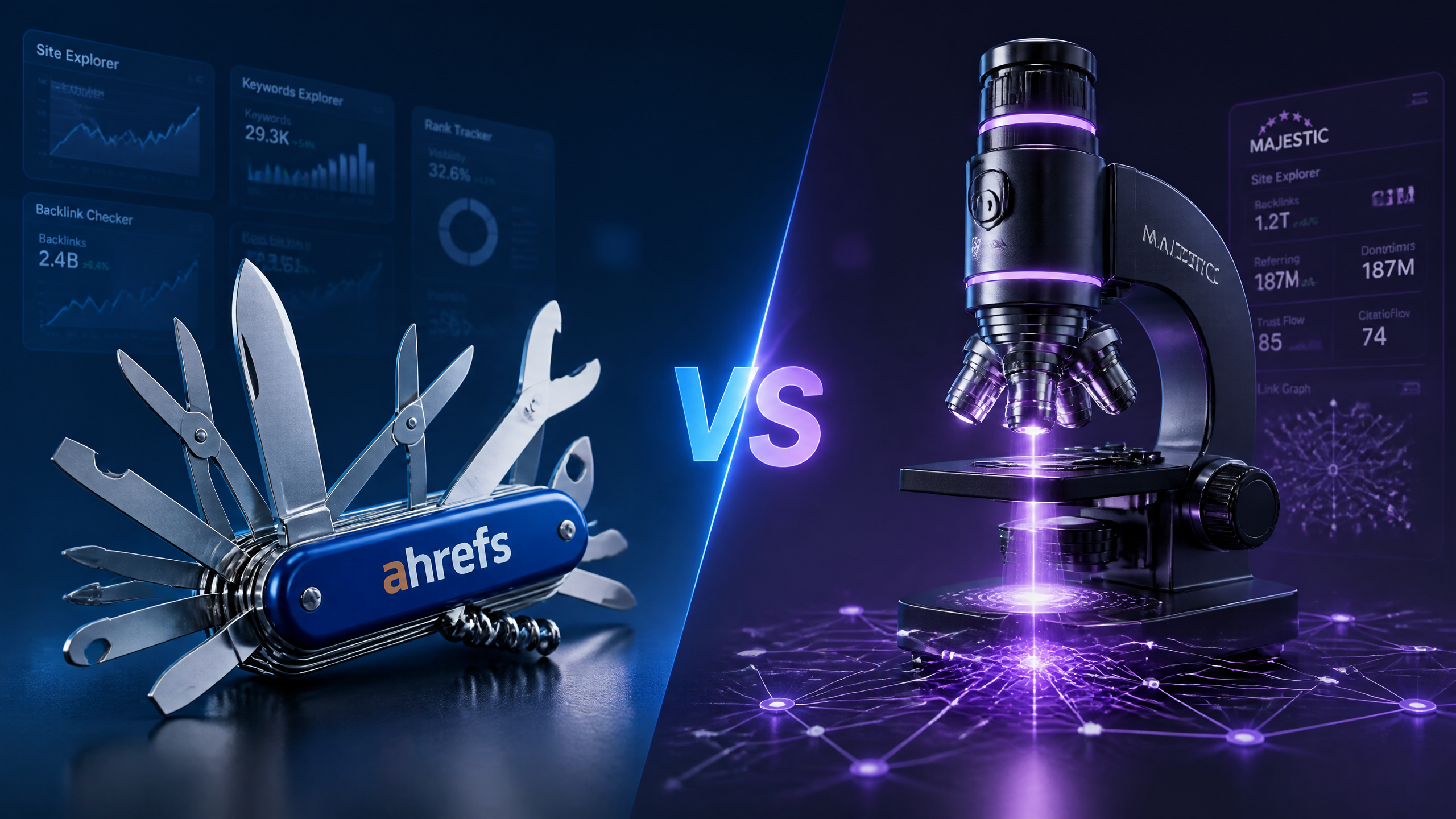
We have all been there. Choosing between Ahrefs vs Majestic is not just a matter of picking a software subscription; it is about choosing the lens through which you view the entire web. In my experience, Ahrefs offers a more user-friendly interface, but Majestic has some unique metrics that are often overlooked by marketers who chase shiny dashboards instead of raw, actionable data.

TL;DR Summary
If you are in a rush, here is the short of it: Ahrefs is the undisputed heavy hitter for all-in-one SEO tasks—keyword research, site audits, rank tracking, and competitor analysis. However, Majestic remains an elite, laser-focused specialist for deep link intelligence, historical backlink audits, and thematic link relevancy through its proprietary Topical Trust Flow.
Key Takeaways
• Ahrefs is best for generalists, agencies, and teams that need a single tool to manage keywords, SERP tracking, and on-page crawling issues.
• Majestic is the superior choice for hardcore link builders, domain flippers, and M&A analysts who require deep historical link data and clean categorization of referring domains.
• Metrics Matter: Do not confuse Ahrefs' Domain Rating (DR) with Majestic's Trust Flow (TF). They measure entirely different aspects of link quality.
• Cost Efficiency: Majestic offers cheaper entry-level pricing if your only objective is analyzing backlink profiles.
Table of Contents
The Backlink Battleground: Ahrefs vs Majestic
Metric Showdown: Domain Rating vs Trust Flow
Backlink Profile Analysis and Crawling Capabilities
Practical Applications and Real-World Workflows
Pricing, Value, and the Evolution of SEO
Frequently Asked Questions (FAQ)
The Backlink Battleground: Ahrefs vs Majestic
Understanding the Core Philosophy of Both Tools
Look, let's be real here. These two platforms were built with completely different philosophies. Ahrefs started as a backlink indexer but evolved into a comprehensive suite designed to handle every facet of organic search. Majestic, on the other hand, chose to do one thing and do it exceptionally well: map the link graph of the internet.
While Ahrefs wants to be the operating system for your entire marketing department, Majestic behaves more like a specialized database for link intelligence. If you try to use Majestic for keyword research, you are going to have a bad time. But if you want to dissect the thematic relevance of a competitor's link profile, Majestic’s database offers a level of granularity that Ahrefs simply does not match.
Ahrefs: The All-In-One SEO Powerhouse
Ahrefs has built an empire on usability and feature breadth. Its Site Explorer is incredibly intuitive, making it easy for beginners and pros alike to quickly assess a site's health, organic traffic trends, and paid search strategies. It is the tool I load up first when I need a quick snapshot of a domain's overall performance. For a broader look at how it stacks up against other legacy suites, check out our comparison of SEO tools like Ahrefs, Semrush, and Moz.
Majestic: The Pure-Play Link Intelligence Specialist
Majestic does not care about your search volume estimates or your on-page meta descriptions. It tracks links. Because of this singular focus, its index is incredibly clean. It categorizes the entire web into a massive taxonomy of topics, allowing you to see not just how many sites link to you, but the types of industries those sites belong to. It is a level of semantic analysis that predated many of the modern AI algorithms we use today.
Feature / Metric | Ahrefs | Majestic |
|---|---|---|
Primary Focus | All-in-one SEO suite | Backlink analysis & link intelligence |
Core Authority Metric | Domain Rating (DR) | Trust Flow (TF) & Citation Flow (CF) |
Historical Data | Excellent, but restricted on lower tiers | Unparalleled historic index (up to 15 years) |
Keyword Research | World-class (Keywords Explorer) | Extremely basic / minimal |
User Interface | Modern, intuitive, highly visual | Functional, data-dense, steeper learning curve |
Pricing Model | Usage-based credits (can get expensive) | Plan-based with generous export limits |
Domain Rating vs Trust Flow
Domain Rating (DR) and Ahrefs' Indexing Power
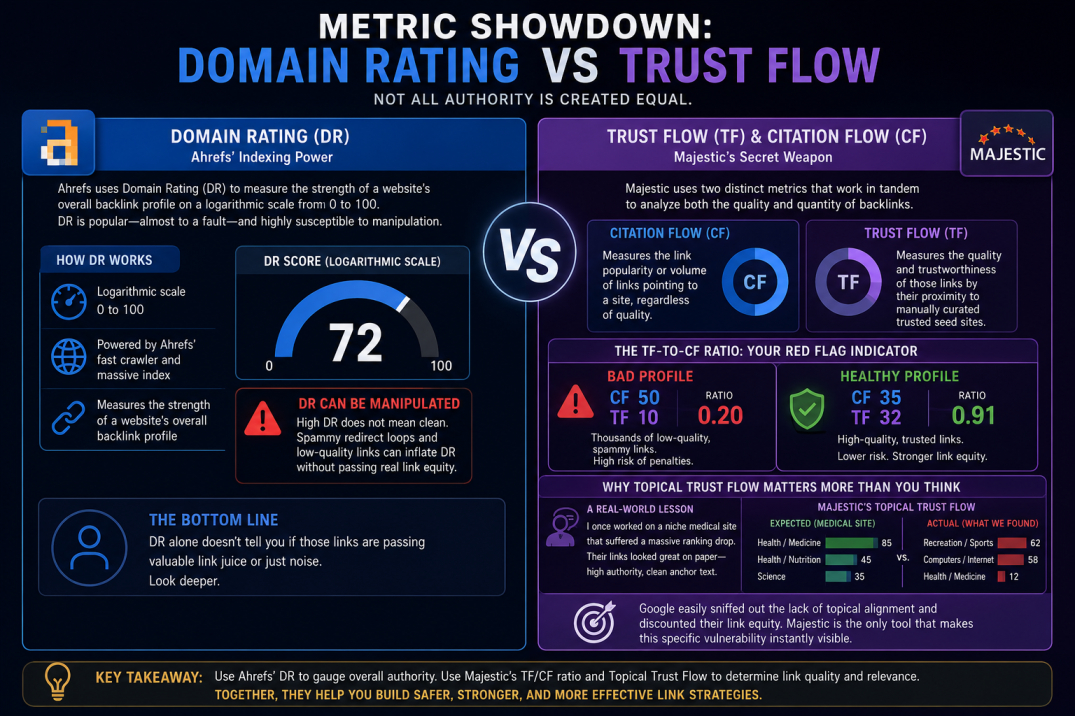
Ahrefs uses Domain Rating (DR) to measure the strength of a website’s overall backlink profile. It is a logarithmic scale from 0 to 100. While DR is incredibly popular in the link-selling industry—almost to a fault—it is highly susceptible to manipulation.
I have seen too many clients get bogged down in data when a simple strategy would suffice. They see a high DR and assume a site is clean, only to find out later that the site's backlink profile is stuffed with spammy redirect loops designed to inflate that single metric. Ahrefs' crawler is fast, and its index is massive, but DR alone does not tell you if those links are actually passing valuable link juice or just noise.
Trust Flow (TF) and Citation Flow (CF): Majestic's Secret Weapon
This is where Majestic shines. Instead of a single arbitrary authority score, Majestic uses two distinct metrics that work in tandem:
• Citation Flow (CF): Measures the link popularity or volume of links pointing to a site, regardless of quality.
• Trust Flow (TF): Measures the quality and trustworthiness of those links by calculating their proximity to a manually curated set of trusted seed sites.
If a site has a Citation Flow of 50 and a Trust Flow of 10, it is a massive red flag. It means the site has thousands of low-quality, spammy links. A healthy site typically has a TF-to-CF ratio close to 1:1. Honestly, ignoring this ratio is how people get hit by manual penalties.
Why Topical Trust Flow Matters More Than You Think
Let me share a personal anecdote about a past project gone wrong. Early in my career, I was tasked with cleaning up a backlink profile for a niche medical client who had suffered a massive ranking drop. On paper, their links looked decent—high authority, clean anchor text.
However, when I analyzed their profile using Majestic’s Topical Trust Flow, the truth came out. While they were a medical site, their primary Topical Trust Flow categories were "Recreation / Sports" and "Computers / Internet." They had bought links on generic blogs that had zero medical relevance. Google’s algorithms had easily sniffed out this lack of topical alignment and discounted their link equity entirely. Majestic is the only tool that makes this specific vulnerability instantly visible.
Backlink Profile Analysis and Crawling Capabilities
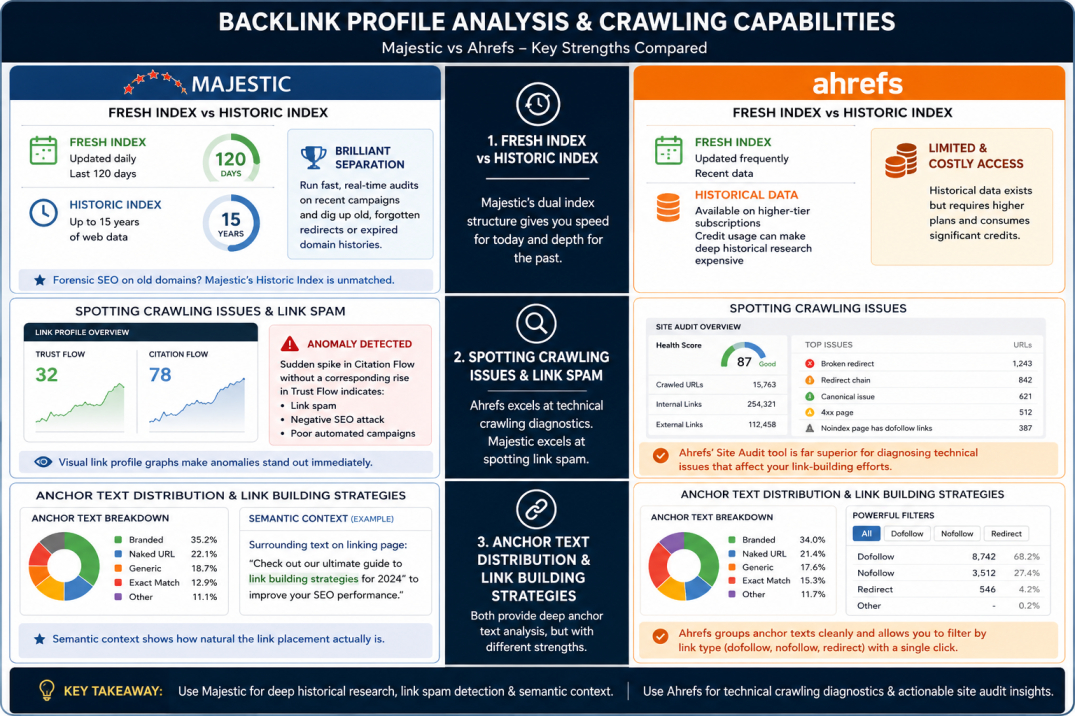
Fresh Index vs Historic Index
Majestic maintains two separate indexes: the Fresh Index (updated daily, covering the last 120 days) and the Historic Index (spanning up to 15 years of web data). This separation is brilliant. It allows you to run fast, real-time audits on recent campaigns while still retaining the ability to dig up old, forgotten redirects or expired domain histories that your competitors tried to sweep under the rug.
Ahrefs also has historical data, but accessing it requires higher-tier subscriptions, and their credit system can make deep historical research prohibitively expensive. If you are doing forensic SEO on an old domain, Majestic's historic index is unmatched.
Spotting Crawling Issues and Link Spam
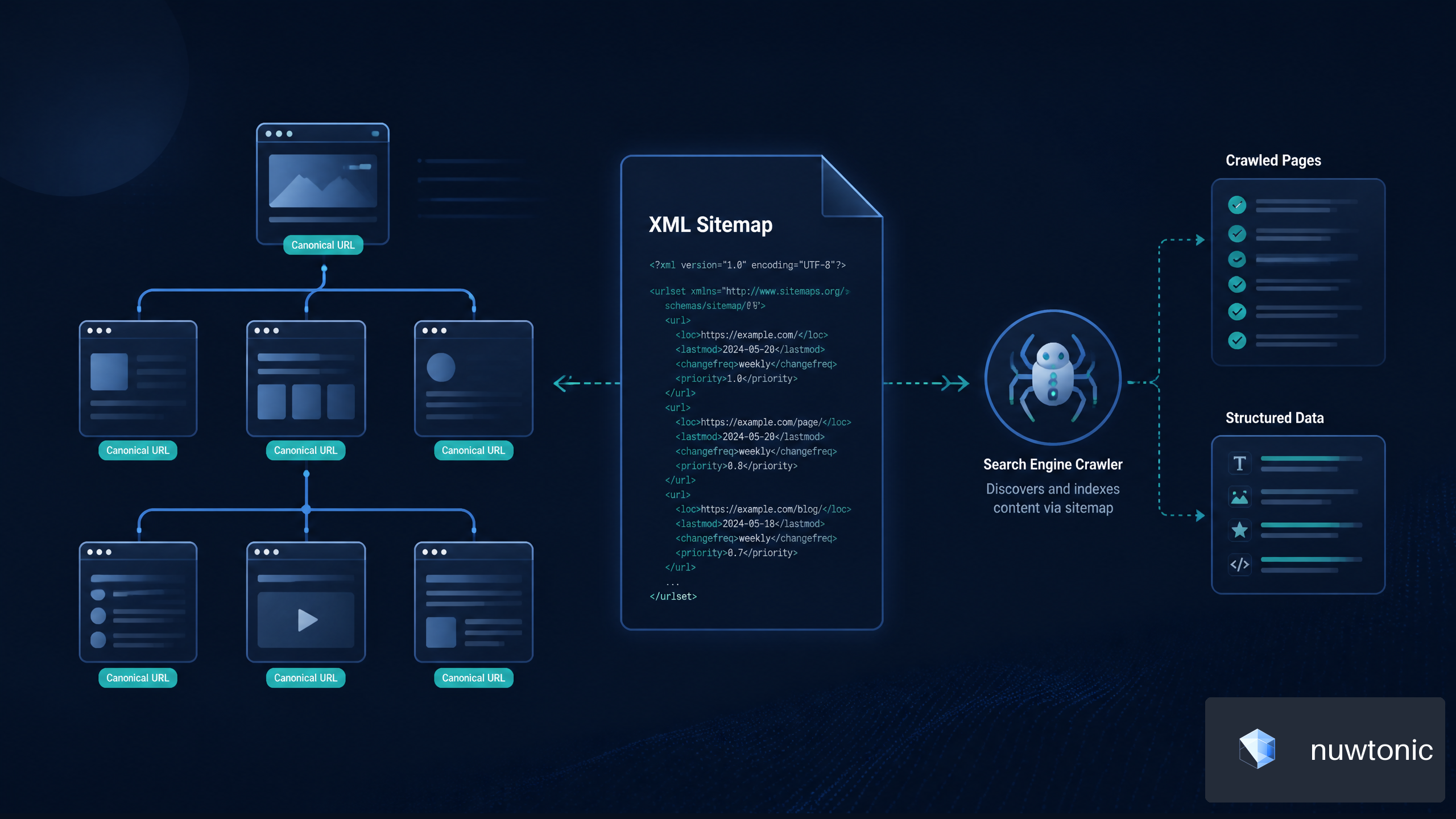
When it comes to identifying crawling issues that might prevent search engines from indexing your hard-earned links, both tools have their merits. However, Ahrefs’ Site Audit tool is far superior for diagnosing technical on-page issues that intersect with your link-building efforts—such as broken redirect chains or canonicalization errors.
But for spotting pure link spam, Majestic’s visual link profile graphs make anomalies stand out immediately. A sudden spike in Citation Flow without a corresponding rise in Trust Flow is a clear indicator of a negative SEO attack or a poorly executed automated link campaign.
Anchor Text Distribution and Link Building Strategies
Analyzing anchor text distribution is critical to avoiding over-optimization penalties. Both platforms provide detailed breakdowns of anchor texts, but they present them differently:
Ahrefs groups anchor texts cleanly and allows you to filter them by link type (dofollow, nofollow, redirect) with a single click.
Majestic provides semantic context around the anchor text, showing you the surrounding text on the linking page, which gives you a clearer picture of how natural the link placement actually is.
In my experience, if you are looking for the best alternatives to Ahrefs specifically for backlink analysis, Majestic is always at the top of my list because of this contextual depth.
Practical Applications and Real-World Workflows
Competitor Research and SERP Analysis
If your daily workflow involves looking at the SERP and analyzing why a competitor is outranking you, Ahrefs is the clear winner. Its SERP overview box shows you the organic traffic, keyword count, and DR of every ranking page instantly. It gives you a holistic view of the competitive landscape without requiring you to jump between different reports.
Majestic is too slow for this type of rapid-fire SERP analysis. It is designed for deep-dive investigations, not quick tactical decisions during a keyword research session.
When to Choose Ahrefs for Your Campaign
You should choose Ahrefs if:
• You need an all-in-one tool to manage keywords, technical site audits, and competitor analysis.
• You want a highly visual, modern interface that is easy to train junior staff on.
• Your strategy relies heavily on content marketing and identifying content gaps.
When Majestic is the Only Sensible Choice
You should choose Majestic if:
• You are buying expired domains or performing due diligence on websites before acquisition.
• You are running large-scale outreach campaigns and need to verify the topical relevance of prospects.
• You are on a tight budget but require enterprise-grade backlink data.
Pricing, Value, and the Evolution of SEO
Cost Analysis and Feature Limits in 2026
Let's talk about the elephant in the room: pricing. Ahrefs has transitioned to a usage-based pricing model that charges you credits for almost every action you take. If you are an agency running dozens of reports a day, your monthly bill can spiral out of control fast.
Majestic, by contrast, has remained relatively conservative with its pricing structure. It offers predictable monthly costs with generous data export limits, making it a much more budget-friendly option for solo practitioners and small agencies who only need backlink data.
The Shift Toward AI and Modern Tooling
As we look at the differences between traditional SEO and AI SEO, the role of these legacy indexes is changing. AI search engines rely heavily on semantic relevance and entity relationships rather than raw link counts.
Majestic’s Topical Trust Flow is actually highly aligned with this semantic shift, as it categorizes links by entity concepts. Meanwhile, Ahrefs has integrated various AI features to help write descriptions and analyze search intent, keeping its platform firmly rooted in modern workflows.
Making the Final Decision for Your Agency
Ultimately, the choice between Ahrefs and Majestic depends on your business model. If you can afford it, having access to both is ideal—Ahrefs for daily operational SEO, and Majestic for specialized link auditing and prospecting. If you must choose one, let your core service offering dictate the decision. Do not buy a Ferrari (Ahrefs) if you only need a high-powered metal detector (Majestic).
Frequently Asked Questions (FAQ)
Is Majestic better than Ahrefs for backlink audits?
Yes, for pure backlink audits, Majestic is often superior due to its Trust Flow vs. Citation Flow metrics and its extensive Historic Index, which allows you to spot historical spam patterns that other tools might miss.
Can I rely on Majestic's Trust Flow for link building?
Absolutely. In fact, it is one of the most reliable metrics for quality control. Aim to acquire links from sites where the Trust Flow is high and closely matches the Citation Flow, ensuring the referring domains are topically relevant to your niche.
How do Ahrefs and Majestic handle crawling issues?
Ahrefs excels at identifying internal crawling issues on your own site via its Site Audit tool. Majestic focuses purely on external crawling, mapping how search engine bots discover and pass equity through external link networks.
Why is there a price difference between Ahrefs and Majestic?
Ahrefs charges more because it is an all-in-one suite with massive databases for keywords, rank tracking, and content analysis. Majestic is cheaper because it focuses almost exclusively on backlink data, reducing its operational overhead.
References and Methodology
Our Evaluation Criteria
Our comparison is based on over eight years of hands-on experience using both platforms in active agency environments. We evaluated both tools based on index size, crawling speed, metric accuracy, usability, and cost-to-value ratio.
Official Documentation and Resources
• Ahrefs Academy: Official guides on Domain Rating calculation and crawler operation.
• Majestic Support: Technical documentation regarding Trust Flow, Citation Flow, and Topical Trust Flow taxonomies.