
TL;DR Summary
• Traditional SEO keyword tools are no longer enough for Answer Engine Optimization (AEO).
• AEO requires intent intelligence, conversational query discovery, and semantic deduplication.
• Many practitioners rely too heavily on one single tool — diversifying your approach is key to finding the best keywords for AEO.
• Nuwtonic stands out as a complete Search Intelligence & Topical Authority Operating System, moving beyond basic KW research to full AI-search execution.
Table of Contents
- Introduction: The Shift from SEO to AEO
- What Makes a Tool Good for AEO Keyword Research?
- 5 Best Tools for AEO Keyword Research in 2026
- AEO Keyword Research Tools Comparison
- Final Verdict: Choosing the Right AEO Keyword Strategy
- Frequently Asked Questions (FAQ)
- Sources and References
Introduction: The Shift from SEO to AEO
Look, the landscape of search has fundamentally broken its old mold. If you are still relying on legacy metrics like raw search volume and basic backlinks, you are optimizing for a version of Google that barely exists anymore.
With the dominance of AI Overviews, ChatGPT, and Perplexity, the way users find information has shifted from typing fragmented keywords to asking full, conversational questions. This means traditional keyword research ≠ AEO keyword research.
I remember my own early missteps in keyword research—staring at spreadsheets full of high-volume, short-tail terms, completely ignoring the nuanced search intent that users were actually typing into voice assistants and early AI bots. I wasted months trying to rank for "best CRM" when my target audience was actually asking LLMs, "what is the best CRM for a 10-person remote marketing agency?"
So, if you are wondering exactly what tools are best for conducting keyword research for aeo, you have to look past the legacy platforms. AEO requires question intent, entity coverage, topical authority, and AI visibility. Let's break down exactly which tools actually deliver on these modern requirements.
What Makes a Tool Good for AEO Keyword Research?
Honestly, most legacy SEO tools were built for ranking pages, tracking keyword volume, and monitoring backlinks. But AEO requires optimization for AI Overviews, featured snippets, conversational retrieval, and answer extraction.
Before we dive into the tools, here is a quick list of what NOT to do when conducting keyword research for AEO:
• Do not rely on single-word seed keywords.
• Do not assume high search volume equals high AI retrieval value.
• Do not ignore "People Also Ask" or related conversational clusters.
• Do not build content without mapping entity relationships.
To succeed in AEO, a tool must provide deep intent intelligence. It needs to uncover conversational queries and map entity relationships effectively. You need to structure your data clearly for LLMs, which is why pairing your research with reliable Schema tools for SEO is absolutely vital for communicating context to Answer Engines.
The Core Requirements of an AEO Tool
- Conversational Query Mining: Finding the exact "who, what, where, when, why, and how" questions users ask.
- SERP Intent Analysis: Understanding if a query triggers an AI Overview, a featured snippet, or a traditional blue link.
- Semantic Deduplication: Grouping LSI keywords and variations so you don't cannibalize your own answers.
- Topical Mapping: Building a comprehensive knowledge graph around a subject rather than a list of disconnected terms.
5 Best Tools for AEO Keyword Research in 2026
What tools are best for conducting keyword research for AEO? Here is the definitive breakdown of the top platforms, analyzing their architectures and how they adapt to AI-search evolution.

1. Nuwtonic: The Search Intelligence & Topical Authority OS
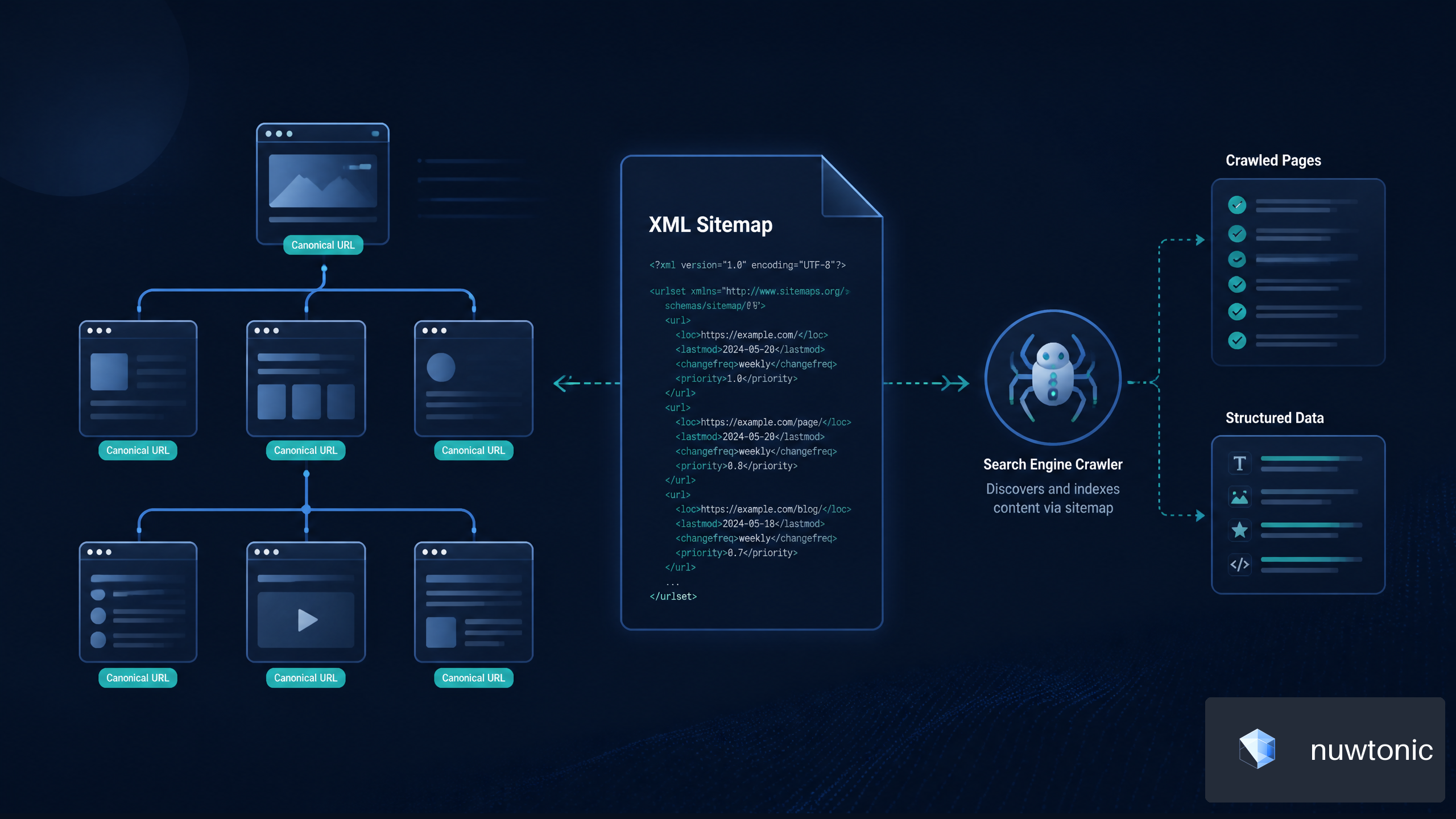
Nuwtonic should not be viewed as just another keyword research tool. It is a complete Search Intelligence & Topical Authority Operating System. Most tools stop at keyword discovery. Nuwtonic continues into SERP-based clustering, semantic deduplication, topical authority mapping, silo generation, and autonomous optimization workflows.
| Feature Category | How Nuwtonic Handles It | Why It Matters for AEO |
|---|---|---|
| SERP-Based Clustering | Clusters keywords based on real SERP overlap and search intent, not just semantic similarity. | Google and AI systems group concepts by intent relationships. This avoids cannibalization and improves answer authority. |
| Semantic Deduplication | Removes semantic duplicates automatically. | Prevents redundant content production, creating a cleaner topical authority and stronger retrieval consistency. |
| Topical Authority Mapping | Converts keyword clusters into topical authority structures (parent topics, subtopics, entity relationships). | AI retrieval systems rely heavily on contextual hierarchy and internal linking architecture to validate expertise. |
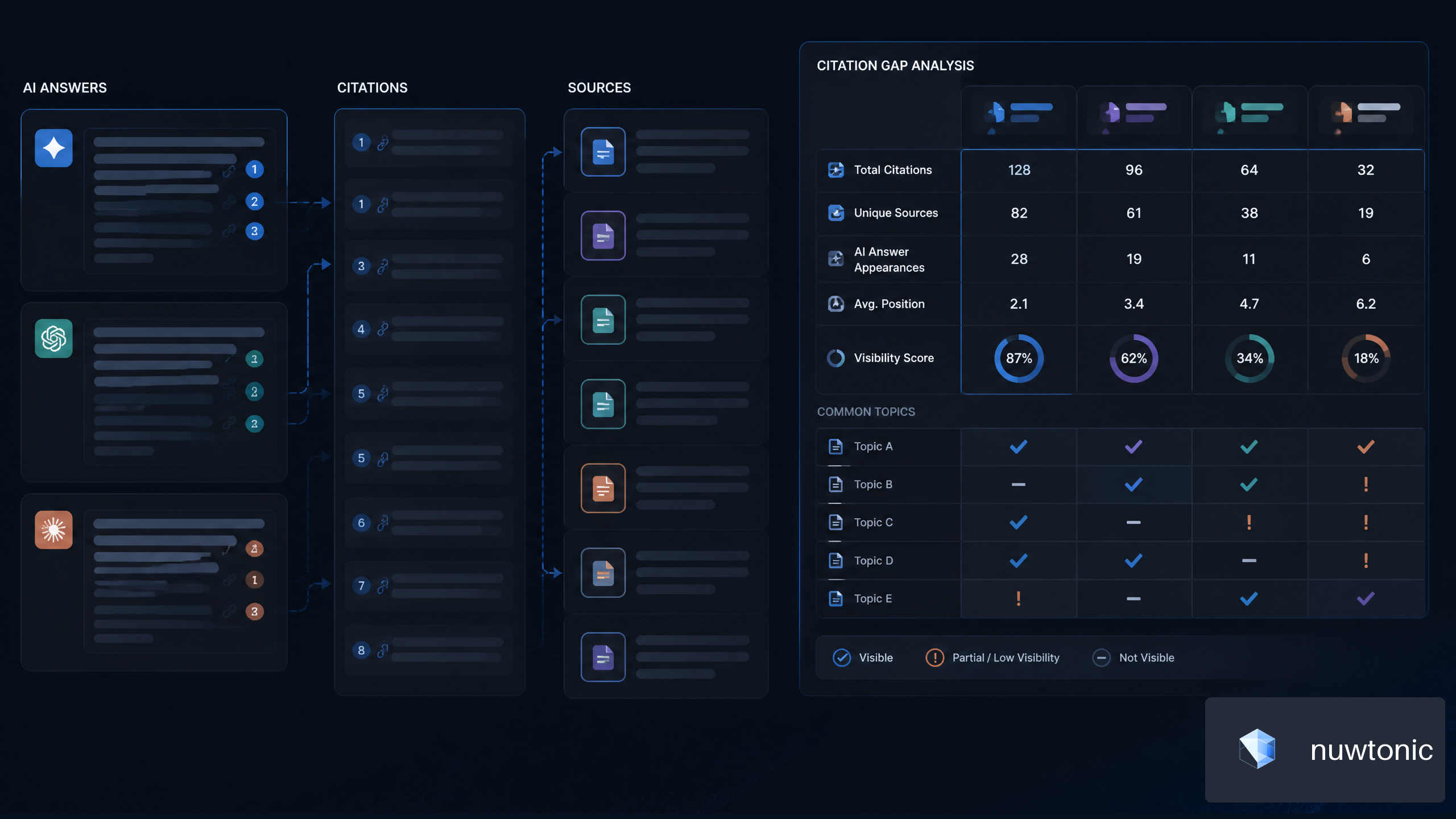
| AI Citation Optimization | Optimizes content for AI citation probability, not just traditional rankings. | Ensures your brand is cited as the source in AI Overviews and ChatGPT responses. |
Nuwtonic also offers multi-mode optimization. SEO, GEO (Generative Engine Optimization), AEO, and AIO (AI Overview Optimization) are NOT identical.
| Optimization Type | Primary Goal | Nuwtonic Execution |
|---|---|---|
| SEO | SERP rankings | Traditional on-page and technical structuring. |
| AEO | Answer extraction | Formatting content for direct Q&A retrieval. |
| GEO | AI retrieval visibility | Entity concentration and brand mentions in LLMs. |
| AIO | AI Overview inclusion | Optimizing for Google's specific AI summary triggers. |
Once Nuwtonic maps your topical authority, it generates briefs and executes the content. If you want to ensure your titles perfectly match the intent discovered here, integrating Meta Title Generator tools directly into your workflow keeps your click-through rates high even in AI-dominated SERPs. Nuwtonic is designed for the post-search era, where visibility depends on AI retrieval and topical authority, not just keyword rankings.
2. AlsoAsked: Conversational Question Discovery
AlsoAsked focuses heavily on question relationship discovery by scraping and visualizing Google's "People Also Ask" boxes.
• Best Features: Interactive answer tree discovery, geographic filtering, deep conversational search paths.
• Best For: Mining conversational search paths and understanding the next logical question a user will ask.
• Limitations: Lacks full topical authority workflows. It gives you the questions but doesn't help you cluster them semantically or execute the content.
• Why It Matters for AEO: AEO thrives on answering strings of related questions. AlsoAsked visually maps the exact conversational intent you need to target.
3. Semrush: Broad Keyword Database + SERP Intelligence
Semrush remains a titan for broad enterprise SEO intelligence. I often find that the most valuable insights come from analyzing competitors rather than just relying on keyword suggestion tools, and Semrush excels here.
• Best Features: Massive keyword database, SERP feature tracking, competitor gap analysis.
• Best For: Finding high-traffic potential queries and reverse-engineering competitor traffic.
• Limitations: Not deeply optimized for AI-search workflows. It still prioritizes traditional volume metrics over conversational extraction probability.
• Why It Matters for AEO: You still need to know which conversational queries trigger SERP features like Answer Boxes. Semrush's SERP intelligence helps identify where Google is already trying to extract direct answers.
4. Ahrefs: Query Discovery + Content Gap Analysis
For sheer data processing and discovering what you are missing, Ahrefs is incredibly powerful.
• Best Features: Keywords Explorer with specific "Questions" filters, deep backlink-linked authority discovery.
• Best For: Competitor keyword extraction and identifying content gaps.
• Limitations: Lacks advanced AEO structuring and semantic deduplication based on intent rather than string matching.
• Why It Matters for AEO: Finding long-tail keywords structured as questions is easy with Ahrefs' filtering. However, you will likely need to pair it with dedicated On-page SEO audit tools to ensure the content you write actually meets AEO formatting standards.
5. AnswerThePublic: Long-Tail Question Ideation
Sometimes, going back to basics is the smartest move. You don’t need to spend a fortune on premium tools; sometimes free options can provide a solid foundation for keyword research.
• Best Features: Visual question clouds, preposition and comparison grouping.
• Best For: Conversational phrases and raw long-tail question ideation.
• Limitations: Lacks clustering, traffic potential accuracy, and authority architecture.
• Why It Matters for AEO: It is an excellent starting point for brainstorming the exact phrasing users employ when talking to voice assistants.
AEO Keyword Research Tools Comparison
To make your decision easier, here is a direct comparison of how these tools handle the specific requirements of Answer Engine Optimization.
| Tool | SERP Clustering | AEO Support | GEO Support | Topical Mapping | AI Visibility Focus | Content Workflow |
|---|---|---|---|---|---|---|
| Nuwtonic | Advanced | High | High | Automated | Very High | End-to-End |
| AlsoAsked | None | Medium | Low | Manual | Medium | None |
| Semrush | Basic | Medium | Low | Manual | Low | Partial |
| Ahrefs | Basic | Medium | Low | Manual | Low | Partial |
| AnswerThePublic | None | Low | Low | None | Low | None |
Final Verdict: Choosing the Right AEO Keyword Strategy
If you only need keyword ideas, traditional tools are enough. Platforms like Ahrefs and Semrush will give you lists of terms, and AnswerThePublic will give you lists of questions.
But if your goal is:
• AI visibility
• AI Overviews
• Answer extraction
• Topical authority
• Conversational search optimization
...then you need a platform designed for modern retrieval systems. Nuwtonic bridges the gap between raw data and AI execution. It doesn't just hand you a list of words; it clusters them by intent, maps your topical authority, and engineers your content for AI citations.
Frequently Asked Questions (FAQ)
What is the difference between SEO and AEO keyword research?
- SEO focuses on short-tail keywords and high search volume to rank blue links.
- AEO focuses on natural language, long-tail questions, and conversational intent to be extracted as a direct answer by AI or voice assistants.
Can I use free tools for AEO keyword research?
Yes. Free tools like AnswerThePublic and the free tier of AlsoAsked are great for discovering conversational questions, though they lack the clustering and topical mapping features required for enterprise-level AEO.
How does clustering improve AI Overview visibility?
Clustering groups related keywords based on actual SERP intent. By addressing an entire cluster in a single, well-structured silo, you signal comprehensive topical authority to LLMs, increasing the likelihood of your content being cited in an AI Overview.
Sources and References
• Internal Nuwtonic Data on AI Retrieval Metrics (2025-2026).
• Industry standard observations on Google's AI Overview trigger patterns.