Why Technical SEO for AI Search Demands a Structural Shift
TL;DR Summary & Key Takeaways
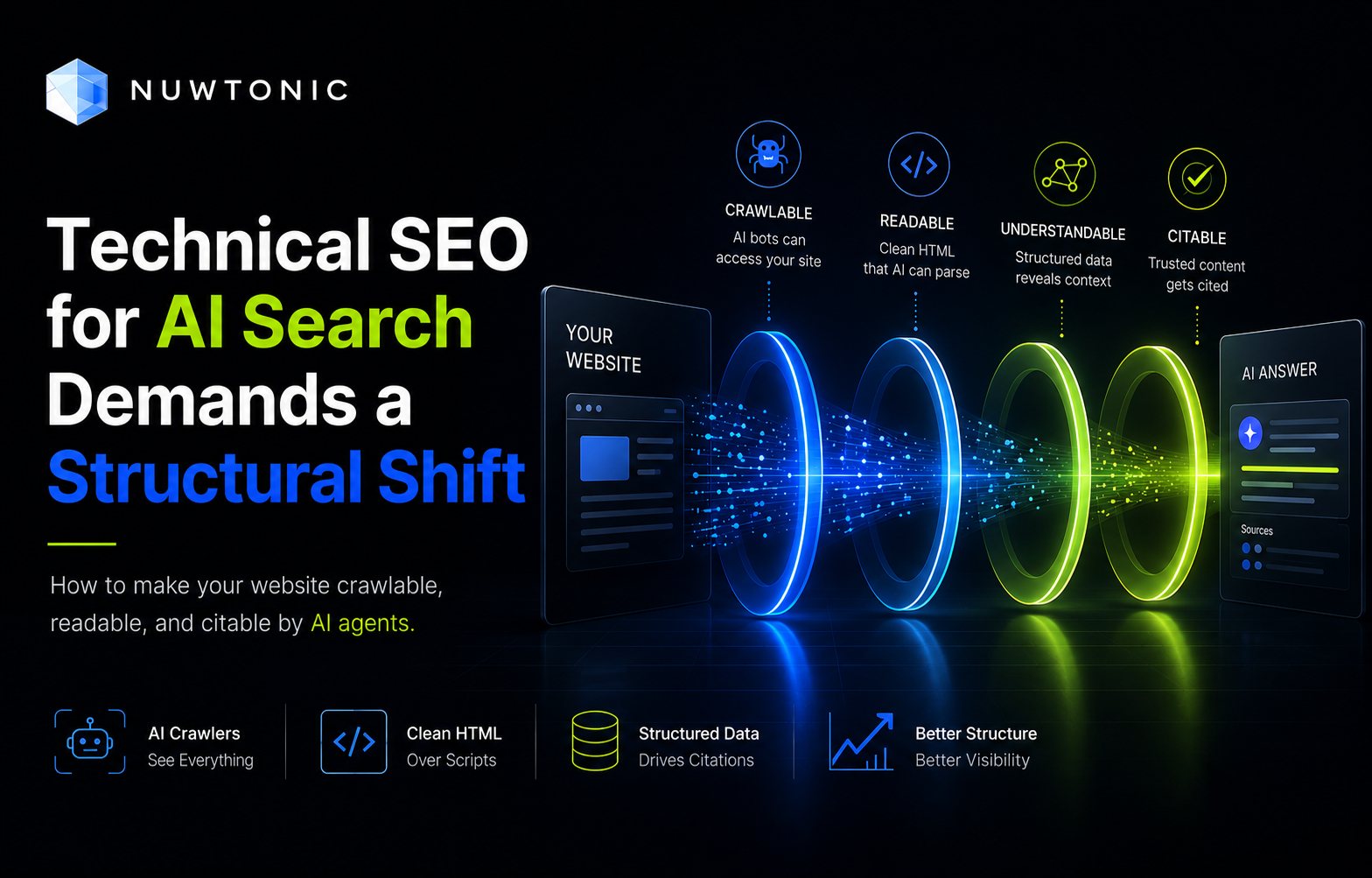
Optimizing for generative search engines requires moving beyond traditional keyword matching to focus on machine-readable site architecture. If AI agents cannot crawl, parse, and verify your content instantly, your brand will not be cited in generative answers.
• Crawlability is Non-Negotiable: If your site blocks AI agents like GPTBot, Bingbot, or Google-Extended, you are locked out of generative search results.
• Structured Data Drives Citations: Pages featuring Organization, Article, and BreadcrumbList schemas see significantly higher citation rates in AI engines.
• Rendering Matters: AI crawlers struggle with client-side JavaScript; server-side rendering (SSR) is essential to present clean HTML.
• Optimize URL Length: Keeping URL slugs within the 17–40 character range correlates with the highest citation rates in AI search engines.
The Shift from Indexing Pages to Parsing Entities
You know what’s interesting? The fundamental way search engines process information has completely evolved. Traditional search was built on matching keywords to an index. AI search, however, relies on natural language processing and machine learning signals to extract entities, understand context, and synthesize conversational answers.
Here’s a common mistake: many SEO practitioners still optimize content as if it is just a collection of keywords, completely ignoring how machine learning models build semantic maps. If an AI agent cannot instantly resolve the relationships between your brand, your products, and user queries, it won't cite you. The goal is no longer just ranking on page one; it is becoming the definitive entity that the AI trusts to ground its responses.
How AI Crawlers Differ from Traditional Search Bots
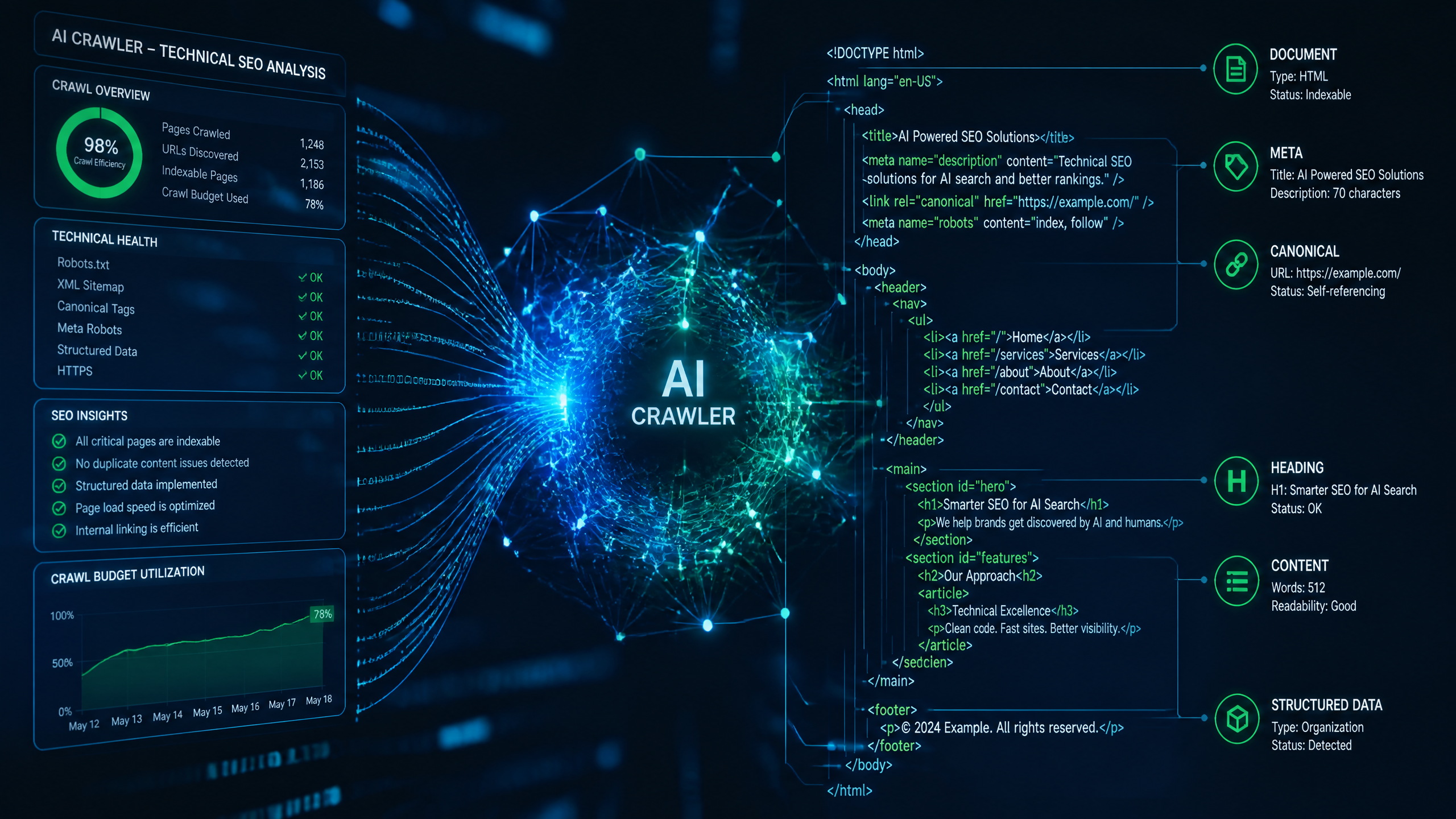
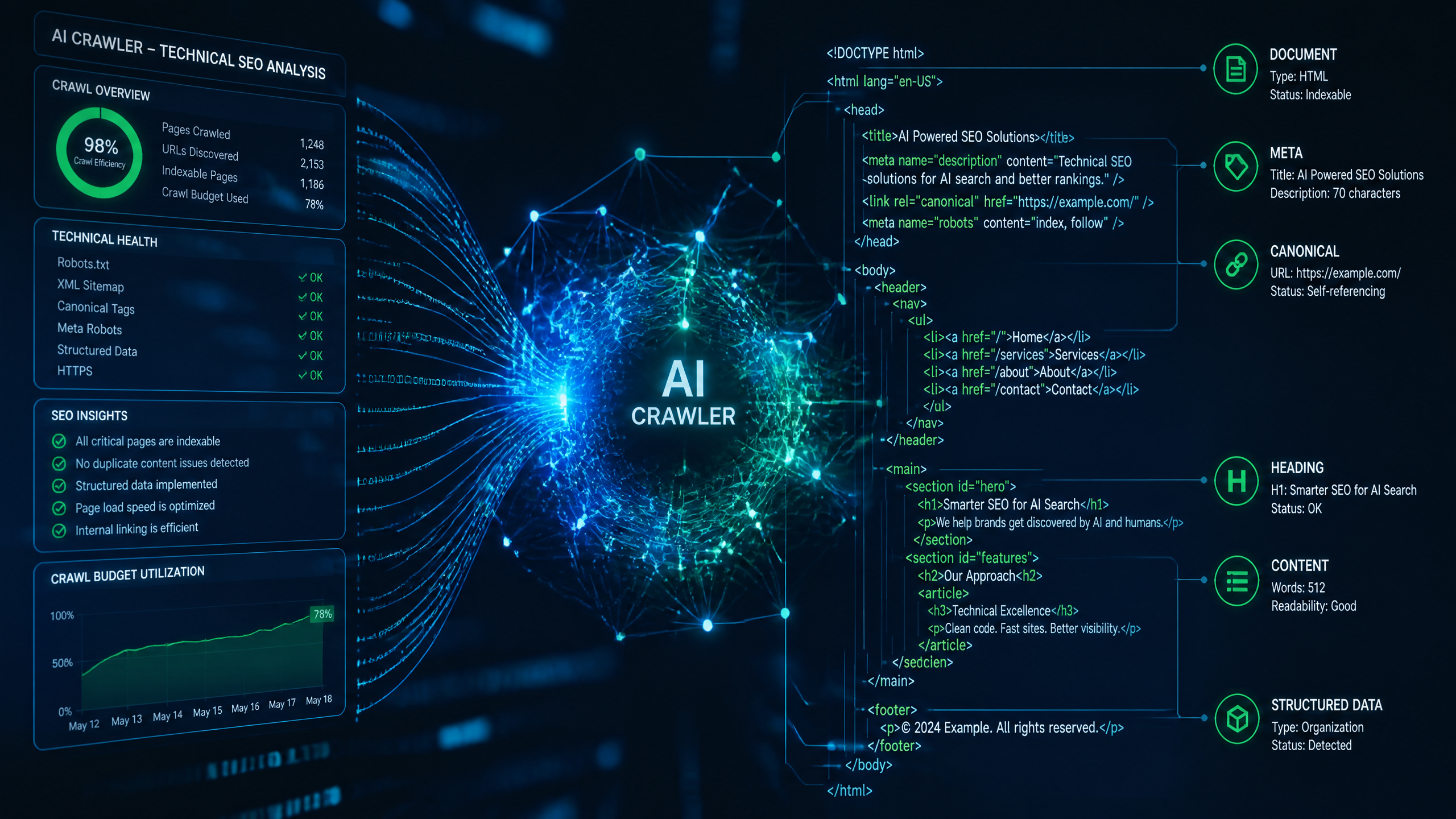
To understand how to optimize, we must first look at how these bots navigate your site. Traditional search engines have massive, highly optimized rendering pipelines that can queue and execute JavaScript. AI agents, on the other hand, are often lightweight, fast-moving, and highly resource-constrained when fetching live data.
Feature | Traditional Search Bots (e.g., Googlebot) | AI Crawlers / Agents (e.g., GPTBot, Google-Extended) |
|---|---|---|
Primary Goal | Indexing pages for keyword-based search queries | Parsing entity relationships, semantic patterns, and training data |
JavaScript Execution | High capability (delayed rendering queue) | Low to none; often rely on raw HTML extraction |
robots.txt Control | Controlled via standard search directives | Controlled via specific AI-bot tokens (e.g., GPTBot) |
Citation Behavior | Links directly to source in search results | Synthesizes answers and cites sources selectively |
Many tutorials on optimizing for AI search complicate things unnecessarily — the real key is to ensure your content is user-friendly and technically sound. By treating AI agents as highly analytical, fast-paced users, you can tailor your technical infrastructure to serve them exactly what they need.
Crawlability and Indexation: Opening the Gates for AI Agents
Configuring robots.txt for GPTBot, Bingbot, and Google-Extended
According to Airefs, allowing GPTBot, Bingbot, and other AI crawlers in robots.txt is essential for AI search visibility, while indexing content as soon as possible accelerates discovery. If you block these crawlers, you are essentially telling LLMs that your brand has nothing of value to say.
Here’s a practical robots.txt configuration to ensure you are not locking out the key players:
text
User-agent: GPTBot
Allow: /
User-agent: Google-Extended
Allow: /
User-agent: Bingbot
Allow: /
Fair warning: while you can block specific bots if you have copyright concerns, doing so completely eliminates your chances of appearing in AI Overviews or chat answers. According to Google's official AI optimization guide, a page must be indexed and eligible to be shown in Google Search with a snippet to be eligible for generative AI features. If you are blocked, you are out of the game.
Server-Side Rendering (SSR) vs. Client-Side Hydration
According to SALT.agency, keeping raw HTML clean and complete for non-JavaScript renderers is critical because many AI models cannot execute scripts. If your site relies heavily on React, Vue, or Angular without server-side rendering, AI crawlers will likely see a blank page.
Rendering Method | AI Crawlability | Implementation Complexity | Best Used For |
|---|---|---|---|
Server-Side Rendering (SSR) | Excellent (Clean, raw HTML delivered instantly) | High | Dynamic, content-heavy sites, e.g., e-commerce |
Client-Side Rendering (CSR) | Poor (AI agents rarely execute complex JS) | Low | Simple web applications, dashboards |
Static Site Generation (SSG) | Excellent (Pre-rendered static files) | Medium | Blogs, documentation, marketing sites |
In my experience, moving a client's e-commerce platform from a pure client-side React app to Next.js SSR resulted in an immediate jump in crawl efficiency. The AI agents went from crawling 10% of our catalog to indexing almost 100% within days. Your mileage may vary, but if you want AI engines to trust your data, you must serve it on a silver platter — in clean, raw HTML.
Managing Indexation and Reducing Crawl Waste
Google advises reducing duplicate content to prevent wasted crawling resources on URLs that don't matter, which is especially important for AI crawl efficiency. If your site generates thousands of duplicate URLs through URL parameters or thin filter pages, AI agents will run out of crawl budget before they reach your high-value content.
To manage indexation issues effectively, you should:
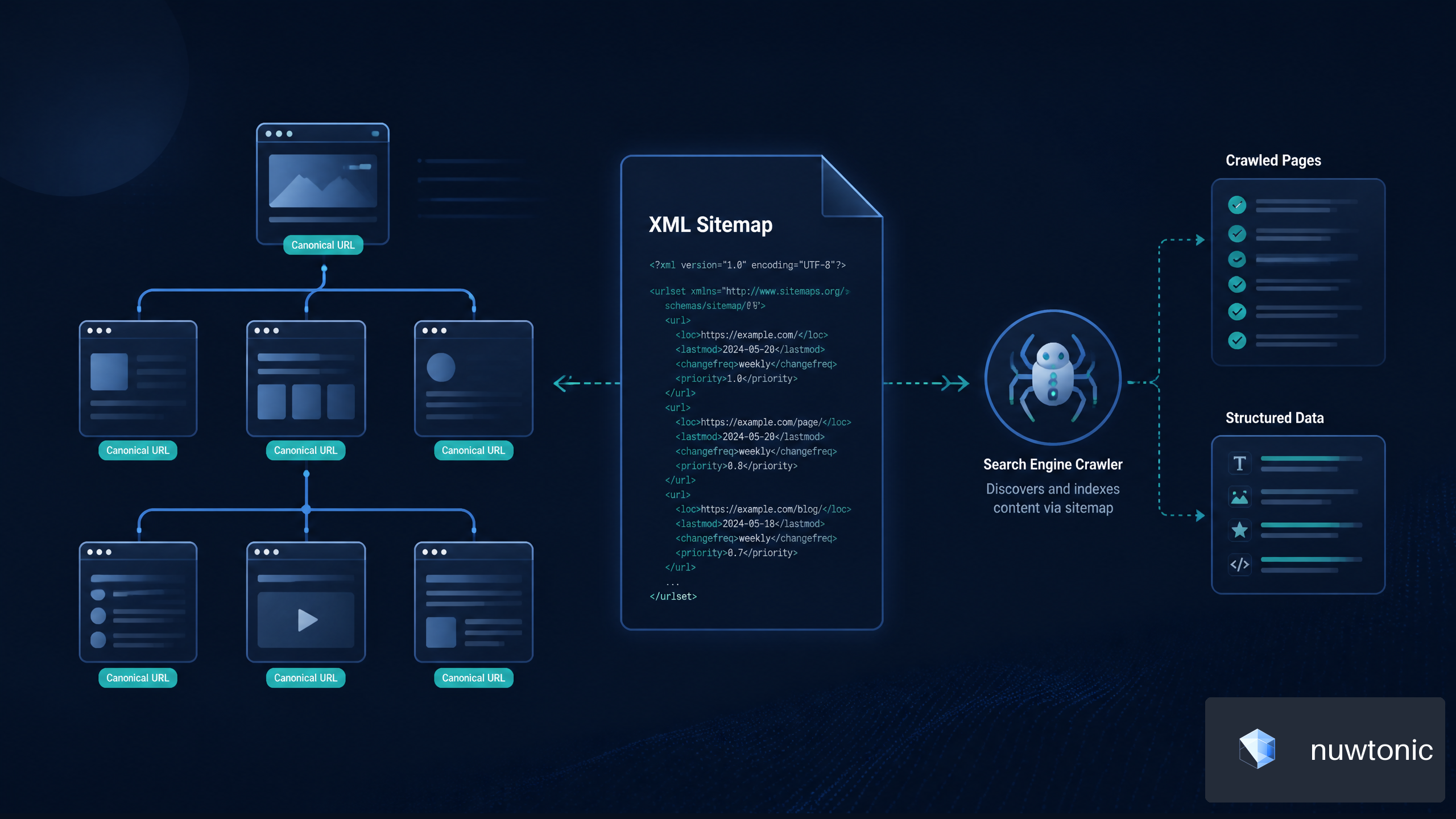
Implement strict canonical tags to point to the definitive version of every page.
Use noindex directives on low-value, duplicate, or thin parameter pages.
Keep your XML sitemaps clean, only listing canonical URLs with updated
lastmodtags.
Structuring Data for Semantic Clarity and Citations
Schema Markup: The Direct Pipeline to AI Knowledge Graphs
Many SEO practitioners overlook the importance of schema markup for AI; it’s crucial for enhancing visibility. According to a 2025 study by Semrush, Organization, Article, and BreadcrumbList schema appear most frequently on pages cited by Google AI Mode, with higher implementation rates on cited pages.
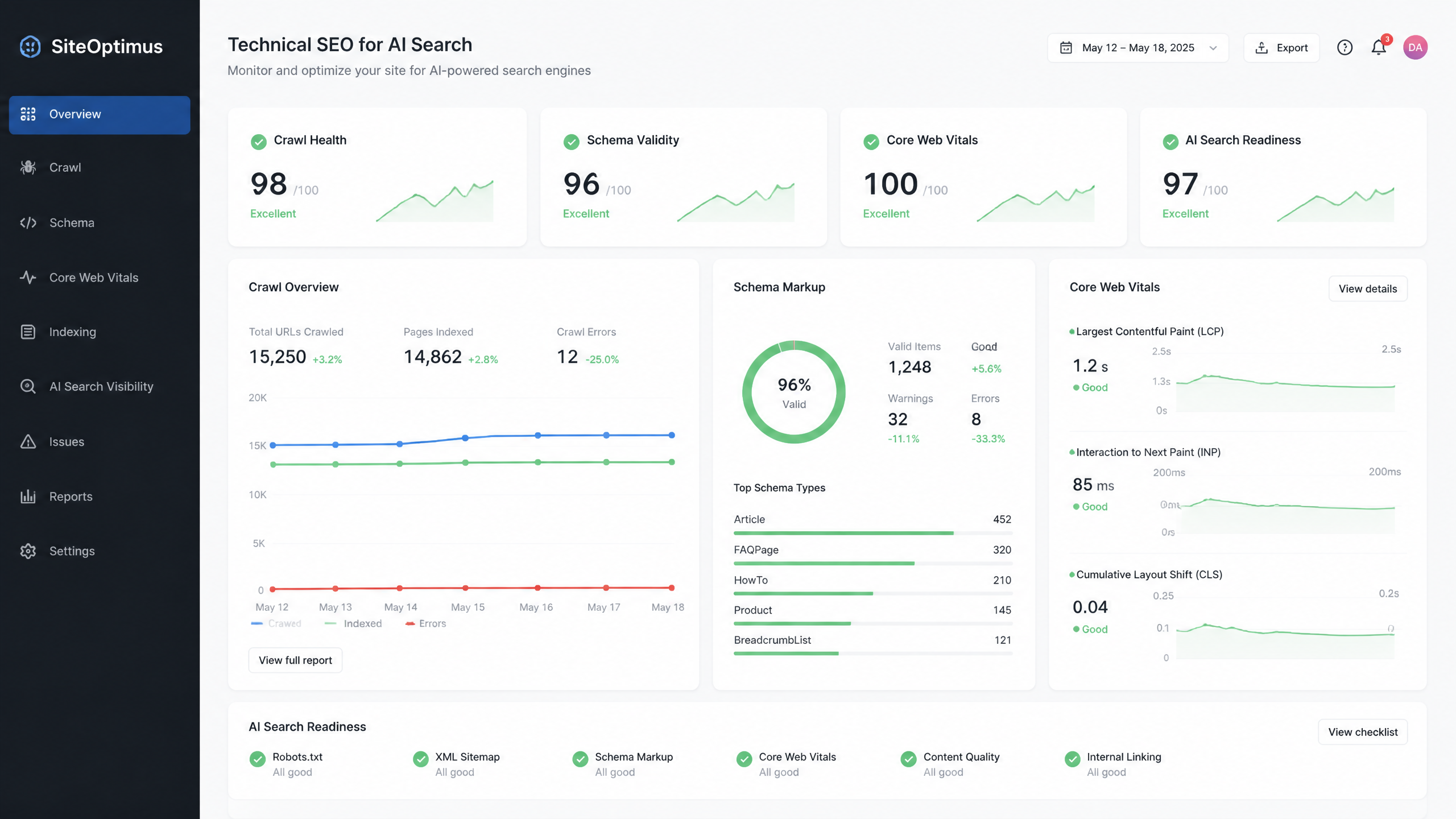
According to ADCetera, embedding key data like dates and ratings in schema helps AI use that information directly in responses. If you want an AI to confidently state your product's rating or price, don't make it guess from the text; give it structured data.
Schema Type | Recommended Use | AI Search Impact | Key Properties to Include |
|---|---|---|---|
Organization | Brand homepage | High (Establishes entity authority) | name, logo, sameAs, url |
Article | Blog posts, news | High (Primary source for informational queries) | headline, datePublished, author, publisher |
BreadcrumbList | All deep pages | Medium (Clarifies site hierarchy) | itemListElement, position, item |
Product | E-commerce items | High (Feeds transactional AI agents) | name, offers, aggregateRating, price |
FAQ | Informational content | Medium (Helps direct Q&A matching) | mainEntity, acceptedAnswer |
Advanced Web Ranking recommends using the sameAs property in schema to connect brands to official profiles and key knowledge graph nodes for entity authority. This acts as a digital passport, telling the AI exactly who you are across the web.
URL Architecture and Slug Length Optimization
A Semrush study found that URLs with 17–40 character slugs receive the most citations in AI search, and cited URLs tend to use descriptive but concise paths.
Here’s a common mistake: using ultra-long, keyword-stuffed URLs like /blog/how-to-optimize-technical-seo-for-ai-search-engines-in-2026-complete-guide. It looks spammy to humans and confuses AI parsers. Instead, use a clean, concise path like /tech-seo-ai-search. Keep it descriptive but brief.
Semantic HTML and Document Hierarchy
Google's AI optimization guide recommends using semantic HTML like <main>, <article>, and <section> to help users and AI models parse and navigate content regions. While perfectly semantic HTML is not strictly required — because the web is generally invalid HTML anyway — using it is a highly recommended practice for screen readers and AI parsing.
Ensure your heading hierarchy is logical:
• Use exactly one H1 tag per page.
• Use H2s for main sections and H3s for sub-sections.
• Avoid jumping from H2 to H4 without an H3.
• Use bullet points or numbered lists to break up long blocks of text.
Performance Metrics and Advanced Delivery Methods
Core Web Vitals and TTFB in the Age of Live Agent Fetching
I've seen too many sites focus solely on keyword density while ignoring core web vitals, which can significantly impact rankings. According to Advanced Web Ranking, fast TTFB (Time to First Byte) and stable uptime matter when AI agents fetch and evaluate pages during generation.
According to Exposure Ninja, compressing images to WebP and minimizing unused JavaScript/CSS reduces load time, which improves crawl efficiency for AI agents. If an AI agent is trying to answer a user query in real-time, it cannot wait 4 seconds for your slow server to respond. It will simply skip your page and cite a faster competitor.
Topic Clusters, Sitemaps, and real-time indexing via IndexNow
According to OMNIUS, building topic clusters with pillar pages supported by subpages and interlinking related resources reinforces context for AI understanding. This modular approach allows AI agents to easily map out the depth of your expertise on any given topic.
Furthermore, OMNIUS reports that XML sitemaps including news, videos, and products, along with IndexNow for real-time URL updates, are increasingly adopted by Bing and AI-first engines. Real-time indexing ensures that your latest content is immediately available to AI agents answering timely queries.
To set up real-time indexing:
Integrate the IndexNow protocol into your CMS.
Set up automated sitemap pings whenever content is updated.
Ensure sitemaps are segmented by content type for easier discovery.
Exposing APIs and Structured Data with openapi.json
If you offer transactional capabilities (pricing, configurators, booking), you should expose them directly to AI agents. By providing a clean openapi.json file, you allow AI assistants to interact with your data directly, expanding your reach beyond simple informational citations to direct transactional actions.
This is the frontier of technical SEO for AI search. It is no longer just about reading text; it is about enabling action.
Frequently Asked Questions & Troubleshooting
Common Questions on Optimizing for AI Search
How do I allow GPTBot and Bingbot in robots.txt without blocking traditional search crawlers?
You can target them individually using their specific user-agent tokens (e.g.,User-agent: GPTBot), while leaving your standard rules forUser-agent: *intact. This allows AI engines to train on and cite your content without altering your traditional organic search visibility.Which schema types have the highest citation rates in Google AI Overviews?
A Semrush study found that Organization, Article, and BreadcrumbList schemas appear most frequently on cited pages. For informational content, FAQ schema is highly prioritized, while Product schema is essential for e-commerce.Does server-side rendering improve AI crawlability?
Yes. Many AI models and crawlers cannot execute JavaScript efficiently. Providing clean, raw HTML via SSR ensures they can fully parse your content without rendering errors.What is the optimal URL slug length for AI search citations?
Data shows that URLs with slugs between 17 and 40 characters receive the highest citation rates in AI-driven search engines. Keep your URLs concise, descriptive, and free of unnecessary parameters.
Sources and References
• Google Search Central: Google's official AI optimization guide
• Semrush Study (2025): Citation frequency and URL slug length analysis.
• Industry insights from ADCetera, OMNIUS, SOAP.agency, Exposure Ninja, and Advanced Web Ranking.