Alright, let's break this down. If you are still building topical maps the way we did in 2021, you are practically invisible to modern Answer Engines.
With over 8 years of experience in SEO and 3 years in AI Search technologies, I've worked with startups and enterprises alike to reconstruct their information architecture for Large Language Models (LLMs). The reality? AI search engines like ChatGPT, Perplexity, and Claude do not parse your site like a traditional crawler looking for keyword density. They look for entities, relationships, and structured knowledge graphs.
In this guide, I will show you exactly how to create a topical map for AI search that forces LLMs to cite your site as the primary authority.
TL;DR & Key Takeaways
Before we get into the weeds, here is the executive summary of what you need to know:
• Entities over Keywords: AI search relies on entity recognition, not string matching.
• Intent is Multi-Hop: Users ask LLMs complex, multi-part questions. Your map must support multi-hop reasoning.
• Structure Dictates Citability: Clear hierarchical relationships and schema markup make your content easier for Retrieval-Augmented Generation (RAG) systems to digest.
Table of Contents
The Paradigm Shift: AI Search vs. Traditional Search
Step 1: Defining Your Seed Entity and Core Knowledge Graph
Step 2: Mapping User Intent for Answer Engines
Step 3: Architecting the Hierarchical Map
Step 4: Technical Execution and Machine Learning Optimization
Frequently Asked Questions (FAQ)
Sources and References
The Paradigm Shift: AI Search vs. Traditional Search
First off, let's clarify why your current strategy might be failing. Many people overlook the importance of user intent when creating topical maps; it's crucial for effective AI search. If you just dump 50 related keywords into a spreadsheet and call it a map, an LLM will ignore you.
Why LLMs Need Entity-Based Mapping
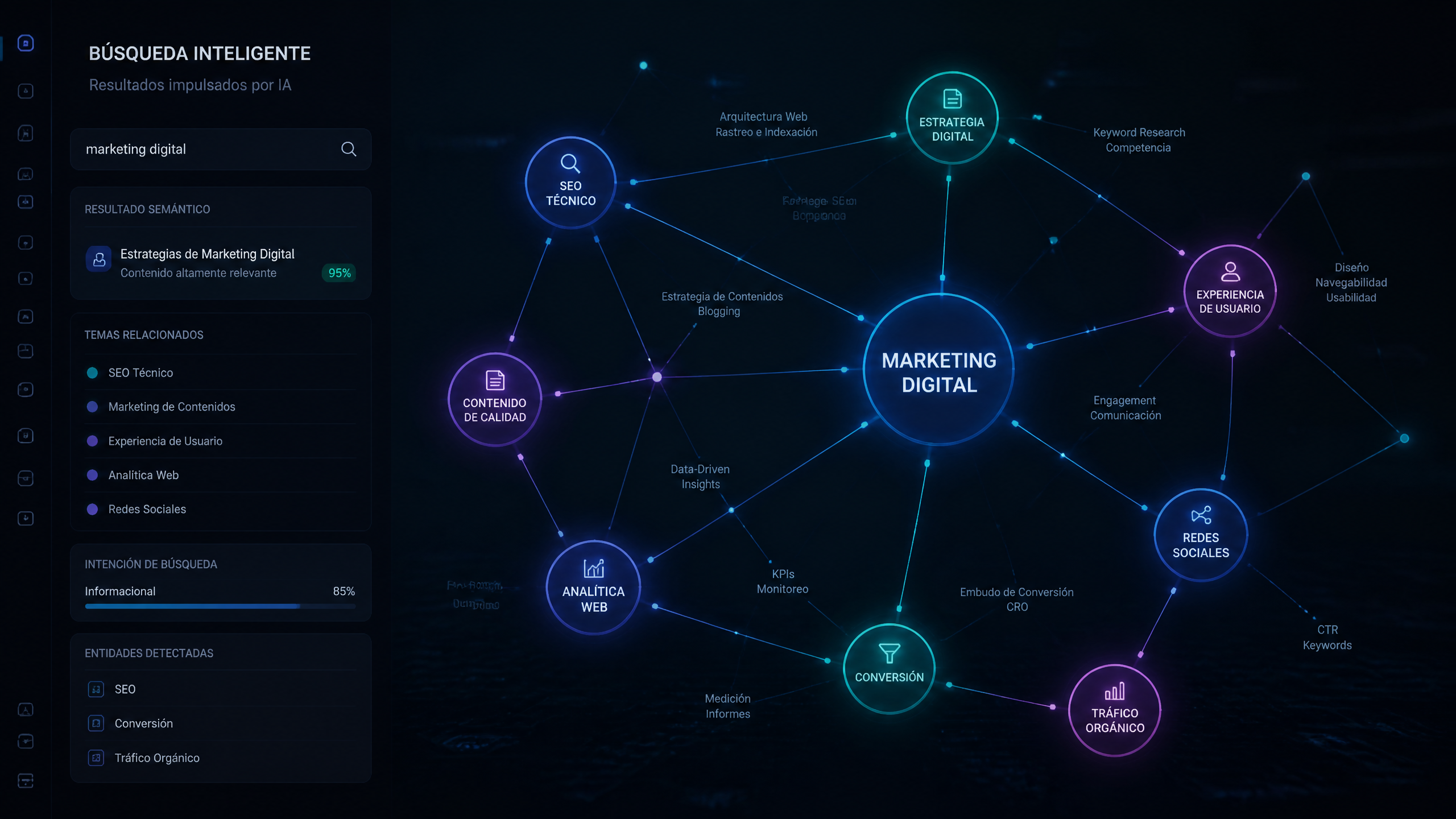
LLMs operate on semantic proximity. They understand that "Apple" the tech company is related to "Tim Cook" and "iPhone," not "orchards" or "pie." When you build a map for AI, you are essentially building a localized knowledge graph.
To understand the fundamental differences in approach, you have to look at the gap between Traditional SEO vs AI SEO. Traditional SEO maps content to search volume. AI SEO maps content to concept relationships.
The Anatomy of a Machine-Readable Map
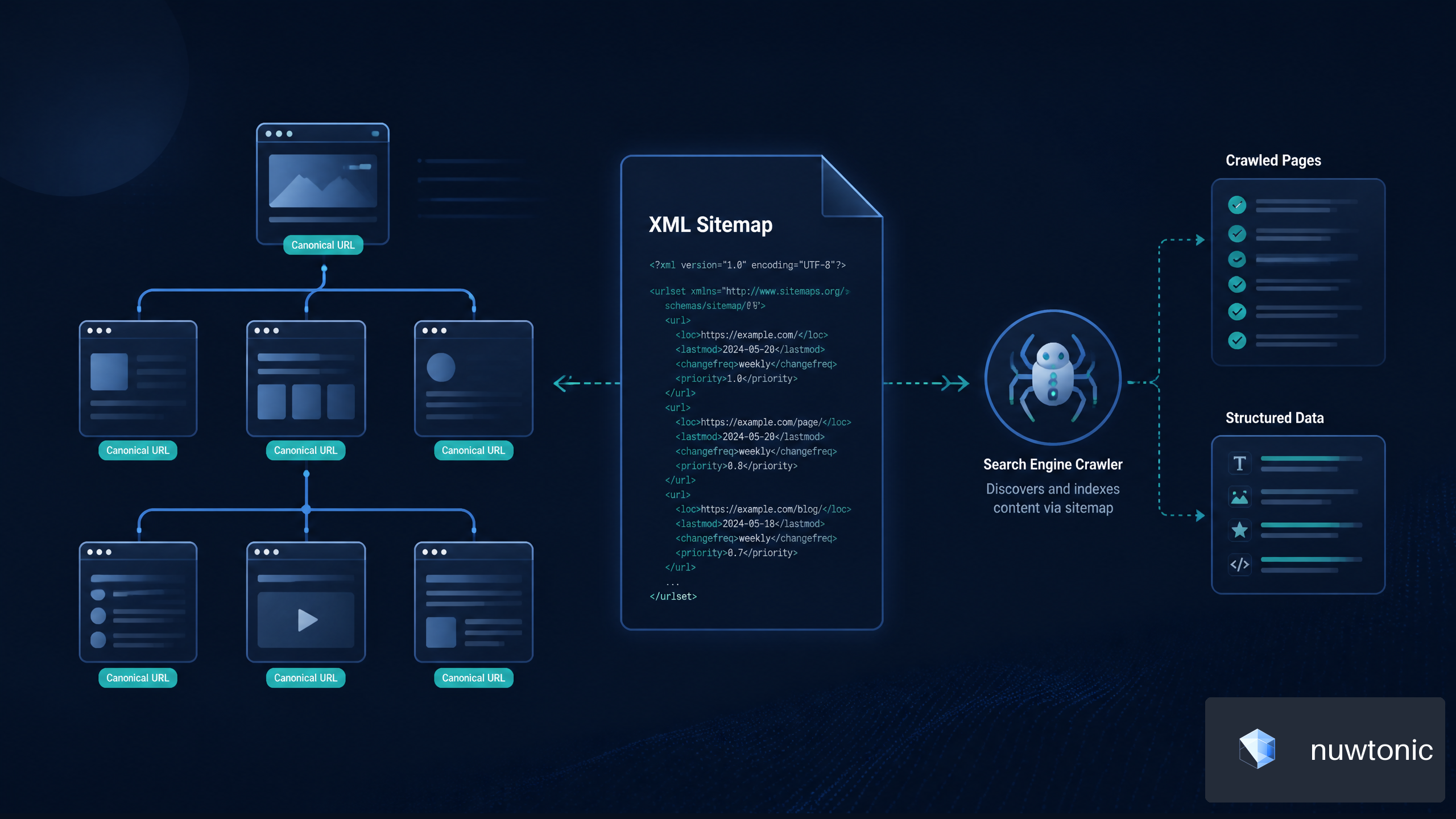
A machine-readable topical map consists of nodes (pages/concepts) and edges (internal links/schema).
Here is how traditional and AI-focused maps compare:
Feature | Traditional Topical Map | AI Search Topical Map |
|---|---|---|
Primary Metric | Search Volume & Keyword Difficulty | Entity Salience & Semantic Relevance |
Structure | Flat or Siloed Clusters | Interconnected Knowledge Graph |
Content Focus | Answering single queries | Supporting multi-hop reasoning |
Linking Strategy | PageRank distribution | Establishing relationship context |
What to Avoid: The Old Keyword Clustering Trap
Overcomplicating topical maps is a common pitfall; using basic principles often yields better results. However, the biggest mistake I see is keyword clustering disguised as topical mapping.
What to avoid:
• Creating separate pages for "best CRM for small business" and "top small business CRM."
• Ignoring the semantic relationships between parent and child topics.
• Failing to define the core entity explicitly on the page.
Step 1: Defining Your Seed Entity and Core Knowledge Graph
Your seed entity is the absolute center of your topical universe. Everything orbits this concept. If your seed entity is ambiguous, your entire map will fail in an AI retrieval environment.
Extracting Entities Over Keywords
Instead of starting with a keyword tool, start with Wikipedia or an established ontology. Identify the core entity and its immediate attributes.
This is exactly Why Use AI for Keyword Research makes sense today. AI tools can analyze top-ranking content and extract the underlying entities (the "who," "what," and "where") rather than just the exact match phrases.
Expanding via Semantic Search Relationships
Once you have your seed entity, you need to find its semantic neighbors.
Identify the parent category (e.g., Seed: Cold Brew Coffee -> Parent: Coffee Brewing Methods).
Identify the child entities (e.g., Nitro Cold Brew, Cold Brew Ratios).
Identify related attributes (e.g., Steeping time, Coarse grind).
By mapping these out, you are aligning with how semantic retrieval models process and categorize complex medical or technical information—grouping by relationship rather than keyword frequency.
Structuring Your Core Topic Modeling
I've found that a clear visual representation of topics often helps teams understand the content structure much better than just a text list. Use a mind-mapping tool to plot the seed entity in the center, drawing branches to the child entities. This visual model becomes your site's architecture.
Step 2: Mapping User Intent for Answer Engines
AI search engines don't just return links; they synthesize answers. This means your topical map must account for the specific ways users interrogate LLMs.
The Four Pillars of LLM Intent
Traditional intent (Informational, Navigational, Transactional) is too basic for AI search. We need to map for conversational intent.
Intent Type | User Behavior in AI Search | Your Map's Content Requirement |
|---|---|---|
Definitional | "Explain X like I'm 5" | Foundational pillar pages with clear, jargon-free definitions. |
Comparative | "Compare X vs Y for Z use case" | Content clusters that matrix features, pros, and cons. |
Diagnostic | "Why is my X doing Y?" | Troubleshooting hubs structured with clear symptom-to-solution pathways. |
Procedural | "Give me step-by-step instructions to do X" | Numbered lists, prerequisites, and outcome-focused guides. |
Aligning Content Clusters with Query Expansion
When a user asks an LLM a short question, the LLM often uses query expansion to retrieve broader context. Your map must anticipate this. If you want a deep dive into how to structure your site to capture these expanded queries, reviewing What is AI SEO Optimization and How to Do It is a necessary next step.
The Nuance of Multi-Hop Reasoning Queries
Users often ask AI multi-hop questions: "What is the best CRM for a 10-person agency, and does it integrate with Slack?"
Your topical map must account for this by ensuring your CRM pillar page explicitly links to your Slack integration supporting page using clear, descriptive anchor text. If the connection isn't explicitly mapped, the LLM won't make the leap.
Step 3: Architecting the Hierarchical Map

Now we turn concepts into actual site architecture. This is where the rubber meets the road for machine learning optimization.
Pillar Pages as Primary Nodes
The pillar page is your definitive guide to the seed entity. It must be exhaustive, but more importantly, it must be structured logically.
• Start with a clear definition of the entity.
• Use H2s for major subtopics (the child entities).
• Summarize the subtopic and immediately link out to the supporting node.
Supporting Nodes and Internal Linking
Supporting nodes are the deep-dive articles. The internal linking strategy here is critical.
Every supporting node MUST link back to the pillar page.
Supporting nodes should link to sibling nodes ONLY if there is a direct semantic relationship.
Use exact-match or highly relevant semantic anchor text. Do not use "click here."
Preventing Content Cannibalization in AI Retrieval
In my experience, cannibalization is the silent killer of AI search visibility. If you have three pages covering "AI content generation tools," the LLM's RAG system gets confused about which one is the authoritative source.
Consolidate overlapping pages. One intent = One page. Period.
Step 4: Technical Execution and Machine Learning Optimization
You have the map. Now you need to make it easily digestible for a machine.
Schema Markup for Entity Recognition
Schema is how you hand-feed your topical map to an AI. It explicitly defines the entities on your page.
| Schema Type | Use Case in AI Search Mapping |
|---|---|---|
| Article / TechArticle | Defines the main content and author authority. |
| About / Mentions | Explicitly links your content to Wikidata or Google Knowledge Graph entities. |
| FAQPage | Feeds direct Q&A pairs into Answer Engine retrieval systems. |
| BreadcrumbList | Validates the hierarchical structure of your topical map. |
Structuring Data for Retrieval-Augmented Generation (RAG)
LLMs use RAG to pull real-time facts from the web. To be pulled, your facts must be formatted cleanly. Use tables for data. Use bullet points for features.
Furthermore, understand how facts are cited and defined by authoritative systems. If you present proprietary data, state it clearly as an original finding. LLMs look for primary sources to cite. If your data is buried in a wall of text, it will be ignored.
Measuring AI Search Visibility
Measuring success here is tricky because AI platforms don't provide traditional Search Console data (yet).
• Monitor your brand name or specific URLs in Perplexity and ChatGPT prompts.
• Track referral traffic from AI domains (e.g., android-app://com.openai.chatgpt).
• Look for increases in zero-click search visibility in traditional engines, as AI Overviews often pull from well-mapped sites.
Frequently Asked Questions (FAQ)
How does a topical map for AI differ from standard SEO?
Standard SEO maps prioritize search volume and keyword variations. AI topical maps prioritize entity relationships, comprehensive knowledge graphs, and multi-hop user intent. AI maps are built for machine summarization, not just indexation.
What tools actually help build these maps?
While you can use traditional tools to gather data, building the actual AI map requires entity extraction.
• Entity Extraction: Use tools that analyze top-ranking NLP data.
• Mind Mapping: Tools like XMind or Miro to visualize the nodes.
• Content Auditing: Crawlers to ensure internal linking reflects the map.
How often should I update the map?
Your topical map is a living document.
Review your core entities quarterly.
Add new supporting nodes whenever industry shifts introduce new concepts.
Audit for cannibalization every six months.
Sources and References
Verified Citations
To ensure the highest level of accuracy and authority in our approach to machine-readable content and entity structures, we rely on established frameworks:
• Semantic Retrieval Models: Insights into how structured data and semantic relationships improve machine retrieval were informed by research on semantic retrieval models.
• Fact Citation and Authority: Guidelines on how authoritative systems define and cite common knowledge versus proprietary facts were sourced from Princeton University's academic integrity guidelines on how facts are cited and defined.