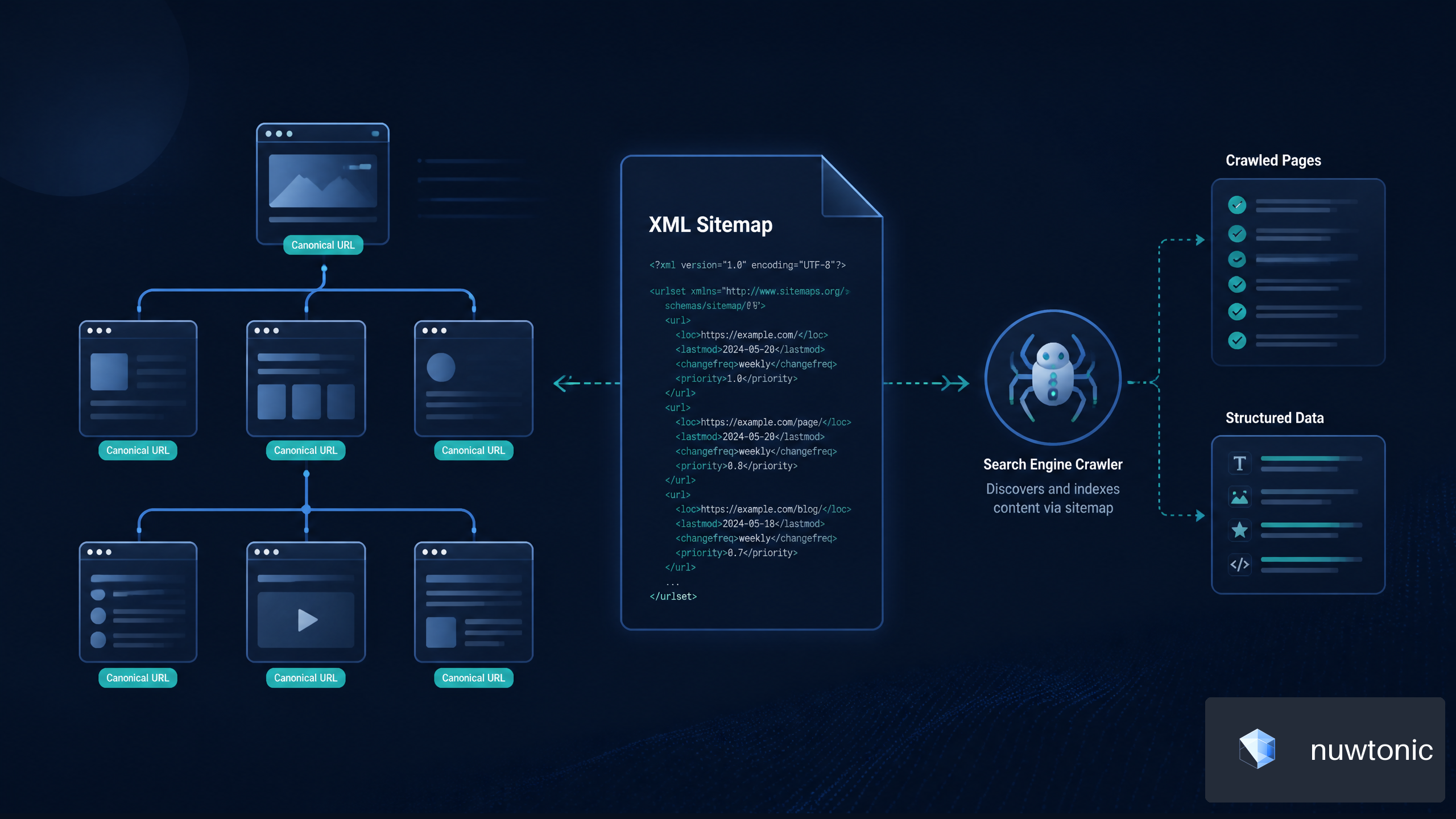

When optimizing a website's technical architecture, SEO professionals frequently debate the comparative damage of two common URL structure issues: broken links vs redirect chains. In our experience at Nuwtonic, managing enterprise-level technical SEO requires understanding not just that these issues are bad, but how they uniquely degrade search performance, user experience, and crawl efficiency.
While both problems disrupt the seamless flow of users and search engine bots through your website, their mechanisms of failure are distinct. One creates an immediate dead end, while the other forces search engines through a convoluted, resource-draining maze.
TL;DR: Key Takeaways
• Broken links immediately stop search crawlers and users, resulting in 404 errors, orphaned pages, and direct spikes in bounce rates.
• Redirect chains drain finite crawl budget and dilute link equity (PageRank) with every additional hop.
• Studies show that 3-hop redirect chains can waste up to 75% of your allocated crawl budget.
• Fixing broken links restores user trust instantly, while consolidating redirect chains maximizes the authority passed to your final destination URLs.
Table of Contents
- Understanding the Core Differences
- Quantifying the SEO Damage: A Direct Comparison
- Technical Consequences for Search Crawlers
- Triage and Recovery Strategies
- Frequently Asked Questions (FAQ)
- Sources and References
Understanding the Core Differences
To effectively triage technical SEO issues, we must first deconstruct the exact mechanical differences between a broken link and a redirect chain.
What is a Broken Link?
A broken link occurs when a hyperlink points to a destination that no longer exists, typically returning a 404 (Not Found) or 410 (Gone) HTTP status code. This can happen due to deleted pages, modified URL slugs without proper redirection, or simple typographical errors in the href attribute.
When a user or search engine bot clicks this link, they hit a brick wall. To systematically identify these dead ends across your domain, we recommend running a comprehensive scan using a reliable broken link checker.
What is a Redirect Chain?
A redirect chain occurs when a link points to a URL that redirects to another URL, which then redirects to a final destination, creating multiple sequential hops (e.g., URL A → URL B → URL C).
Unlike a broken link, the user eventually reaches a live page, but the journey is highly inefficient. You can map out these multi-hop paths using a dedicated redirect checker to visualize how server responses are daisy-chained together.
The Mechanics of Link Equity Loss
Link equity, commonly referred to as "link juice," is the ranking authority passed from one page to another.
• Broken Links: Authority transfer drops to zero. The link equity simply evaporates into a 404 error, benefiting neither the source page nor the intended destination.
• Redirect Chains: Authority transfer diminishes incrementally. While Google officially states that a single 301 redirect passes full PageRank, practical research on redirect behavior shows that multi-hop chains dilute link equity significantly, increasing the likelihood that crawlers abandon the journey entirely.
Quantifying the SEO Damage: A Direct Comparison
Which issue hurts your rankings more? The answer depends on your site's size, authority, and the specific metrics you are measuring. Below is our comparative analysis.
| Impact Metric | Broken Links (404s) | Redirect Chains (3+ Hops) |
|---|---|---|
| Link Equity Transfer | 0% (Total Loss) | Diminished (Estimated 10-15% loss per hop) |
| Crawl Budget Impact | Stops crawler at the dead end | Actively wastes budget on intermediate URLs |
| User Experience | High friction; immediate abandonment | Moderate friction; delayed page load time |
| Indexation Risk | Destination page drops from index | Destination page indexing delayed significantly |
| Time to Recover | 1-2 weeks after fixing | 2-4 weeks for Google to recrawl full path |
Crawl Budget Waste and Efficiency
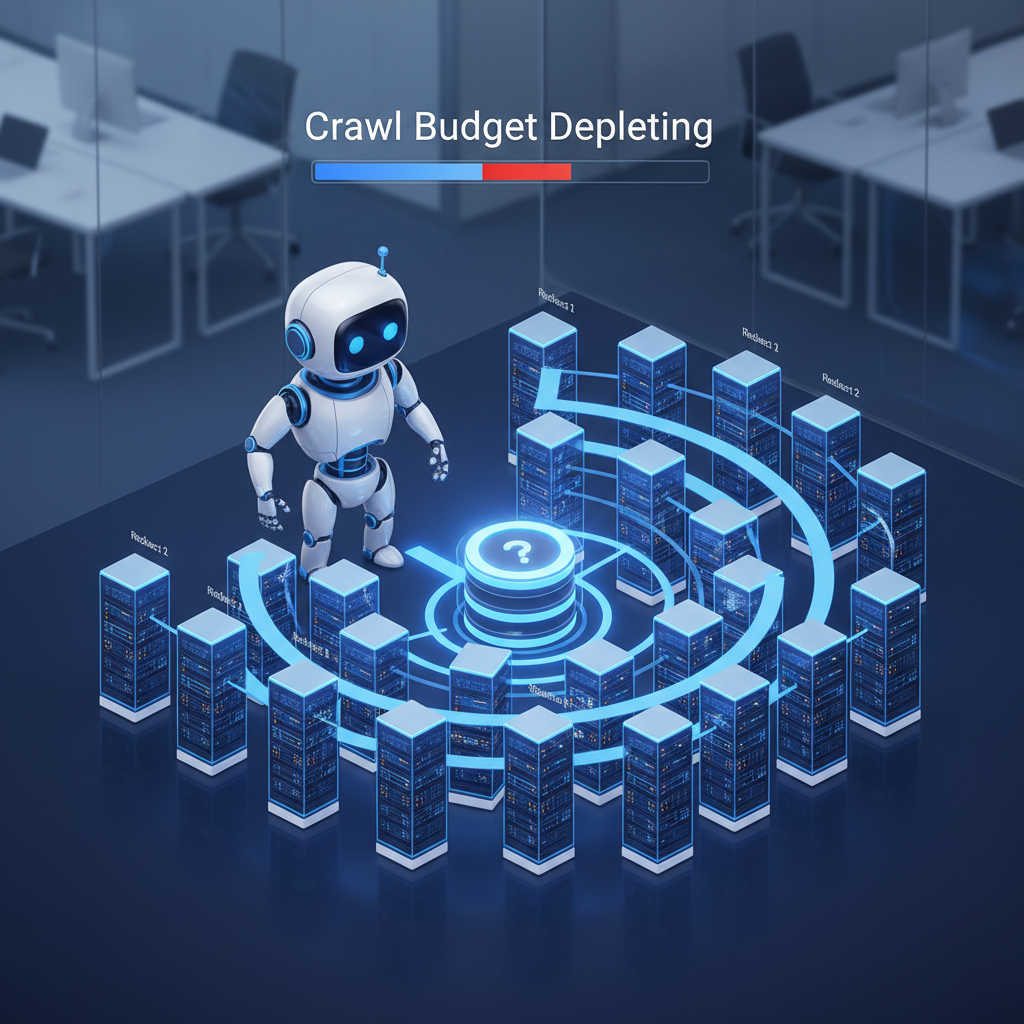
Google's crawl budget is finite. When redirect chains are present, they waste this limited resource disproportionately.
Consider this scenario: If Google allocates a crawl budget of 1,000 pages for your site, and encounters redirect chains averaging three hops, crawlers will effectively index only about 250 unique destination pages. The remaining 750 crawl requests are wasted on intermediate redirects. This massive efficiency loss is often the root cause when you are fixing indexed but not ranking pages, as the final page lacks the authority signals it deserves.
User Experience and Bounce Rates
Search engines heavily weigh user experience signals. According to user experience research, broken internal links hinder the user journey, leading to frustration and premature site exits.
High bounce rates resulting from broken navigation signal to search engines that your content lacks value, directly depressing your rankings. Redirect chains, conversely, increase page load times. Every server hop adds latency, which negatively impacts Core Web Vitals.
Indexation Disruptions
Broken links sever the pathways that search bots use to discover content. If a page is only linked via a broken URL, it becomes an "orphaned page." Orphaned pages are technically invisible to crawlers navigating your site architecture, meaning they will eventually drop out of the search index entirely.
Technical Consequences for Search Crawlers
Understanding how Googlebot interacts with your server architecture is critical for modern SEO.
How Googlebot Handles Dead Ends
According to industry SEO research, broken internal links prevent Google from crawling your site effectively. When Googlebot encounters a 404, it logs a crawl error and halts progression down that specific path. If your site accumulates too many of these errors, Google may lower your overall domain crawl rate, assuming the site is poorly maintained.
The Hop Limit in Redirect Sequences
Googlebot does not follow redirects infinitely.
- Googlebot typically follows up to 5 redirect hops in a single crawl session.
- If the chain exceeds 5 hops, the bot abandons the sequence.
- The final destination URL is left uncrawled, unindexed, and stripped of any potential ranking power.
- If the chain loops back on itself (a redirect loop), the bot immediately aborts, resulting in a critical error in Google Search Console.
HTTPS Security and Redirect Complexity
When migrating from HTTP to HTTPS, improper implementation often creates chains (e.g., HTTP A → HTTPS A → HTTPS B). Based on website security and SEO guidance, search engines penalize links that do not use the secure HTTPS protocol. A redirect chain that forces a bot through an insecure HTTP intermediate step compounds link equity dilution with negative security signals.
Triage and Recovery Strategies
Not all URL errors require an immediate midnight fix. We use a structured severity matrix to prioritize technical debt.
Prioritizing Fixes Based on Severity
| Issue Type | SEO Severity Level | Recommended Action | Priority |
|---|---|---|---|
| Redirect Loops | Critical | Break loop, point to 200 OK | 1 (Immediate) |
| Broken Internal Navigation | High | Update href to live URL | 2 (24-48 Hours) |
| 3+ Hop Redirect Chains | High | Consolidate to single hop | 3 (Within 1 week) |
| Broken External Backlinks | Medium | 301 redirect dead URL to relevant page | 4 (Within 2 weeks) |
| 2-Hop Redirect Chains | Low | Update internal links to final URL | 5 (Routine Maintenance) |
Consolidating Redirect Paths
To fix an existing redirect chain, you must create a direct path from the original URL to the final destination.
• Identify the start of the chain (URL A).
• Identify the final destination (URL C).
• Change the server rule so URL A 301 redirects directly to URL C.
• Remove the intermediate rule for URL B (unless URL B also receives direct traffic, in which case it should also point to URL C).
Reclaiming Orphaned Content
When you fix broken internal links, you often rescue orphaned content. By restoring the link pathway, you allow link equity to flow back into these isolated pages. In our experience, pages rescued from orphaned status typically see a ranking recovery within 14 to 28 days as Google recrawls the restored site architecture.
Frequently Asked Questions (FAQ)
How many redirects in a chain is too many?
Ideally, zero. Every redirect should be a single hop. However, from a strict algorithmic standpoint, Google will follow up to 5 hops before abandoning the crawl. Anything exceeding 2 hops should be flagged for immediate consolidation to preserve crawl budget and page speed.
Do external 404s hurt SEO more than internal broken links?
They hurt in different ways. Broken internal links damage your site architecture, crawlability, and direct user experience. External 404s (when high-authority external sites link to a dead page on your domain) represent a massive loss of incoming link equity. Both are severe, but reclaiming external 404s via 301 redirects offers a faster boost to Domain Authority.
How long does rankings recovery take?
Once a broken link is fixed or a chain is consolidated, rankings do not return overnight. Google must recrawl the affected URLs, process the new pathways, and recalculate PageRank distribution. Typically, you will observe recovery signals between 2 to 4 weeks, depending on your site's baseline crawl frequency.
Sources and References
Verified Citations
• Nuvew: Analysis of broken link types and search engine bot dead ends.
• Adido Digital: Research on redirect chain behavior, link equity dilution, and crawl budget waste.
• LeadWalnut: Studies on broken links, user experience friction, and bounce rate impacts.
• Urllo: Guidance on HTTPS protocol integration within redirect implementations.