
The Shift to Answer Engine Optimization
In 2026, the battleground for digital visibility has shifted from ten blue links to a single, synthesized answer. While Google remains a titan, optimizing for Perplexity AI search has become the critical frontier for brands seeking high-intent traffic. We aren't just looking at keywords anymore; we are looking at citation velocity and answer engine confidence.
At Nuwtonic, we have analyzed thousands of queries to understand exactly how Perplexity's "retrieval and reranking" architecture decides which sources to cite and which to ignore. It is not magic—it is a strict algorithmic preference for structure, recency, and authority.
TL;DR: The Executive Summary
If you are short on time, here is the core logic of our findings:
- Recency is King: Content updated every 2-3 days sees a massive spike in impression share.
- Structure Wins: The "Inverted Pyramid" writing style is mandatory for AI extraction.
- Schema is Vital: JSON-LD markup accounts for roughly 10% of ranking weight.
- Authority Lists: Being mentioned in "Top X" lists on high-authority sites drives recommendations.
The Perplexity Algorithm: Retrieval vs. Reranking
To rank, you must understand the machine you are feeding. Perplexity operates on a two-stage system that differs significantly from traditional search engines. It does not just index; it synthesizes.
- Retrieval Stage: The AI casts a wide net, pulling documents based on semantic keyword matching and vector similarity. It looks for content that might answer the user's query.
- Reranking Stage: This is where the magic happens. The engine filters the retrieved set based on strict criteria: freshness, domain authority, and structured data validity. If your content is relevant but stale, it gets discarded here.
Our data suggests that the reranking stage is ruthless. We have seen semantically perfect articles excluded simply because they lacked the "traction signals" (like recent engagement or external citations) that the AI uses as a proxy for trust.
Structuring Content: The Inverted Pyramid
Writing for humans and writing for LLMs (Large Language Models) used to be different disciplines. Now, they have converged on clarity. Perplexity favors the Inverted Pyramid structure common in journalism. You must provide the direct answer immediately, followed by supporting details.
Why? Because the AI needs to extract the "core fact" in milliseconds to generate its response. If the answer is buried in paragraph four, the engine moves on to a source that put it in sentence one.
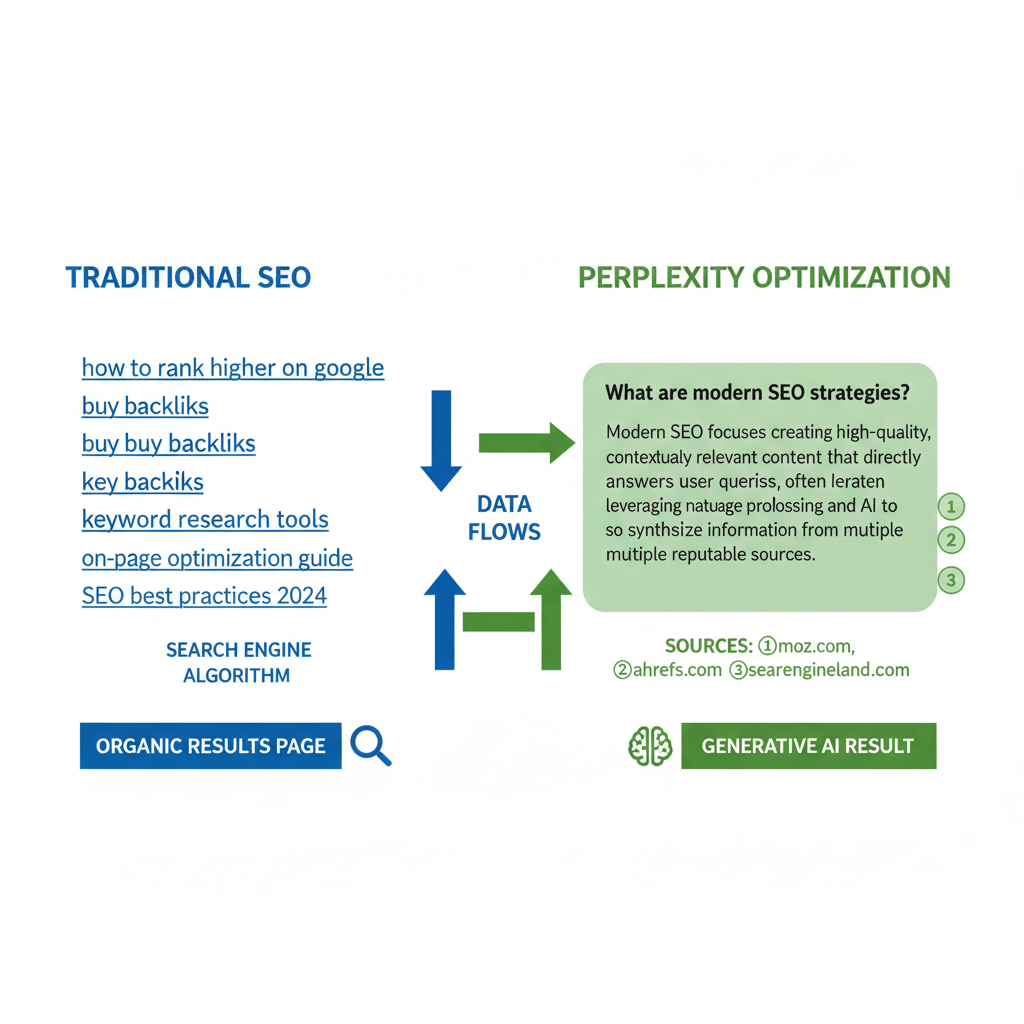
Traditional SEO vs. Perplexity Optimization
The differences between traditional SEO and AI SEO are stark when you look at the tactical execution. We have broken down the shift in focus below:
| Feature | Traditional Google SEO | Perplexity AI Optimization |
|---|---|---|
| Primary Goal | Click-through to website | Citation in generated answer |
| Content Structure | Narrative flow, longer intro | Answer-first, bullet points |
| Keyword Strategy | High volume, exact match | Natural language, question-based |
| Update Frequency | Monthly or Quarterly | Weekly or Daily (2-3 days ideal) |
| Multimedia | Images for engagement | YouTube embeds for citation |
Technical Signals: Schema and Data Structure
If content is the fuel, Schema markup is the engine piping. First Page Sage notes that Schema markup contributes up to 10% of Perplexity's ranking factors. This is not a marginal gain; it is a competitive necessity.
We recommend implementing specific JSON-LD schemas that help the AI parse your content's intent without guessing:
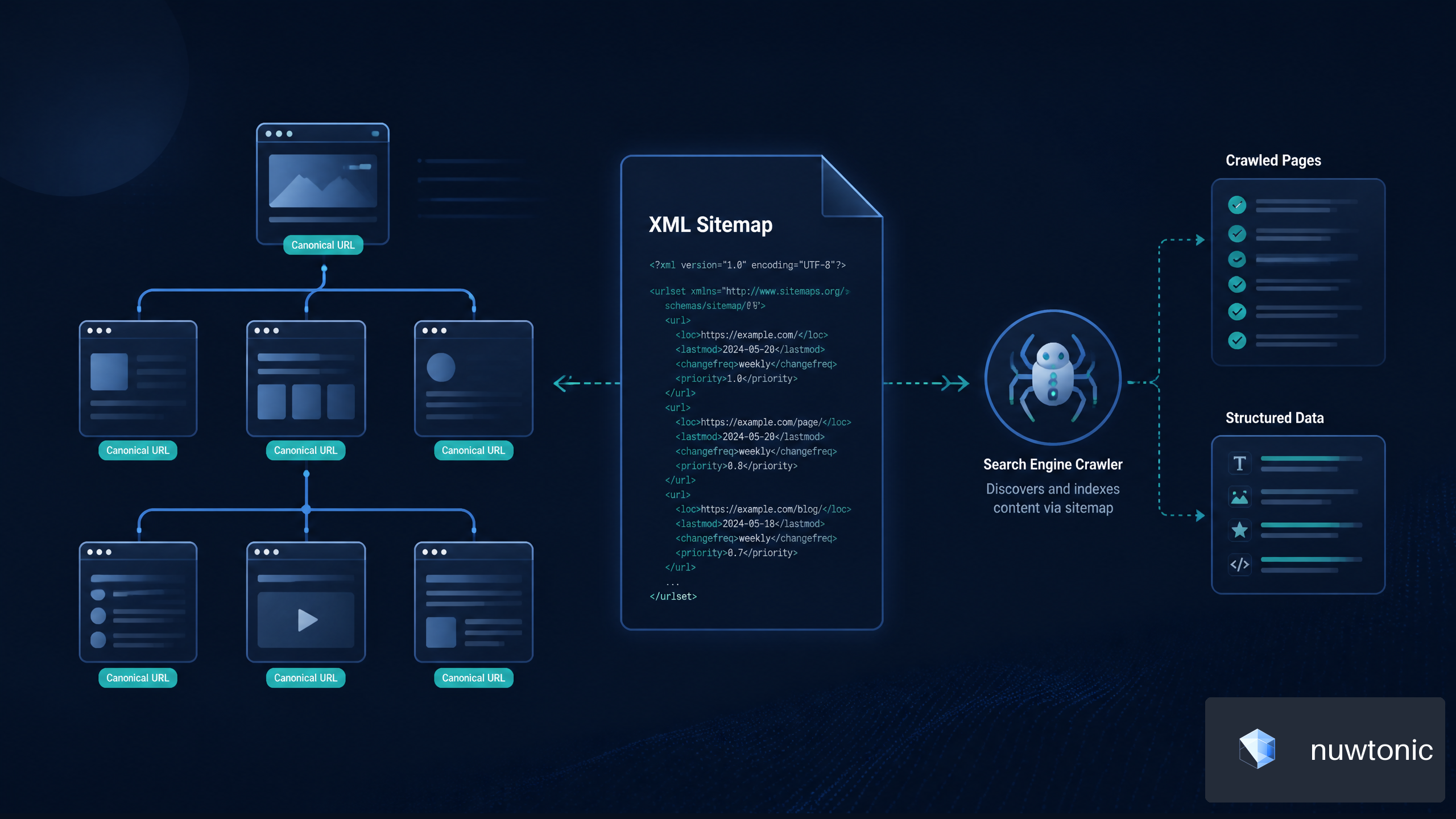
- Article Schema: With
dateModifiedproperties clearly defined. - FAQ Schema: To directly feed the question-answer pairs the AI is looking for.
- Organization Schema: To solidify your brand entity in the Knowledge Graph.
This technical foundation supports the importance of EEAT in AI SEO, as it provides verifiable metadata about who is behind the content. Perplexity relies heavily on these trust signals to differentiate between a hallucination and a fact.
Content Freshness and Decay Modeling
Here is a hard truth: Perplexity hates stale content. In our tests, we observed that the "recency effect" is a dominant variable in the reranking stage. Content that is refreshed—meaning actual data updates, not just changing a timestamp—receives a significant visibility boost.
The Decay Timeline
How fast does your content drop out of Perplexity's consideration set? Faster than you think.
| Time Since Last Update | Perplexity Visibility Potential | Action Required |
|---|---|---|
| 0 - 72 Hours | High (Peak) | Monitor for citations |
| 4 - 14 Days | Moderate | Plan minor refresh |
| 15 - 30 Days | Low | Urgent update needed |
| 30+ Days | Near Zero | Full rewrite required |
Evidence from Consultus Digital supports this, highlighting that regular updates are critical to signal ongoing relevance. If you are in a high-velocity niche like tech or finance, the window is even smaller.
Topic Selection and Entity Salience
Not all topics are created equal in the eyes of an Answer Engine. Perplexity shows a clear bias toward "high-utility" topics—categories where accuracy is paramount, such as business analytics, coding, and financial advice.
To capture this traffic, you need to build Topical Authority. You cannot just write one article about "AI SEO" and expect to rank. You need a cluster of interlinked content that covers every facet of the entity.
Using Tools to Identify Gaps
Identifying the right questions to answer is half the battle. We use a variety of top AI SEO tools to map out the question landscape. Specifically, we look for:
- Long-tail questions: Queries starting with "How," "Why," or "Best way to."
- Comparison queries: "X vs Y" searches are prime territory for Perplexity's summary tables.
- Data-driven queries: Searches looking for statistics or benchmarks.
FAQ: Common Questions on Perplexity Optimization
We often get asked about specific tactics for AI visibility. Here are the answers based on current system behaviors.
Does embedding video help with Perplexity?
Yes. Shorter articles that embed relevant YouTube videos are frequently cited. The AI seems to value the multimedia signal as a proxy for comprehensive coverage, often pulling transcripts or metadata from the video itself.
How do I track my Perplexity rankings?
Unlike Google Search Console, there is no official dashboard yet. You must rely on manual testing or proxy metrics like referral traffic from perplexity.ai. However, the primary metric should be Brand Mentions and Citations rather than traditional rank position.
Can I just use AI to write content for AI?
Risky. While AI can help structure content, Semrush suggests that unique human insight and proprietary data are what prevent your content from being filtered out during the reranking stage. You need "Information Gain"—new facts that do not exist elsewhere.
Key Takeaways
- Adopt the Inverted Pyramid: Answer first, explain second.
- Refresh Aggressively: Treat your content as a living stream, not a static library.
- Structured Data is Non-Negotiable: Use Schema to speak the AI's language.
- Focus on Citations: Aim to be the source that other high-authority pages reference.
Conclusion
Optimizing for Perplexity AI search requires a fundamental shift in mindset. You are no longer trying to trap a user on your page for ad revenue; you are trying to convince a machine that you are the single most trustworthy source of truth on the internet. It is a game of precision, technical excellence, and relentless freshness.
At Nuwtonic, we automate this complexity, helping you audit your technical signals and craft content that AI engines love to cite. The search landscape has changed—make sure your strategy changes with it.