Test de Résultats Enrichis Gratuit
Gagnez plus d'espace dans les résultats de recherche. Auditez vos données structurées pour voir si vous êtes éligible aux extraits enrichis de Google et aux résultats améliorés.
What Are Rich Results and How Do They Work?
Defining Rich Results
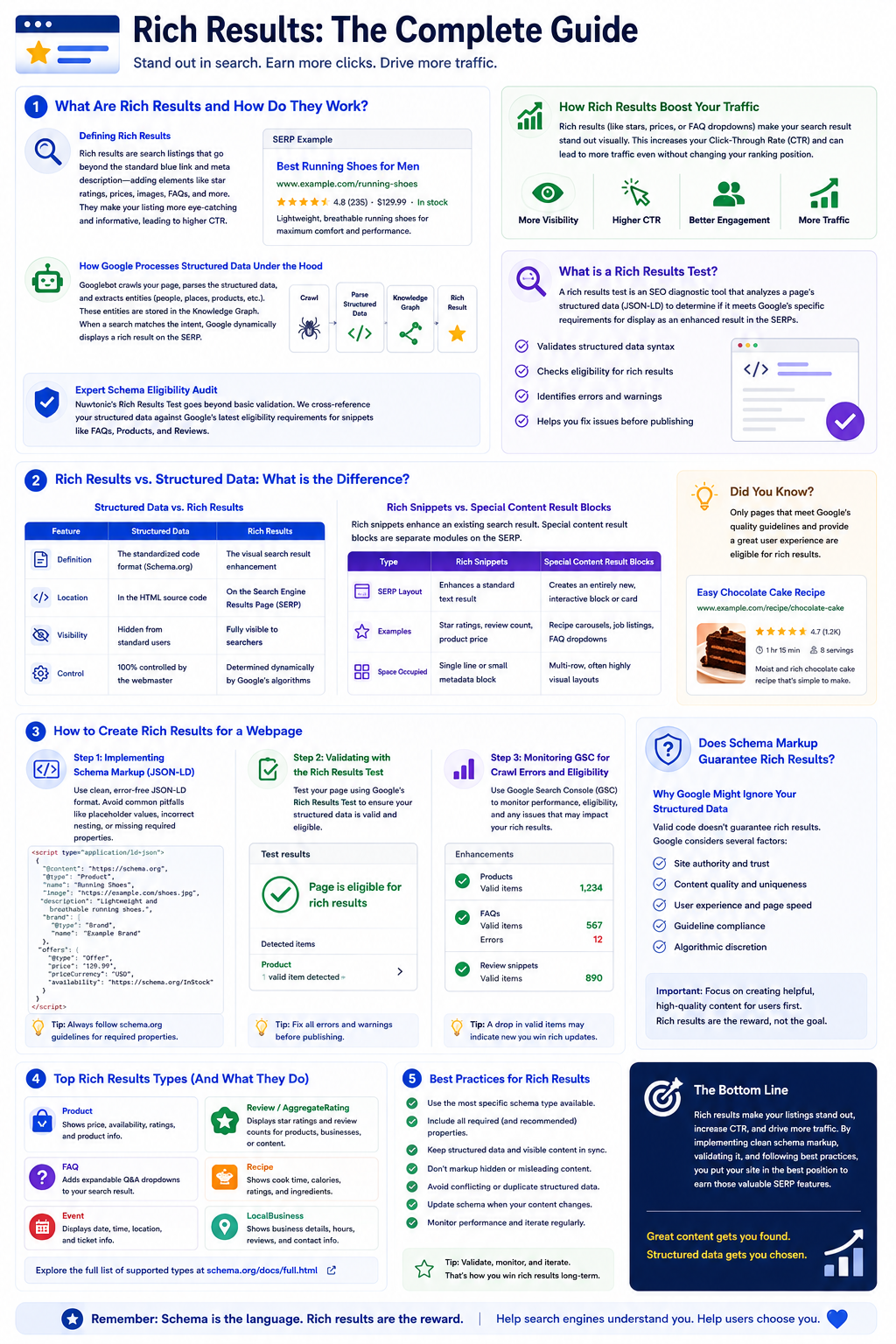
To understand what rich results are and how they work, we must first look at how search engines have evolved. In the early days of SEO, search results were flat, uniform lines of blue text. Today, search engine results pages are highly dynamic, visual environments. Rich results are any search listings that go beyond the standard blue link and meta description—incorporating elements like star ratings, product availability, pricing, recipe cook times, or interactive carousels. Many people overlook the importance of schema markup — it's not just a nice-to-have, it's essential for rich results. Without this underlying code, Google's crawlers are left to guess the context of your content. By explicitly labeling your data, you bridge the gap between human language and machine understanding.
How Google Processes Structured Data Under the Hood
When Googlebot crawls a webpage, it parses the HTML document looking for specific semantic signals. This is where semantic search comes into play. Instead of merely indexing keywords, Google attempts to understand the entities on your page—such as a person, a place, an organization, or a product—and the relationships between them. If your page contains valid structured data, Google's extraction engine parses the code and places the structured entities into its Knowledge Graph. From there, Google's search delivery algorithms evaluate the searcher's intent. If the intent matches the structured entities on your page, Google dynamically constructs a rich result on the SERP.
Expert Schema Eligibility Audit
Nuwtonic's Rich Results Test goes beyond basic validation. We cross-reference your structured data against Google's latest eligibility requirements for snippets like FAQs, Products, and Reviews, helping you fix issues before you publish.
How Rich Results Boost Your Traffic
Rich results (like stars, prices, or FAQ dropdowns) make your search result stand out visually. This increases your Click-Through Rate (CTR) and can lead to more traffic even without changing your ranking position.
What is a Rich Results Test?
A rich results test is an SEO diagnostic tool that analyzes a page's structured data (JSON-LD) to determine if it meets Google's specific requirements for display as an enhanced result in the SERPs.
Rich Results vs. Structured Data: What is the Difference?
I often see sites neglecting their structured data, which can lead to missed opportunities for visibility and engagement. Part of the problem is a fundamental confusion about the terminology. Many marketers use the terms "structured data" and "rich results" interchangeably, but they are entirely different concepts. Structured data is the input; a rich result is the output.
| Feature | Structured Data | Rich Results |
|---|---|---|
| Definition | The standardized code format (Schema.org) | The visual search result enhancement |
| Location | In the HTML source code | On the Search Engine Results Page (SERP) |
| Visibility | Hidden from standard users | Fully visible to searchers |
| Control | 100% controlled by the webmaster | Determined dynamically by Google's algorithms |
Rich Snippets vs. Special Content Result Blocks
Another point of confusion is how a rich snippet relates to a special content result block. A rich snippet is an enhancement of an existing, standard search result—like adding review stars beneath a standard meta description. On the other hand, special content result blocks are entirely separate modules on the SERP, such as interactive job search blocks, local pack maps, or recipe carousels that sit independently of organic blue links.
| Type | Rich Snippets | Special Content Result Blocks |
|---|---|---|
| SERP Layout | Enhances a standard text result | Creates an entirely new, interactive block or card |
| Examples | Star ratings, review count, product price | Recipe carousels, job listings, FAQ dropdowns |
| Space Occupied | Single line or small metadata block | Multi-row, often highly visual layouts |
How to Create Rich Results for a Webpage
Step 1: Implementing Schema Markup (JSON-LD)
Before you write a single line of code, let's outline some common pitfalls. I frequently see developers copy-pasting generic schema templates from the web, leaving placeholder values intact, or nesting schemas incorrectly—like placing a Product schema inside an Article schema without any logical connection. This leads to critical crawl errors that disqualify the page entirely. To avoid these pitfalls, you should use dedicated schema tools to generate clean, syntax-perfect JSON-LD. JSON-LD is Google's preferred format because it separates the semantic data from the visual HTML layout, making it cleaner to maintain and less prone to breaking during design updates.
Step 2: Validating with the Rich Results Test
Once your JSON-LD is generated and placed in the <head> or <body> of your webpage, you must validate it. Do not assume your code is perfect just because your page looks fine on your browser. You should run your URL or raw code block through the official rich results test. This tool will parse your markup and explicitly tell you which rich result types were detected, whether there are any warnings (optional fields missing), or if there are critical errors (required fields missing) that will prevent display.
Step 3: Monitoring GSC for Crawl Errors and Eligibility
After deploying your validated code, you must monitor its performance over time. Google Search Console (GSC) is your command center for this. Inside GSC, you will find dedicated enhancement reports for every type of schema you have implemented (e.g., Products, FAQs, Merchant Listings). Keep a close eye on these reports. A sudden drop in eligible URLs usually indicates that a site update has broken your structured data templates, resulting in crawl errors that strip your rich results from the SERPs.
Does Schema Markup Guarantee Rich Results?
Why Google Might Ignore Your Structured Data
You know, it's funny how often I see developers perfectly format their JSON-LD, only for the marketing team to block search bots in robots.txt or fail Google's quality guidelines. Having 100% valid code does not guarantee that Google will display rich results for your webpage. Google's algorithms evaluate several non-technical factors before granting these visual upgrades:
- Site Authority and Trust: New or low-trust sites are often denied rich results until they establish credibility.
- Content Relevance: If your schema claims a page is a "Recipe" but the page is actually an e-commerce product category, Google will ignore the markup and may penalize the site for spammy structured data.
- Searcher Intent: Google dynamically decides if a rich result serves the user's immediate query. If they believe a simple text snippet is better, they will show that instead.
How Long for Google Rich Results to Appear After an Update?
If you have recently updated your structured data, do not expect to see changes on the SERPs instantly. The timeline depends entirely on Google's crawl frequency for your specific site. For high-traffic news sites, updates can appear within minutes. For smaller, less authoritative blogs, it can take anywhere from a few days to several weeks. To speed up this process, always submit your updated URLs directly through GSC's "Request Indexing" feature after validating your code.
Does the Rich Results Test Trigger a Google Crawl?
It is a common misconception that running a URL through the testing tool forces Google to update its index. It does not. The testing tool fetches the live HTML of the page in real-time to analyze the code, but this is an isolated sandbox environment. It does not trigger a permanent recrawl or update Google's search index. You must still request a crawl via GSC to push those changes live.
Do the Majority of SERPs Include Rich Results?
SERP Feature Prevalence in 2026
As search engines push for highly interactive layouts, rich results have become the norm rather than the exception. Recent search industry studies indicate that over 60% of commercial and informational search queries now feature at least one type of rich result or special content block on the first page. For transactional queries—like searching for physical products—that number climbs past 80%.
Do Rich Results Increase Click-Through Rate? (What the Studies Say)
In my experience, testing different formats for rich snippets can significantly boost CTR, but many just stick to the basics. I remember a past project for an e-commerce client where we spent weeks refining their product schema—adding real-time stock availability, price drops, and nested review aggregates. Within a month, their organic click-through rate shot up by 28%, resulting in a massive revenue lift without any increase in baseline rankings.
| Schema Type | Average CTR Increase | Core User Benefit |
|---|---|---|
| Product (Price, Stock) | 15% - 25% | Instant price and availability transparency |
| Review / Rating | 20% - 35% | Visual social proof directly in search results |
| FAQ Schema | 10% - 15% | Expanded real estate and direct answers on the SERP |
| Recipe | 30% - 50% | High visual appeal with images, cook times, and calories |
To visualize how these enhancements will look before they go live, you can use the Google SERP preview tool to test different title, description, and rich snippet variations.
Rich Snippet Audit Scope
This tool evaluates supported schema types, required and optional properties, eligibility errors, and specific warnings related to Google's display standards.
How to Audit Your Rich Results
Enter your page URL or paste your schema code directly.
Run the test to analyze your structured data eligibility.
Check for critical errors that prevent your rich snippets from showing.
Fix warnings to improve the quality of your search appearance.
Understanding Your Eligibility Status
Eligible
Great! Your page meets all requirements for enhanced results in Google.
Errors found
Critical issues are present. Google will not show rich results for this page until fixed.
Warnings found
Your page is eligible, but adding optional properties could improve its appearance.
Detected types
Specific rich result categories (e.g., FAQ, Article) identified on your page.
Audit Disclaimer
Eligibility is not a guarantee of display. Google ultimately decides which rich results to show based on the user's query and the quality of the page.
Frequently Asked Questions About Rich Results
Common Technical Queries Answered
Does the Google Rich Results Test show images?
Yes, the tool displays a rendered screenshot of the page as Googlebot sees it, allowing you to verify if your visual assets and structured images are fully accessible to the crawler.
What is one difference between rich results and structured data?
Structured data is the standardized code implemented on your website's backend, whereas rich results are the visual, interactive search listings displayed on Google's frontend SERPs.
Can invalid schema markup hurt my rankings?
While minor validation warnings won't hurt your organic rankings, severe, manipulative, or spammy structured data violations can lead to manual actions from Google, stripping your site of all rich result eligibility.
Essayez nos autres outils SEO et IA gratuits
Nous avons rassemblé certains de nos outils gratuits qui pourraient vous aider dans vos efforts SEO.
Filtrer les outils à afficher
Générateur de Titre Meta Gratuit
Générez des balises de titre à fort CTR optimisées pour Google grâce à l'IA.
Outil Gratuit de Keyword Clustering
Regroupez des mots-clés liés en clusters thématiques pour une stratégie SEO plus claire.
AI Overview Keyword Finder
Detectez les keywords qui declenchent les AI Overviews et evaluez les opportunites de citation avec des signaux de volatilite.
Low Competition Keyword Finder
Identifiez les SERP faibles, les opportunites dominees par les forums et les keywords ou une faible autorite peut gagner.
Reddit Keyword Finder
Extrayez les questions recurrentes, les pain points et l'intention d'achat depuis Reddit et les forums.
Question Keyword Tool
Trouvez des keywords de type FAQ et les questions utilisateur les plus courantes.
Buyer Intent Keyword Finder
Filtre specifiquement les keywords commerciaux et transactionnels.
Zero Search Volume Keyword Finder
Detecte des keywords emergents ou caches que les outils de volume classiques ratent.
Vérificateur de Longueur de Titre Gratuit
Vérifiez si vos titres respectent les limites de pixels pour éviter la troncature.
Générateur de Meta Description Gratuit
Créez des descriptions percutantes qui résument votre contenu et boostent les clics.
Vérificateur de Longueur de Meta Description Gratuit
Vérifiez si vos descriptions respectent les limites de pixels.
Prévisualisation SERP Google Gratuit
Simulez l'apparence de votre titre et de votre description dans les résultats Google.
Vérificateur de Balisage Schema Gratuit
Validez vos données structurées pour garantir qu'elles sont lisibles par les moteurs.
Vérificateur de Texte Alt Gratuit
Identifiez les textes alt manquants, vides ou dupliqués sur vos images.
Générateur de Texte Alt Gratuit
Générez instantanément des textes alt descriptifs et conformes pour vos images.
Générateur de Nom de Fichier Image Gratuit
Convertissez du texte brut en noms de fichiers images optimisés pour le SEO.
Outil d'Audit SEO On-Page Gratuit
Lancez un audit on-page pour les pages de services SEO, les workflows de technical SEO audit et les optimisations SEO optimization.
Vérificateur de Balise H1 Gratuit
Identifiez la présence et le contenu des balises H1 sur n'importe quelle page.
Vérificateur de Structure de Titres Gratuit
Auditez vos balises H1-H6 pour garantir une structure logique et SEO-friendly.
Vérificateur d'URL Canonique Gratuit
Identifiez les URL canoniques déclarées et analysez les signaux associés.
Outil d'Audit EEAT Gratuit
Analysez votre contenu pour les signaux d'Expérience, d'Expertise, d'Autorité et de Fiabilité de Google.
Outil d'Audit AIO & GEO Gratuit
Optimisez votre contenu pour les Aperçus IA et l'Expérience Générative de Recherche avec un audit détaillé.
Vérificateur de Liens Cassés Gratuit
Scannez une page pour identifier les liens qui renvoient des erreurs.
Vérificateur de Redirection Gratuit
Analysez le comportement des redirections URL pour identifier les types et destinations.
Derniers articles sur le SEO et l'IA
Parcourir tous les articles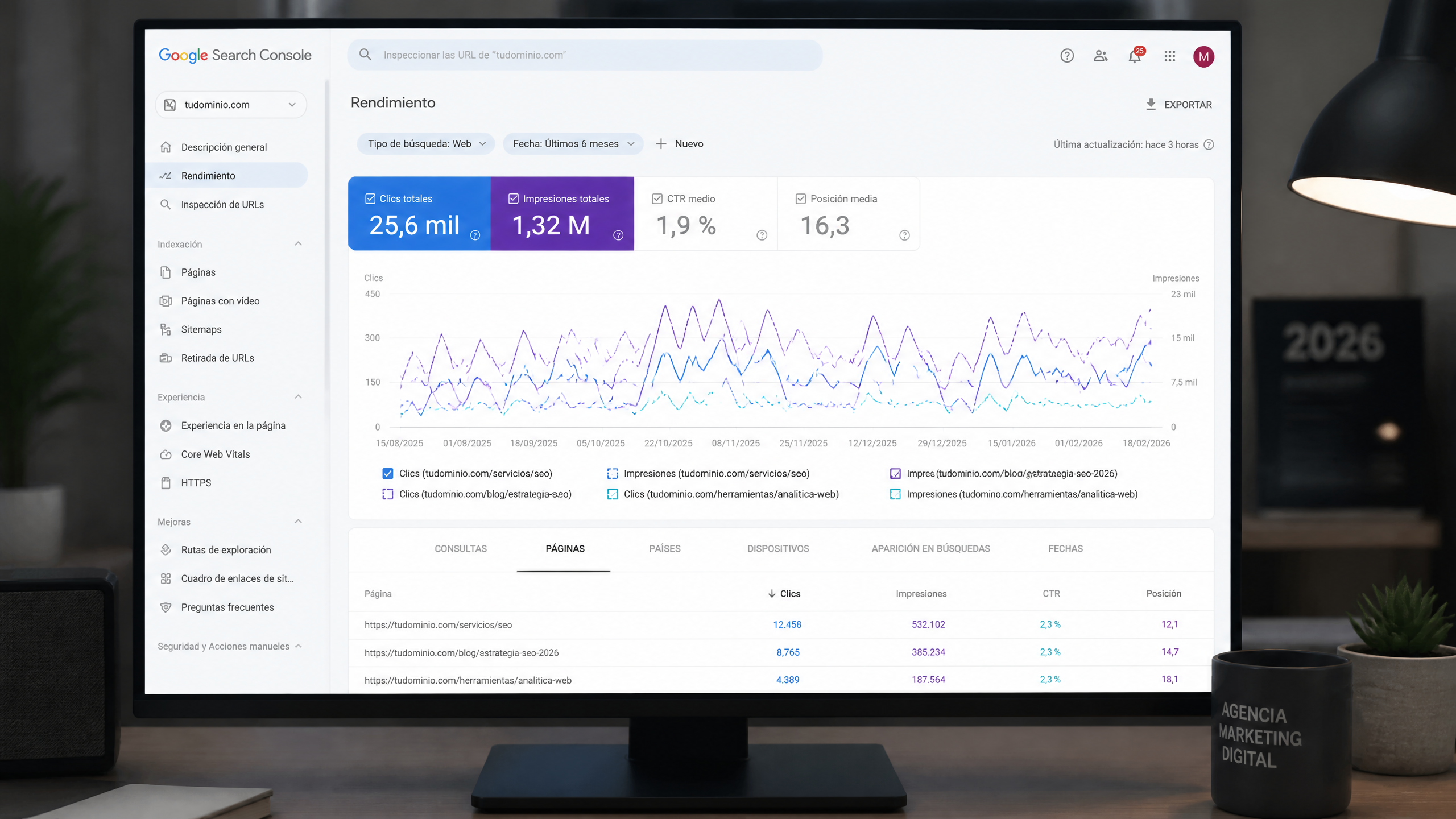
Comment trouver la cannibalisation de mots-clés dans GSC

Pourquoi l'E-E-A-T est le pilier central du SEO à l'ère de l'IA

EEAT vs Domain Authority : Le Guide Ultime pour Arbitrer Confiance et Puissance SEO

Best AI SEO Tools : Le Guide Sans Filtre d'un Consultant

Formatting Content for LLM Readability : Le Guide de l'Ingénieur NLP