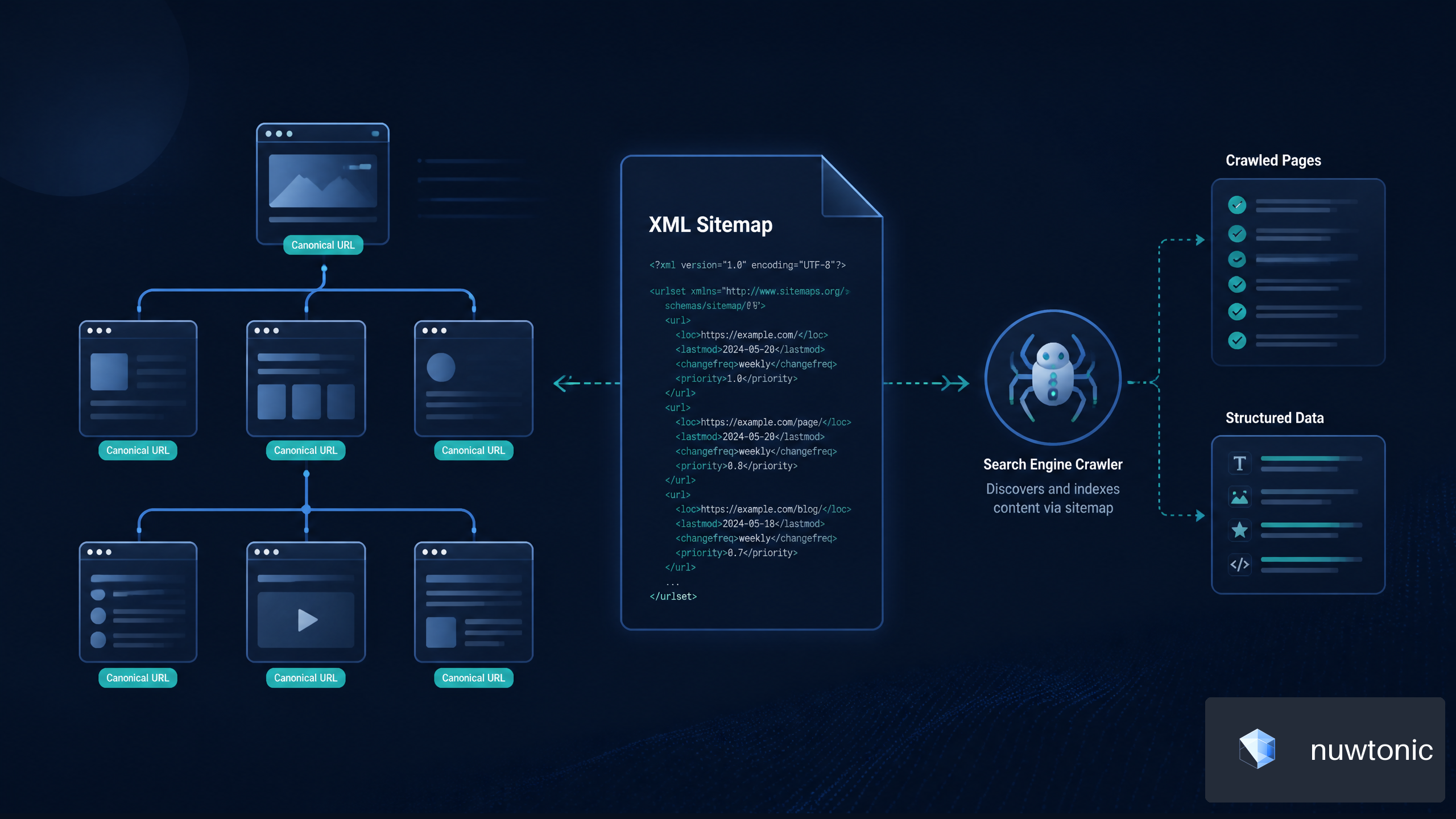

Honestly, most ecommerce sites overlook the importance of proper site structure — it's more crucial than many realize. Over my 7 years optimizing online stores, I've seen too many businesses get bogged down by tracking every minor keyword fluctuation when focusing on conversion rates and indexation control would yield infinitely better insights.
Look, an ecommerce SEO audit isn't just a generic health check. It is a financial triage process. When you are dealing with thousands — or millions — of URLs, a standard blog-style audit will completely fail you. You need a system that identifies which technical issues are actively bleeding revenue and which are just cosmetic warnings in Google Search Console.
TL;DR Summary
• An ecommerce SEO audit focuses heavily on crawl budget, faceted navigation, and duplicate content.
• Prioritizing fixes based on revenue impact is mandatory; not all technical errors deserve immediate attention.
• Category pages often drive more non-branded search revenue than individual Product Detail Pages (PDPs).
• Handling out-of-stock and discontinued products correctly preserves vital link equity.
• Nuwtonic's AI-driven platform can automate much of this analysis, allowing you to focus on strategy and approval.
Key Takeaways
• Control Your Indexation: Stop search engines from crawling low-value filtered pages.
• Optimize for Intent: Map commercial keywords to category pages, and specific long-tail queries to PDPs.
• Implement Schema: Product, Offer, and Review structured data are non-negotiable for rich results.
• Speed is Revenue: Core Web Vitals directly impact mobile conversion rates, not just your SERP position.
Table of Contents
- Why an Ecommerce SEO Audit is Different (And Harder)
- Taming the Beast: Faceted Navigation and Duplicate Content
- Optimizing the Money Pages: Categories and PDPs
- Handling the Inevitable: Out-of-Stock and Seasonal Products
- Technical Performance and Core Web Vitals
- FAQ Section
- Sources/References
Why an Ecommerce SEO Audit is Different (And Harder)
A standard site audit might look at 50 to 500 pages. An ecommerce SEO audit regularly deals with 50,000 to 5,000,000 URLs. The scale fundamentally changes the approach.
The Crawl Budget Reality Check
Search engines allocate a specific "crawl budget" to your site. If your server logs show Googlebot spending 80% of its time crawling dynamically generated filter URLs (like ?color=blue&size=large&sort=price_asc), it means your actual money pages — your new product lines and high-margin categories — are being ignored.
I've seen this across dozens of enterprise stores: the backlink profile is strong, the on-page optimization is decent, but organic traffic is flatlining because Google literally cannot discover the right pages. You must use log file analysis to verify actual bot behavior, not just rely on third-party crawler tools.
Prioritizing Revenue Over Technical Severity
A good SEO audit doesn't just highlight issues; it should also provide actionable recommendations that are easy to implement. Early in my career, I spent weeks fixing thousands of missing meta descriptions on discontinued products. It was technically "correct," but it drove zero additional revenue.
You must categorize your audit findings. Here is how I evaluate issues:
| Issue Type | Technical Severity | Revenue Impact | Action Priority |
|---|---|---|---|
| Broken checkout scripts | High | Critical | Immediate |
| 404s on top-selling category | High | High | Immediate |
| Missing Product Schema | Medium | High | High |
| Duplicate content on variants | Medium | Medium | Moderate |
| Missing alt text on old blogs | Low | Low | Low |
The Pitfalls of Following Generic Checklists
Fair warning: blindly following generic SEO advice will hurt an ecommerce store. For example, generic advice says "never have duplicate H1s." But in ecommerce, having similar H1s across paginated category pages is completely normal and often necessary. You have to contextualize the rules for the platform you are auditing.
Taming the Beast: Faceted Navigation and Duplicate Content
Faceted navigation — those handy sidebar filters for size, color, brand, and price — is the number one cause of ecommerce SEO disasters.
Why Filters Destroy Your Indexation
Every time a user clicks a filter, a new URL is generated. If you have 10 colors, 5 sizes, and 4 brands, that is 200 possible combinations for one category. If search engines can crawl these, you will suffer from massive duplicate content and index bloat. This dilutes the relevance of your main category page.
The Canonical Tag vs. Robots.txt Debate
How do you fix this? It depends heavily on your specific platform and crawl budget constraints.
| Method | How it Works | Best Used For | Drawbacks |
|---|---|---|---|
| Canonical Tags | Points the filter URL to the main category URL. | Small to medium sites where crawl budget isn't exhausted yet. | Bots still have to crawl the page to see the tag, wasting crawl budget. |
| Robots.txt Disallow | Blocks bots from crawling parameter URLs entirely. | Large sites with millions of URLs and severe crawl budget issues. | Does not consolidate link equity if someone links to a filtered page. |
| Meta Robots Noindex | Tells bots to crawl but not index the page. | Pages that need to be crawled for link discovery but kept out of the SERP. | Google may eventually stop crawling noindex pages entirely. |
Managing Product Variants Properly
Should every color of a t-shirt have its own indexable URL?
My rule of thumb: If users search for the variant specifically (e.g., "red nike running shoes"), give it a unique, indexable URL with unique copy. If they don't (e.g., "usb cable 3ft" vs "usb cable 4ft"), use a canonical tag pointing all variants to a single master product page. I once canonicalized all variants for a specialized hardware store and we lost 30% of our long-tail traffic overnight. Always check search demand first.
Optimizing the Money Pages: Categories and PDPs
Your site architecture dictates how authority flows. Category hierarchy is more crucial than many realize.
Category Pages: Your True Search Drivers
Category pages often rank better than product pages for non-branded commercial queries. A user searching for "men's leather boots" wants options, not a single product.
To optimize these, ensure your category pages have:
- A clear, descriptive H1.
- 150 to 300 words of unique, helpful text (not just keyword-stuffed fluff at the bottom).
- Sensible pagination that allows bots to crawl deep into the product roster.
Product Detail Pages (PDPs) and Thin Content
Thin manufacturer copy is a chronic ecommerce weakness. If you are using the exact same product description as 50 other retailers, why should Google rank you?
You need a systematic approach to updating product copy. If you want a deep dive into the mechanics of this, I highly recommend checking out our comprehensive guide on How to Do On-Page SEO. It breaks down exactly how to structure your headings and content for maximum relevance.
Structured Data and Schema Markup Essentials
Without schema markup, you are leaving money on the table. Search engines rely on structured data to populate rich snippets — those eye-catching price, rating, and availability badges in the SERP.
Ensure your audit verifies the presence and validity of:
• Product Schema: Defines the item.
• Offer Schema: Details the price, currency, and stock status.
• Review/AggregateRating Schema: Pulls in those crucial gold stars that boost CTR.
• BreadcrumbList Schema: Helps Google understand your site architecture.
Handling the Inevitable: Out-of-Stock and Seasonal Products
Products die. Seasons change. How you handle these URLs determines whether you retain your hard-earned authority or throw it away.
The 404 vs. 301 Conundrum
Never just delete a product page without a plan. Here is the matrix I use for decommissioning products:
| Product Status | SEO Action | User Experience Action |
|---|---|---|
| Temporarily Out of Stock | Leave page live (200 OK). | Add an email capture for "Notify me when back in stock". |
| Permanently Discontinued (Has Replacement) | 301 Redirect to the new model. | Add a banner explaining the redirect and showing the new item. |
| Permanently Discontinued (No Replacement) | 410 Gone or 301 to parent category. | If 301ing to a category, ensure the category is highly relevant. |
Preserving Link Equity During Product Churn
If a discontinued product has high-quality backlinks, letting it 404 is a crime against your backlink profile. You must redirect it to the closest relevant page to pass that PageRank along. If you want to see the exact blueprint we used to salvage a massive drop in category traffic due to poor URL handling, check out this Ecommerce GSC Page Recovery Case Study.
Building a Repeatable Decommissioning Process
Your audit should result in a Standard Operating Procedure (SOP) for the merchandising team. SEOs shouldn't be manually redirecting products every week. Automate this process where possible — this is exactly where Nuwtonic's automated workflow proves its worth by identifying dead URLs and suggesting optimal redirect mapping for your approval.
Technical Performance and Core Web Vitals

Technical performance isn't just an SEO metric; it is a conversion metric.
Why Speed Metrics Actually Matter for Conversions
Google's Core Web Vitals (LCP, INP, CLS) measure how users experience your site. Layout instability (CLS) is particularly damaging in ecommerce. Imagine a user trying to click "Add to Cart," but a late-loading promotional banner pushes the button down, causing them to click an ad instead. That frustration kills conversions.
Mobile Usability in a Mobile-First Shopping World
Shopping behavior is highly mobile. Your audit must evaluate the mobile template independently of the desktop site. Check for:
• Tap target sizing (are buttons too close together?).
• Hidden content (is critical product info hidden behind un-crawlable JavaScript tabs?).
• Intrusive interstitials (pop-ups that cover the whole screen on mobile).
Pagination and Crawl Depth Limitations
Large catalogs need a clean approach to page series. If a category has 1,000 products, and you display 20 per page, that is 50 pages of pagination. If Google only crawls to page 5, 900 products might remain undiscovered.
To audit this effectively, you need specialized tools. You can run a preliminary check using our On-Page SEO Audit Tool to identify immediate crawl depth issues and missing tags on your paginated series.
FAQ Section
What is included in an e-commerce SEO audit?
An ecommerce SEO audit includes a deep dive into crawlability, indexation control (especially for faceted navigation), site architecture, duplicate content resolution, schema markup validation, Core Web Vitals performance, and category/PDP on-page optimization.
How do I prioritize fixes by revenue impact?
You prioritize by mapping technical errors to high-traffic or high-conversion pages. A missing meta description on a top-selling category page is a higher priority than a 404 error on a discontinued product from three years ago that has zero backlinks and zero search volume.
Which pages matter most in an e-commerce audit?
Category pages and sub-category pages typically matter most because they target high-volume, non-branded commercial queries. Following that, high-margin Product Detail Pages (PDPs) and the homepage are critical. Filtered parameter pages usually matter the least and should often be excluded from the index.
Sources/References
Data and Research Methodology
The insights and frameworks presented in this audit guide are synthesized from extensive log file analyses, Google Search Console data, and proprietary performance metrics gathered across multiple SME and enterprise ecommerce platforms over the last 7 years.
Industry Standards
Recommendations regarding Core Web Vitals, Schema.org implementation, and crawl budget management align with current search engine webmaster guidelines and technical documentation as of 2026. Strict adherence to data-driven prioritization ensures that the strategies discussed yield measurable improvements in organic visibility and revenue.