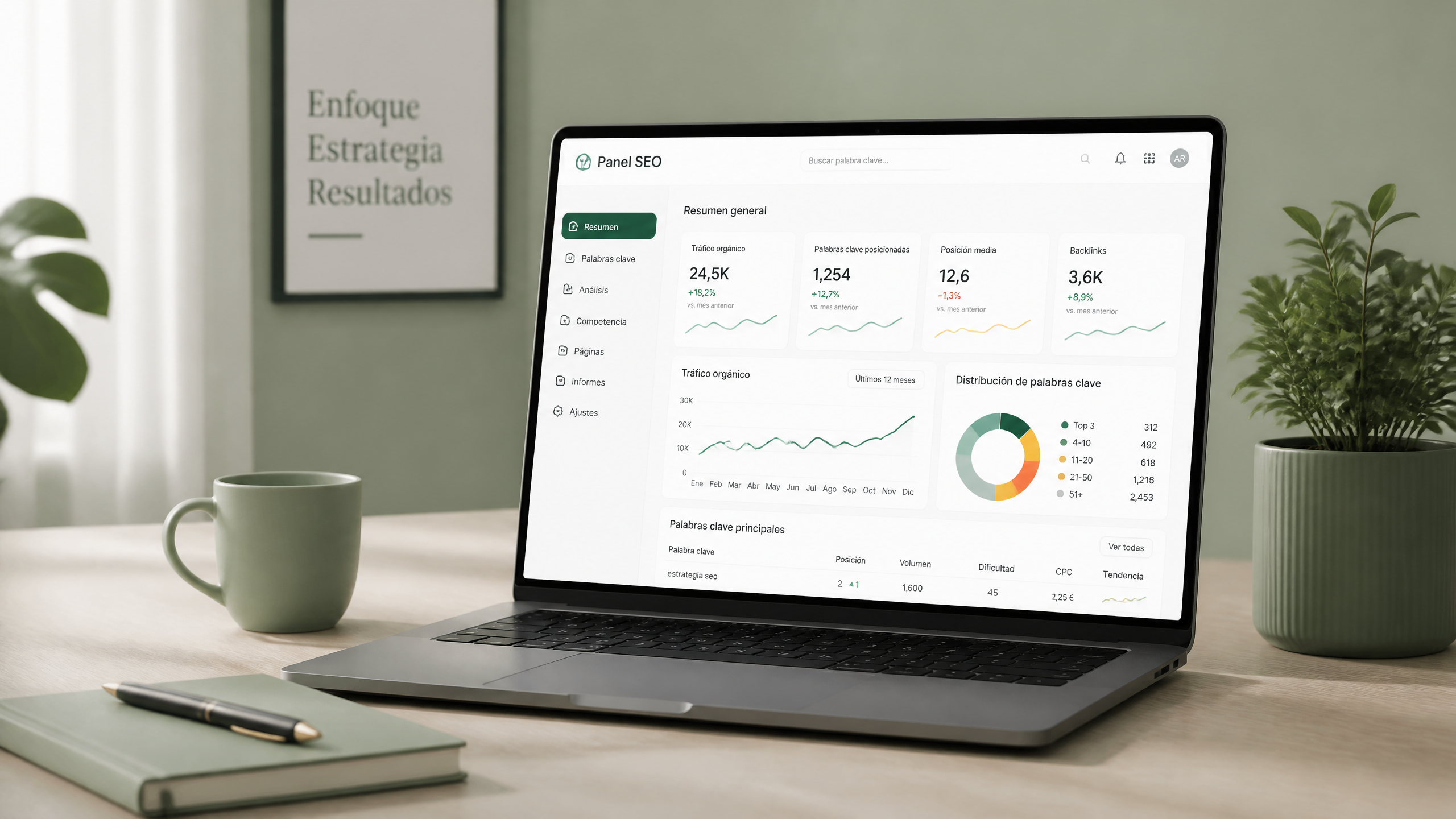
Let's be honest: most guides make on-page SEO sound way more complicated than it really is. Focus on the basics, and you will see results. Over my 8 years as an SEO Specialist, I've seen sites spend ages on backlinks when they could have just improved their on-page content for quicker wins.
On-page SEO is the practice of optimizing individual web pages so they rank higher and earn more relevant traffic in search engines. It is about helping search engines understand your page, while simultaneously providing an excellent experience for the human reading it.
In this manual, we are going to break down exactly how to do on-page SEO effectively, skipping the fluff and focusing on what actually moves the needle in 2026.
TL;DR Summary
• On-page SEO aligns your content with user search intent and search engine algorithms.
• Title tags and meta descriptions remain your most critical tools for driving click-through rates (CTR).
• Proper heading structure (H2s, H3s) helps both readers and crawlers digest your content.
• Internal linking distributes authority and builds topical relevance.
• Measuring your results with the right tools is non-negotiable for ongoing success.
Key Takeaways
Search intent dictates your content format; never write a massive guide for a transactional keyword.
Meta tags are your first impression in the SERPs—optimize them for clarity and curiosity.
Content depth and originality outrank keyword repetition every single time.
Schema markup and proper alt text provide essential context to search engine crawlers.
Continuous testing and updating of old content yields faster results than constantly publishing new pages.
Table of Contents
The Foundation: Search Intent and Keyword Alignment
Crafting Title Tags and Meta Descriptions That Win Clicks
Structuring Your Content for Readers and Crawlers
The Power of Internal Linking and Site Architecture
Technical Elements of On-Page SEO
Measurement, Testing, and Optimization Updates
Frequently Asked Questions (FAQ)
Sources and References
1\. The Foundation: Search Intent and Keyword Alignment
What the User Actually Wants
Before you touch a single meta tag or write a line of copy, you must understand search intent. Search intent is the underlying goal behind a user's query. If someone searches "buy running shoes," they want a product page. If they search "how to choose running shoes," they want an informational guide.
I once audited a client's site where they wrote a 3,000-word essay for a query that clearly required a simple pricing calculator. Unsurprisingly, it ranked nowhere. You cannot brute-force your way past intent.
Matching Intent with Content Types
To rank, your page must mirror what the user expects to see. Here is how you should align your content based on the query type:
Intent Type | User Goal | Ideal Content Format | Example Query |
|---|---|---|---|
Informational | To learn something new | Blog posts, step-by-step guides, FAQs | "how to do on page seo" |
Navigational | To find a specific website | Brand pages, login portals | "Nuwtonic login" |
Commercial | To investigate before buying | Product comparisons, reviews, lists | "best SEO automation tools" |
Transactional | To make a purchase immediately | Product pages, checkout pages | "buy Nuwtonic subscription" |
The Mistake of Keyword Stuffing
Here is a common mistake I see constantly: cramming the primary keyword into every single paragraph. Excessive repetition of keywords is not just unnecessary; it actively hurts your readability. According to Google's helpful content guidelines, content should be helpful, reliable, and created for people first, not written only to manipulate rankings. Use LSI keywords (naturally related terms) to build topical authority instead of sounding like a broken robot.
2\. Crafting Title Tags and Meta Descriptions That Win Clicks
Optimizing the Title Tag for Relevance
Too many people overlook the importance of meta tags — they're your first impression in the SERPs, after all. Your title tag is one of the strongest page-level relevance signals you have. Official documentation states that title links in search results should be descriptive and concise so users and search engines can understand the page topic quickly.
Keep titles under 60-70 characters to avoid truncation. Include your primary keyword naturally, ideally near the front, but prioritize compelling copy over keyword placement.
Writing Meta Descriptions That Convert
Let's get this out of the way: meta descriptions are not a direct ranking factor. However, they absolutely influence whether searchers click a result. A higher click-through rate sends a strong engagement signal to search engines. Treat your meta description like a mini-advertisement. Keep it between 150-160 characters, include a clear value proposition, and end with a soft call to action.
Common Meta Tag Blunders
I usually list common mistakes before presenting solutions, because seeing what not to do is often more helpful. Here are the traps to avoid:
The Mistake | Why It Fails | The Solution |
|---|---|---|
Keyword Stuffing Title | Looks spammy, deters clicks | Write for humans first, include 1-2 core terms |
Missing Meta Description | Google pulls random page text | Write a custom 150-character summary |
Vague Phrasing | Does not stand out in the SERP | Use specific numbers, brackets, or compelling adjectives |
Over 70 Characters | Gets cut off with an ellipsis (...) | Use a character counting tool before publishing |
3\. Structuring Your Content for Readers and Crawlers
Using H2s and H3s Effectively
Headings are not just for making text look big and bold. They create a semantic hierarchy that search engines use to understand your page's structure. Your page should have one main title (handled by your CMS as the H1), followed by H2s for main sections, and H3s for sub-points. Never skip from an H2 straight to an H4.

Formatting for Scannability (The UX Connection)
Users do not read; they scan. If a user lands on your page and sees a massive wall of text, they will bounce (which is a nightmare, by the way). To improve engagement metrics:
• Keep paragraphs short (3-4 lines maximum).
• Use bullet points for lists and steps.
• Bold important concepts to draw the eye.
• Use blockquotes for key takeaways or expert insights.
Primary Content Quality and Depth
Your primary content is the meat of your on-page SEO. It must comprehensively answer the user's query. Do not just regurgitate what the top 3 results say. Add unique information gain—whether that is a personal anecdote, proprietary data, or a better formatting structure. Quality content naturally attracts backlinks and keeps users on the page longer.
4\. The Power of Internal Linking and Site Architecture
Building Content Clusters
Internal linking is how you show search engines which pages are the most important on your site. By grouping related content into "clusters," you build topical authority. For example, if you have a pillar page on "Digital Marketing," you should link out to sub-topics like "Social Media," "Email Marketing," and "On-Page SEO," and have those pages link back to the pillar.
Choosing the Right Anchor Text
Do not use "click here" or "read more" as anchor text. Crawlable text links help Google understand the destination page. Use descriptive anchor text that gives crawlers context about the linked page. If you are linking to a page about site speed, use anchor text like "improve your website loading times" rather than a generic phrase.
Distributing Page Authority
When a page on your site earns external backlinks, it gains authority. You can funnel that authority (often called link juice) to other important pages via internal links. I make it a habit to audit my top-performing pages quarterly just to add new internal links pointing to newer, lower-ranking content.
5\. Technical Elements of On-Page SEO
Image Optimization and Alt Text
Images are a massive part of the on-page experience, but search engines cannot "see" them. They rely on alt text. Alt text should accurately describe the image content and its function.
Name your files descriptively before uploading (e.g.,
on-page-seo-checklist.jpg, notIMG_9876.jpg).Compress images to ensure fast load times (Core Web Vitals matter).
Write natural alt text that includes keywords only if they genuinely describe the image.
Schema Markup for Rich Snippets
Schema markup (structured data) is code you put on your website to help search engines return more informative results for users. While it does not guarantee rich results, it makes your page eligible for them. Whether it is FAQ schema, Review schema, or Article schema, implementing this gives search engines explicit clues about the meaning of a page.
Handling Duplicate Content and Canonicals
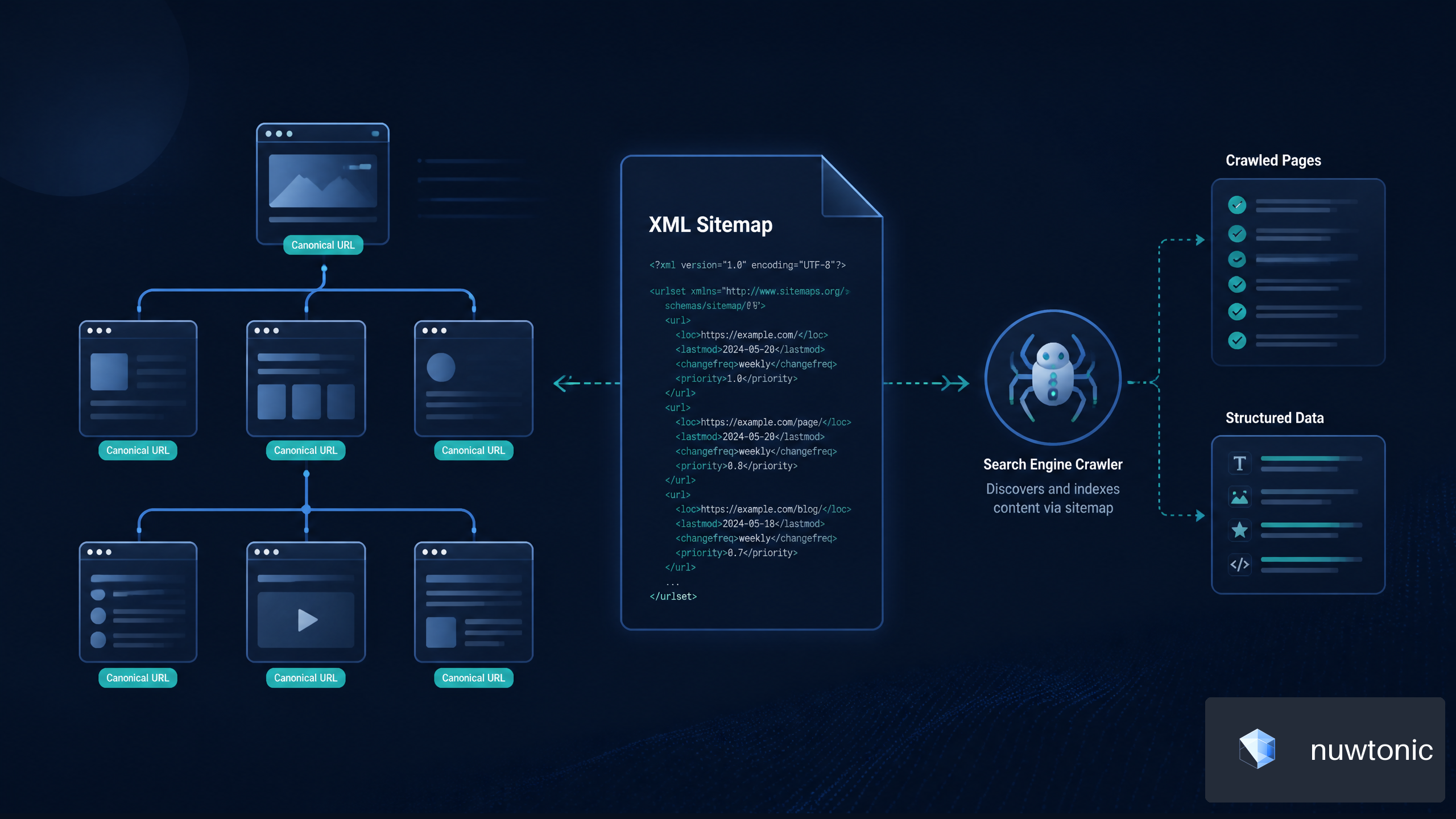
Duplicate content can confuse search engines, diluting your ranking potential. If you have multiple pages with similar content, you need to use canonical tags. According to official guidelines, canonical tags indicate the preferred version of a page when multiple URLs contain similar or duplicate content. This consolidates your ranking signals into one master URL.
6\. Measurement, Testing, and Optimization Updates
Tracking the Right Metrics
You cannot improve what you do not measure. After implementing on-page changes, you need to monitor specific metrics to gauge success.
Metric | What It Tells You | Where to Find It |
|---|---|---|
Organic Traffic | Are more people finding the page? | Google Analytics |
Average Position | Is the page moving up in the SERPs? | Google Search Console |
Click-Through Rate (CTR) | Are your title and meta description working? | Google Search Console |
Bounce Rate / Engagement | Is the content satisfying search intent? | Google Analytics |
Refreshing Existing Content
Here is a pro-tip: improving existing pages often yields faster results than writing brand-new ones. Search engines already have your old pages indexed. By updating outdated statistics, expanding thin sections, and improving the headings, you can revive a dead page within weeks.
Tools to Automate the Process
Managing all these on-page factors manually is tedious. I highly recommend running your pages through a dedicated on-page SEO audit tool to instantly identify missing alt text, broken links, or sub-optimal heading structures. Furthermore, leveraging specific page SEO tools can help you analyze keyword density and LSI opportunities without having to guess. Nuwtonic also helps you to Automate the SItewise On Page SEO Optimization in a single click and all fixes are done and applied to you CMS.
Frequently Asked Questions (FAQ)
What is the difference between on-page and technical SEO?
This is a common point of confusion. On-page SEO focuses on optimizing the content and HTML source code of a page (titles, headings, copy, intent). Technical SEO deals with backend website structure, server optimizations, and crawlability. For a deeper dive into how they interact, check out our guide on on-page SEO vs technical SEO.
How long should a meta description be?
Keep your meta descriptions between 150 and 160 characters. Anything longer risks being truncated by search engines, leaving your call-to-action cut off.
How do I know if my on-page changes worked?
You should monitor Google Search Console for changes in your Average Position and Click-Through Rate (CTR) for the target page. Allow 2 to 4 weeks after requesting indexing to see stabilized results.
Sources and References
Official Documentation
• Google Search Central: SEO Starter Guide
• Google Search Central: Creating Helpful, Reliable, People-First Content
• Google Search Central: Title Links and Snippets Guidelines
• Google Search Central: Consolidating Duplicate URLs
By following these steps, you are not just checking boxes for an algorithm; you are building a genuinely helpful, well-structured resource that deserves to rank. Now get in there and start optimizing.