If you are still optimizing solely for ten blue links, you are fighting a war that ended two years ago. In 2026, the battleground is the "Answer"—that prime real estate in Google's AI Overviews and the citation layer of Large Language Models (LLMs). The "ai seo checklist 2026" isn't just about keywords; it is about becoming the undeniable source of truth that AI must cite.
At Nuwtonic, we have analyzed millions of data points to understand what makes an AI citation stick. It is no longer enough to be indexed; you must be understood. This guide is your operational manual to bridging the gap between legacy search tactics and the new reality of Answer Engine Optimization (AEO).
The Shift: From Clicks to Citations
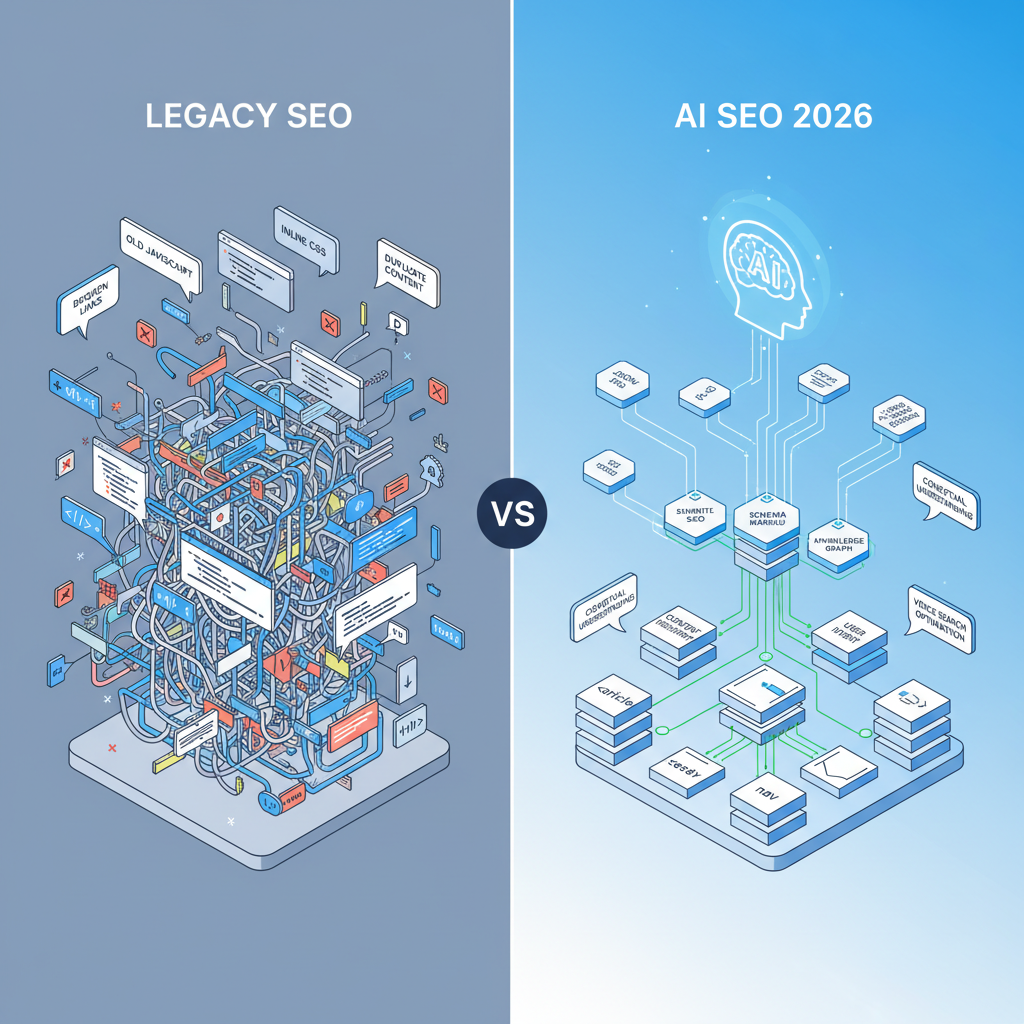
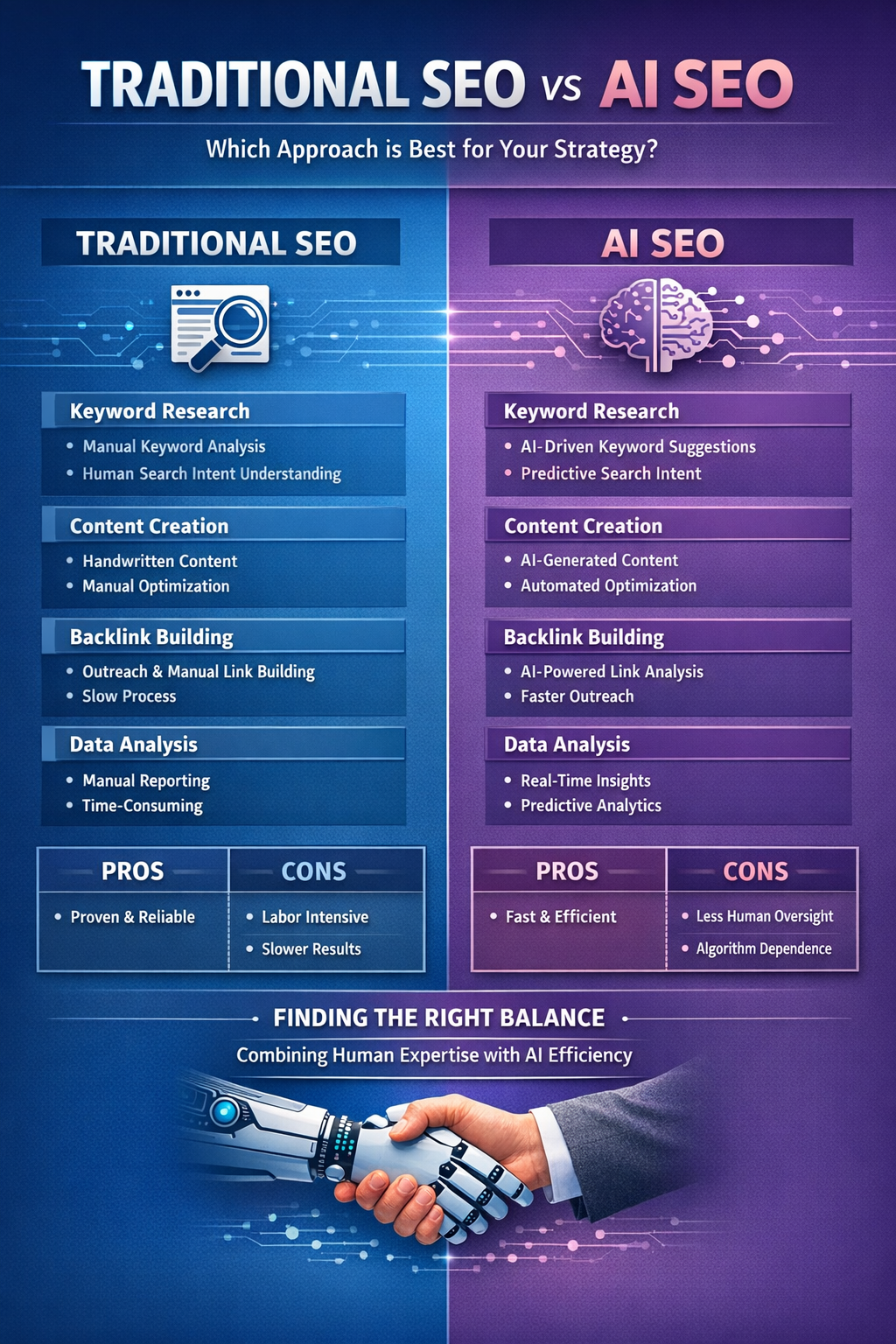
The fundamental difference lies in intent. Traditional search was about routing traffic; AI search is about synthesizing answers. Understanding the nuance between traditional SEO vs AI SEO is the first step to recalibrating your strategy. If your content is buried in fluff, AI agents will skip it for a source that respects their processing logic.
Defining AEO and GEO
To rank in 2026, you must master two distinct disciplines:
• AEO (Answer Engine Optimization): Structuring content to be the direct answer in platforms like Perplexity or Google's AI Overviews.
• GEO (Generative Engine Optimization): Optimizing for visibility within the generative text of LLMs, ensuring your brand is cited as a primary entity.
Feature | Traditional SEO | AI SEO (AEO/GEO) |
|---|---|---|
Primary Goal | Ranking #1 in SERP | Being the Cited Source |
Success Metric | Click-Through Rate (CTR) | Share of Voice / Citations |
Content Structure | Long-form, "skyscraping" | BLUF (Bottom Line Up Front) |
Keywords | High Volume Phrases | Conversational Queries & Entities |
Technical Foundation: Crawlability for AI Bots
Before an AI can cite you, it must read you. In 2026, the technical bar is higher. AI crawlers are resource-constrained and highly selective.
The Robots.txt Governance
You cannot block the bots that matter. There is a critical distinction between beneficial retrieval agents (like OAI-SearchBot) and aggressive training scrapers.
CodeClinic's 2026 guide emphasizes that blocking the wrong agent effectively erases your existence from the AI's knowledge base. Ensure your robots.txt explicitly allows agents that drive traffic while disallowing those that only harvest data without attribution.
The Rendering Queue Reality
Since the December 2025 Google update, the rules for indexing have tightened. If your page returns anything other than a 200 status code, it may be excluded from the rendering queue entirely. This means soft 404s or 5xx errors are not just "bad user experience"—they are invisibility cloaks against AI visibility.
To audit these metrics effectively, you need robust technical SEO tools that can simulate AI crawler behavior and identify these blocking issues before they impact your rankings.
Core Web Vitals: The INP Standard
Speed is trust. In 2026, Interaction to Next Paint (INP) is the supreme metric for page experience.
Why INP Matters for AI
AI algorithms prioritize pages that convert. If a user clicks a citation and the page hangs, that signal is fed back into the model, deprecating your site's trust score.
• Target: INP < 200ms.
• Proxy Metric: If you lack field data, use Total Blocking Time (TBT) from lab tests as a proxy.
According to Semrush's on-page checklist, optimizing for these vitals is non-negotiable for maintaining top-tier rankings. Sites with INP under 200ms have shown a correlation with 24% lower bounce rates, a signal AI heavily weighs.
Structuring Data for Grounding
LLMs hallucinate less when you provide them with structured facts. Schema markup is your way of speaking the AI's native language.
Essential Schema Types for 2026
Do not rely on generic Article schema alone. You must be specific to trigger "Experience" signals.
FAQPage: critical for Q&A queries.
HowTo: Essential for step-by-step instructional queries.
Organization: To solidify Entity Trust and prevent identity confusion.
Yotpo's technical analysis highlights that e-commerce pages adding statistic-heavy "Specs" sections combined with proper schema saw a significant uptake in AI Overview citations.
Content Strategy: Writing for Machines & Humans
High-ranking content in 2026 follows the BLUF principle: Bottom Line Up Front.
The BLUF Methodology
AI models extract answers from the top of the semantic hierarchy. If your answer is buried in paragraph four, you lose.
• State the Answer: Immediately after the H2 or H3 heading.
• Provide Data: Back it up with numbers, dates, or specific entity names.
• Elaborate: Provide context afterwards for the human reader.
Leveraging advanced content generation features allows you to scale this format, ensuring every page on your site adheres to this strict structural standard without manual rewriting.
Entity Trust and Verification
AI systems verify business identity before citing content. This is "Entity Trust." You build this by consistent NAP (Name, Address, Phone) data across the web and by referencing US regulatory constraints (like FTC transparency rules) where applicable. This signals to the AI that you are a legitimate, compliant entity.
AI SEO Checklist 2026 : The Nuwtonic Quantified AI SEO Framework (ACI Model)
To rank in AI search in 2026, you must quantify citation probability rather than rely on generic optimization tactics.
ACI (AI Citation Index) is a 100-point scoring framework that predicts AI citation likelihood across Answer Engine Optimization (AEO) and Generative Engine Optimization (GEO) environments.
ACI Framework Overview (100-Point Model)
Layer | Component | Weight | Measurement Variable |
|---|---|---|---|
L1 | Technical Accessibility | 15 | Crawl & Render Integrity |
L2 | Structured Grounding | 15 | Schema Density & Validation |
L3 | Answer Extractability | 20 | BLUF Compliance Rate |
L4 | Entity Authority | 15 | Entity Graph Coherence |
L5 | Fact Density | 10 | Quantified Data Ratio |
L6 | UX & Experience | 10 | INP & Engagement Stability |
L7 | Topical Depth | 10 | Semantic Coverage Score |
L8 | Trust & Compliance | 5 | Transparency Signals |
Total = 100 Points
L1 — Technical Accessibility (15 Points)
AI systems must be able to crawl, render, and index your content without friction.
Scoring Formula
L1 = (Bot Allowance + 200 Status Integrity + JS Render Success + Sitemap Freshness) / 4 × 15
Measurement Criteria
Metric | Requirement | Points |
|---|---|---|
robots.txt | Explicitly allows AI retrieval bots | 3.75 |
HTTP Status | 100% HTML URLs return 200 | 3.75 |
JavaScript Rendering | No blocked hydration in headless test | 3.75 |
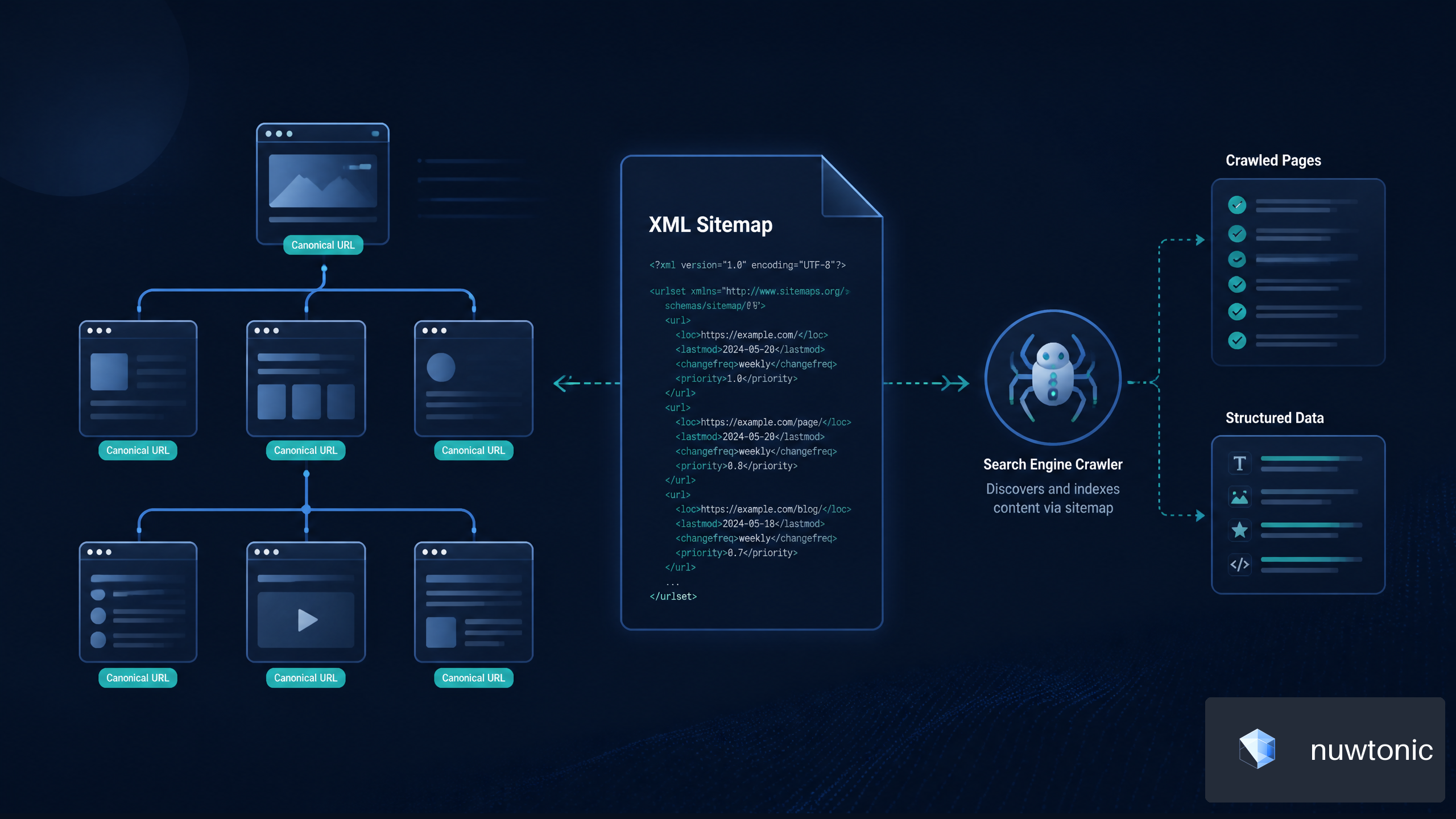
XML Sitemap | Updated within last 7 days | 3.75 |
Maximum: 15
L2 — Structured Grounding Score (15 Points)
Structured data reduces hallucination risk and improves grounding confidence.
Required Schema Types (Baseline 2026)
FAQPage
HowTo
Organization
Author
BreadcrumbList
Scoring Logic
L2 = (Validated Schema Types / 5) × 15
Valid Schema Types | Score |
|---|---|
5/5 | 15 |
4/5 | 12 |
3/5 | 9 |
<3 | ≤6 |
Validation must pass:
Rich Results Test
Google Search Console Enhancement Report
L3 — Answer Extractability (20 Points)
AI models extract from semantic hierarchy. Sections must follow BLUF formatting.
BLUF Compliance Requirements
Each H2 section must:
Start with a direct answer sentence
Contain at least one numeric or measurable anchor
Include a named entity or defined technical term
Scoring Formula
L3 = (BLUF-Compliant Sections / Total H2 Sections) × 20
Example: If 8 of 10 sections comply:
L3 = (8 / 10) × 20 = 16
Maximum: 20
L4 — Entity Authority Score (15 Points)
Measures entity graph coherence and verification signals.
Components (3 Points Each)
Consistent NAP (Name, Address, Phone)
sameAs structured links (LinkedIn, Twitter, GitHub, etc.)
Author schema with persistent @id
Branded anchor mentions within content
Regulatory or compliance reference (e.g., FTC transparency)
Scoring Formula
L4 = (Verified Components / 5) × 15
Maximum: 15
L5 — Fact Density Ratio (10 Points)
Higher quantified statement density increases citation likelihood.
Quantified Statement Examples
“INP < 200ms”
“100% 200 status coverage”
“Monthly audit cycle”
“AIR target ≥ 25%”
Scoring Formula
Fact Density Ratio = Quantified Statements / Total Paragraphs
L5 = Ratio × 10
Ratio | Score |
|---|---|
≥ 0.6 | 10 |
0.4 | 7 |
< 0.3 | ≤5 |
L6 — UX & Experience Layer (10 Points)
User behavior feeds model reinforcement signals.
Scoring Breakdown
Metric | Target | Points |
|---|---|---|
INP | < 200ms | 4 |
TBT (Lab Proxy) | < 150ms | 3 |
Bounce Rate | < 55% | 3 |
Total Possible: 10
L7 — Topical Depth Score (10 Points)
Measures semantic coverage compared to top SERP competitors.
Methodology
Extract top 5 ranking pages.
Perform NLP entity frequency extraction.
Compare semantic coverage ratio.
Formula
L7 = (Your Entity Coverage / Competitor Average) × 10
Example: If coverage = 92% → Score = 9.2
Maximum: 10
L8 — Trust & Compliance Signals (5 Points)
Binary verification scoring.
Signal | Points |
|---|---|
Updated Privacy Policy | 1 |
AI Transparency Disclosure | 1 |
About Page > 800 words | 1 |
Author Credentials Visible | 1 |
External Authority References | 1 |
Maximum: 5
Final ACI Formula
ACI = L1 + L2 + L3 + L4 + L5 + L6 + L7 + L8
ACI Score Interpretation
Score Range | Citation Probability |
|---|---|
85–100 | High AI Citation Probability |
70–84 | Competitive but volatile |
55–69 | Low citation likelihood |
<55 | Structurally invisible to AI systems |
AI Inclusion Rate (AIR) — Real-World Validation Metric
ACI predicts structural readiness. AIR measures actual performance.
AIR Formula
AIR = (AI Citations Observed / AI Queries Tested) × 100
Example: 18 citations across 60 tested prompts:
AIR = 30%
Benchmark Targets
AIR | Interpretation |
|---|---|
≥ 25% | Strong visibility |
≥ 40% | Category authority |
≥ 60% | Dominant citation entity |
Key Takeaways
• Shift Mentalities: Move from chasing clicks to earning citations through high-trust data.
• Technical Rigor: Ensure your robots.txt and status codes invite AI crawlers rather than blocking them.
• Structure is King: Use Schema.org and BLUF formatting to make your content easy for LLMs to digest.
• Metric Focus: Prioritize INP scores under 200ms to signal a high-quality user experience.
FAQ Section
What is the most important metric for AI SEO in 2026?
Entity Trust and INP (Interaction to Next Paint). Entity Trust ensures you are verified enough to be cited, while INP ensures the user experience is robust enough to maintain that ranking.
How do I optimize for Google AI Overviews?
Focus on "Answer Engine Optimization" (AEO). Use valid Schema markup (like FAQPage), format content with the answer first (BLUF), and ensure high fact density in your text.
Should I block all AI bots in robots.txt?
No. You must distinguish between beneficial agents (like OAI-SearchBot) that drive traffic and aggressive scrapers that only use your data for training. Blocking beneficial agents will destroy your visibility in AI search results.
How often should I audit my content for AI readiness?
We recommend a monthly audit. AI search trends shift rapidly, and maintaining "content freshness" is a key trust signal for algorithms determining current relevance.