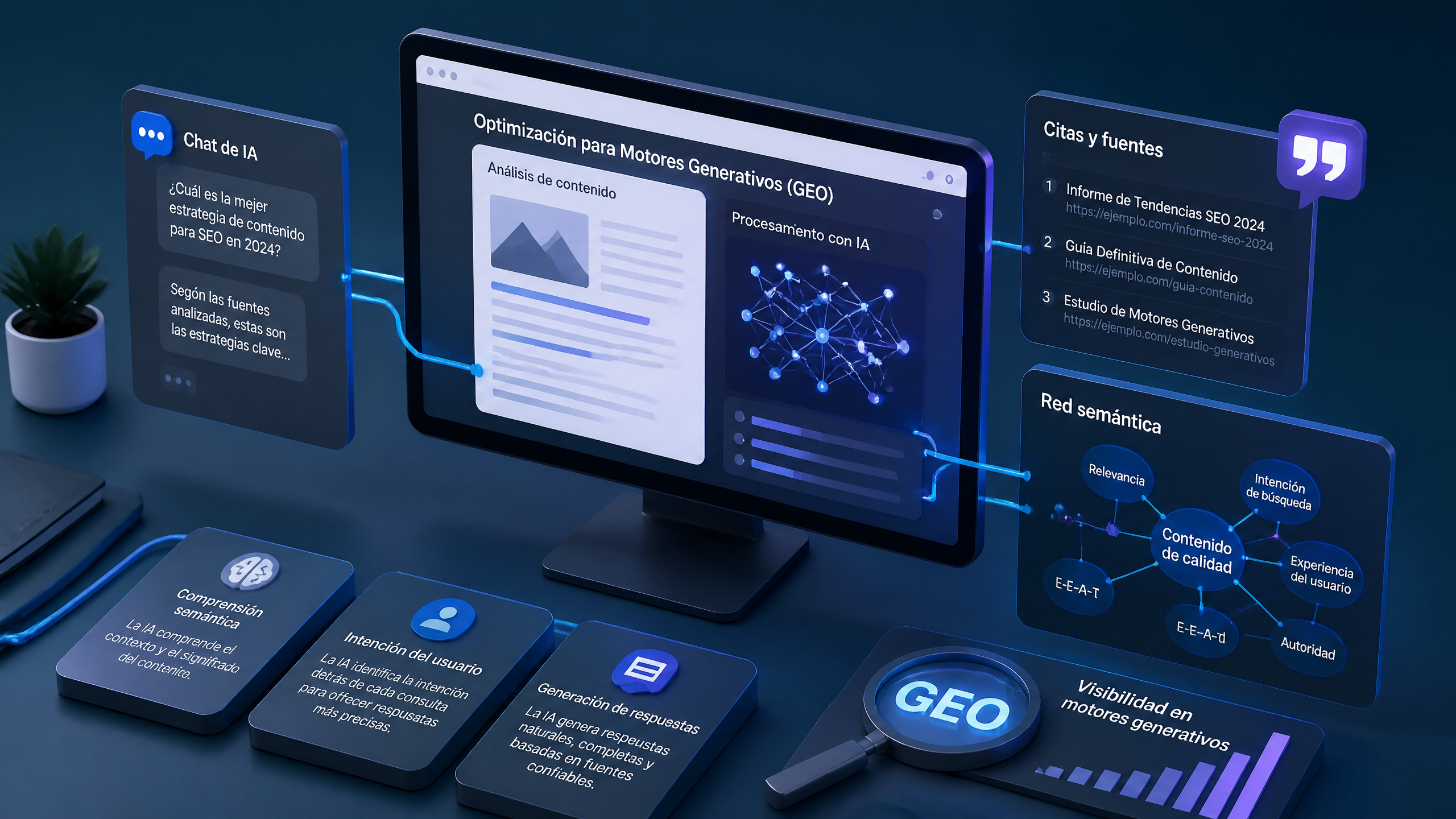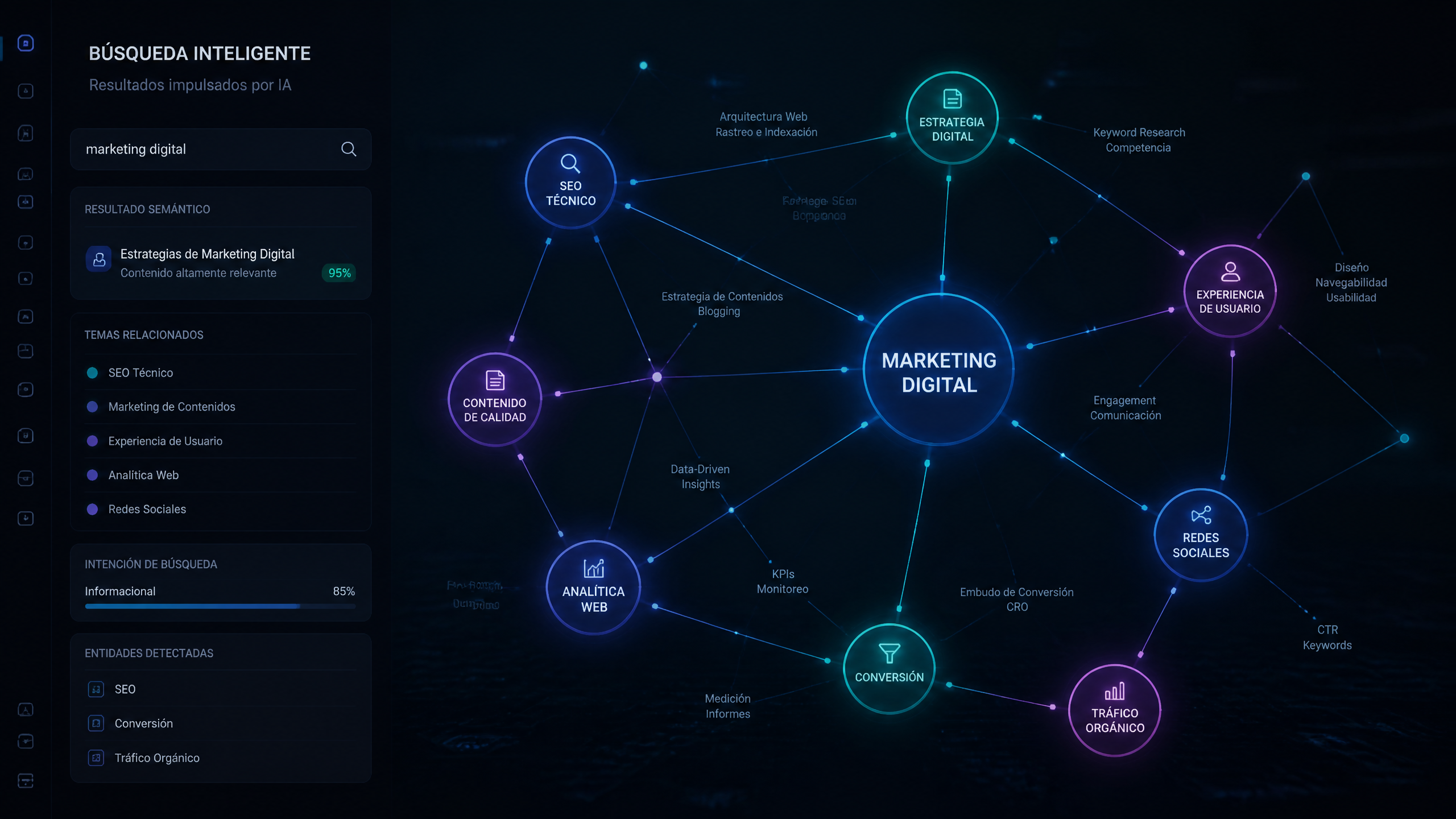
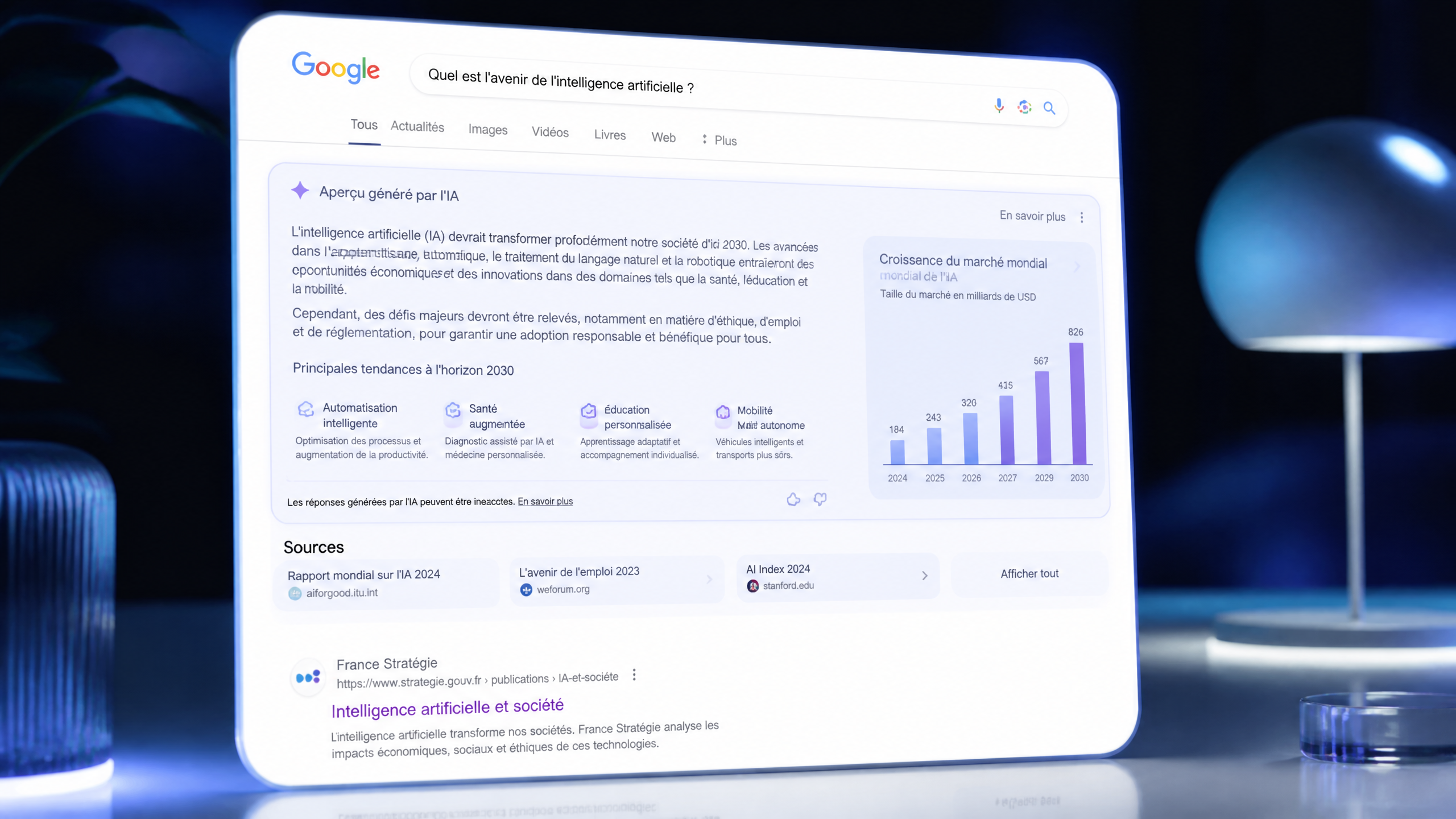
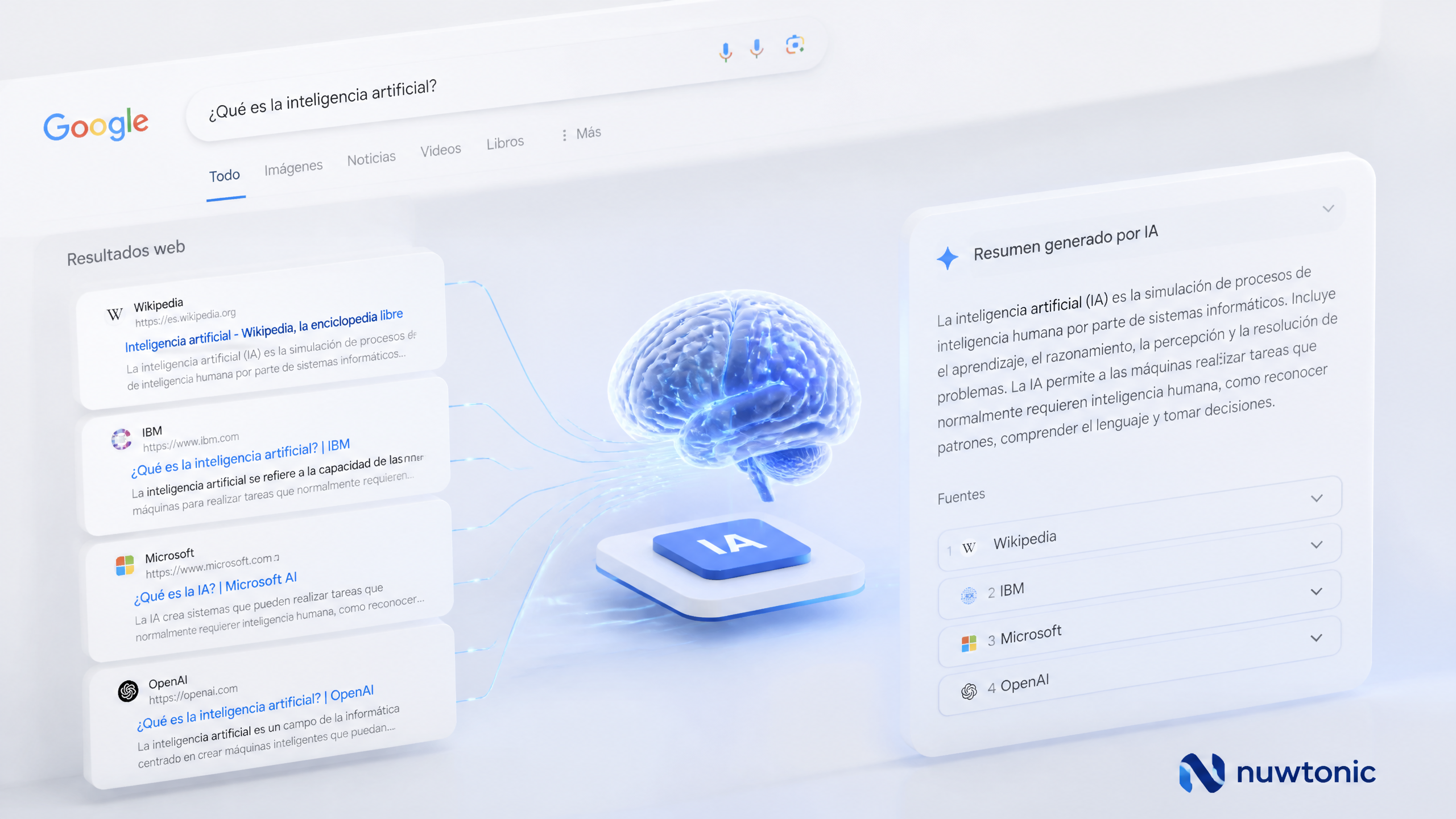
Mira, si has estado prestando atención a las SERP últimamente, te habrás dado cuenta de que el terreno de juego ha cambiado por completo. La llegada de las respuestas generadas por inteligencia artificial ha revolucionado la forma en que los usuarios consumen información. Ya no se trata solo de pelear por el primer enlace azul de toda la vida; ahora la gran pregunta que se hacen todos los profesionales del sector es cómo aparecer en las respuestas generadas por IA o, en su defecto, how to rank in google ai overviews.
La verdad es que la inteligencia artificial no es un enemigo; es una herramienta poderosa que, si se utiliza bien, puede revolucionar la forma en que hacemos SEO. Pero para aprovecharla, tenemos que dejar atrás viejos vicios. He visto demasiados sitios perder tiempo en optimizaciones técnicas complejas cuando lo que realmente necesita el algoritmo de Google es un buen contenido estructurado que resuene con el usuario y responda a su intención de búsqueda de forma directa.
Resumen Rápido (TL;DR)
Si tienes prisa, aquí tienes los puntos clave para posicionar en los resúmenes de IA de Google:
• Prioriza páginas fuertes: Es mucho más fácil optimizar URLs que ya están en el top 10 orgánico.
• Estructura limpia: Usa encabezados H2/H3, listas de viñetas y párrafos cortos para facilitar la extracción.
• Respuestas directas: Responde al qué, cómo y por qué en las primeras 50 palabras de cada sección.
• Enriquece con Schema: Implementa marcado estructurado para dar contexto semántico inmediato.
• Monitorea constantemente: Revisa las citas de forma semanal y ajusta según los movimientos de la competencia.
Tabla de Contenidos
¿Qué son los AI Overviews y por qué cambia el tablero del SEO?
Selección y priorización de contenidos: ¿Por dónde empezar?
Estructuración de contenidos para la extracción de IA
Autoridad, E-E-A-T y señales de confianza
Medición, monitoreo y optimización continua
Preguntas Frecuentes (FAQ)
Fuentes y Referencias
¿Qué son los AI Overviews y por qué cambia el tablero del SEO?
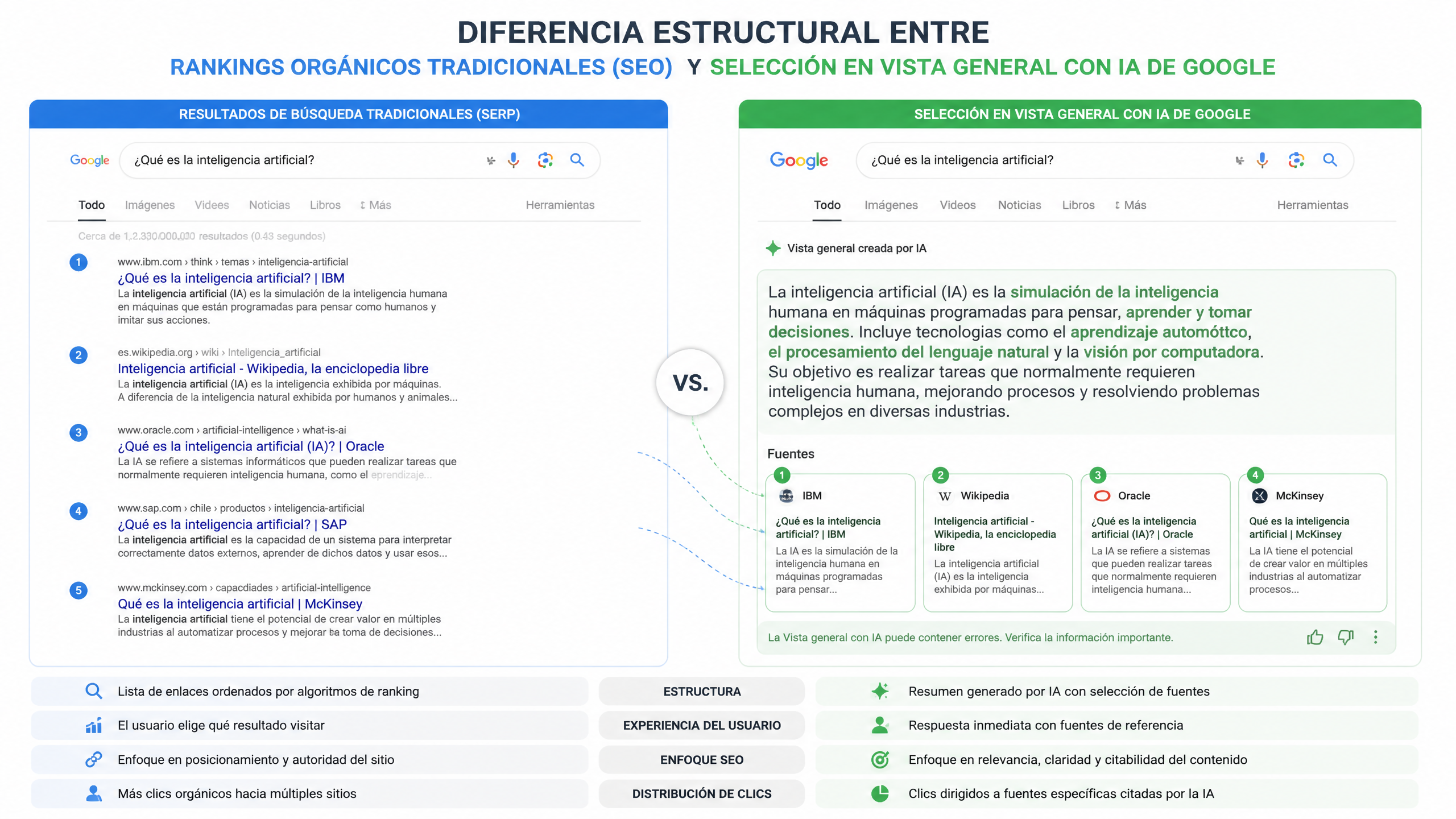
Para entender cómo optimizar nuestro contenido, primero debemos comprender qué ocurre bajo el capó de Google. Los AI Overviews son resúmenes generados por inteligencia artificial que sintetizan respuestas complejas directamente en la parte superior de las búsquedas, citando diversas fuentes web para respaldar su información.
La diferencia entre el ranking orgánico clásico y la selección de IA
Aquí viene el primer baño de realidad: una buena posición orgánica no garantiza aparecer en el resumen de IA. Según las discusiones y análisis compartidos en la comunidad de SEO en Reddit, se ha observado una desconexión notable entre el ranking tradicional y la visibilidad en AI Overviews.
Esto ocurre porque los AI Overviews pueden depender de un proceso de búsqueda ampliada o fan-out —un mecanismo donde el sistema ejecuta internamente consultas relacionadas para construir una respuesta integral— que difiere del algoritmo de ranking web normal. He visto casos de clientes frustrados porque su página, posicionada con orgullo en el número uno, era ignorada por la IA, la cual prefería citar un sitio del puesto siete que respondía de forma mucho más directa y estructurada.
El papel de las consultas conversacionales y de lenguaje natural
Las personas ya no buscan como antes. En lugar de escribir términos de búsqueda inconexos, formulan preguntas completas y conversacionales. Según AIOSEO, escribir con un tono natural y conversacional es sumamente relevante porque las consultas de los usuarios reflejan cada vez más cómo hablamos en la vida real. Si tu contenido suena robótico y excesivamente optimizado para palabras clave rígidas, la IA pasará de largo.
¿Cómo decide el algoritmo de Google qué fuentes citar?
El motor de búsqueda necesita certezas. De acuerdo con las directrices analizadas por Dageno AI, el contenido debe estar estructurado, ser factual y rico en contexto para tener más opciones de ser seleccionado por la IA. Google busca fuentes que no solo repitan definiciones superficiales, sino que ofrezcan una cobertura semántica profunda que resuelva la consulta de un solo vistazo.
Selección y priorización de contenidos: ¿Por dónde empezar?
La mayoría de las guías sobre SEO se complican demasiado; a menudo, la clave está en entender bien la intención de búsqueda y aplicar el sentido común. No intentes optimizar todo tu sitio web a la vez para los AI Overviews. Eso es una receta para el agotamiento y la frustración.
Identificar las páginas con mayor potencial
¿Por dónde empezamos entonces? Los datos de Dageno AI sugieren que las páginas que ya se posicionan en el top 10 orgánico suelen ser el mejor punto de partida para intentar aparecer en AI Overviews. Estas URLs ya cuentan con la confianza inicial de Google, por lo que solo necesitan un empujón estructural para ser atractivas para el modelo de lenguaje.
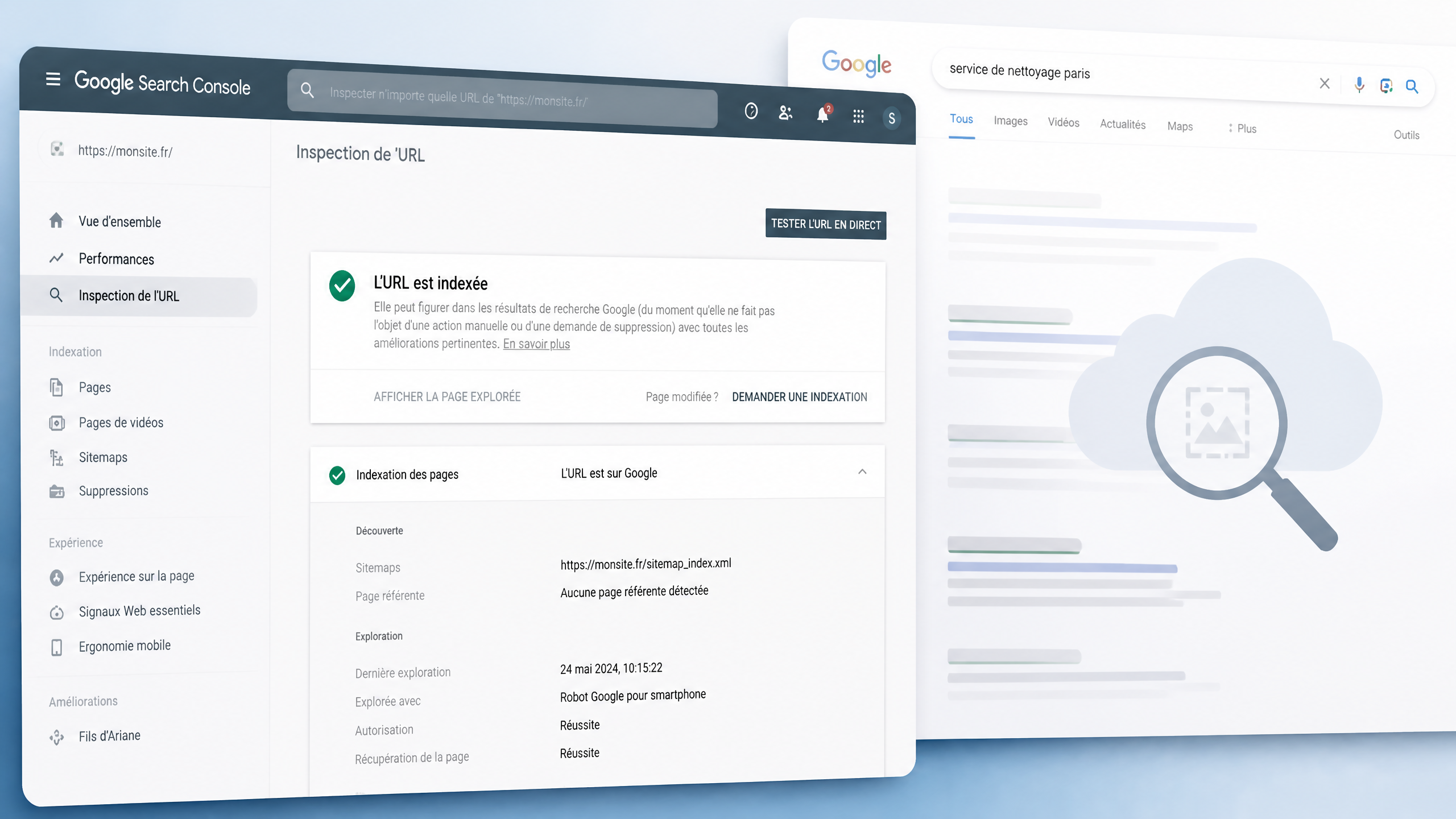
Auditoría de consultas existentes con GSC
El primer paso práctico es abrir Google Search Console (GSC) e identificar qué páginas informativas están recibiendo impresiones pero tienen un CTR bajo debido a la presencia de resúmenes de IA en sus SERPs. Para refinar esta búsqueda de oportunidades, puedes apoyarte en herramientas de investigación de palabras clave que te muestren el volumen real y la intención detrás de cada consulta.
El uso de herramientas específicas para visiones de IA
No todas las palabras clave activan resúmenes generados por IA. Para evitar disparar a ciegas, resulta extremadamente útil contar con un buscador de palabras clave para visiones de IA. Esta herramienta te permite filtrar de forma precisa qué términos de búsqueda de tu nicho ya muestran AI Overviews, ayudándote a detectar brechas de cobertura y oportunidades de mejora frente a tus competidores.
Estructuración de contenidos para la extracción de IA
Una vez que has seleccionado tus URLs objetivo, es hora de arremangarse y optimizar el contenido en sí. La IA de Google no lee los artículos como un humano; escanea la estructura semántica buscando respuestas rápidas y lógicas.
El poder de los H2, H3, listas estructuradas y párrafos cortos
La legibilidad no es solo un favor para tus usuarios; es una alfombra roja para el rastreador de Google. Según los análisis de Dageno AI, usar H2, H3, listas y párrafos cortos facilita enormemente que Google extraiga información precisa del contenido.
Por su parte, desde AIOSEO se enfatiza que escribir respuestas cortas y claras bajo encabezados específicos mejora la legibilidad para las consultas que alimentan directamente estos resúmenes informativos.
Responder directamente a preguntas: El enfoque "Qué, Cómo y Por Qué"
Para alinearte de verdad con la intención de búsqueda, tu contenido debe estructurarse de manera que resuelva las dudas del usuario paso a paso. Según Dageno AI, las respuestas óptimas deben cubrir de forma completa el qué, cómo, por qué y los siguientes pasos de la consulta.
Por ejemplo, si el encabezado H3 es "¿Cómo se calcula el ROI de una campaña de marketing?", el párrafo inmediatamente posterior debe dar la fórmula y la definición directa en un bloque de no más de 45-50 palabras. Evita dar rodeos innecesarios o meter paja introductoria.
La importancia de los datos estructurados y el Schema Markup
Los datos estructurados son el lenguaje nativo de los motores de búsqueda. Aunque no son un factor de ranking directo que te garantice el éxito por sí solo, incorporar marcado de esquema —como Schema de tipo Article, FAQ o HowTo— ayuda a los motores a entender mejor el contexto, las entidades y la estructura del contenido, según señala Dageno AI.
Antes de realizar cambios masivos, te recomiendo ejecutar una auditoría SEO en página para asegurarte de que tu marcado estructurado no tiene errores de sintaxis que confundan a los rastreadores.
Autoridad, E-E-A-T y señales de confianza
Google no va a arriesgar su reputación citando información dudosa en sus resúmenes de inteligencia artificial. Por ello, las directrices de E-E-A-T (Experiencia, Pericia, Autoridad y Confianza) son más críticas que nunca.
Construcción de autoridad temática y biografías de autor
La autoría ya no es un elemento decorativo al final del post. De acuerdo con AIOSEO, construir autoridad temática y reforzar la biografía del autor ayuda de forma directa a que Google perciba el contenido como experto y confiable. Asegúrate de incluir perfiles de autores reales con enlaces a sus redes profesionales y credenciales verificables.
Señales de confianza externas: Reseñas y menciones de terceros
No basta con que tú digas que eres un experto; otros deben validarlo. La integración de señales de confianza como reseñas, menciones en medios de comunicación de terceros y estudios de respaldo con enlaces salientes a fuentes gubernamentales o académicas fortalece enormemente la credibilidad de tu sitio web frente al algoritmo de Google.
Mantener el contenido fresco y actualizado
La frescura de la información es un factor determinante, especialmente en sectores dinámicos como la tecnología o las finanzas. Mantener el contenido actualizado de forma constante es una de las tácticas más recomendadas por los especialistas para competir con éxito en los AI Overviews.
Medición, monitoreo y optimización continua
El SEO para la era de la IA no es un proceso estático de "configurar y olvidar". Requiere una iteración constante basada en datos empíricos.
Cómo trackear tus citas en AI Overviews de forma semanal
Dado que las SERPs cambian constantemente, la monitorización debe ser parte de tu rutina de trabajo. Dageno AI aconseja monitorizar las citas semanalmente y comparar los movimientos con los competidores para entender qué cambios en el contenido o en el algoritmo están afectando tu visibilidad.
Qué hacer si tu URL posiciona en el Top 3 pero no aparece en el resumen de IA
Si te encuentras en este escenario —que es muy común—, la solución pasa por analizar minuciosamente a los competidores que sí están siendo citados por la IA. Pregúntate:
• ¿Están usando un formato de lista que a mí me falta?
• ¿Su respuesta directa es más concisa y fácil de procesar para un modelo de lenguaje?
• ¿Tienen un marcado Schema más completo?
• ¿Abordan subtemas semánticos que yo he pasado por alto?
Comparativa: SEO Tradicional vs. Optimización para AI Overviews
Para visualizar mejor las diferencias estratégicas, analicemos la siguiente tabla comparativa:
Aspecto Estratégico | SEO Tradicional | Optimización para AI Overviews |
|---|---|---|
Objetivo principal | Posicionar en el top 10 orgánico tradicional. | Ser citado y enlazado en el bloque de resumen de IA. |
Estructura preferida | Artículos extensos, contenido pilar profundo. | Bloques de respuesta directa, H2/H3 claros, listas. |
Enfoque de palabras clave | Palabras clave long-tail y de volumen de búsqueda. | Consultas conversacionales y preguntas en lenguaje natural. |
Relevancia del Schema | Útil para fragmentos enriquecidos (rich snippets). | Crucial para que la IA entienda el mapa de entidades. |
Frecuencia de actualización | Periódica (mensual o trimestral). | Alta y constante para mantener la frescura factual. |
Preguntas Frecuentes (FAQ)
¿Aparecer en los AI Overviews canibaliza el tráfico de mi web?
Aunque existe el temor de que los usuarios no hagan clic al obtener la respuesta directamente, los estudios iniciales demuestran que ser citado como fuente de confianza en el AI Overview suele atraer tráfico altamente cualificado de usuarios que realmente quieren profundizar en el tema.
¿Es obligatorio tener un dominio con alta autoridad para ser citado?
No necesariamente. Aunque la autoridad ayuda, la estructura del contenido y la precisión semántica para responder a la intención de búsqueda conversacional juegan un papel mucho más determinante en la selección de fuentes por parte de la IA.
¿Cómo puedo bloquear mi contenido para que no sea usado por la IA de Google?
Si por razones estratégicas prefieres que Google no utilice tu contenido en sus resúmenes de IA, puedes utilizar la directiva nosnippet en tus etiquetas meta, aunque ten en cuenta que esto también afectará a la forma en que se muestran tus resultados en la búsqueda orgánica tradicional.
Conclusión
El SEO no ha muerto; simplemente ha evolucionado hacia un modelo mucho más centrado en la estructura semántica, la claridad y la confianza. Optimizar para how to rank in google ai overviews no requiere trucos de magia ni intentar engañar al algoritmo de Google. Consiste en ponérselo fácil tanto a la inteligencia artificial como a tus usuarios: responde de forma directa, estructura tu contenido con lógica, demuestra tu experiencia y mantén la información siempre fresca.
Empieza hoy mismo auditando tus páginas con mejor rendimiento orgánico y adáptalas a este nuevo formato. El futuro de las búsquedas ya está aquí, y los que se adapten primero se llevarán la mayor parte del pastel.